


French Kingwood Nightstands
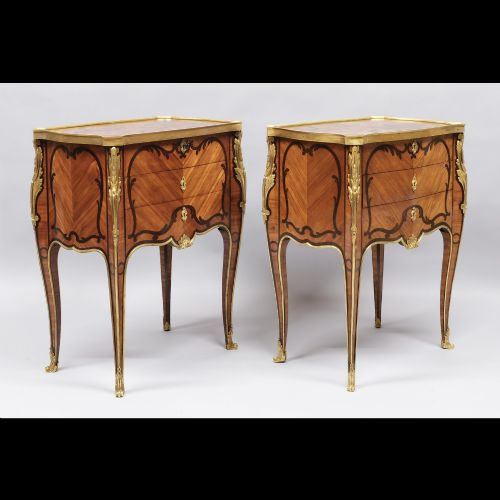
These French kingwood nightstands bring together rich timber veneers and marble tops for bedside storage, rooted in continental revival taste.
French Kingwood Nightstands
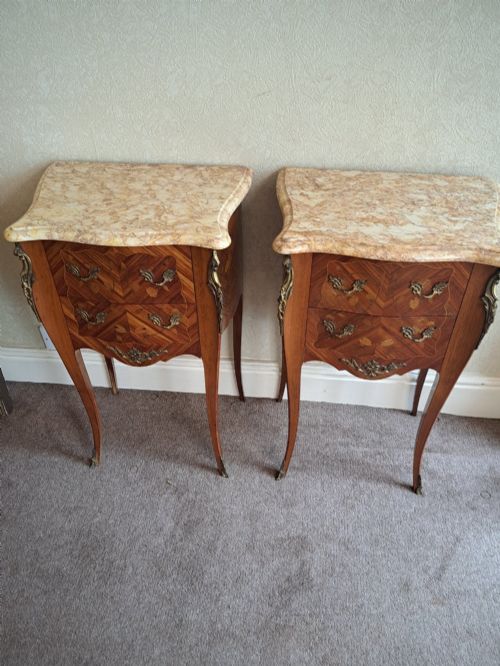
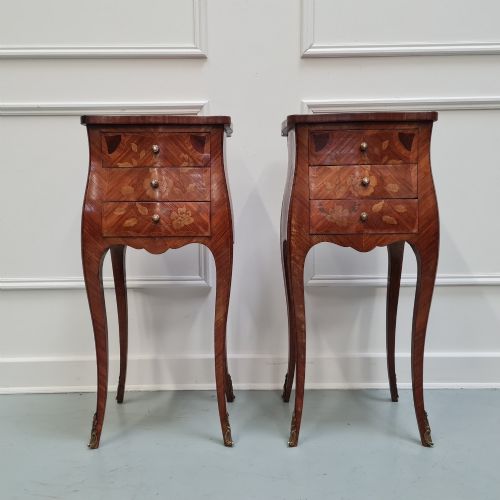
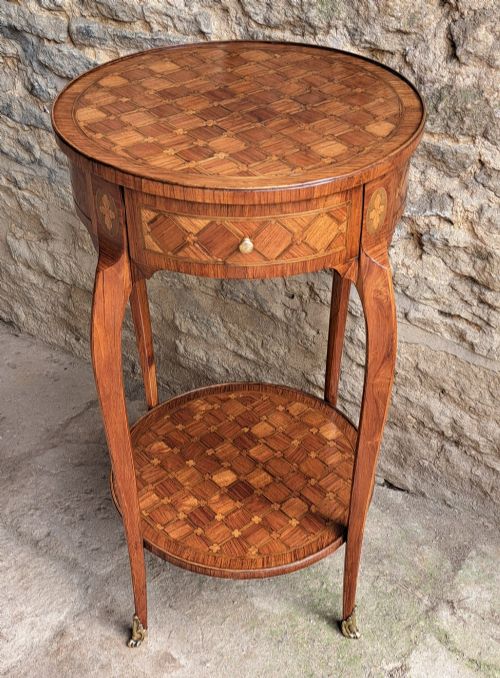
French kingwood nightstands encompass bedside cabinets, lamp tables, and small commodes produced across the nineteenth and twentieth centuries. The selection leans heavily toward matching pairs from the 1920s and 1930s, alongside pieces originating in the late nineteenth century and the Victorian era.
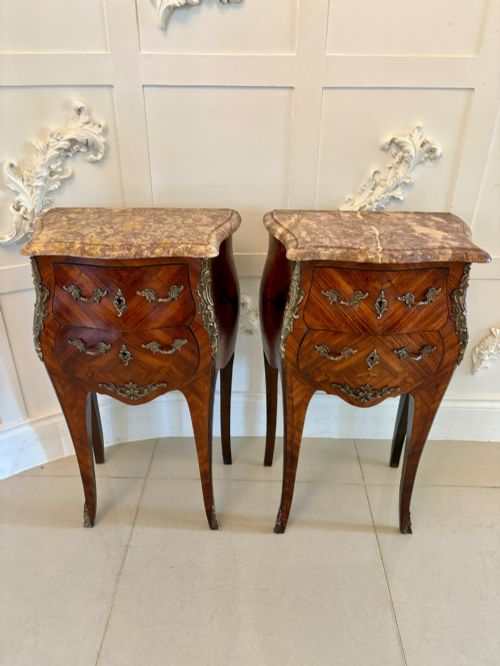
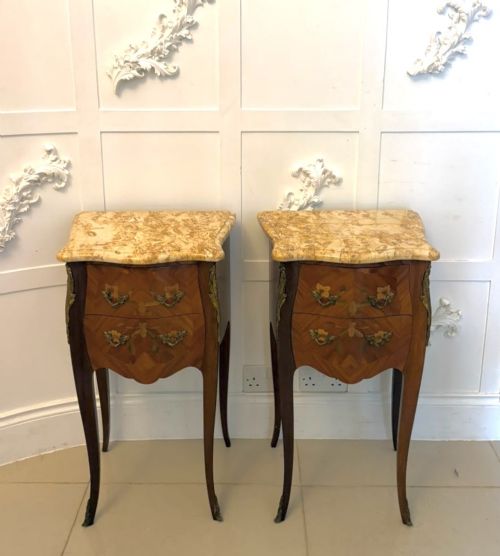
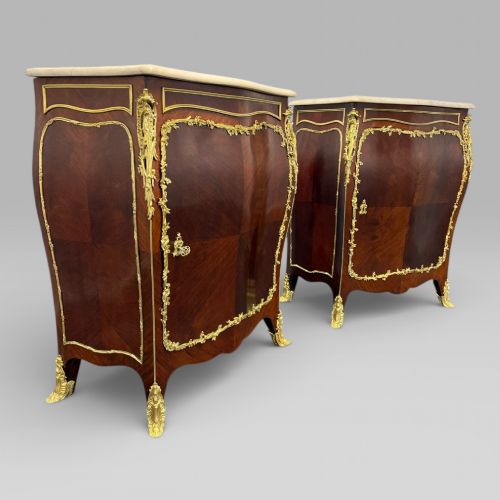
Makers and cabinetmakers drew inspiration from earlier royal tastes, particularly Louis XV and Louis XVI styles, incorporating serpentine fronts and bombe profiles. Buyers encounter these forms as freestanding bedside tables with marble tops and inlaid wooden surfaces.
Materials and construction
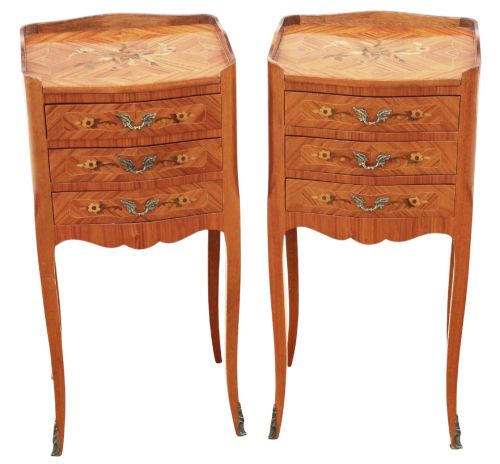
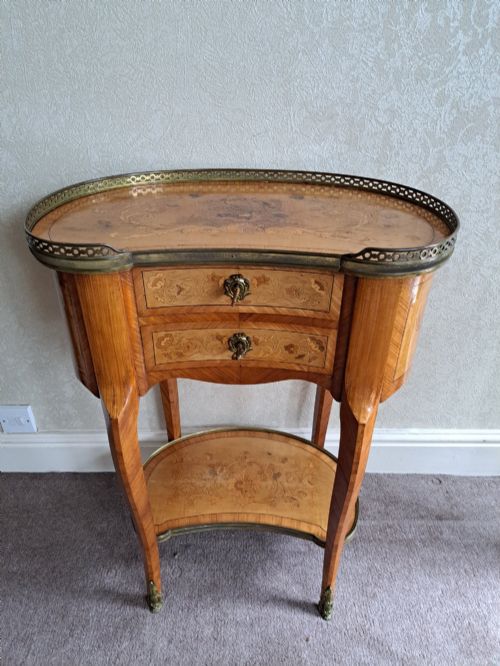
Cabinetmakers constructed these pieces using dense timber veneers applied over solid carcassing, pairing kingwood with walnut, rosewood, and satinwood for contrasting grain patterns. Marquetry and parquetry patterns decorate the drawer fronts and tabletops with intricate geometric or floral designs.
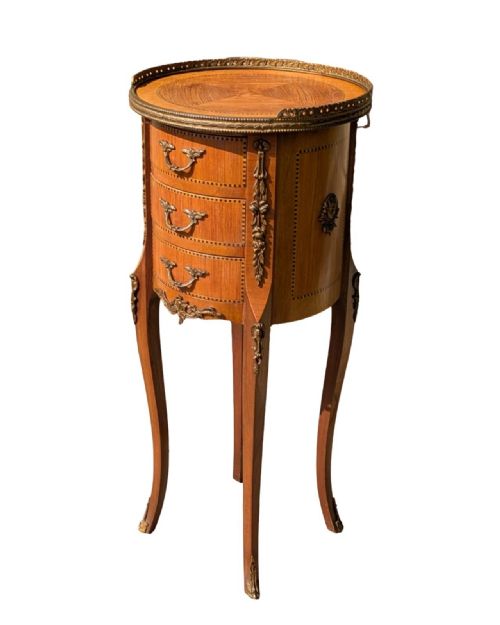
Ormolu mounts and cast brass fittings accent the corners, legs, and aprons to highlight the contours of the woodwork. Heavy marble slabs, fitted precisely to the upper surface, provide durable tops for daily bedside use.
Distinctions in execution
The standard of execution rests on the precision of the veneer work and the crispness of the cast ormolu mounts. Finer examples display seamless matching of the wood grain across curved drawer fronts and intricate floral marquetry without gaps or lifting.
Structural refinement shows in the weight and thickness of the fitted marble top and the smooth movement of the drawers within their housings. Workshop attribution to known makers further elevates the standing of an individual cabinet.
E. Kahn·Sormani·Francois Linke
The French Kingwood Nightstands Glossary
- Kingwood
- A dense, heavily figured Brazilian timber prized for its rich brown colour and dark violet striping. Cabinetmakers sliced it into thin veneers for decorative marquetry.
- Ormolu
- Gilded bronze mounts cast and chased with rococo or neoclassical scrollwork. They protect vulnerable corners and accentuate the lines of the cabinet.
- Bombe
- A swollen, outward-curving profile on the front and sides of a cabinet. This curved shape requires advanced woodworking skill to fit the veneer accurately.
- Marquetry
- The art of forming decorative patterns using thin pieces of wood veneer. Artisans arrange contrasting timbers to create floral or geometric scenes.
- Chevet
- A French term for a small bedside table or cabinet. These diminutive pieces provide compact storage beside a bed.
French Kingwood Nightstands: Frequently Asked Questions
What materials make up these nightstands?
The primary wood is kingwood, frequently accompanied by rosewood, walnut, and satinwood veneers. Brass and ormolu mounts provide metallic contrast.
Most examples feature smooth marble tops designed to sit securely on the upper surface.
How do I identify the period of a nightstand?
Dating relies on stylistic clues, timber choice, and construction methods. Pieces drawing on Louis XV or Louis XVI designs appear across both the nineteenth and twentieth centuries.
Twentieth-century production often yields matching pairs, while nineteenth-century items show heavier patination and hand-cut joinery.
Are these tables sturdy enough for daily use?
These cabinets offer robust construction intended for practical bedroom storage. The fitted marble tops provide durable surfaces that resist daily wear.
Careful placement away from direct heat sources protects the underlying veneer and glue joints.
What is the difference between a commode and a chevet?
A chevet is specifically a compact bedside table designed for nighttime storage. A commode is generally a larger chest of drawers intended for more prominent placement.
Many listings use these terms interchangeably for small French bedside cabinets.