
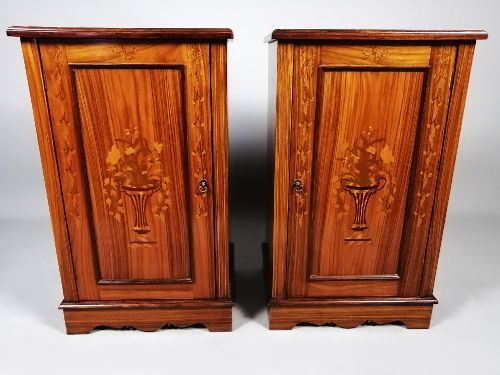
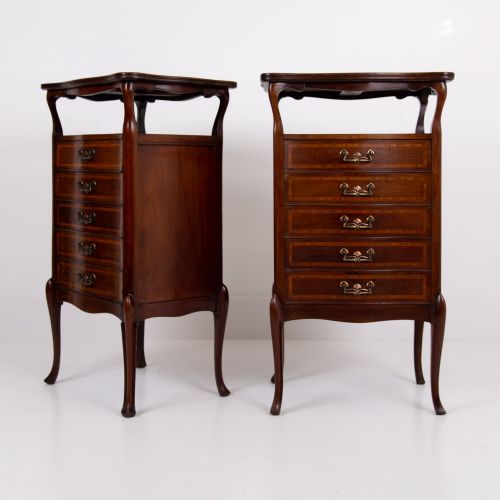
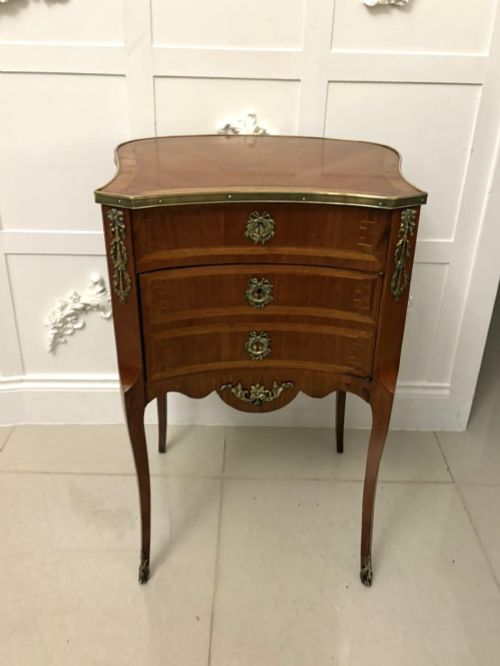
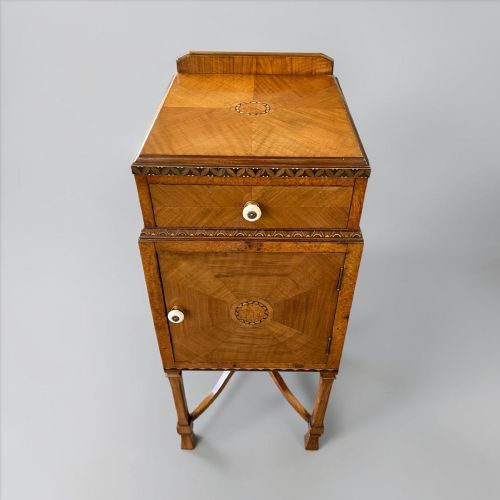

Brown Inlaid Bedside Cabinets
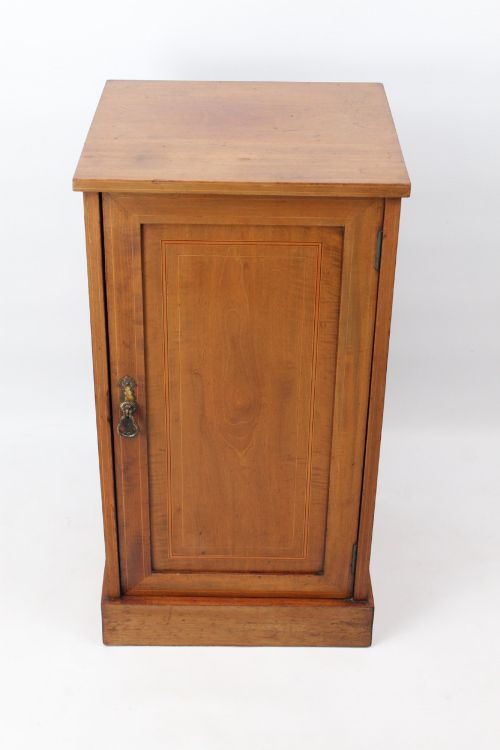
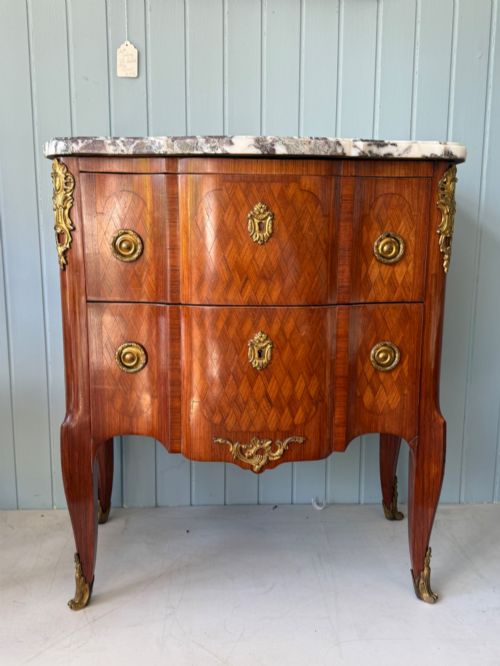
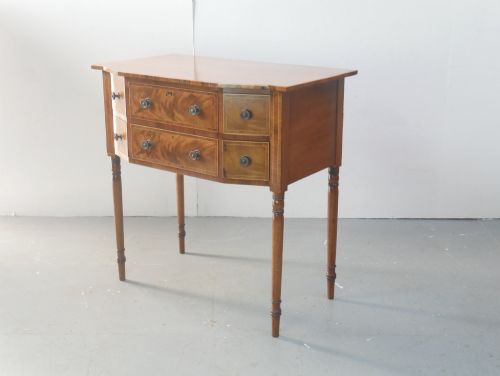
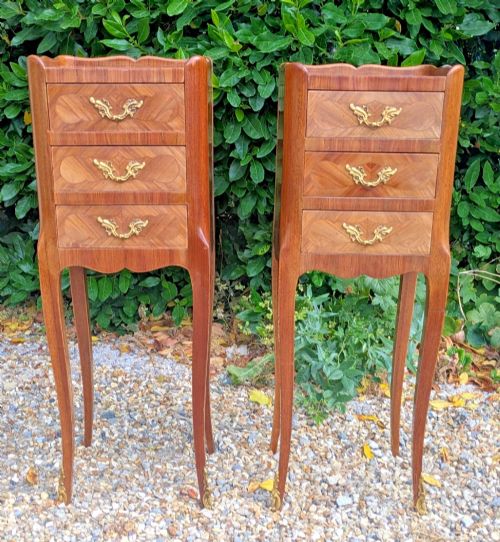
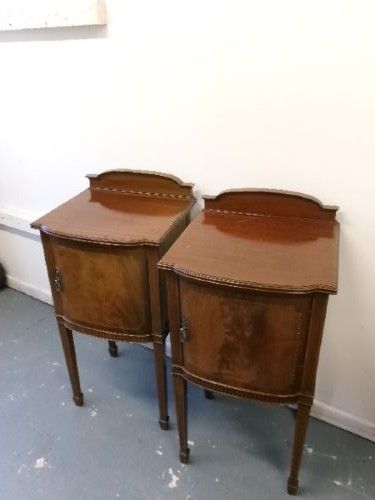
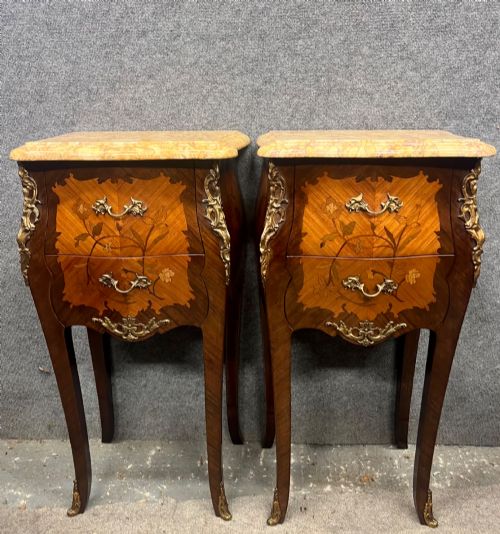
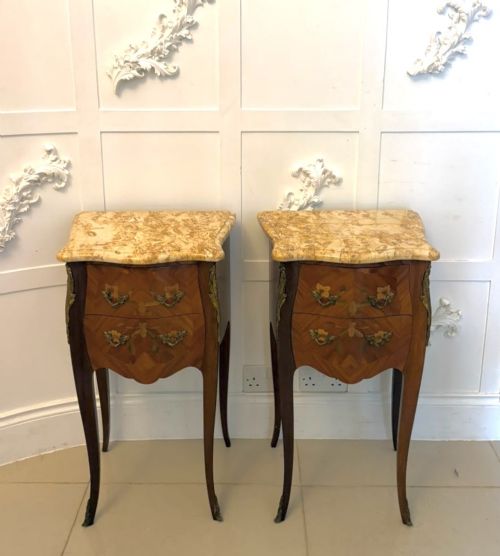
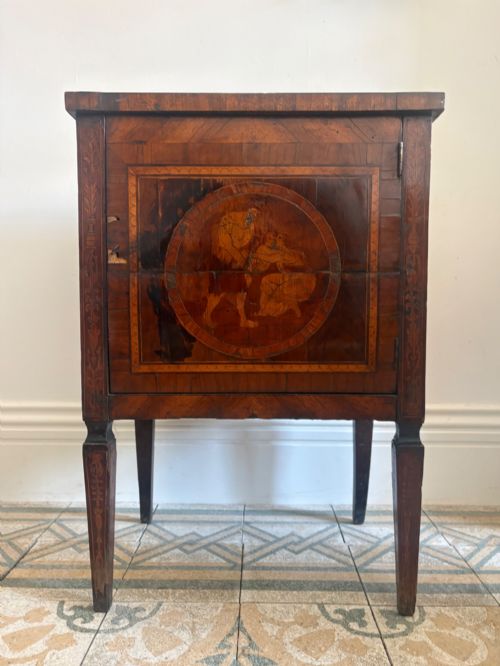
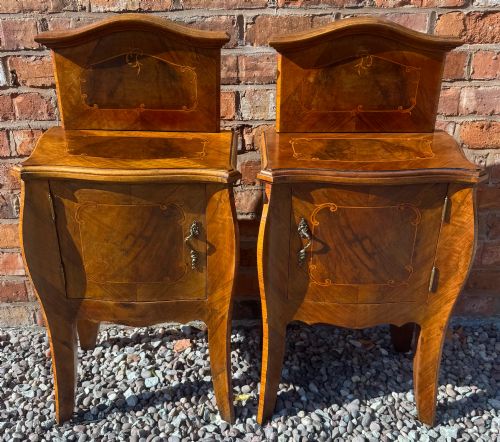
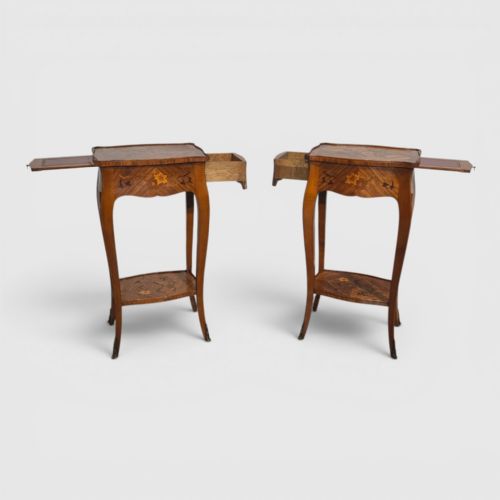
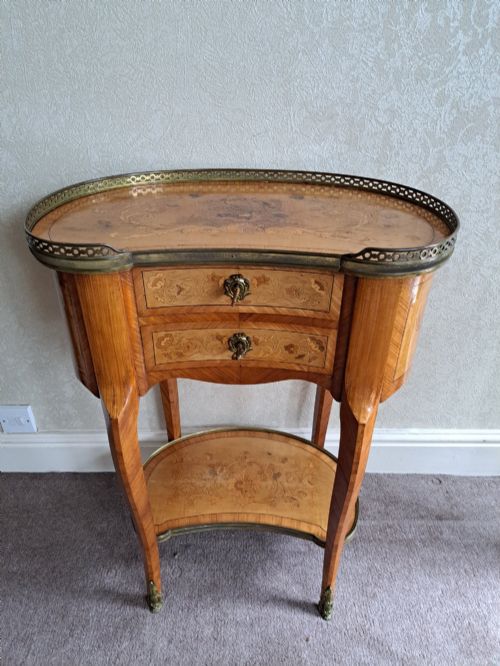
These brown inlaid bedside cabinets bring timber variety and careful marquetry details directly to the bedside.
Brown Inlaid Bedside Cabinets
Brown inlaid bedside cabinets encompass a range of compact bedroom storage forms, from Victorian cupboards and Edwardian chests to French commodes and lamp tables. The pieces found here span the eighteenth, nineteenth, and early twentieth centuries, reflecting diverse periods such as Georgian, Victorian, Edwardian, and Art Deco. Buyers seeking these items will encounter various configurations including single cupboards, open tables, and drawer units.
Mahogany, walnut, and rosewood form the primary bodies of these cabinets, frequently paired with lighter decorative timbers. Many examples originate from English workshops following Sheraton revival styles, or from continental makers employing French Louis XV and Louis XVI designs. The selection leans heavily towards pairs, particularly in Edwardian mahogany and French kingwood marquetry formats.
How they were made
Cabinet makers utilised solid timbers and applied veneers of mahogany, walnut, kingwood, satinwood, and rosewood over foundational woods. Surfaces were then enriched with contrasting floral or geometric marquetry and parquetry patterns, set into the timber using precise hand-cutting techniques.
Metal components such as brass handles, mounts, and ormolu details were integrated to accent the woodwork and drawers. Certain continental pieces incorporate fitted marble tops, requiring careful masonry work to sit flush upon the wooden frames.
Some nineteenth-century mahogany cabinets were built to double as discreet shoe storage alongside their primary bedside duties.
What varies in quality
The sophistication of the inlaid marquetry and parquetry defines the upper tier of these pieces, distinguishing simple linear stringing from intricate, multi-timber floral pictorial work. Wood selection also dictates grade, with figured flame mahogany, rich rosewood, and dense kingwood commanding greater regard than plain timbers.
Construction precision separates standard utility pieces from finer items, visible in the tightness of the drawer dovetails, the symmetry of matched pairs, and the quality of supplementary brass or ormolu mounts. The inclusion of original marble tops and intact fitted interiors further separates standard output from superior examples.
Sormani·Heals
The Brown Inlaid Bedside Cabinets Glossary
- Marquetry
- Decorative veneer work forming pictorial or geometric patterns using various coloured woods. It differs from parquetry by creating complex pictures rather than repeating tile arrangements.
- Parquetry
- Geometric mosaic woodwork used for repeating patterns on tabletops and cabinet doors. This technique utilises small wooden blocks to form parquet surfaces.
- Ormolu
- Gilt bronze mounts applied to furniture edges and feet during the eighteenth and nineteenth centuries. This decorative metalwork originates mainly from French cabinet-making traditions.
- Serpentine
- A gently undulating curved furniture front shape popular in Georgian and revival designs. This profile softens the rectangular geometry of bedside cabinets.
- Commodo
- A decorative chest of drawers or cabinet originating from continental Europe. These pieces often feature prominent curved legs and elaborate marquetry.
Brown Inlaid Bedside Cabinets: Frequently Asked Questions
Are these cabinets sold as pairs?
Many of the listings on this page consist of matched pairs, particularly among Edwardian mahogany and French kingwood styles. Single cabinets also appear frequently for buyers needing only one bedside table.
Pairs usually share identical dimensions, timber grains, and marquetry motifs, though slight variations can occur in antique pieces due to hand-crafting methods.
What periods do these cabinets represent?
The selection spans from the eighteenth century through the Victorian and Edwardian eras up to the nineteen-thirties. Revival styles also feature prominently, notably Sheraton revival and French Louis XV.
Earlier pieces typically display Georgian or late eighteenth-century proportions, while later examples incorporate Art Deco influences or early twentieth-century production techniques.
What timbers were used for the inlays?
Cabinet makers used lighter contrasting woods such as satinwood to create marquetry details against darker background timbers. Rosewood, walnut, and mahogany frequently serve as the primary body materials.
Detailed panels often incorporate multiple exotic and native timbers to achieve shaded floral and geometric compositions across the cabinet doors and drawer fronts.
Do these cabinets have marble tops?
A selection of the continental pieces, particularly French kingwood commodes and bedside tables, feature fitted marble tops. These stone slabs add weight and a smooth surface for bedside use.
Wooden top alternatives remain standard for English mahogany and walnut cabinets from the Victorian and Edwardian periods.