
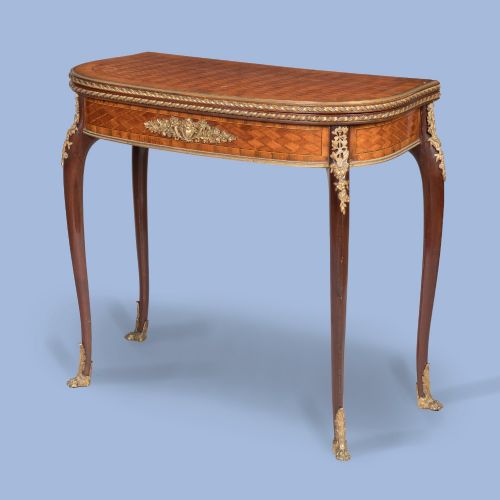
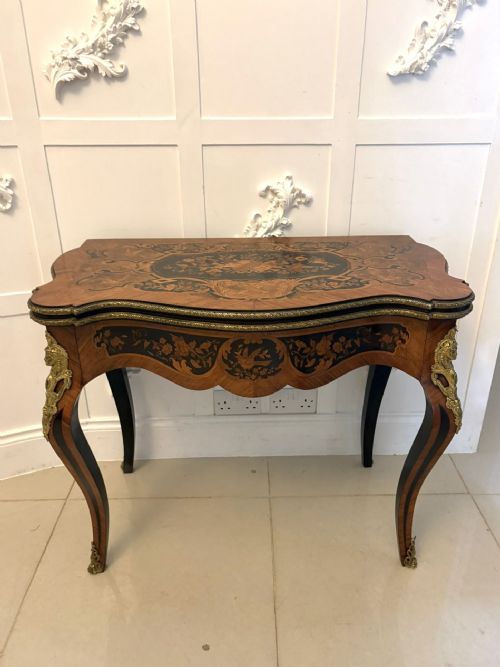


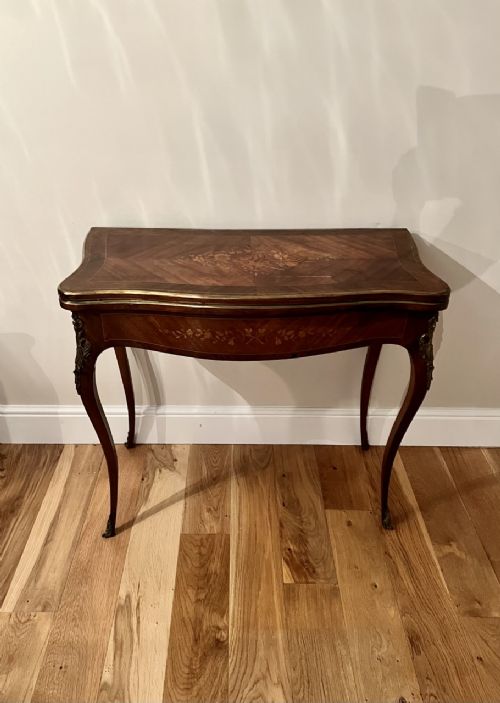


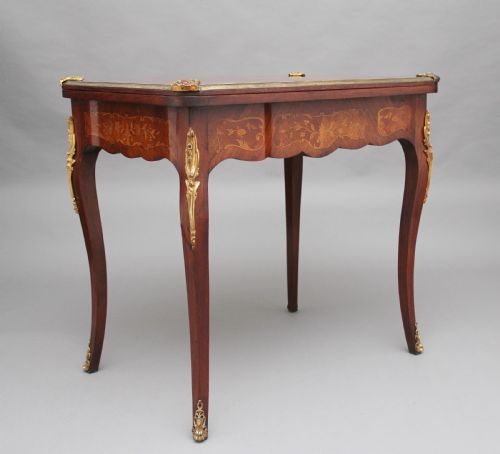
French Kingwood Games Table
A french kingwood games table brings the fluid elegance of continental revival design straight into a reception room.
French Kingwood Games Table
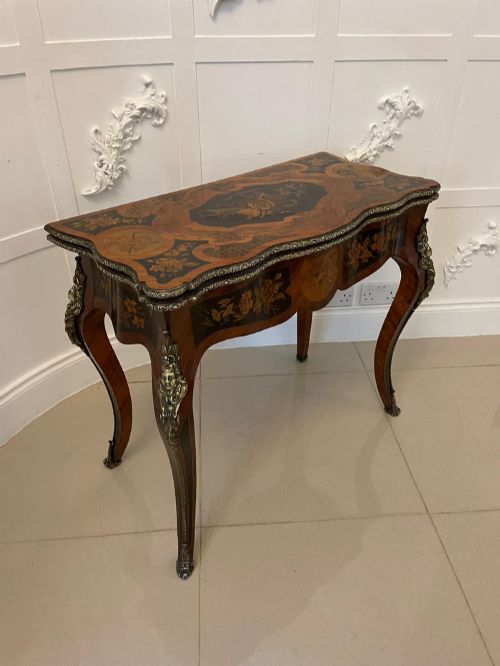
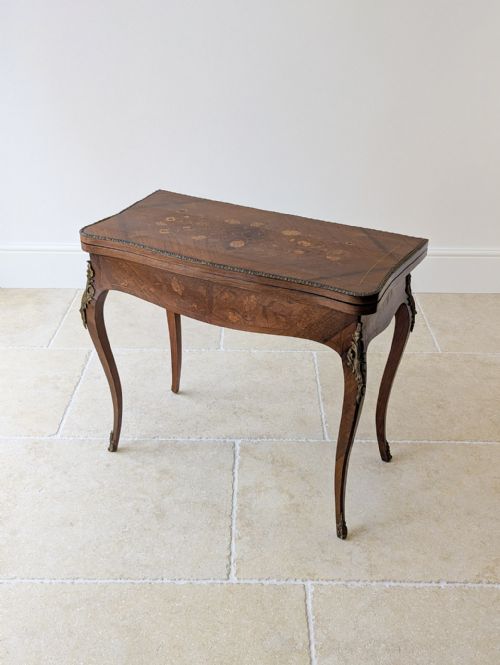
A french kingwood games table combines practical surface utility with decorative finesse, typically appearing as a folding card table or multi-purpose games surface from the nineteenth century. These pieces emerge predominantly in the nineteenth century, spanning Victorian interpretations and continental revivals.
Makers and workshops constructed these tables in card table and console forms, heavily influenced by Louis XV and Louis XVI styles. The surviving examples showcase the enduring appeal of French Rococo revival aesthetics in British and European homes.
How they were made
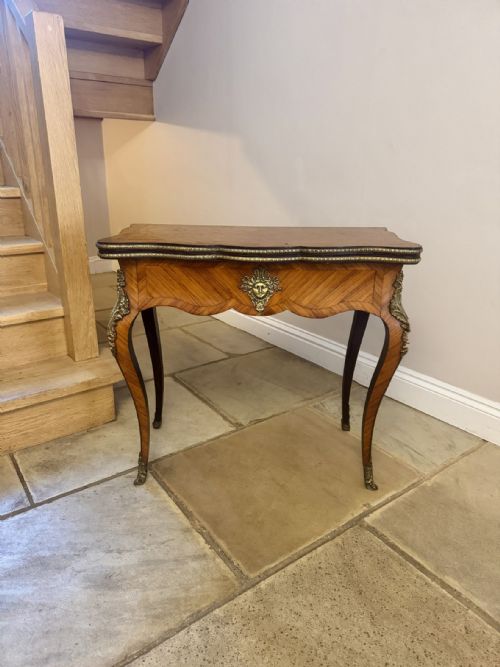
Cabinet makers utilised kingwood as the primary veneer, often pairing it with rosewood and walnut across cross banded and marquetry inlaid surfaces. Timber preparation required precise cutting to achieve complex geometric parquetry patterns and floral marquetry designs.
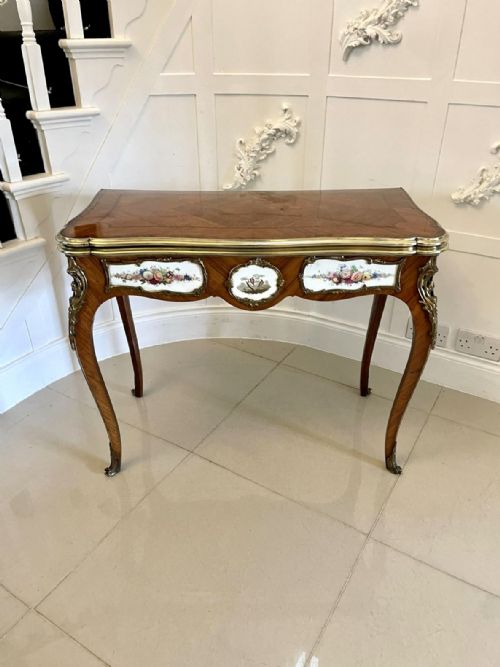
Ormolu and gilt bronze mounts define the structural edges, while brass details accent the hinges and friezes. Certain exhibition pieces incorporate porcelain plaques into the mounted framework.
Listings feature 19th Century, Victorian, 1860, 1850, 1890, and 1900 periods, constructed in kingwood, ormolu, brass, rosewood, gilt bronze, wood inlay, porcelain, and walnut.
What varies in quality
The sophistication of the timber inlay and the crispness of the ormolu mounts separate standard production from exhibition grade work. Finer pieces demonstrate meticulous hand-chasing on the bronze mounts and seamless alignment of the wood grain across folding surfaces.
Attribution to documented makers such as François Linke or Henry Dasson elevates a piece, reflecting superior workshop standards and refined proportions within the Louis XV manner.
G T Morant·François Linke·Joseph-Emmanuel Zwiener·Henry Dasson·J Duval
The French Kingwood Games Table Glossary
- Kingwood
- A dense, heavily figured Brazilian timber prized for its rich brown colour and striking dark violet streaks. Cabinet makers selected it for high-status veneer work throughout the nineteenth century.
- Ormolu
- Gilded bronze used for decorative mounts, feet, and edging on revival furniture. Skilled artisans chased the metal surface by hand after casting to achieve sharp detail.
- Marquetry
- The art of forming decorative patterns using thin veneers of various woods applied to a carcase. Makers used contrasting timbers like rosewood and walnut to create floral and geometric scenes.
- Parquetry
- Geometric wood inlay forming repetitive patterns such as cubes or chequers across the table top. This technique showcases the precision of the nineteenth century workshop.
- Cross banding
- A border technique where veneer strips run perpendicular to the main grain of the table top. It frames the central marquetry panel with a contrasting stripe.
French Kingwood Games Table: Frequently Asked Questions
How do I use a antique games table?
These tables feature folding or rotating tops that open to reveal a baize-lined surface for cards or board games. When closed, they function as side tables or console tables against a wall.
Position the table away from direct sunlight and heat sources to protect the delicate kingwood veneer and prevent the wood from drying out.
How should I care for kingwood veneer?
Maintain the polished finish by dusting lightly with a dry, soft cloth and avoiding silicone-based polishes. Keep room humidity stable to prevent movement in the timber carcase.
Treat the ormolu mounts with similar care, avoiding harsh chemical cleaners that can damage the historical gilding.
What is the difference between Louis XV and Louis XVI styles?
Louis XV revival pieces, common in nineteenth century games tables, feature asymmetrical curves, serpentine frames, and exuberant rococo mounts. Louis XVI style introduces neoclassical straight lines, symmetry, and architectural motifs.
Both styles utilise kingwood veneers, but the silhouette of the legs and apron reveals the specific design inspiration.