


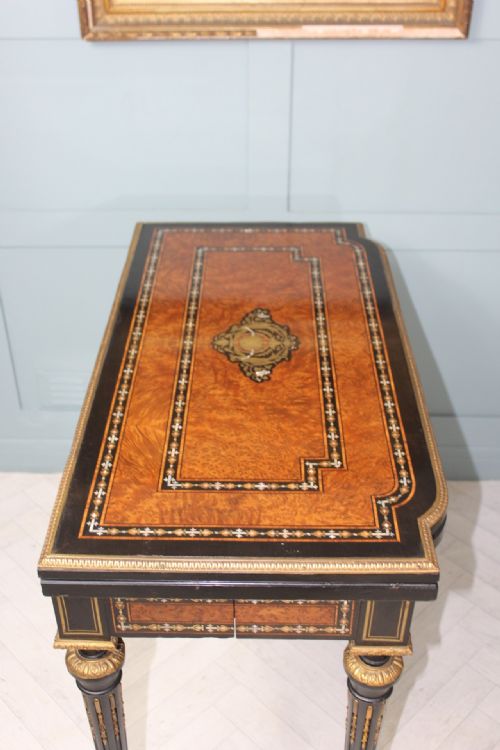


French Inlaid Card Table
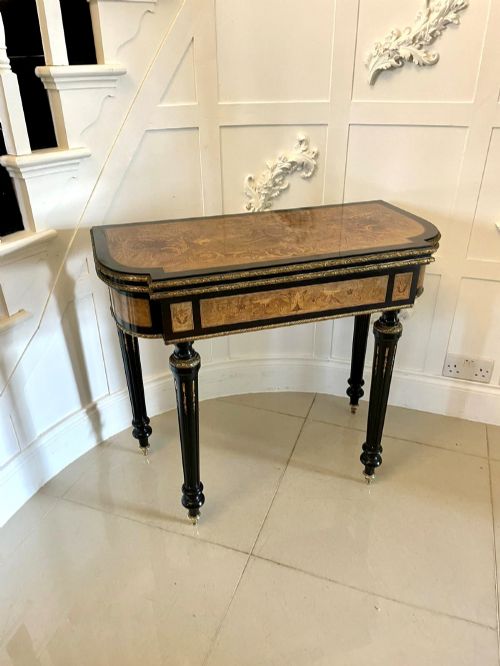
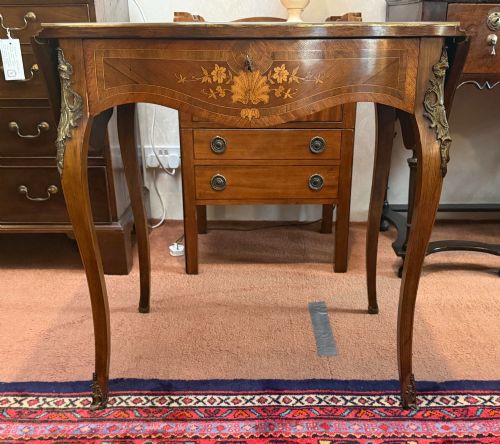
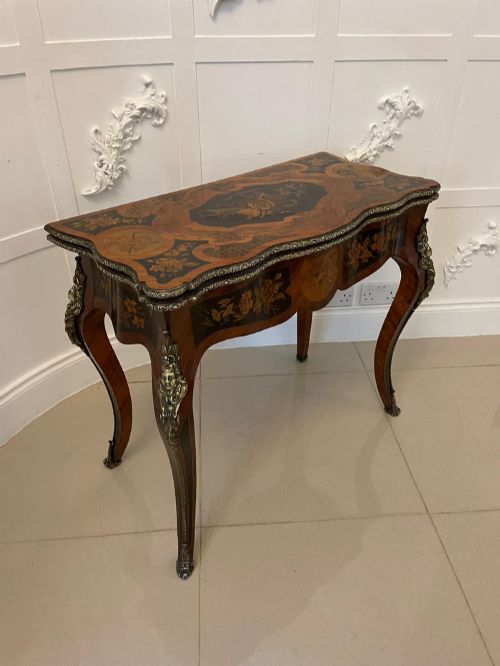
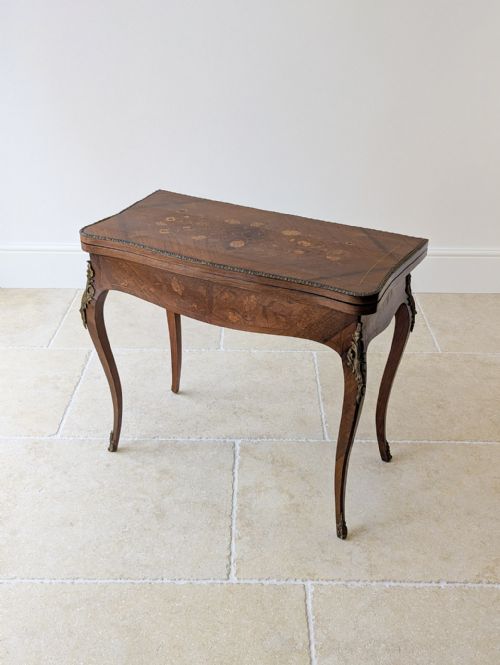
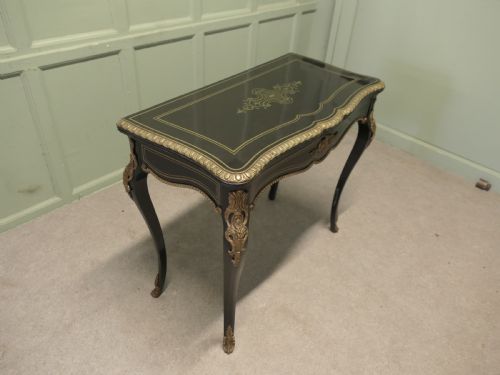
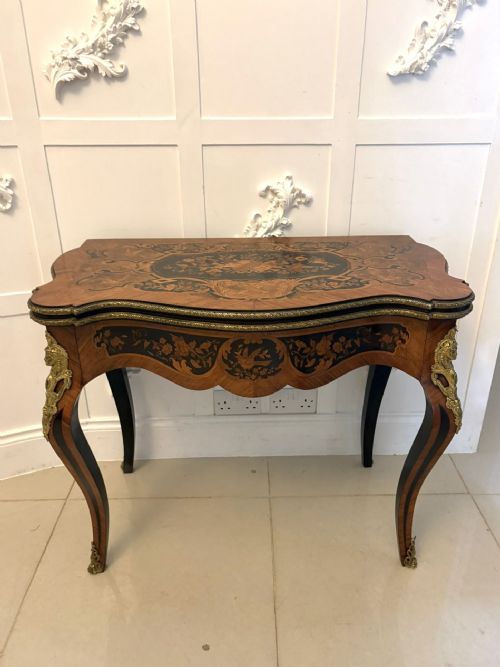
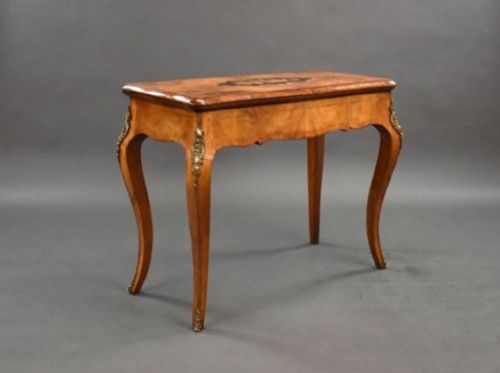
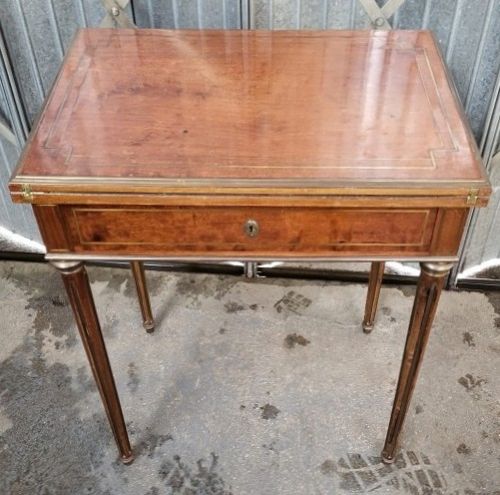
A french inlaid card table brings folding ingenuity and continental walnut, kingwood and ormolu into a drawing room.
French Inlaid Card Table
When a buyer searches for a french inlaid card table, they encounter versatile folding and swivel-top pieces designed for social games in the nineteenth century. The examples on this page span the Victorian era, the 1850s, 1860s, 1870s, 1880s, 1890s and 1900, alongside earlier 18th century pieces.
The most common forms are card tables, games tables, side tables and console tables executed in Louis XV style, Louis XVI style, French Rococo Revival and Napoleon III aesthetics. These pieces transition smoothly from compact console proportions to dual-purpose gaming surfaces when the top folds or pivots open.
Makers such as Maison Millet, Edwards & Roberts, Henry Dasson and François Linke appear in the record, showing the high level of cabinet-making applied to these domestic objects. Walnut, burr walnut, kingwood and ebonised wood form the carcasses for intricate wood inlay, marquetry, parquetry and brass detail.
Materials and construction
Cabinet-makers built the carcasses using solid walnut, burr walnut and ebonised wood, applying veneers of kingwood and exotic woods across the surfaces. Marquetry and parquetry inlays formed floral or geometric patterns, often enhanced with brass and mother-of-pearl detail.
Gilt-bronze ormolu mounts highlighted the curves of the apron and legs, following the contours of French Rococo and neoclassical revivals. The folding tops relied on pivoting wooden leaves or clever mechanical hinges to reveal baize-lined or polished playing surfaces.
Some tables hide mother-of-pearl details alongside wood inlay, catching the candle-light during late-night parlour games.
Assessing quality and execution
The standard of timber selection and the precision of the marquetry inlay set the better pieces apart from standard workshop production. Exhibition quality examples feature finely cast ormolu mounts, crisp wood veneers and substantial structural timber that keeps the folding mechanism true.
Makers known for signed or attributed pieces, such as Henry Dasson, Maison Millet and Edwards & Roberts, demonstrate superior hand- chiselled mounts and exact parquetry geometry. The depth of the brass and mother-of-pearl inlay further distinguishes the ambitious salon furniture from simpler domestic tables.
Maison Millet·Edwards & Roberts·Henry Dasson·Francois Linke
The French Inlaid Card Table Glossary
- Marquetry
- Decorative veneer work arranged in pictorial or floral patterns using various coloured woods. It requires precise hand-cutting of thin timber slices.
- Ormolu
- Gilt-bronze mounts applied to furniture edges and legs. This technique adds metallic contrast and sculptural definition to wooden surfaces.
- Parquetry
- Geometric wood inlay forming repeating patterns such as cubes or chequers. It differs from marquetry through its strict reliance on angled lines.
- Boulle
- Inlay technique combining tortoiseshell and brass. It takes its name from André-Charles Boulle and defines opulent 19th-century revival pieces.
- Kingwood
- A dense, richly grained exotic timber used extensively for French cabinet-making veneers. Its dark figuring creates contrast against lighter inlay woods.
French Inlaid Card Table: Frequently Asked Questions
How do these tables open?
Most pieces utilise a folding top that pivots on a hinge to reveal a polished wooden or baize-lined surface.
Some designs include a rear swing leg that moves out to support the opened leaf.
What woods were used?
Cabinet-makers relied on walnut, burr walnut and ebonised wood for the main structure.
Exotic timbers like kingwood provided the contrasting veneers for the intricate marquetry and parquetry.
How do I style a card table?
These pieces function well against a wall as a console or side table when folded shut.
Opening the top transforms the room into a sitting area ready for cards or board games.
What periods do they date from?
The pieces on this page originate primarily in the 19th century, covering the Victorian era and Napoleon III reigns.
Styles draw heavily on 18th-century French court aesthetics, particularly Louis XV and Louis XVI revivals.