
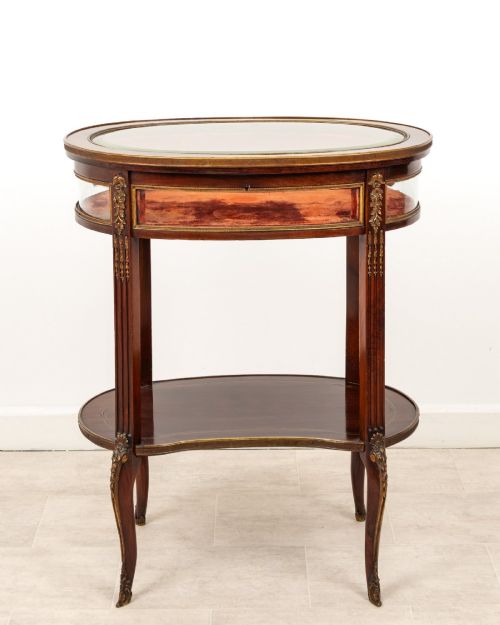
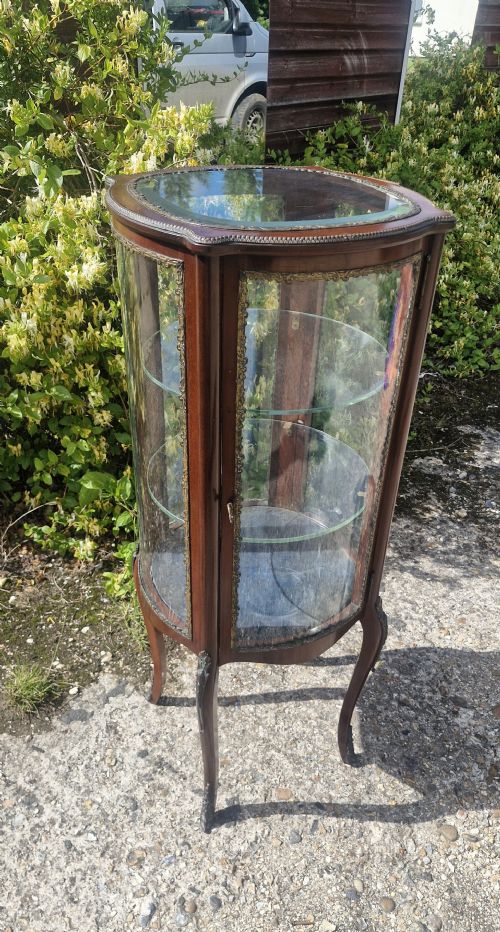


French Jewellery Display Table
A french jewellery display table brings the quiet theatre of the Parisian salon into the modern interior, designed specifically to showcase precious trinkets beneath glass.
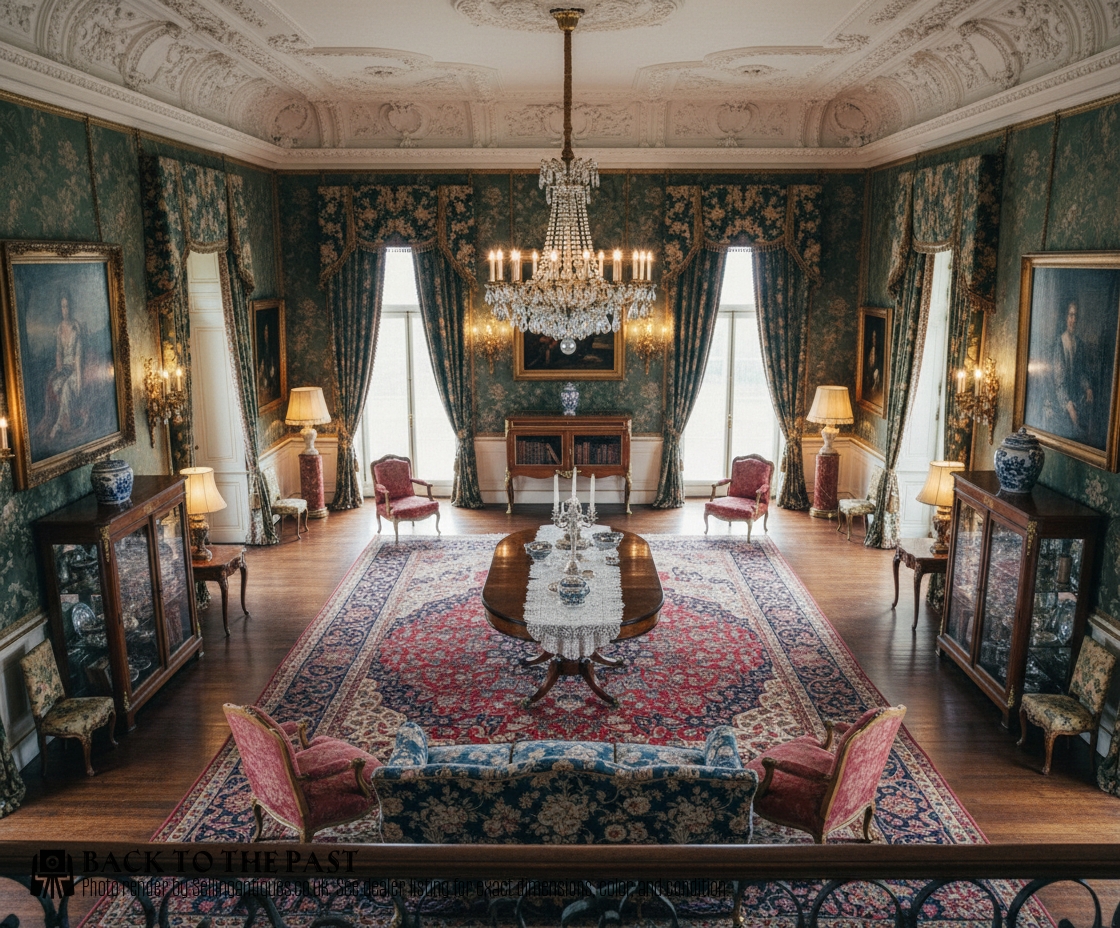
French Jewellery Display Table
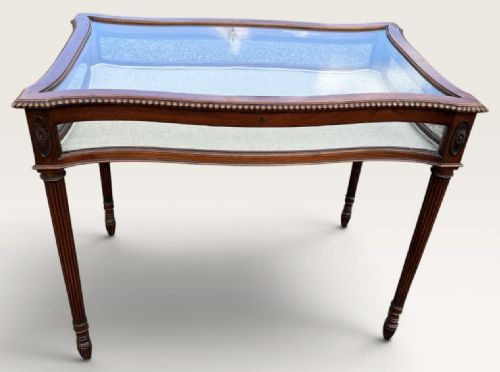
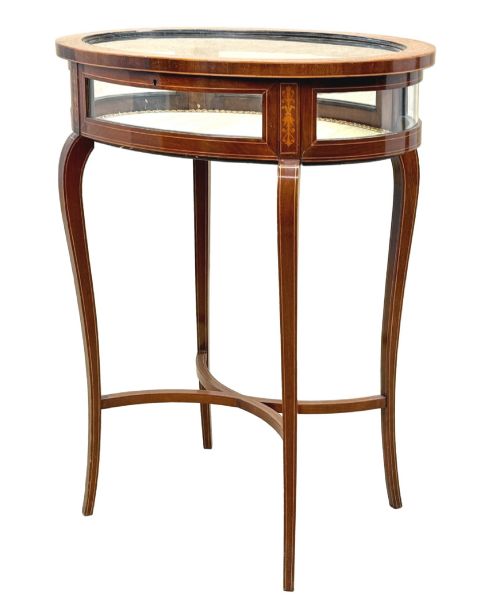
A french jewellery display table functions primarily as a glazed vitrine mounted on slender legs, created to present rings, medals and small valuables to the eye without requiring the cabinet door to open. These pieces emerge in forms such as oval, serpentine and heart-shaped tables, alongside freestanding cabinets.
The most common versions encountered here date from the nineteenth century, spanning Victorian and Edwardian revivals of Louis styles. They combine timber framing with hinged glass tops that lift or slide to grant access to a velvet-lined interior well.
Makers drew heavily on eighteenth-century design vocabulary, producing tables that bridge the gap between functional furniture and personal vitrines. They appear in private drawing rooms and collector chambers, serving both display and storage functions.
Construction and materials
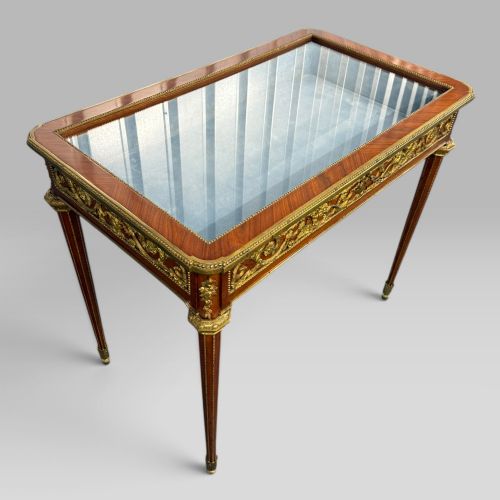
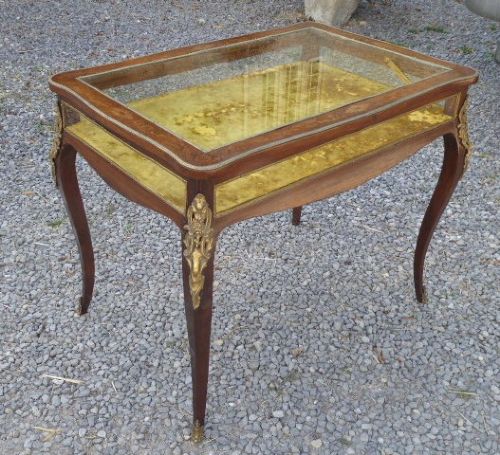
Makers constructed the primary carcase using dense cabinet timbers like mahogany, rosewood and kingwood, frequently applying decorative marquetry or brass inlay. Ormolu and gilt-bronze mounts decorate the corners, legs and aprons, cast in intricate rococo or neoclassical patterns.
Glazing forms the central working element of the top, fitted securely into timber or brass frames above a lined compartment. Fabric and velvet provide the traditional floor covering inside the display well, cushioning the objects exhibited.
Mahogany and kingwood dominate the timber selections across the site's listings, frequently paired with gilt-bronze or ormolu mounts.
Assessing craftsmanship
Quality rests significantly in the weight and crispness of the gilt-bronze or ormolu mounts, where hand-chasing distinguishes superior castings from mechanical reproduction. Timber selection also dictates grade, with figured mahogany and complex kingwood marquetry marking out the more ambitious workshops.
Structural rigidity in the slender leg frames determines long-term stability, particularly where heavy glass tops exert downward pressure. The precision of the mitres, the smoothness of the hinge action and the depth of the wood polish separate standard production pieces from exceptional examples.
François Linke
The French Jewellery Display Table Glossary
- Bijouterie table
- A specialised display table featuring a glazed top and a shallow velvet-lined compartment designed for small precious objects and jewellery. These pieces were developed specifically to exhibit collections within domestic rooms.
- Ormolu
- Gilded bronze applied as decorative mounts to furniture frames and corners. The technique involves creating a mercury gilding on cast bronze, producing a deep metallic lustre.
- Marquetry
- Inlaid patterns of contrasting veneers assembled to create geometric or floral designs across the timber surface. Artisans cut thin slices of various woods to fit jigsaw-like into the primary ground.
- Vitrine
- A glass-fronted or glass-topped cabinet used for displaying curiosities and ornaments. In the context of display furniture, it shares characteristics with the bijouterie table.
- Serpentine
- A curved furniture outline that undulates with a convex centre flanked by concave ends. This contour appears frequently on the rims of high-status display tables.
French Jewellery Display Table: Frequently Asked Questions
What did people put in these tables?
Owners used these surfaces to exhibit pocket watches, portrait miniatures, rings and delicate medals within easy reach of seated guests. The glazed compartment protected fragile items from dust while keeping them visible.
Such items formed part of the broader Victorian and Edwardian culture of private collection and display. The tables acted as physical conversation pieces in the drawing room.
How do I clean the velvet inside?
Dust accumulation inside the glazed well requires careful removal using a soft brush or low-suction attachment without disturbing the fabric lining. Moisture must be kept entirely away from antique textiles and timber joints.
Harsh cleaning agents will ruin historic fabric and strip the polish from surrounding wood. Gentle preventative maintenance preserves the interior lining for years to come.
Are these tables sturdy enough for daily use?
Most examples rely on slender cabriole or tapered legs designed to support display weight rather than heavy physical loads. Placing everyday items on top of the glass risks scratching the surface or stressing the frame.
They function best when positioned away from high-traffic walkways where accidental knocks might occur. Treating them as display furniture rather than utility tables ensures their structural longevity.
How can I tell a Victorian piece from an Edwardian one?
Victorian examples often favour denser rosewood and mahogany with heavier ormolu mounts and deep, dark polish finishes. Edwardian interpretations tend towards lighter mahogany framing, subtle marquetry and more restrained neoclassical lines.
Revival styles overlapped considerably during these decades, making timber choice and mount quality more reliable guides than date alone. Comparing the secondary woods beneath the frame often clarifies the era of manufacture.