

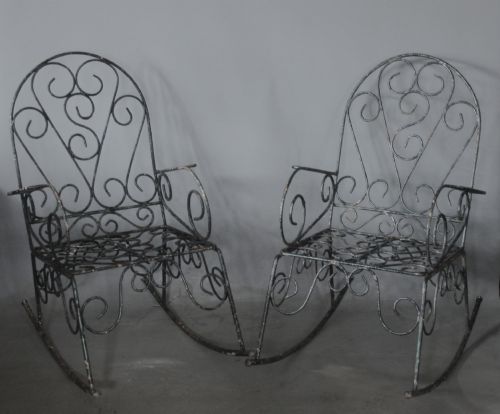
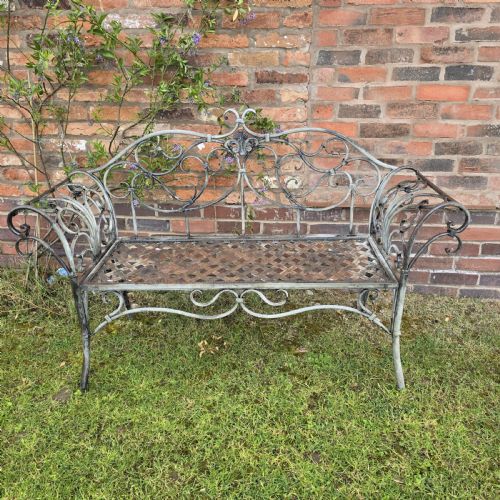


French Iron Garden Seat
A french iron garden seat brings enduring metalwork to lawn and terrace, offering a sturdy perch shaped by decades of weathering.
French Iron Garden Seat
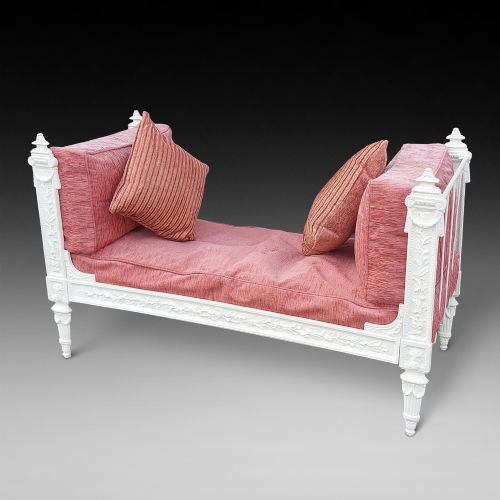
A french iron garden seat encompasses forms ranging from modest armchairs and folding chairs to substantial benches, daybeds, and complete dining or bistro sets. These pieces emerge from periods spanning the nineteenth century through the decades of the early twentieth century, including Victorian, Edwardian, and regional French styles.
The most common examples encountered in this category are garden benches and paired chairs rendered in cast iron, wrought iron, or wirework. They often appear alongside related outdoor furnishings such as tables, rocking chairs, and conservatory seating.
Originating for practical use in gardens, parks, and terraces, these metal seats combine utility with decorative metalwork. Collectors find them in various states of preservation, from weathered painted surfaces to bare metal.
Materials and construction
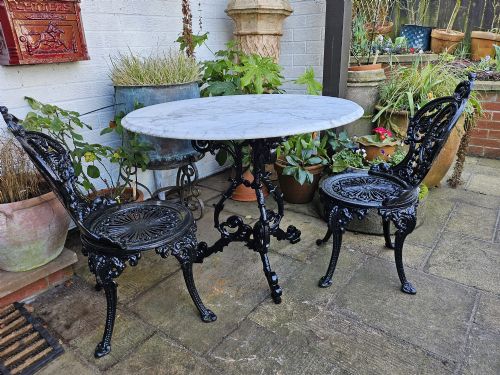
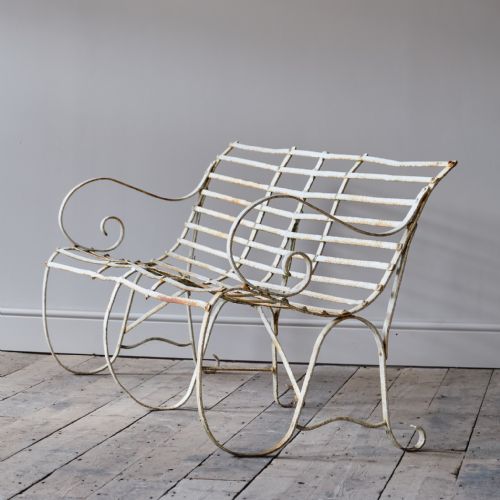
Makers utilised cast iron for intricate decorative components and sturdy frames, pouring molten metal into moulds to create detailed motifs such as gothic arches or scrollwork. Wrought iron and steel were shaped by hand through heating and bending to form strap work, armrests, and supportive structures.
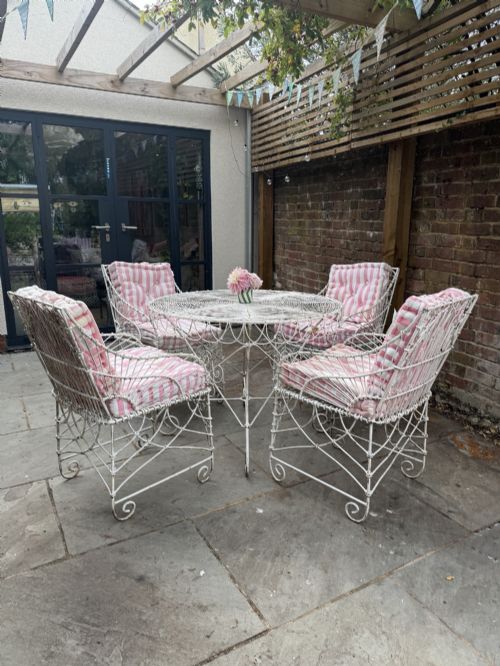
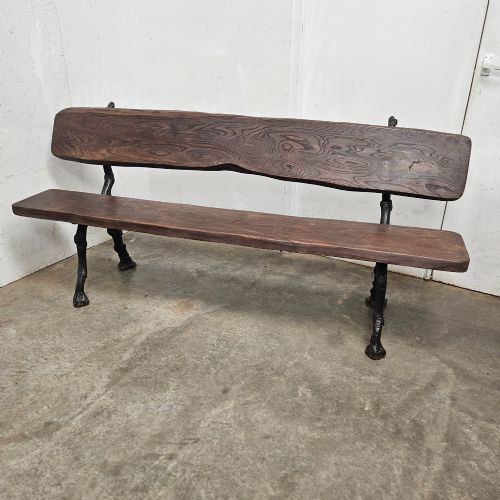
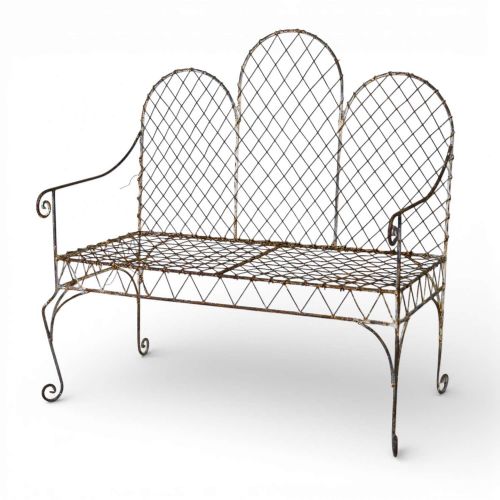
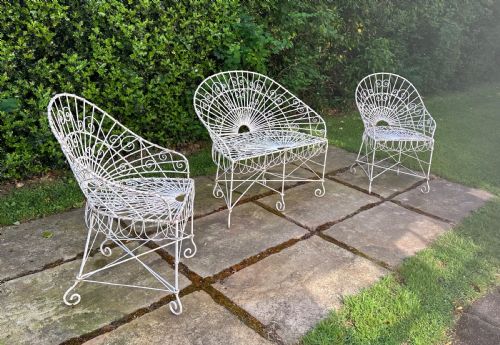
Wirework construction involved bending and twisting metal wires into geometric patterns, frequently employed for arbours and lighter seating. Elm and marble occasionally supplemented the metal framework in specific bench seats and table tops.
Surface finishes typically involved layers of paint applied to protect the metal from the elements. Over time, weathering produces flaking and patination across these painted layers.
Assessing quality in metal garden furniture
Quality rests in the crispness of the casting and the complexity of the smith's work, where finer pieces display intricate detailing such as gothic tracery or refined scroll work rather than plain industrial casting. The structural integrity of the joints, whether riveted, bolted, or forged, dictates the piece's durability.
The integrity and history of the surface finish contribute significantly to the character of a piece. Original layers of paint that have weathered naturally hold greater appeal than modern repainting, provided the underlying metal remains sound.
Proportion and form differentiate standard utility seating from masterworks of foundry design. Matching sets and documented foundry patterns command greater interest among collectors.
Val D osne
The French Iron Garden Seat Glossary
- Cast iron
- Iron melted and poured into a mould to create rigid forms. This technique allowed nineteenth-century foundries to mass-produce intricate garden benches with ornate relief patterns.
- Wrought iron
- Iron heated and worked by hand with hammers and anvils. Unlike cast iron, it bends rather than snaps under sudden stress, making it suitable for strap work and scroll designs.
- Wirework
- Metal wires bent, woven, and joined to form lightweight garden furniture and arbours. This technique gained popularity during the Victorian era for its airy appearance.
- Faux bois
- Imitation of wood grain rendered in metal or concrete. In garden seats, iron was sometimes shaped or painted to mimic natural timber branches.
- Arras
- A style of French metal garden furniture associated with a specific manufacturing tradition in northern France. Pieces from this origin often feature distinctive construction and foundry marks.
French Iron Garden Seat: Frequently Asked Questions
How do I protect my seat outdoors?
Iron and steel furniture withstands outdoor conditions naturally, though continuous exposure to moisture accelerates oxidation. Placing the seat on paving rather than directly on damp soil helps prevent excessive rust at the base of the legs.
Applying protective wax or suitable metal coatings can slow down weathering if the piece retains valuable historic paint. Many owners choose to store lighter pieces or wirework indoors during harsh winter months.
Can I leave original paint on iron furniture?
Original painted surfaces provide historical context and aesthetic character that collectors value. Flaking paint can often be stabilised with appropriate conservation products rather than stripping the entire piece.
If rust threatens the structural stability of the metal beneath, targeted treatment of affected areas preserves the surrounding historic finish without resorting to a total repaint.
How do I distinguish cast iron from wrought iron?
Cast iron exhibits thicker profiles with sharp decorative relief details formed in moulds, but the material is brittle under sharp impacts. Wrought iron shows hammer marks, fibrous textures, or visible grain, and consists of thinner bars bent into scrolls and straps.
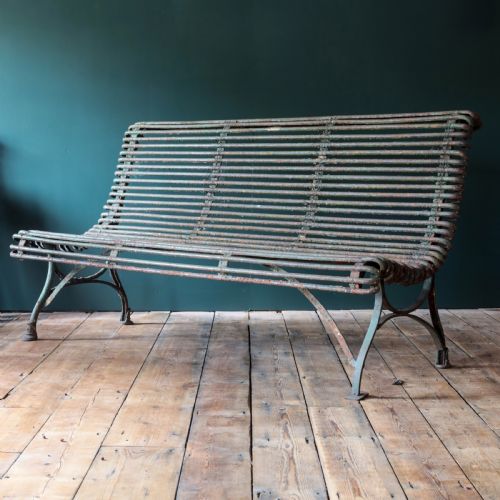
Many nineteenth-century garden seats combine both techniques, using cast iron for decorative bench ends and wrought iron or steel for the supporting stretchers and slats.
Are wirework pieces strong enough for daily use?
Victorian wirework furniture was engineered to support weight despite its delicate appearance, utilising tension and crossed wire arrays for strength. However, rusted or broken joints compromise this structural integrity over time.
Checking the welded or twisted intersections ensures the piece remains safe for sitting rather than serving purely as a decorative garden focal point.