
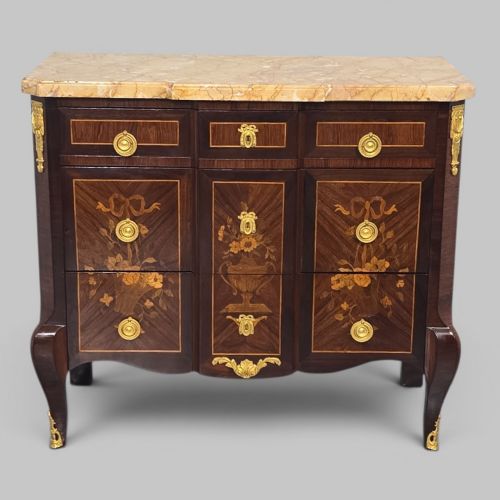
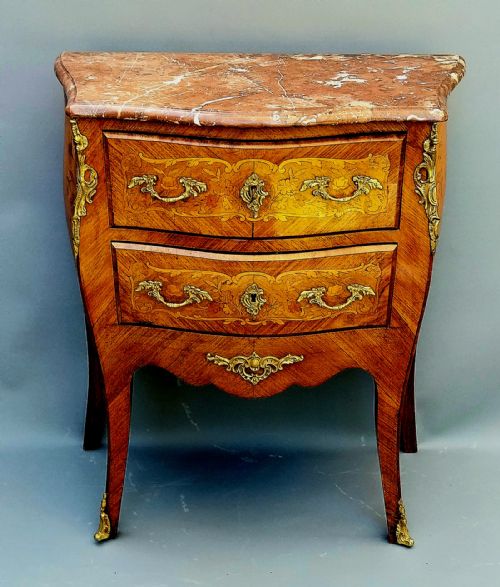


French Inlay Cabinet Drawers
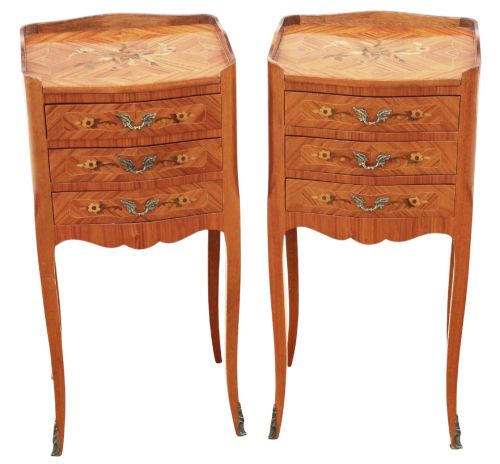
French inlay cabinet drawers bring together walnut, kingwood and marble in bedside tables and commodes built for display and storage.
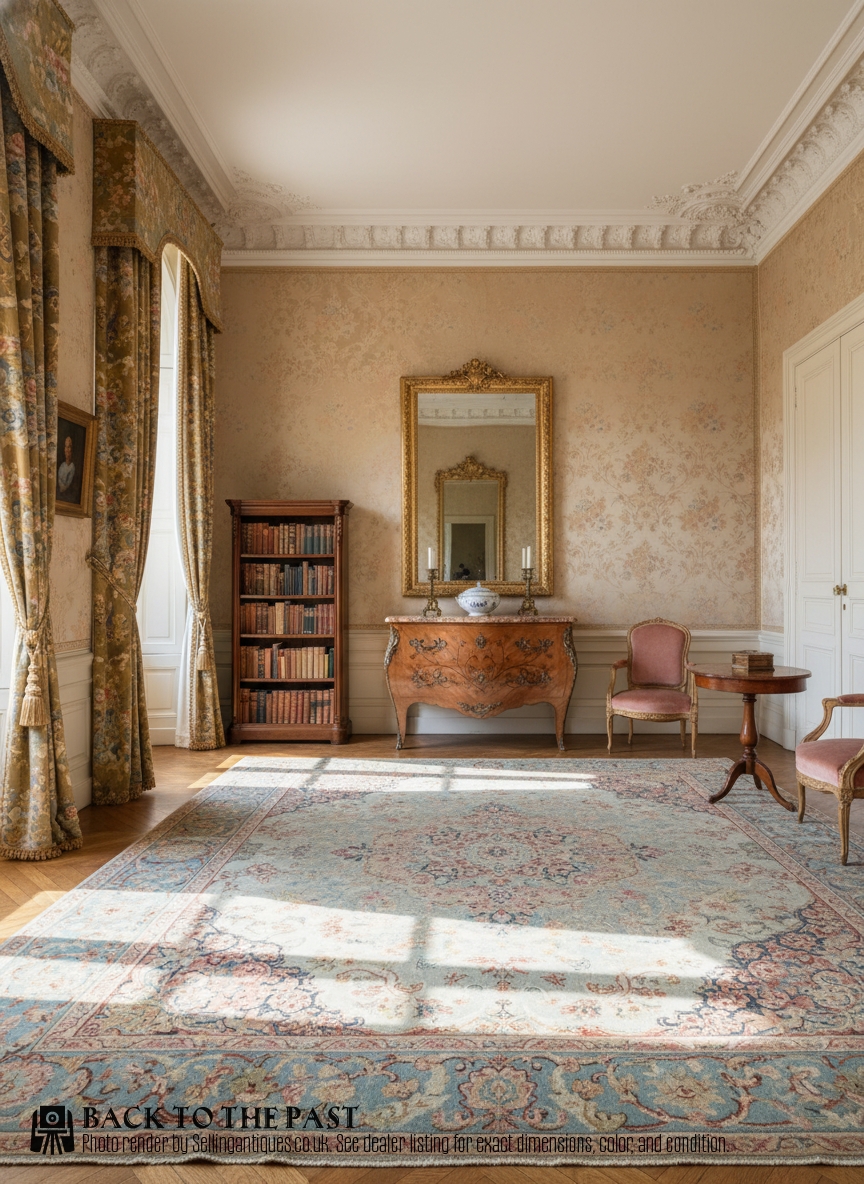
French Inlay Cabinet Drawers
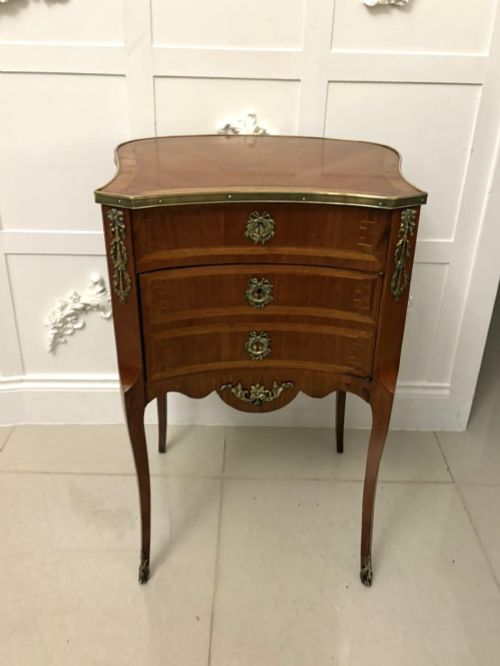
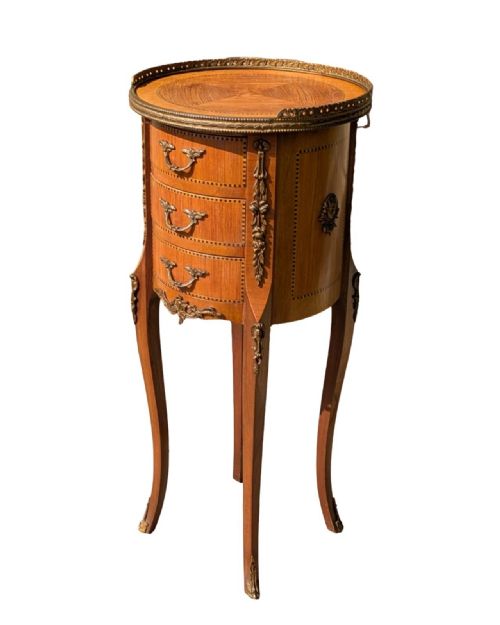
When you search for french inlay cabinet drawers, you encounter a range of forms spanning from the eighteenth century to the early twentieth century. The selection leans heavily towards practical bedside tables, compact cabinets, and larger commodes with fitted drawers.
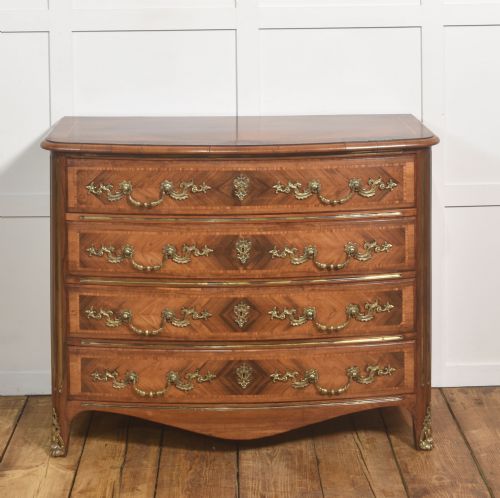
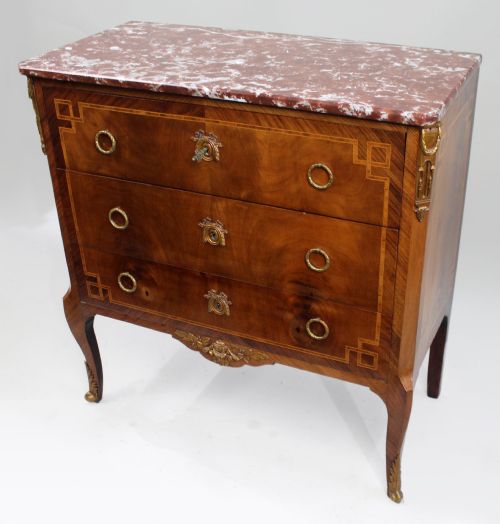
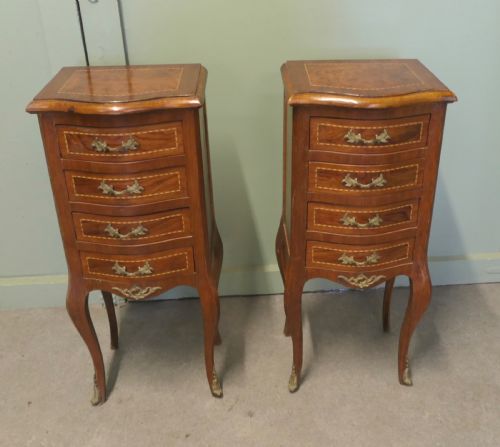
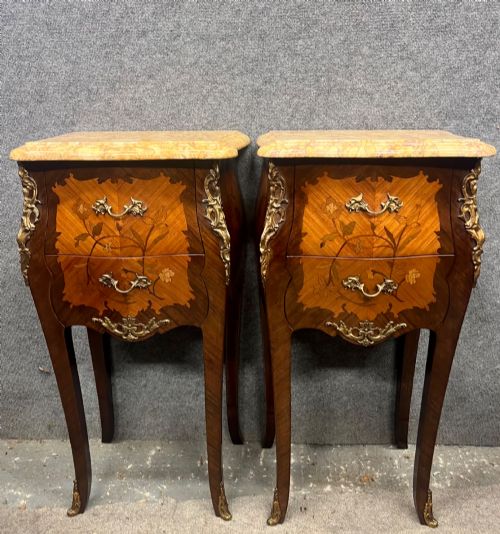
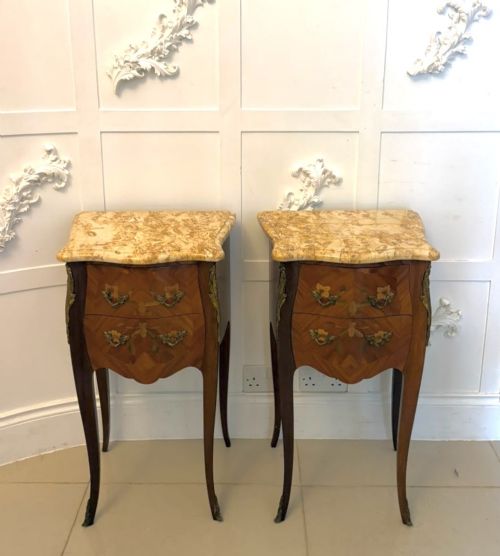
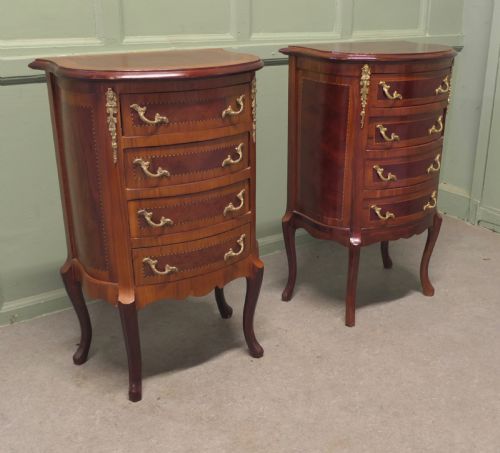
Most examples originate from the nineteenth and early twentieth centuries, drawing heavily on Louis XV and Louis XVI revival aesthetics. Pieces appear in various formats, including serpentine chests, bombe shapes, and tall side lockers designed for domestic use.
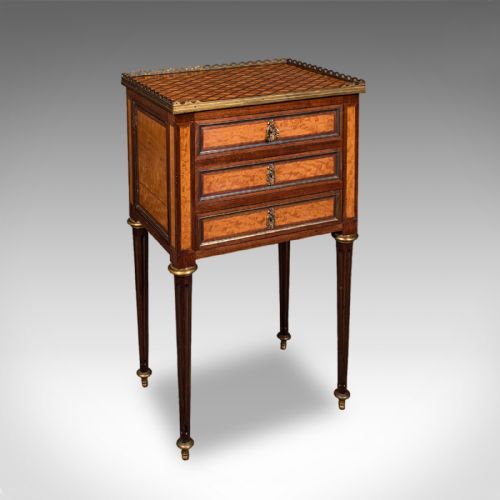
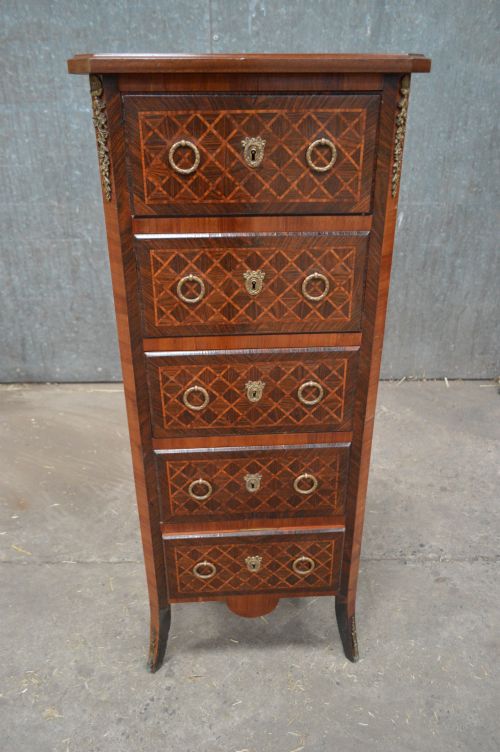
Alongside smaller lamp tables and bedside chests, you find taller secretaire desks and multi-drawer semaniers. The overriding focus remains on storage units that incorporate decorative wood surfaces and detailed upper slabs.
Materials and Technique
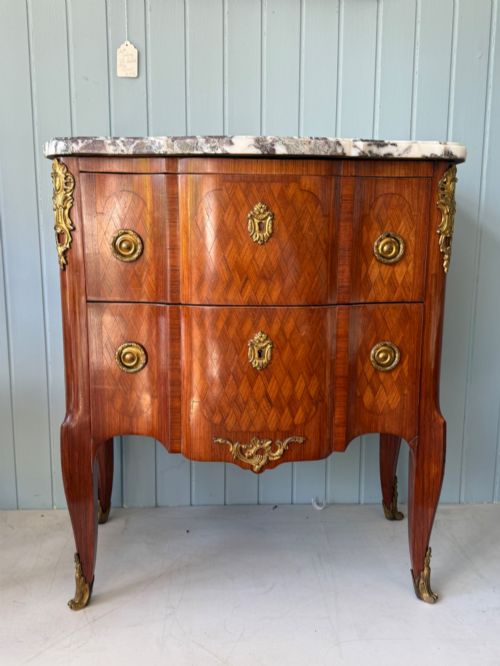
Cabinet makers utilised a rich palette of hardwoods including walnut, kingwood, rosewood, mahogany, fruitwood, and cherrywood to construct the carcase and drawer structures. Marquetry and parquetry techniques allowed artisans to cut and fit contrasting veneers into intricate floral or geometric patterns across the drawer fronts and sides.
Many pieces incorporate polished marble tops in shades like rouge, secured above the operational drawers. Cast brass and ormolu mounts, handles, and escutcheons are frequently applied to accent the corners, drawer edges, and keyholes.
Listings span from the 18th century through the 1930s, featuring walnut, kingwood, marble, and brass.
Distinctions in Standard
The degree of refinement in the floral marquetry and parquetry patterns separates standard production from exceptional examples. Finer pieces display crisp, tight joints in the veneer work and meticulous alignment across multiple drawer fronts.
The quality of the secondary materials, such as heavy cast ormolu mounts and substantial marble slabs with clean bevelling, distinguishes the upper tier. Structural integrity in the timber carcase and smooth movement within the drawer housing further define the better specimens.
Maison Krieger
The French Inlay Cabinet Drawers Glossary
- Marquetry
- Decorative veneer work arranged in pictorial or floral patterns. Artisans cut thin slices of different timbers to compose complex designs across flat surfaces.
- Parquetry
- Geometric veneer work forming repeating patterns such as cubes or chevrons. This technique provides durable and visually structured surfaces on cabinet tops and drawer fronts.
- Ormolu
- Gilt-bronze mounts applied for decorative and protective purposes. These metallic elements highlight the structural lines and corners of the furniture.
- Bombe
- An outwardly bulging or convex shape characteristic of certain commodes and bedside cabinets. This swelling profile requires advanced woodworking skill to execute properly.
- Commode
- A low chest of drawers designed for domestic storage. These units frequently feature marble tops and elaborate veneer work.
French Inlay Cabinet Drawers: Frequently Asked Questions
What are french inlay cabinet drawers?
These items are storage furniture pieces featuring decorative wood veneers and fitted drawers, predominantly built in France.
They encompass bedside tables, commodes, and side cabinets originating across several centuries.
How were marble tops used?
Stone slabs were fitted directly onto the upper surface of commodes and bedside cabinets to provide a durable, wipeable finish.
This addition protected the underlying woodwork while adding weight and a contrasting colour to the design.
How do I identify a revival style?
Revival pieces borrow the sweeping lines, cabriole legs, and symmetrical ormolu mounts associated with earlier royal courts.
Nineteenth and twentieth-century makers reinterpreted these historical motifs for contemporary domestic interiors.
How should I care for veneer?
Keep wooden surfaces away from direct heat sources and strong sunlight to prevent the underlying adhesives from drying out.
Dust gently with a dry cloth and avoid excessive moisture on the marquetry and parquetry details.