
Bronze Mounted French Commode
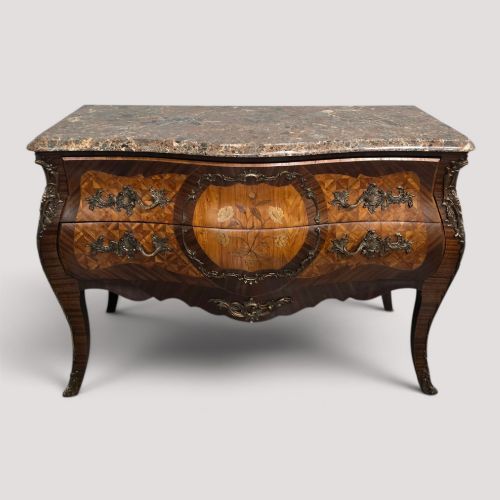
A bronze mounted french commode brings exceptional craftsmanship and sculptural metalwork into a room.
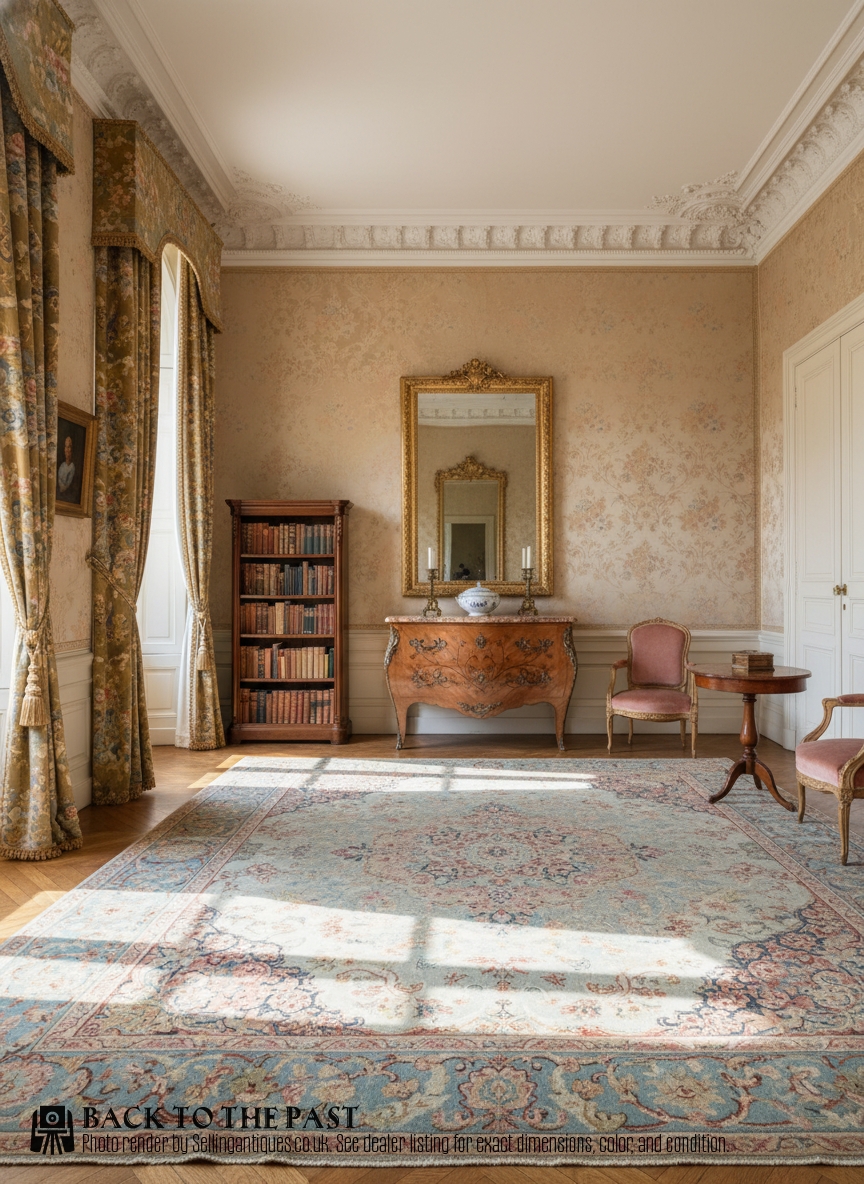
Bronze Mounted French Commode
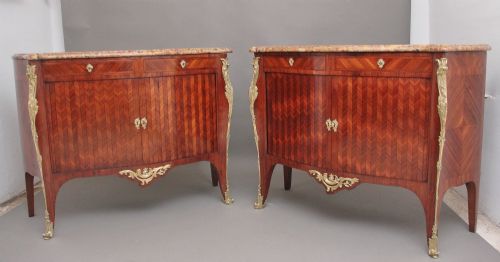
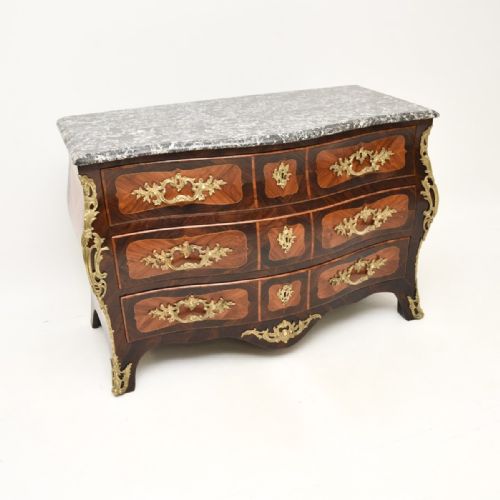
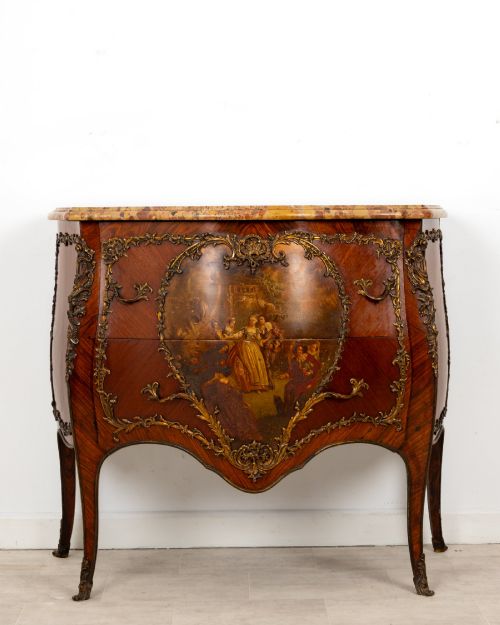
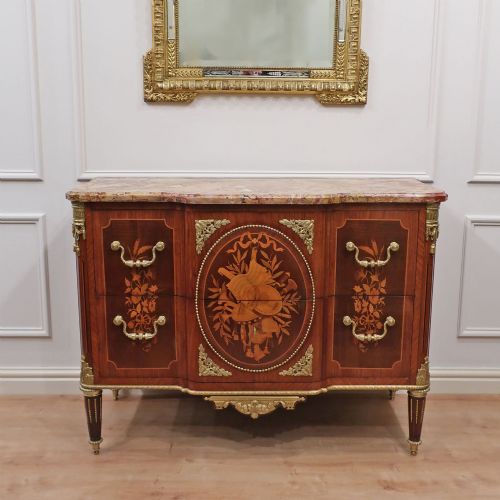
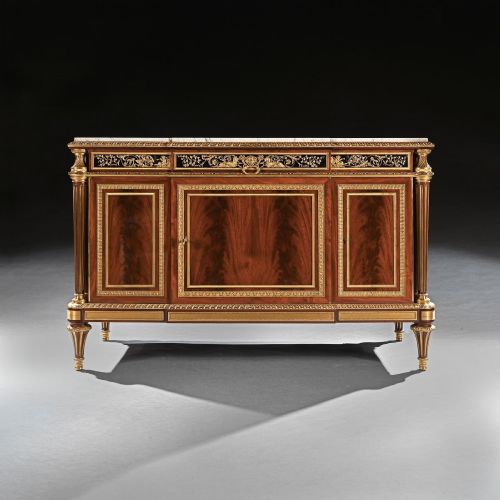
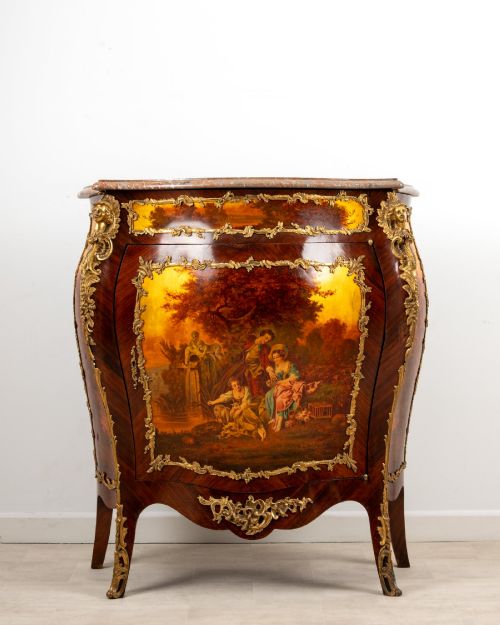
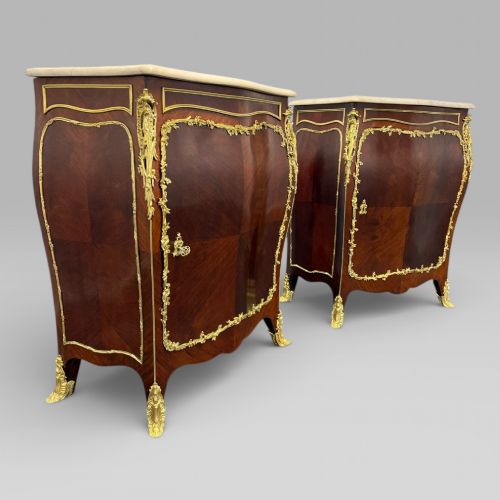
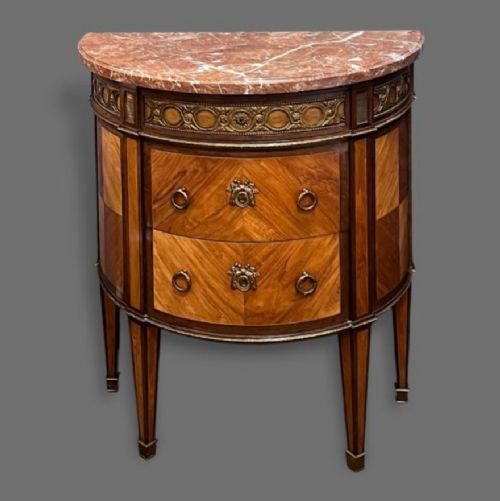
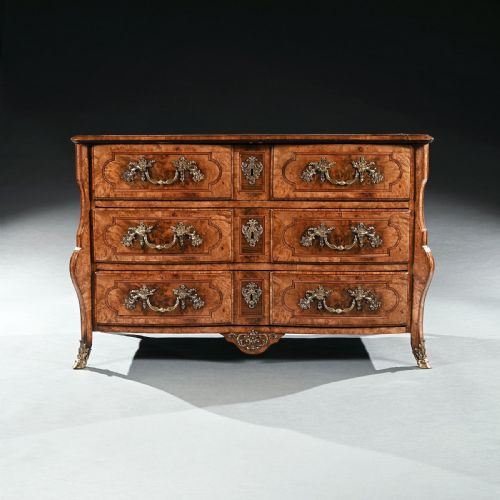
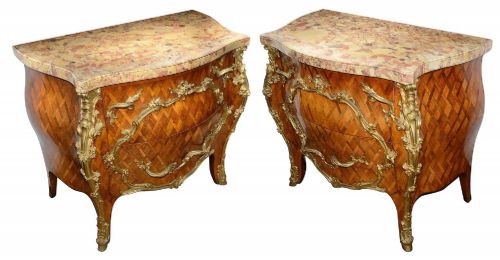
A bronze mounted french commode is a substantial storage piece designed with decorative metal mounts, often featuring drawers or cupboards accessed through finely constructed carcases. These pieces appear frequently across the eighteenth and nineteenth centuries, taking forms from serpentine shapes to bombé profiles and demi-lune chests.
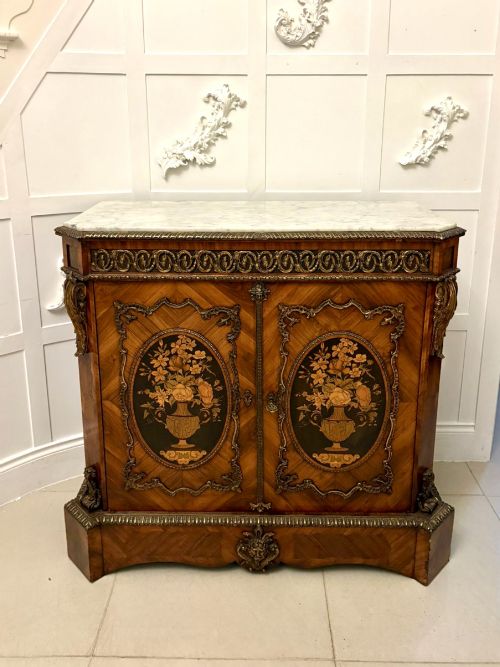
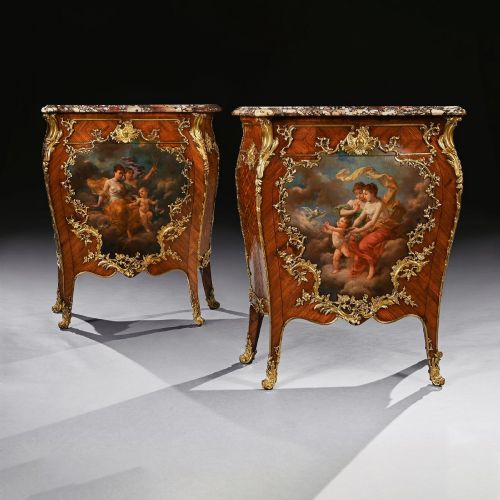
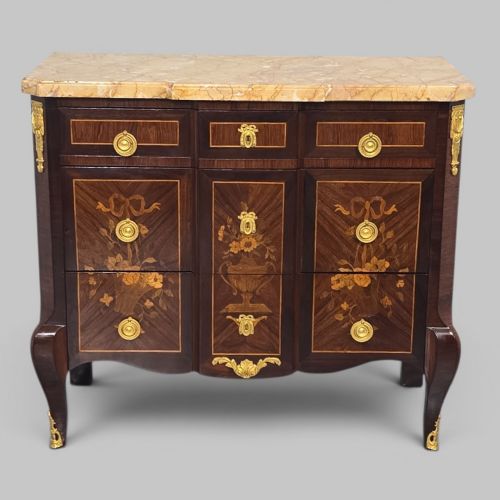
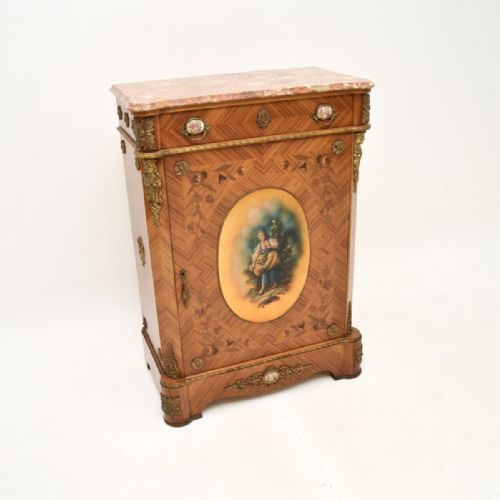
The versions most commonly met on this page belong to the Louis XV and Louis XVI styles, alongside nineteenth-century revivals created in Paris workshops. Alongside full-sized chests, buyers will encounter smaller bedside tables, miniature chests, and side cabinets sharing the same decorative vocabulary.
Origins trace directly to French cabinet-making traditions, incorporating regional outputs from makers in Grenoble alongside major Parisian workshops. The combination of fitted marble tops and elaborate mounts defines the visual identity of these items across every period represented.
Materials and construction methods
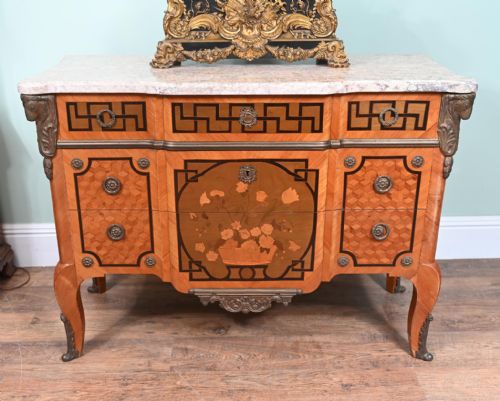
Carpenters constructed the primary carcase using foundational timbers such as mahogany, walnut, oak, and satinwood, applying decorative veneers including kingwood, rosewood, and burr maple in geometric parquetry or pictorial marquetry patterns. Vernis Martin painted finishes also appear on select cabinet surfaces.
Gilt bronze and ormolu mounts were cast, chased, and fire-gilt before being meticulously fitted to the angles, feet, and aprons of the commode. Heavy marble slabs, shaped to follow the contours of the chest, were then bedded onto the timber tops.
Several miniature chests are present, proving that even eighteenth-century master craftsmen loved making tiny versions of their biggest ideas.
Assessing quality and execution
The distinction between standard execution and masterwork production lies in the crispness of the gilt bronze chasing and the precision of the veneer work. Superior examples exhibit deeply articulated mounts that integrate seamlessly with the carcase contours.
Interior construction standards also separate the tiers, visible in the dovetailing of drawer boxes, the selection of secondary timbers, and the fluidity of movement in serpentine or bombé shapes. Pieces bearing the signatures of established makers reflect a higher degree of hand-finishing across every component.
Jacques Bircklé·Henry Dasson·E. Kahn·Thomas Hache·Jean-Henri Riesener·Paul Sormani
The Bronze Mounted French Commode Glossary
- Ormolu
- Gilded bronze used for decorative mounts and accents on furniture. The technique involves applying a mercury and gold amalgam to cast bronze before heating.
- Vernis Martin
- A simulated Japanese lacquer technique developed in eighteenth-century France by the Martin brothers. It produces a glossy, translucent painted finish on furniture panels.
- Bombé
- A swelling, convex outward curve found on the sides and fronts of commodes and cabinets. This baroque profile requires advanced veneer shaping and joinery skills.
- Marquetry
- The art of applying decorative pieces of veneer to a structure to form intricate patterns or pictures. Craftsmen use contrasting woods to create tonal depth.
- Parquetry
- Geometric wood inlay patterns arranged across furniture surfaces. Squares, triangles, and lozenges create repeating motifs without pictorial elements.
Bronze Mounted French Commode: Frequently Asked Questions
What is a bronze mounted french commode?
A bronze mounted french commode is a decorative chest of drawers or cabinet originating from France, distinguished by cast metal mounts of gilt bronze or ormolu.
These pieces typically combine fine wood veneers with marble tops, serving as both functional storage and decorative centrepieces.
How do I identify a Louis XV style commode?
Louis XV style pieces are characterised by asymmetric curves, cabriole legs, and elaborate rococo floral mounts in gilt bronze.
They frequently feature serpentine or bombé profiles that soften the overall rectangular mass of the cabinet.
How do I care for marble and ormolu?
Marble surfaces require regular dusting and immediate wiping of acidic spills to prevent staining the stone. Ormolu mounts should be cleaned gently with a dry, soft cloth without abrasive polishes that could damage the mercury gilding.