

French Inlaid Writing Table
A french inlaid writing table brings decorative warmth and practical surface area to a room.
French Inlaid Writing Table
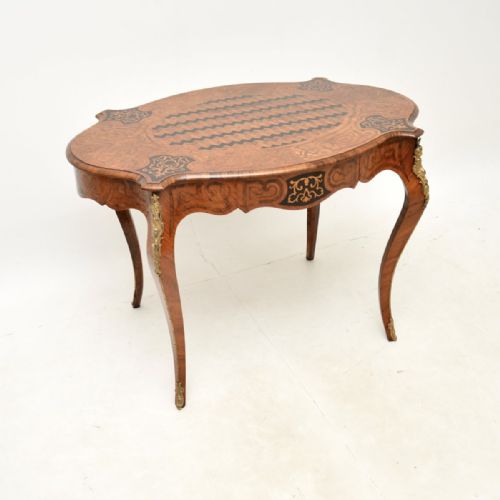
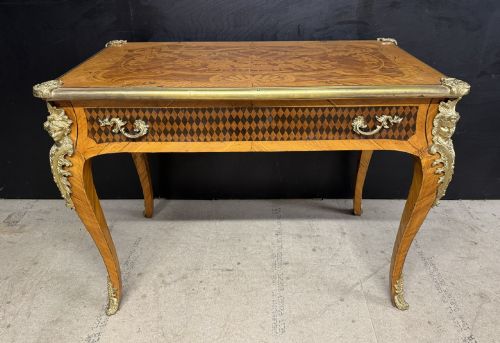
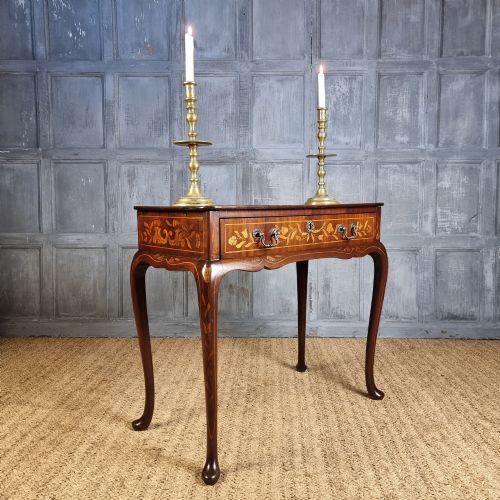
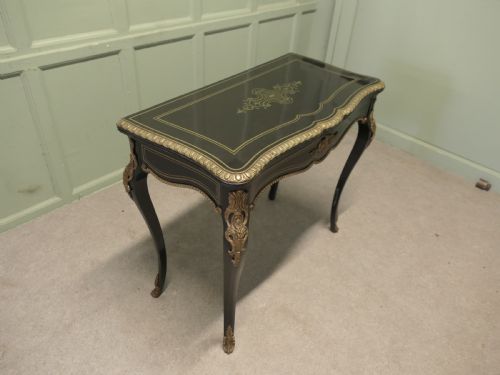
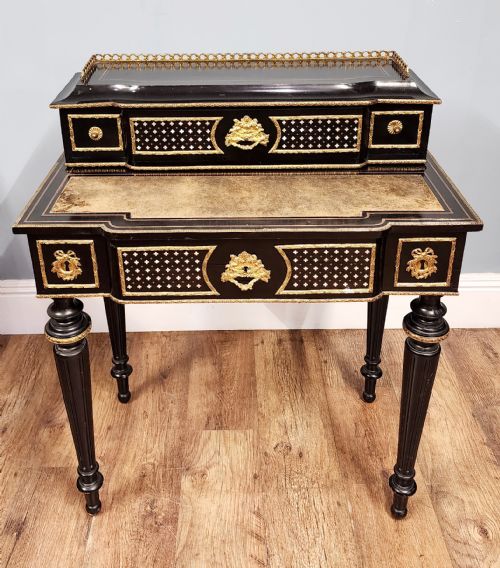
When you search for a french inlaid writing table, you encounter desks and freestanding centre tables originating from the nineteenth century, including Victorian interpretations and specific forms like the bureau plat, bureau de dame and bonheur-du-jour.
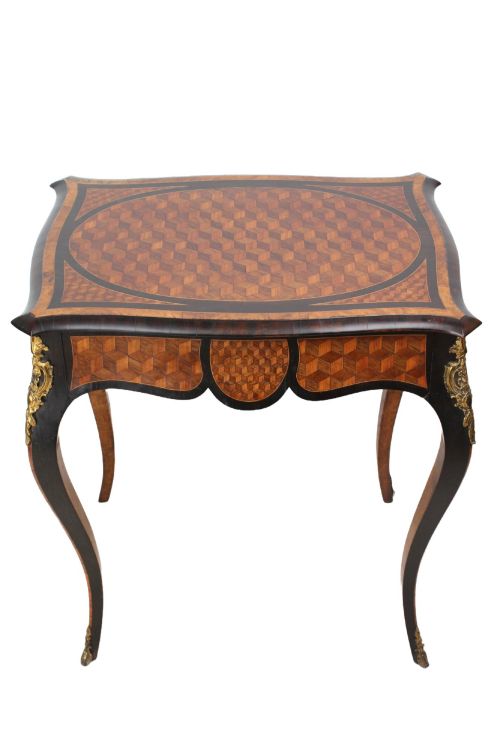
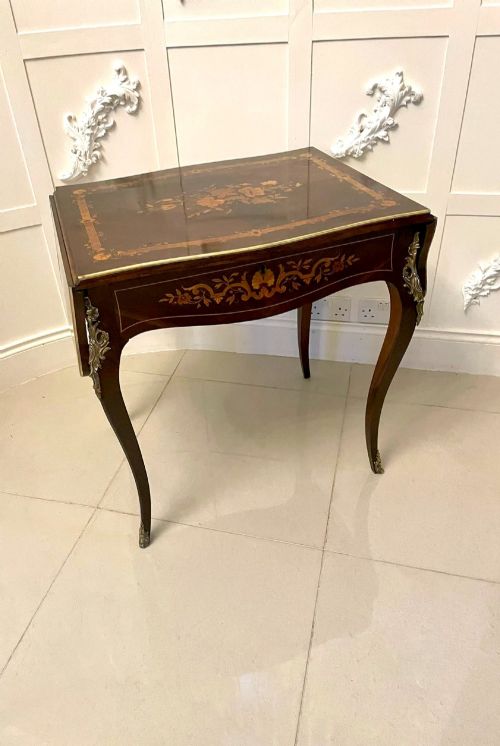
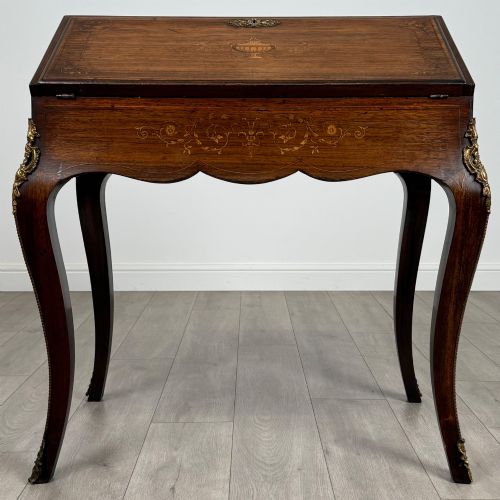
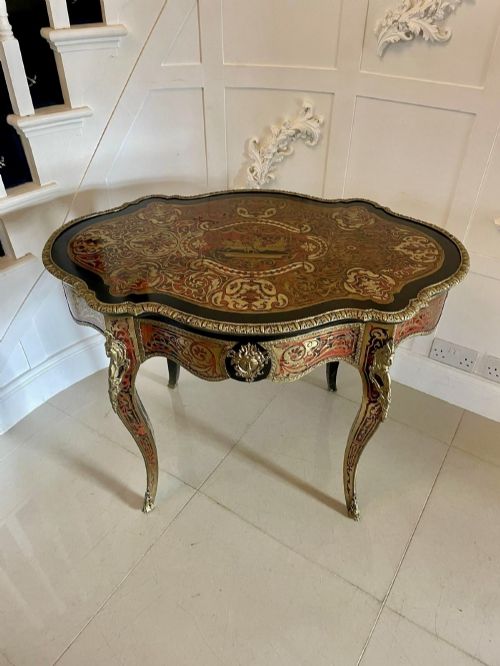
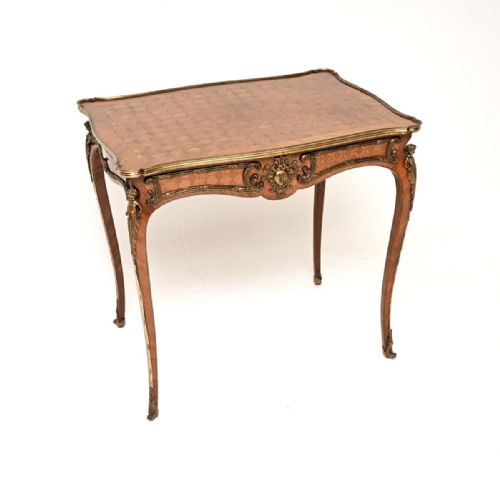
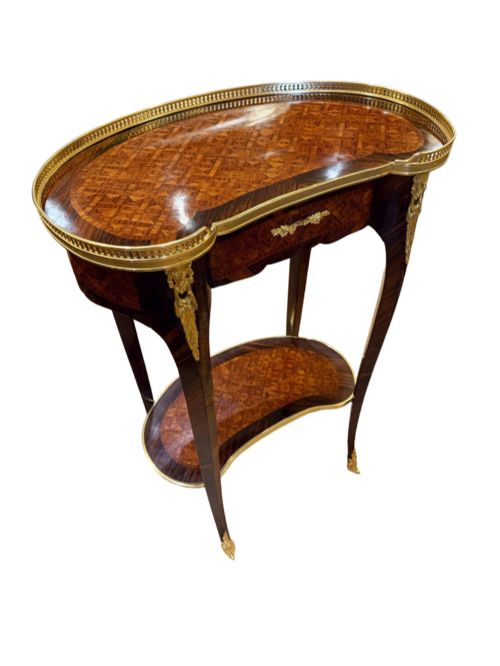
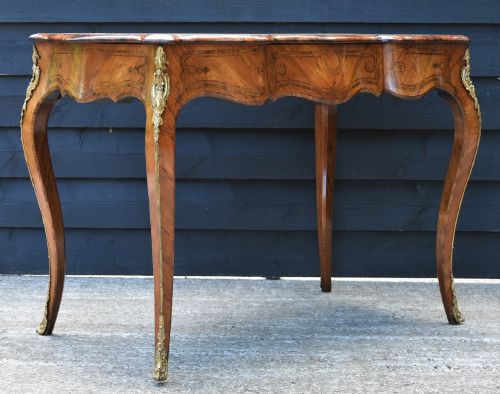
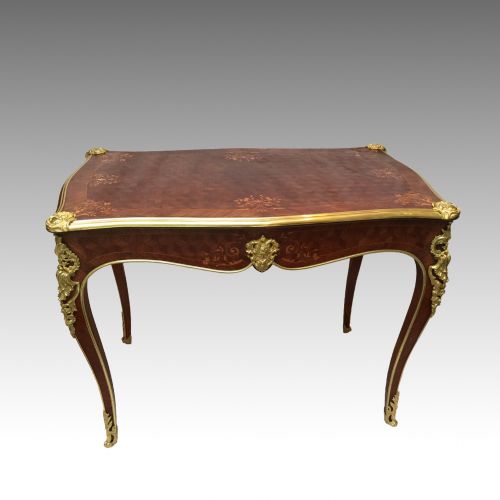
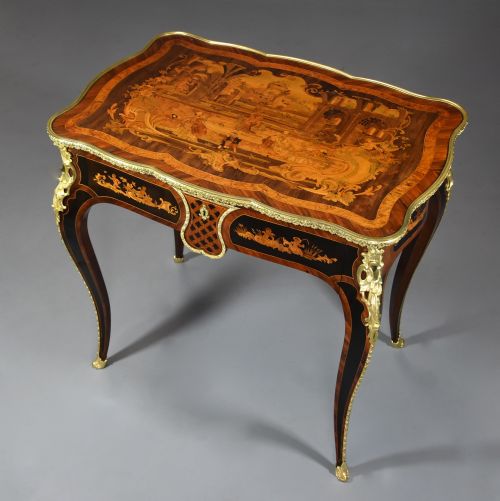
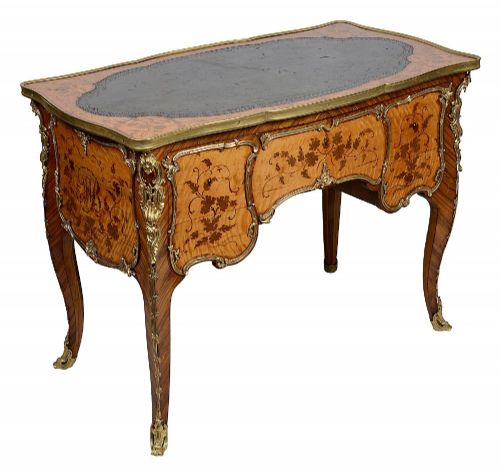
The version most commonly met on this page is a nineteenth-century freestanding table featuring marquetry or parquetry patterns set into exotic timbers, often mounted with ormolu and designed to sit in the middle of a room.
These pieces encompass serpentine profiles, kidney shapes, and kneehole configurations, drawing on Louis XV and Louis XVI revival styles that prioritise curved cabriole legs and ornamental mounts.
How they were made
Cabinet makers utilised dense hardwoods such as kingwood, walnut, rosewood, and mahogany as the structural foundation for intricate surface decoration.
Craftsmen applied contrasting veneers in geometric parquetry or pictorial marquetry, often combining brass, satinwood, and ebonised wood to create detailed motifs.
Finishing touches involved the integration of cast ormolu and gilt bronze mounts along desk drawers and legs, alongside the insertion of tooled leather writing surfaces.
Several tables include hidden compartments and metamorphic functions designed for nineteenth-century letter writing and secret correspondence.
What varies in quality
The refinement of the veneer work dictates the standing of a piece, distinguishing simple geometric arrangements from elaborate, multi-timber floral marquetry.
The weight and precision of the ormolu mounts create a marked distinction, where hand-chased bronze detailing surpasses simpler cast brass applications.
Structural integrity and choice of secondary timbers reflect the workshop standards behind the construction, separating standard commercial furniture from bespoke creations.
JAS Shoolbred·Donald Ross·Millet
The French Inlaid Writing Table Glossary
- Bureau Plat
- A freestanding writing desk with drawers fitted beneath the writing surface. These tables typically feature a leather insert and ormolu mounts.
- Marquetry
- The art of applying pieces of veneer to a structure to form decorative patterns and pictorial designs. Cabinet makers select contrasting timbers to achieve tonal depth.
- Parquetry
- Geometric wood inlay arranged in repetitive patterns such as cubes, chequers, orlozenges. This technique creates texture across the top of a table.
- Ormolu
- Gilt bronze mounts applied to the edges, corners, and legs of furniture. The term describes the golden appearance achieved through mercury gilding or modern electroplating.
- Bonheur-du-Jour
- A small lady's writing desk featuring a raised superstructure with small drawers, compartments, or a cabinet above the main writing surface.
French Inlaid Writing Table: Frequently Asked Questions
What is a bureau plat?
A bureau plat is a flat-topped freestanding desk equipped with drawers in the frieze. It is finished on all sides so it can stand in the middle of a room rather than against a wall.
These desks often feature tooled leather inserts and decorative ormolu mounts along the cabriole legs and drawer borders.
How do I use a bonheur-du-jour?
A bonheur-du-jour functions as a compact writing desk or dressing table with an upper section for storage. The raised back typically contains small drawers and pigeonholes for correspondence.
Its smaller footprint makes it suitable for use in a bedroom or a drawing room where a full-sized desk is impractical.
What is the difference between marquetry and parquetry?
Marquetry involves arranging wood veneers into pictorial scenes, floral sprays, or curving scrolls. Craftsmen use varied timber colours to create shading and form.
Parquetry relies on geometric shapes like squares, triangles, and diamonds to build repeating patterns across the surface.
How do I identify Louis XV style?
Louis XV style furniture is characterised by asymmetrical curves, serpentine lines, and the complete absence of straight structural members. Cabriole legs ending in scroll feet are a primary indicator of this aesthetic.
Ormolu mounts on these pieces frequently mimic natural foliage, C-scrolls, and rococo motifs.