





French Inlaid Wooden Drawers
French inlaid wooden drawers bring architectural grace and rich timber grain to a room, offering practical storage disguised as art.
French Inlaid Wooden Drawers
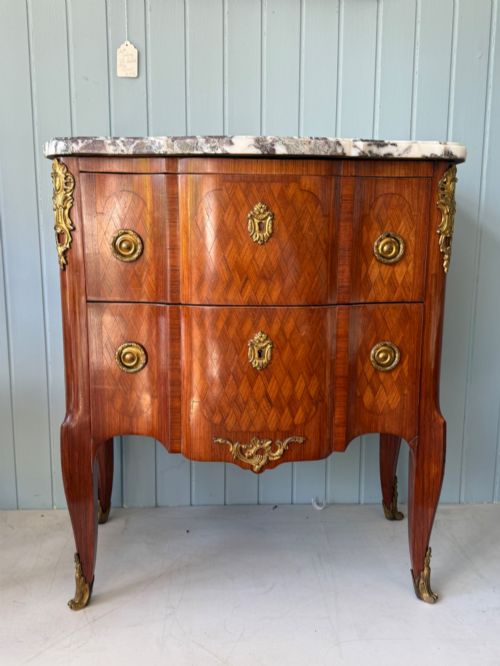
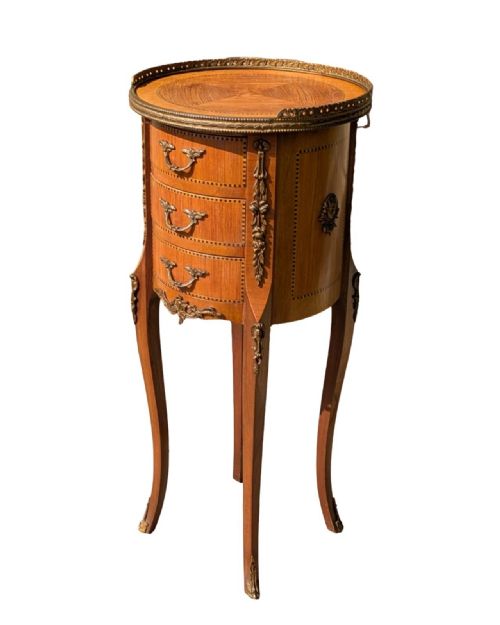
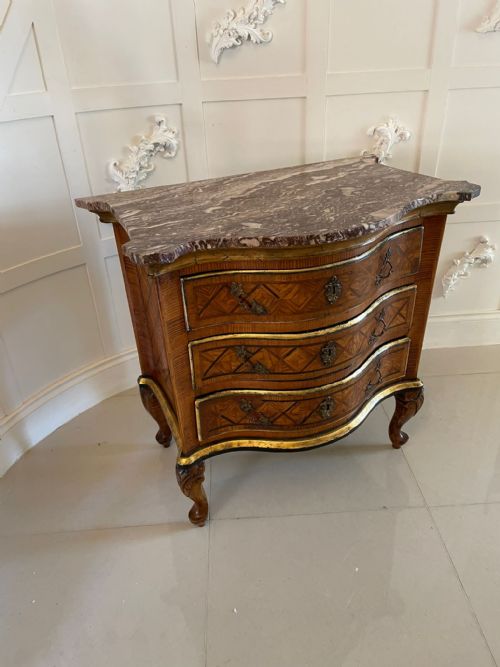
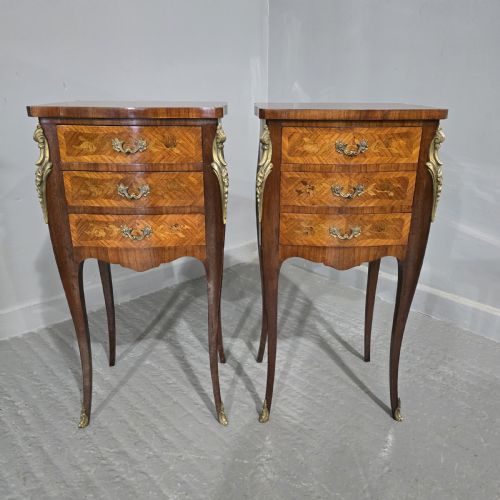
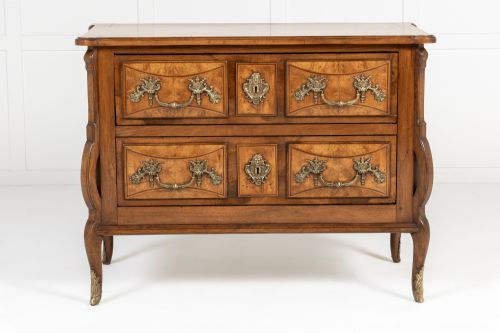
French inlaid wooden drawers encompass both substantial commodes and smaller bedside cabinets, each piece designed to anchor a room with refined storage. When exploring French inlaid wooden drawers, buyers encounter distinct forms ranging from serpentine 18th-century chests to 20th-century pairs.
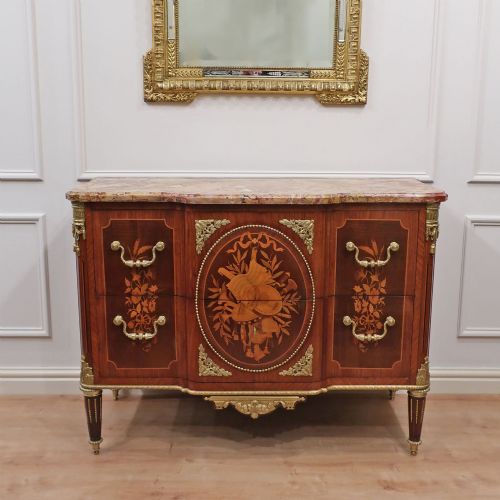
The selection centres heavily on commodes and bedside cabinets, featuring styles from Louis XV revival to Louis XVI. These pieces serve as functional storage for bedrooms and living spaces while displaying intricate surface decoration.
Origins span across the 18th, 19th, and early 20th centuries, showing a steady continuity in continental cabinet making. Buyers find both single statement commodes and matched pairs of bedside chests.
Materials and construction methods
Craftsmen built these pieces using substantial carcases of walnut, cherrywood, fruitwood, and harewood, providing a sturdy foundation for decorative veneers. Kingwood and rosewood were then applied in precise geometric parquetry or pictorial marquetry patterns.
Surface ornamentation frequently incorporates brass, ormolu, and gilt bronze mounts to accent the drawer edges and corners. Many surfaces are topped with fitted marble slabs, combining heavy stone with delicate woodwork.
Some bedside cabinets arrive in matched pairs, proving that even small tables appreciate having a companion for the journey.
Distinctions in craftsmanship and design
Quality reveals itself in the precision of the veneer work and the complexity of the timber patterns. Superior examples display seamless geometric parquetry or detailed floral marquetry that follows the contours of bombe or serpentine carcases without interruption.
The integration of mounts and marble tops marks another tier of distinction. Finer pieces feature crisply chased ormolu and heavy, well-fitted marble slabs that sit flush against the wooden frame.
The French Inlaid Wooden Drawers Glossary
- Commode
- A low chest of drawers or cabinet, often fitted with a marble top and prominent decorative mounts. They function as both storage units and display surfaces.
- Marquetry
- The art of applying pieces of veneer to a structure to form decorative patterns and pictures. Craftsmen utilise various coloured timbers to create contrast and depth.
- Parquetry
- A geometric mosaic of wood pieces used for decorative floors and furniture surfaces. It creates repeating patterns across drawer fronts and tops.
- Ormolu
- Gilded bronze applied to the mounts, feet, and handles of furniture. This technique adds metallic contrast to the rich wooden surfaces.
- Bombe
- A swelling, outward-curving contour found on the sides and fronts of advanced cabinet forms. This shape requires advanced woodworking skill to veneer successfully.
French Inlaid Wooden Drawers: Frequently Asked Questions
Where should I place a commode?
These pieces suit living rooms, hallways, and bedrooms where their decorative fronts can be fully appreciated. Their drawer space provides practical storage for household items or clothing.
Larger commodes anchor blank walls effectively, while matching bedside cabinets flank a bed to bring symmetry to a bedroom scheme.
How do I care for the marble top?
Marble surfaces require simple wiping with a damp cloth and mild soap to remove dust and daily grime. Avoid acidic cleaners and harsh chemicals that etch the stone polish.
Using coasters and placemats protects the surface from liquid rings and scratches, keeping the stone smooth and intact.
How do I distinguish Louis XV from Louis XVI style?
Louis XV pieces lean towards asymmetrical curves, flowing lines, and bombe shapes that soften the overall silhouette. The decoration focuses on natural motifs and sweeping floral marquetry.
Louis XVI furniture introduces straight lines, geometric symmetry, and neoclassical restraint. Fluted columns and rectangular drawer arrangements replace the curved contours of the earlier period.
What is the difference between parquetry and marquetry?
Parquetry relies on geometric shapes like cubes, triangles, and squares to build repeating patterns across a wooden surface. It emphasises symmetry and architectural order.
Marquetry arranges varied veneers into pictorial scenes, floral sprays, or scrolling designs. It requires cutting organic shapes from different timber species to form intricate pictures.