
French Inlaid Commode
A french inlaid commode brings continental elegance and practical storage to a room through decorative veneers and polished stone surfaces.

French Inlaid Commode
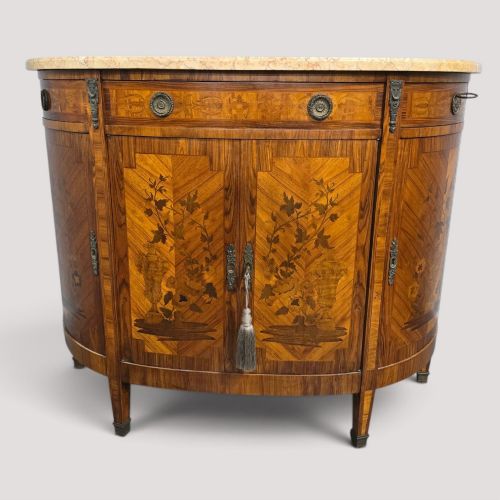
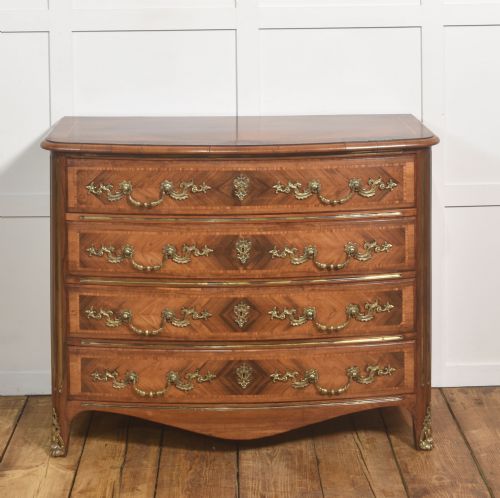
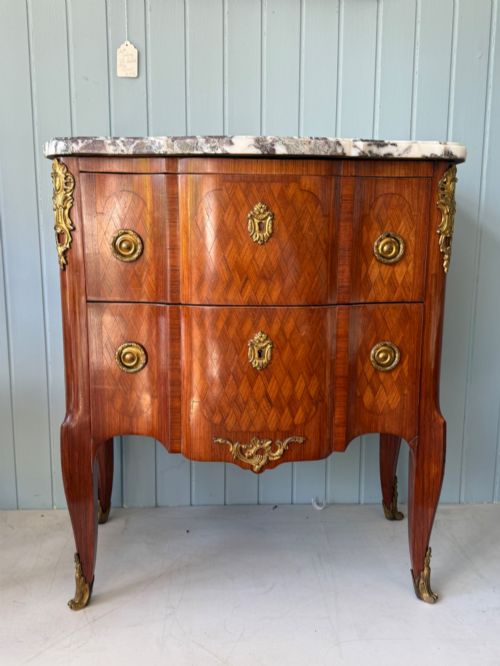
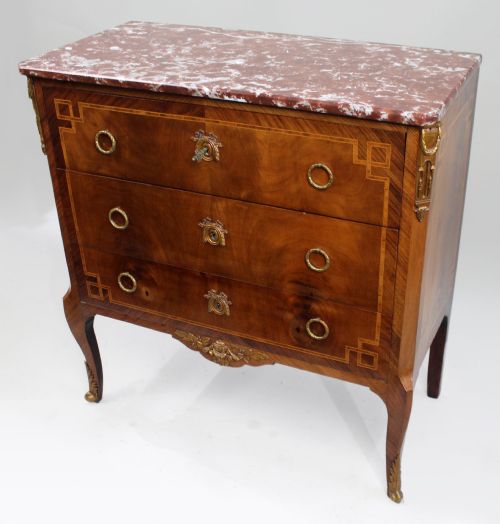
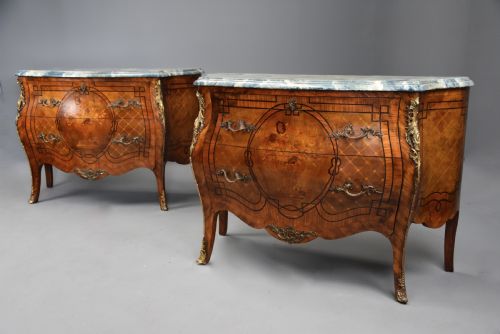
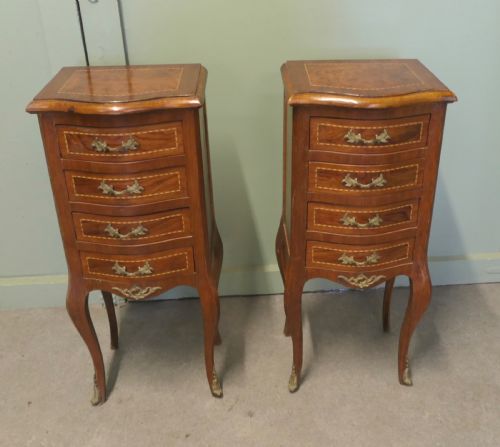
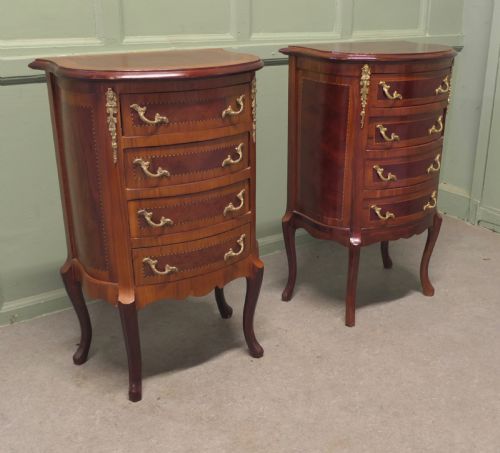
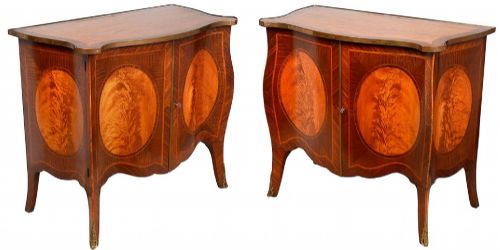
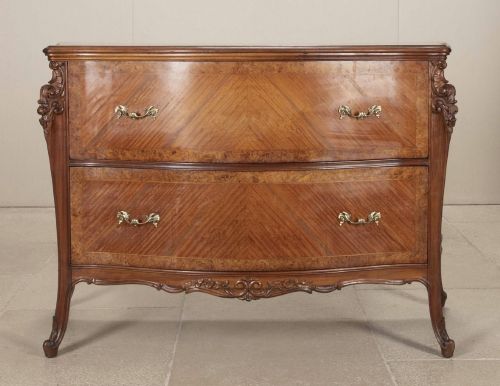
A french inlaid commode functions primarily as a decorative chest of drawers or low cabinet, rooted in continental cabinet-making traditions. The pieces appearing here span the eighteenth, nineteenth, and early twentieth centuries, reflecting enduring tastes for serpentine and bombe shapes.
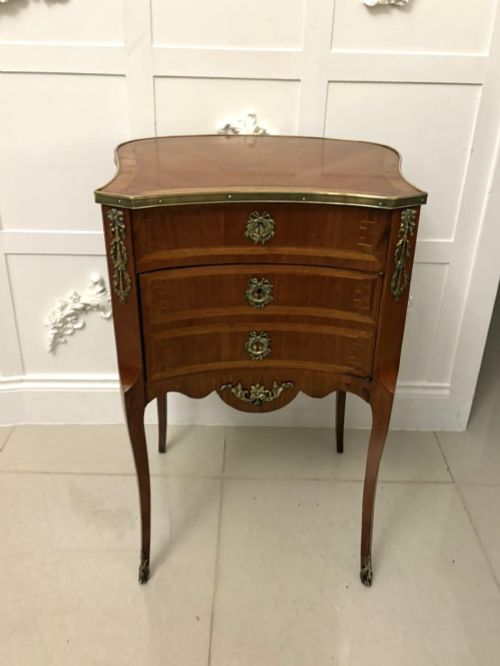
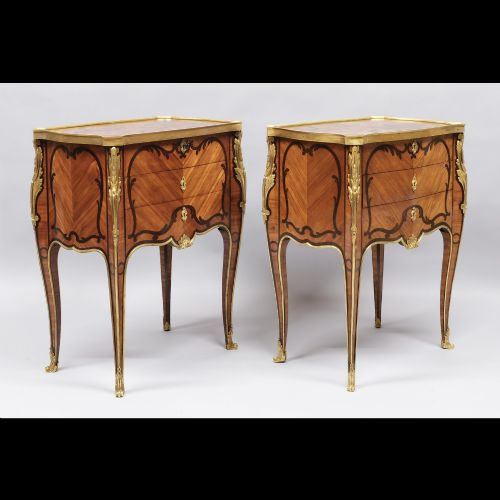
Buyers encounter numerous regional interpretations and revival styles on this page, notably French Louis XV and Louis XVI designs. Alongside standard chests of drawers, the selection includes bedside cabinets, sideboards, and demi-lune consoles designed for formal reception rooms or private chambers.
Materials and Technique
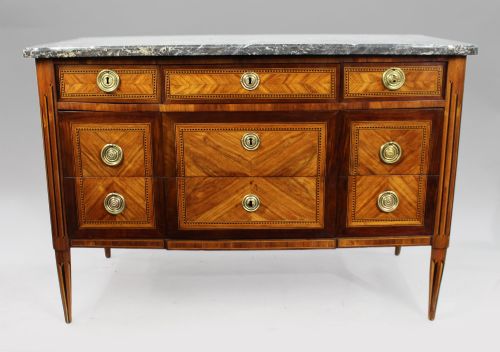
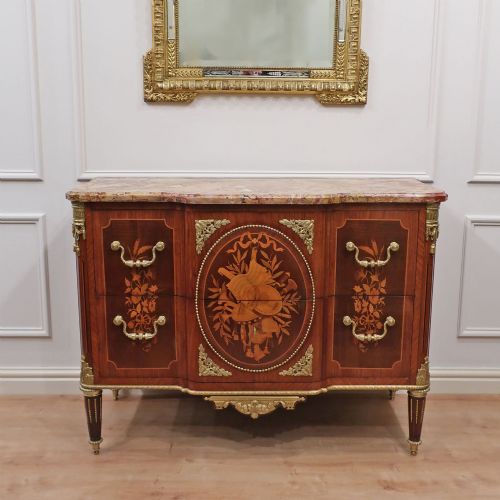
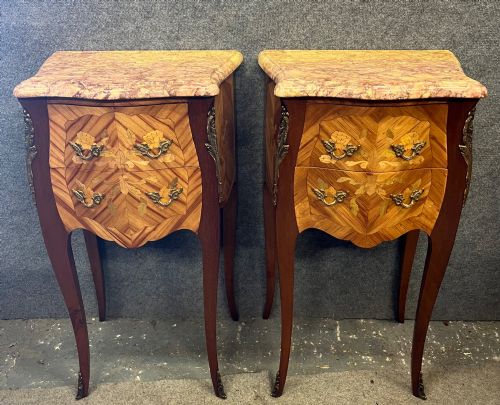
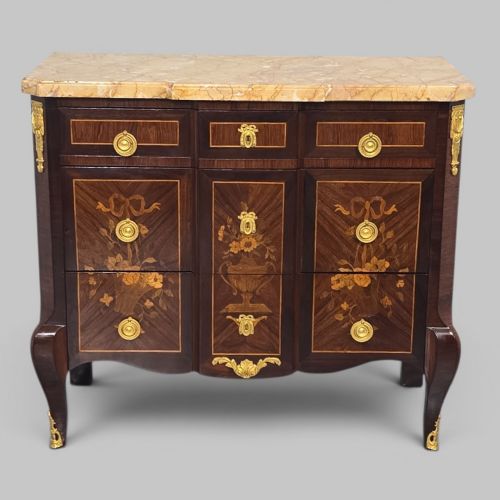
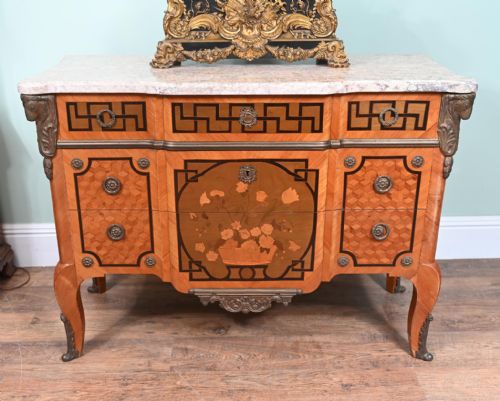
Cabinet-makers constructed these pieces using dense structural timbers such as walnut, mahogany, and oak, applied with contrasting decorative veneers like kingwood, rosewood, tulipwood, and satinwood. Marquetry patterns depict floral scenes or geometric motifs, while parquetry employs precise wood tiles to create cubic illusions.
Heavy use of ormolu mounts provides gilt bronze accents along corners and aprons to highlight the contours of the carcase. Many items feature thick marble tops, including rouge and scagliola varieties, cut and polished to fit the serpentine or breakfront profiles precisely.
Some nineteenth-century makers concealed secret locking mechanisms behind decorative marquetry flowers to guard family silver.
Craftsmanship and Construction
Superior examples demonstrate meticulous alignment in the veneer work, where complex marquetry flows seamlessly across drawer fronts and sides without awkward interruptions. The crispness of the cast ormolu mounts and the weight of the fitted marble top signal the workshop standards behind the piece.
Internal joinery reveals the grade of execution, with hand-cut dovetails on drawer construction and sound structural timber framing the carcase. Pieces retaining original surface finishes and authentic mounts command greater attention from discerning collectors.
Sormani
The French Inlaid Commode Glossary
- Marquetry
- Decorative wood veneer arranged in pictorial patterns such as flowers or landscapes. Craftsmen cut various coloured woods together to fit flush into a prepared ground.
- Parquetry
- Geometric wood veneer work arranged in repeating patterns like cubes or squares. This technique showcases the natural grain contrasts of timbers like kingwood and walnut.
- Ormolu
- Gilt bronze mounts applied to furniture edges, feet, and handles for ornamentation. The technique involves applying a gold amalgam to bronze before firing.
- Bombe
- A swelling, outward-curved commode profile characteristic of eighteenth-century rococo designs. This bulging shape requires skilled veneer application across compound curves.
- Scagliola
- A composite material made from selenite, glue, and pigments, mimicking natural marble. Artisans inlay and polish this mixture to create decorative table tops.
French Inlaid Commode: Frequently Asked Questions
How do I date a french inlaid commode?
Dating relies on examining the structural timber beneath the veneers, the style of the bronze ormolu mounts, and the cut of the dovetails inside the drawers. Eighteenth-century versions typically show hand-carved carcases and distinct regional joinery.
Later nineteenth- and twentieth-century revival pieces emulate these earlier forms while utilising machinery-assisted construction methods and standardised hardware fittings.
Where should I place a french inlaid commode at home?
These cabinets suit hallways, living rooms, and bedrooms where their decorative marquetry and polished marble surfaces serve as focal points. Their modest height makes them ideal for supporting lamps, mirrors, or small decorative objects.
Avoid positioning them in direct sunlight or near heat sources, as extreme temperature shifts can cause delicate veneers to lift from the timber base.
Are marble tops original to these commodes?
Most antique commodes retain their original fitted marble slabs, which were cut specifically to match the serpentine or breakfront contours of the carcase. Inspecting the underside of the stone reveals tooling marks consistent with the period of manufacture.
Replacements do occur due to accidental damage over the centuries, so matching the stone profile to the wooden frame remains important.