
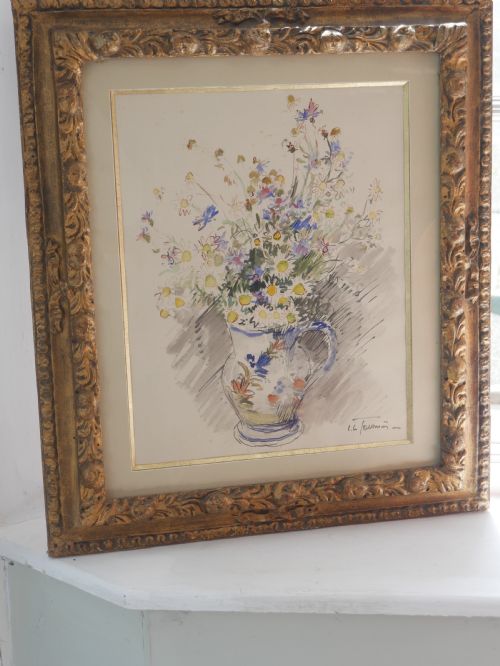


French Impressionist Flowers
French impressionist flowers capture the fleeting light of domestic and garden blooms through spirited brushwork and vibrant colour.
French Impressionist Flowers
When you search for french impressionist flowers, you encounter oil paintings, watercolours, and still life compositions spanning the late nineteenth to the mid twentieth century. The selection ranges from informal garden views of water lilies to intimate tabletop arrangements of anemones and cottage blooms.
Most pieces you meet on this page date from the early decades of the twentieth century, particularly the nineteen-thirties and nineteen-fifties. These works frequently depict vases, baskets, or terracotta pots filled with seasonal flora set against domestic interiors or natural backdrops.
The aesthetic embraces movements from impressionism and post-impressionism to modernism and realism. Artists working in the French school manipulate paint to evoke the atmospheric quality of light upon petals and leaves.
Materials and techniques
Painters build these floral scenes primarily using oil paint applied to canvas, wood panels, or metal supports. Artists often layer pigments with visible brushstrokes to create texture, whilst gesso prepares wooden surfaces for the application of colour.
Frames frequently utilise giltwood to complement the rich tones within the composition. Watercolour on paper appears alongside the heavier oil works, offering a lighter treatment of botanical subjects.
One unexpected domestic companion sharing a modernist floral still life is a humble pigeon lamp.
Judging quality
Quality rests upon the handling of light and the confidence of the brushwork within the floral arrangement. Finer examples display a dynamic interplay of colour and tone that breathes life into the petals, whereas lesser works remain flat and static.
The choice of support and framing contributes to the overall integrity of the piece. Works executed on mahogany panels or canvas with original gesso frames possess a structural and visual cohesion absent in inferior mountings.
The French Impressionist Flowers Glossary
- Still life
- A painting depicting inanimate subject matter, typically commonplace objects such as flowers in a vase or basket. This genre allows artists to focus on colour, light, and texture.
- Giltwood
- Wood that has been treated with gold leaf or a gold-coloured finish. It frequently forms the decorative border of period picture frames.
- Pointillist
- A technique of painting where small, distinct dots of colour are applied in patterns to form an image. Luminist pointillism emphasises the effect of light on the subject.
- Gesso
- A plaster mixture used as a coating for a base material such as wood or canvas before painting. It provides a smooth and stable surface for oils.
- Post-Impressionism
- A predominantly French art movement that developed from impressionism, extending its limitations while retaining its use of vivid colours and thick application of paint.
French Impressionist Flowers: Frequently Asked Questions
What periods do these paintings cover?
The works span from the late nineteenth century through to the mid twentieth century, with notable representation from the nineteen-twenties, thirties, and fifties. This timeline tracks the evolution from nineteenth-century realism and impressionism into various modernist interpretations.
Buyers encounter a mix of styles that reflect the changing artistic priorities of French painters across these decades. Each period brings distinct approaches to colouration and canvas preparation.
What subjects are most common?
Floral compositions dominate the selection, featuring anemones, roses, water lilies, and cottage garden flowers. These blooms appear arranged in wicker baskets, ceramic vases, terracotta pots, or growing naturally beside lakes and windows.
Interiors and still life settings provide the primary context for these botanical studies. The arrangement often includes domestic objects alongside the flowers.
What materials were used for the supports?
Artists painted on a variety of grounds, most notably stretched canvas, wood panels such as mahogany, and metal sheets. Watercolour works on paper also feature within the broader category of these floral pieces.
Giltwood frames frequently accompany the paintings, providing a traditional border that reflects the period of creation. The choice of support often helps indicate the approximate date of the work.
How do impressionist and modernist pieces differ?
Impressionist works prioritise the natural play of light and atmosphere upon the flowers using soft, blended or broken brushstrokes. Modernist examples tend to emphasise bolder forms, flattened perspective, and experimental compositions.
Both styles share a French provenance and a focus on floral subjects, yet their visual impact varies significantly. Modernist paintings often introduce stronger contrasts and simplified shapes.
How should I care for an oil on canvas?
Keep the painting away from direct sunlight and fluctuating humidity to protect both the canvas and the oil paint. Stable indoor environments prevent the wood stretcher and the canvas from warping.
Dust the surface gently with a soft, dry brush and avoid using any liquid cleaners on the paint or the giltwood frame. Professional conservation ensures the longevity of period materials.