


French Hanging Light
A french hanging light brings interior spaces a distinct decorative gravity through period metalwork and glass.
French Hanging Light
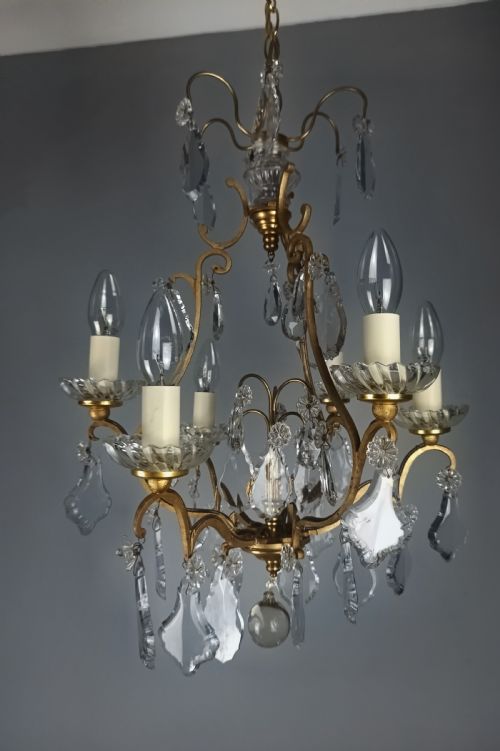
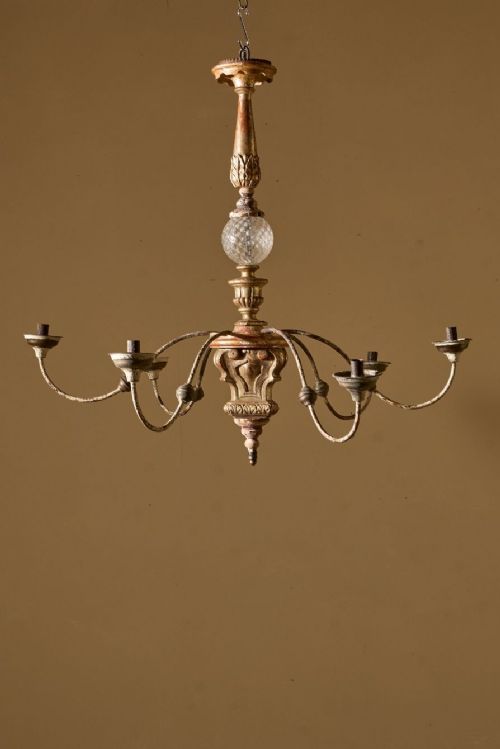
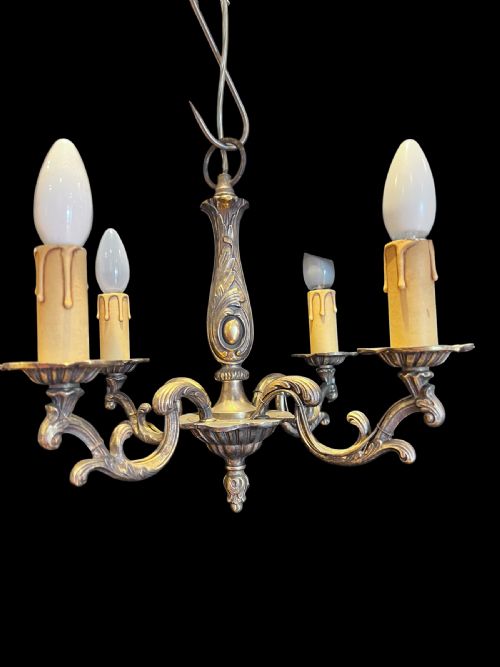
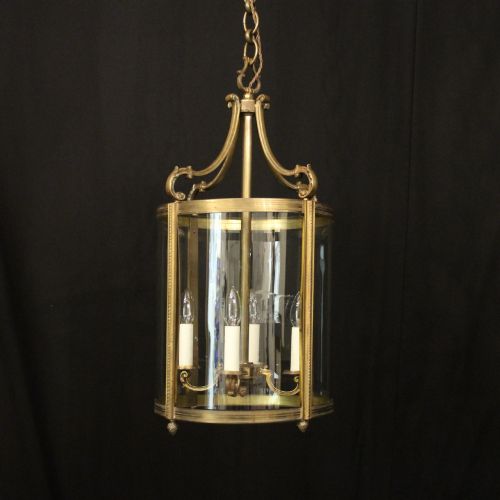
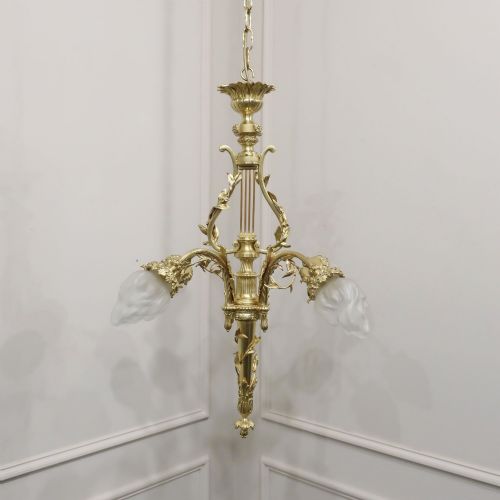
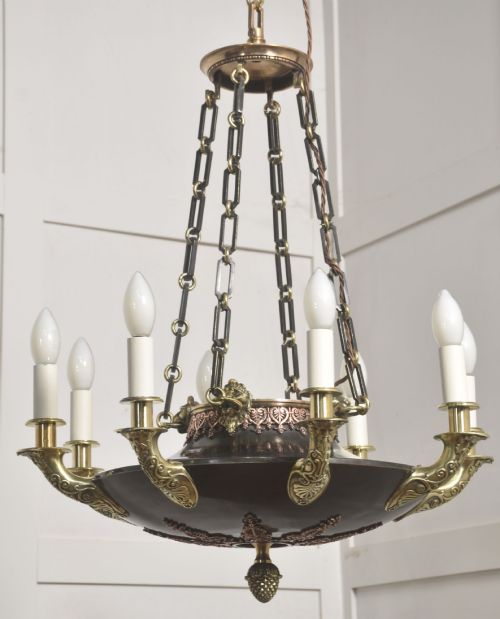
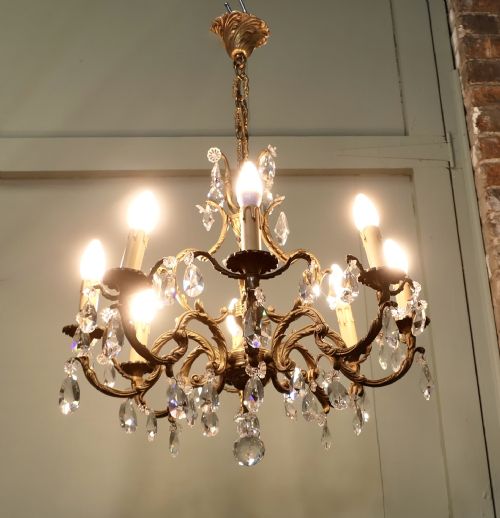
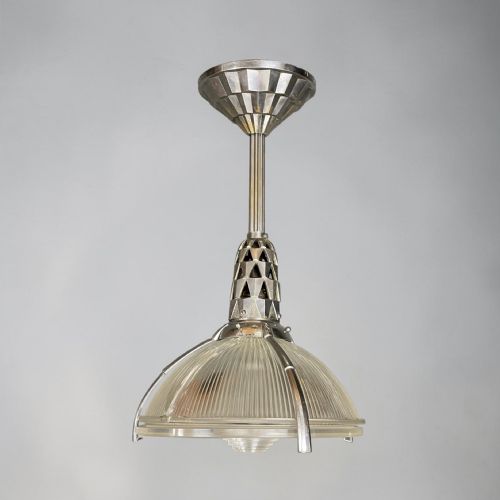
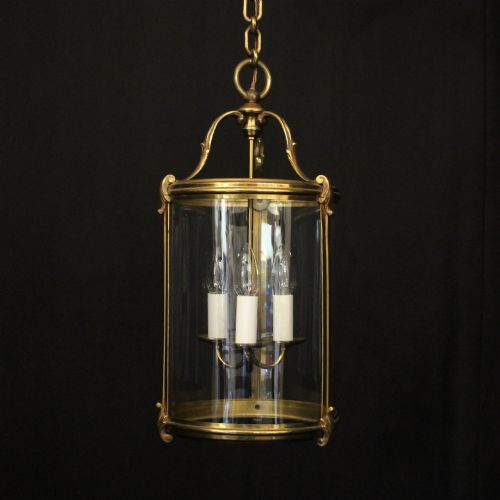
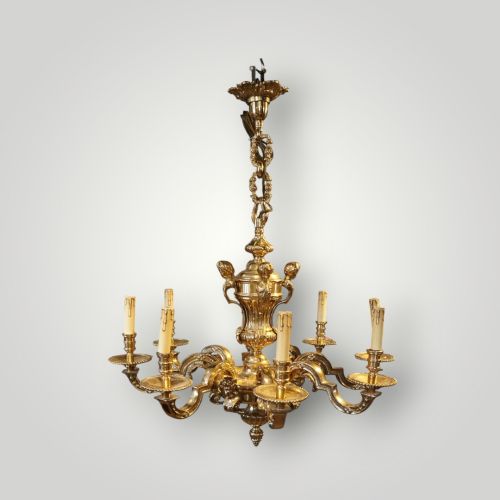
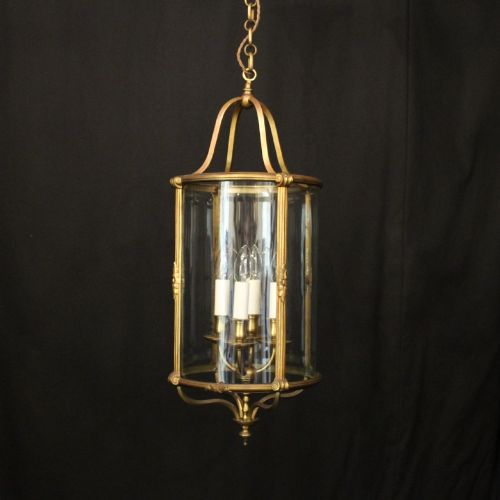
When you search for a french hanging light, you encounter suspended ceiling fixtures spanning the nineteenth century through the art deco era. These pieces manifest primarily as hall lanterns, multi-light chandeliers, and glass globe pendants originating from French workshops and chateaux.
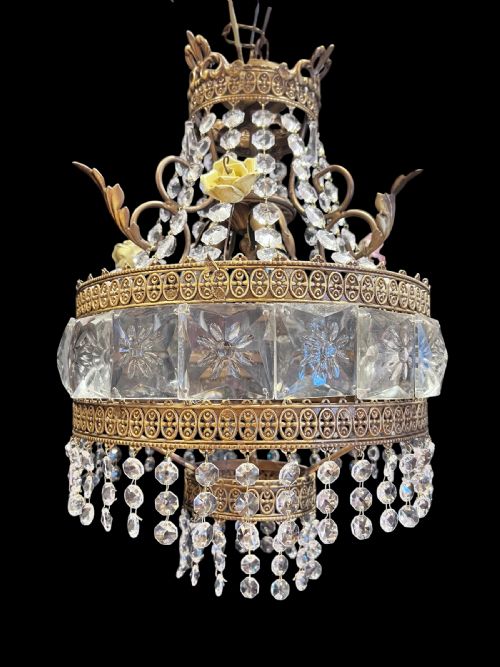
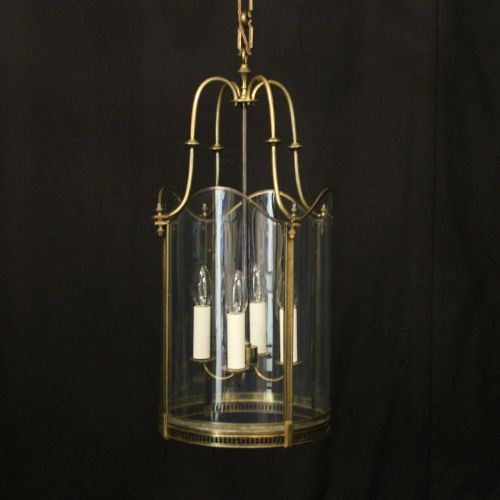
The selections on this page demonstrate the enduring popularity of styles such as French Neoclassical, Rococo, and Art Deco. Buyers meet lanterns with convex glass panels alongside chandeliers hung with crystal lustres and porcelain flowers.
How they were made
Maker workshops utilised cast metals including bronze, brass, and gilt-plated alloys to form the structural frames of these hanging fixtures. Skilled founders shaped these metals into intricate scrollwork, coronets, and Neoclassical motifs.
Glassmakers produced blown, etched, opalescent, and frosted glass globes or panels that diffused illumination within the room. Workers then assembled these components by hand, incorporating crystal drops and drops of amber or turquoise glass.
What varies in quality
Quality rests upon the crispness of the metal casting and the depth of the original gilding or patination. Heavier bronze and brass frames with finely chased detailing separate superior examples from simpler commercial production.
The integrity and provenance of the glass elements also dictate overall worth. Intricately etched panels, undamaged opalescent globes, and heavy faceted crystal lustres indicate higher workshop standards.
Émile-Jacques Ruhlmann·G.E.C
The French Hanging Light Glossary
- Ormolu
- Gilded bronze produced by applying a mercury and gold amalgam to a bronze object. This historic technique creates a warm, durable golden finish.
- Lustre
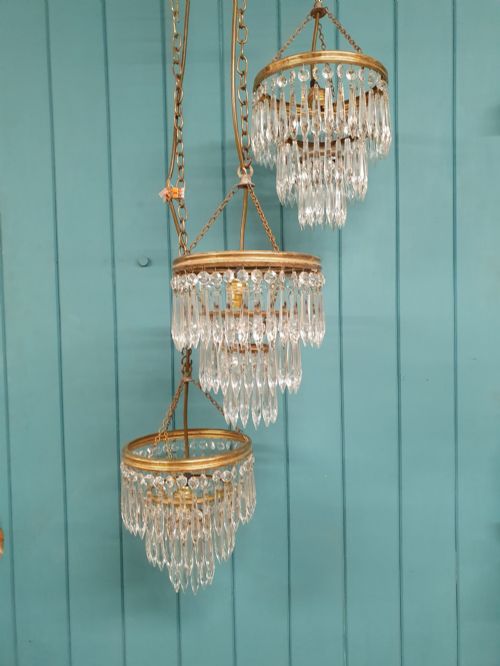
- A cut crystal or glass pendant suspended from a chandelier to refract light. These elements hang in multiples around the metal frame.
- Convex lantern
- A hanging light featuring curved glass panels that project outward. This shape disperses illumination across a wider angle in entrance halls.
- Tolewear
- Enamelled and painted metal sheet shaped into decorative floral or foliage forms. It frequently appears in coloured accents on mid-period fittings.
- Opaline glass
- An opaque, milky glass popular during the nineteenth and early twentieth centuries. It softens bulb glare while casting an even glow.
French Hanging Light: Frequently Asked Questions
Where should I hang a hall lantern?
Entrance hallways and vestibules provide the traditional location for these enclosed fixtures, offering adequate ceiling clearance for guests passing underneath.
Their enclosed glass panels protect internal candles or bulbs from draughts while casting a welcoming illumination across tight entry spaces.
How do I clean crystal lustres?
Remove the crystal drops gently from the frame and wash them in lukewarm water with mild soap. Avoid harsh chemical cleaners that might strip historic surface patinas.
Dry each piece thoroughly with a soft lint-free cloth before rehanging them on the metal armature.
What is an opaline glass globe?
Opaline glass is a translucent, milky material that diffuses light evenly without harsh glare. Art Deco designers favoured this smooth medium for simple pendant forms.
These globes often screw or fit directly into brass or chrome galleries suspended by chains.
How do I date a brass chandelier?
Examine the construction methods, screw threads, and wiring channels visible on the metal frame. Hand-cut components and cast bronze typically point to nineteenth-century manufacture.
Stylistic cues such as streamlined geometric lines or floral motifs further narrow the decade of production.