
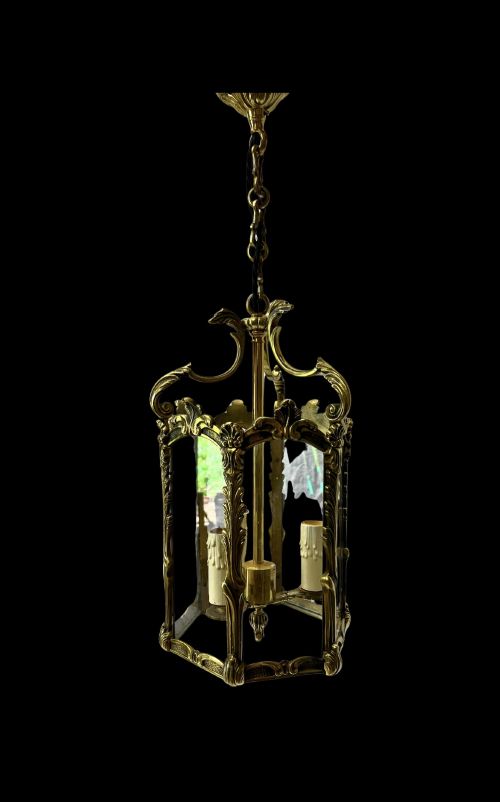


French Hallway Lanterns
French hallway lanterns bring architectural presence and brilliant illumination to entrance spaces through historic metalwork and glass.
French Hallway Lanterns
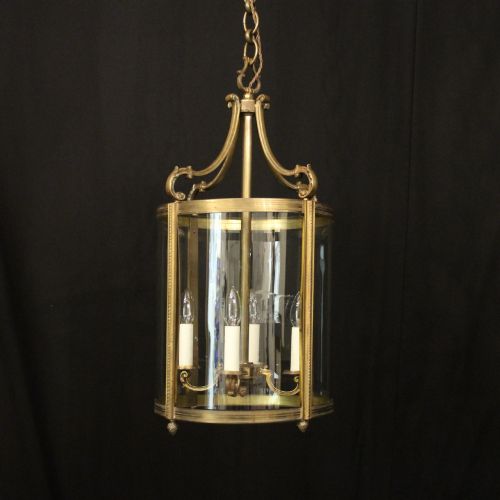
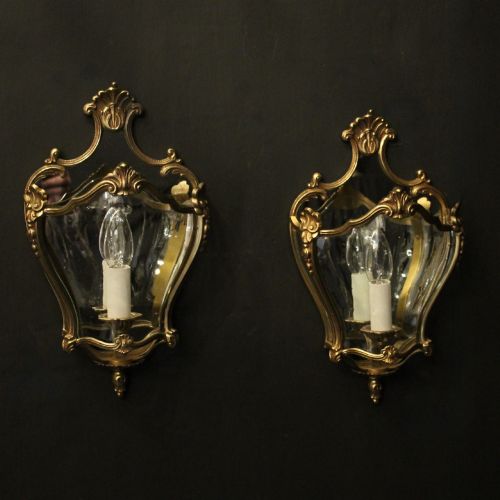
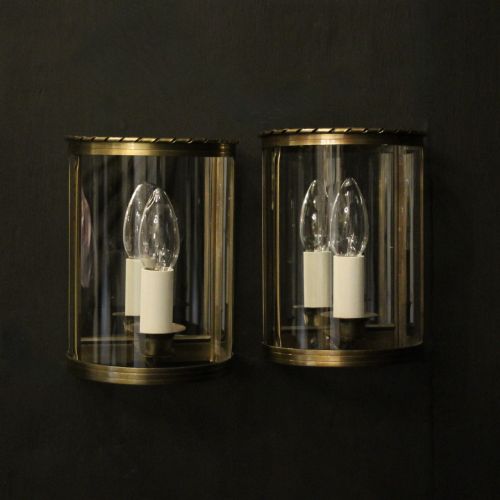
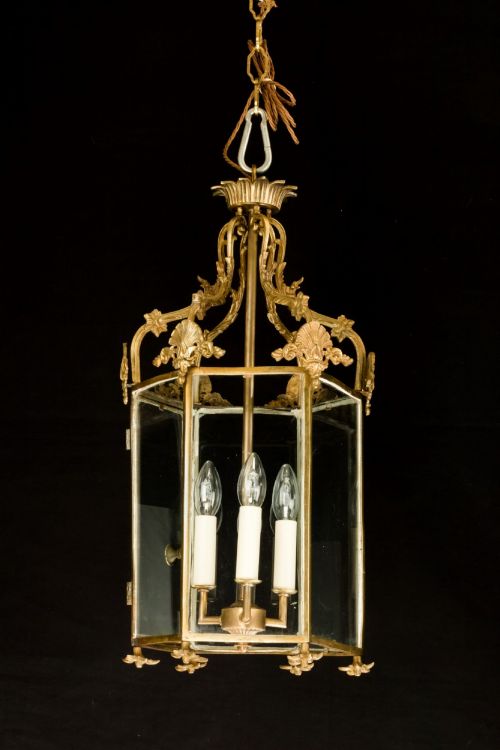
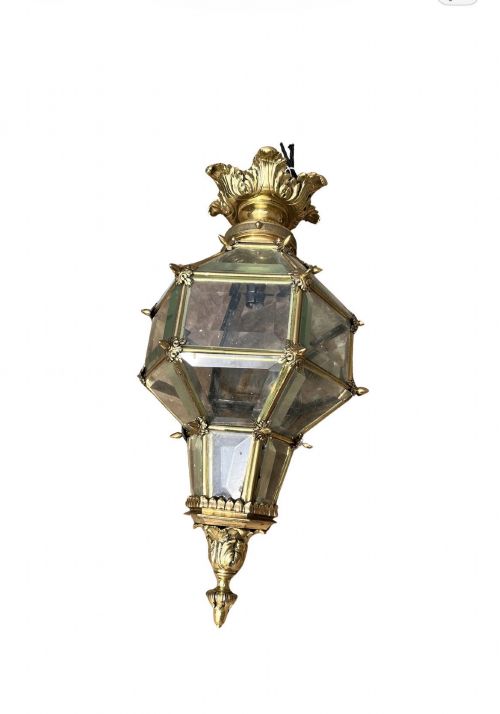
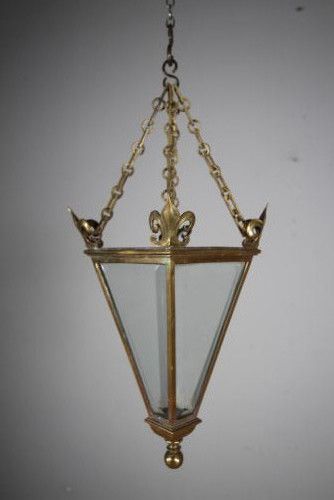
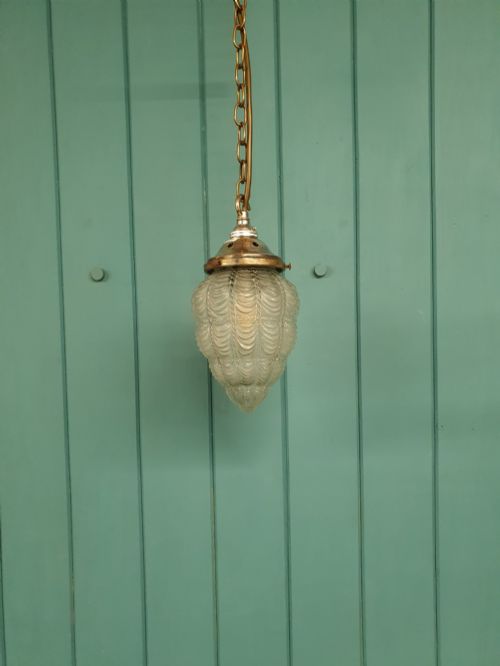
French hallway lanterns encompass hanging ceiling lights, pendant lighting, and wall sconces designed specifically for entrance spaces and corridors. Buyers seeking these fixtures encounter diverse forms ranging from large multi-light hanging lanterns to half-lanterns and convex designs.
The pieces on this page span the nineteenth century through the early decades of the twentieth century, including periods such as eighteen ninety, nineteen hundred, and nineteen thirty. Styles draw heavily upon traditional aesthetics like Louis XVI, Rococo, Empire, and Arts and Crafts.
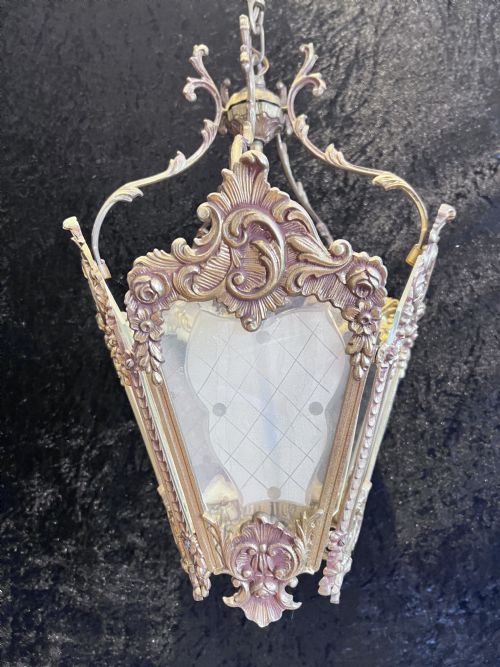
Moulded, etched, and cut glass panels combine with metal frames to create functional illumination that defines a hallway's character. Single light and multi-light configurations appear alongside specialised variations like hexagonal and convex shapes.
Materials and construction methods
Metals form the structural backbone of these lanterns, utilising brass, bronze, gilded bronze, gilt brass, steel, wrought iron, copper, and painted toleware. Gilding and polychrome finishes frequently enhance the bronze and brass surfaces.
Glass elements are integrated through clear, moulded, etched, or cut panels fitted into metal framing. Artisans employed casting, forging, and soldering techniques to shape the heavy metals and secure the delicate glass panes.
Several lanterns are shaped with convex glass designed to make the hallway candlepower bounce twice as far.
Distinctions in quality and execution
Quality reveals itself in the weight and crispness of the cast metal mounts, particularly in gilded bronze and brass fixtures. Finer examples display meticulous detailing in classical motifs, scrolling foliage, and structural joints.
The selection and treatment of the glass panels further differentiate the tier of a piece. Heavier gauge metals, complex convex or hexagonal geometry, and superior cutting or moulding elevate a lantern's overall presence.
The French Hallway Lanterns Glossary
- Gilded Bronze
- Bronze that has been treated with a thin layer of gold or gold leaf to give a rich, metallic finish. This material is frequently seen in high-status French lighting.
- Half-Lantern
- A light fixture split flat down the middle, designed to mount directly against a wall rather than hang in open space. These work well in narrow corridors.
- Toleware
- Painted or lacquered sheet metal, often decorated with polychrome finishes. It provides colour and decorative charm in continental lighting designs.
- Convex Lantern
- A hanging fixture featuring curved glass panels that bow outward. This design diffuses light more broadly across an entrance hall.
French Hallway Lanterns: Frequently Asked Questions
What is a French hallway lantern?
A French hallway lantern is an overhead or wall-mounted lighting fixture designed to illuminate entryways and corridors using metal and glass construction.
These pieces draw on historical French design traditions, incorporating materials like brass, bronze, and iron to create a decorative architectural focal point.
How were these lanterns used?
Historically, these fixtures hung in grand entryways, stairwells, and halls to provide welcoming illumination for residents and guests.
They served both a practical purpose for lighting dark passageways and a decorative one to display the homeowner's taste through ornate metalwork.
How do I live with one?
Integrating a historic lantern into a modern hallway requires considering ceiling height and proportion to ensure safe clearance and visual balance.
Many pieces arrive wired for contemporary electrical standards, allowing them to function as primary overhead lighting sources in a home.
How do I tell periods apart?
Distinguishing periods involves examining the decorative style, such as the symmetrical restraint of Louis XVI or the ornate curves of Rococo and Regence revival designs.
Material choices and manufacturing techniques also offer clues, with nineteenth-century pieces often featuring heavier hand-cast bronze while later twentieth-century examples incorporate steel and simpler brass forms.