


French Gilt Wall Appliques
French gilt wall appliques bring warmth and period character to a room through decorative metalwork mounted directly onto the surface.
French Gilt Wall Appliques
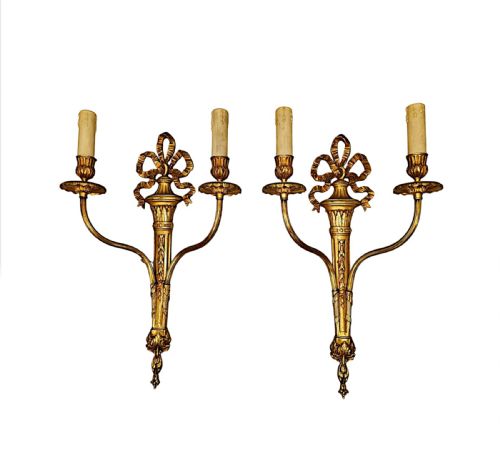
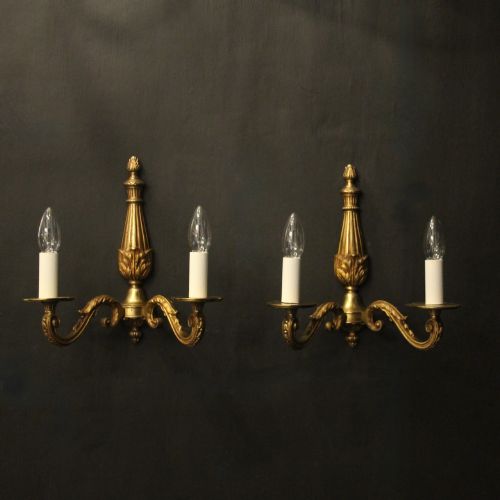
French gilt wall appliques comprise wall lights and sconces designed to hold candles or electric bulbs, illuminating rooms from a vertical surface. The selection spans the nineteenth century and the early decades of the twentieth century, reflecting enduring decorative tastes.
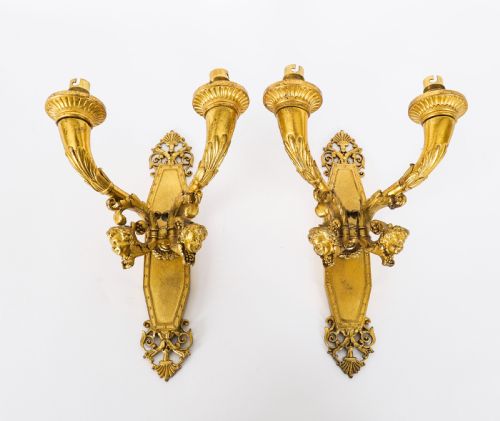
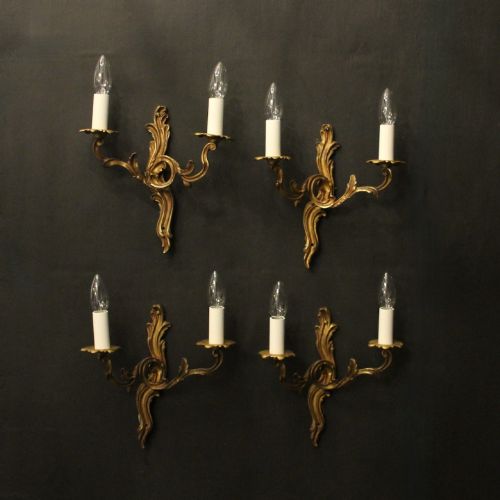
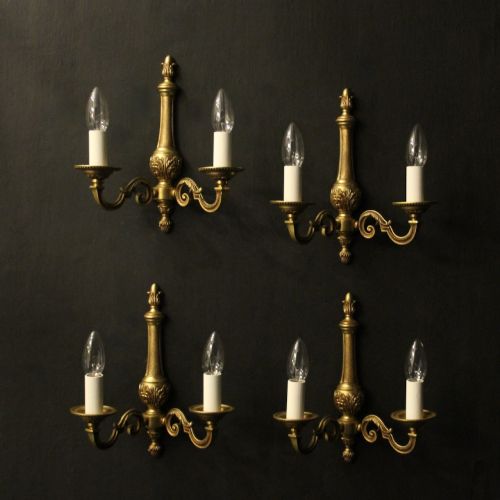
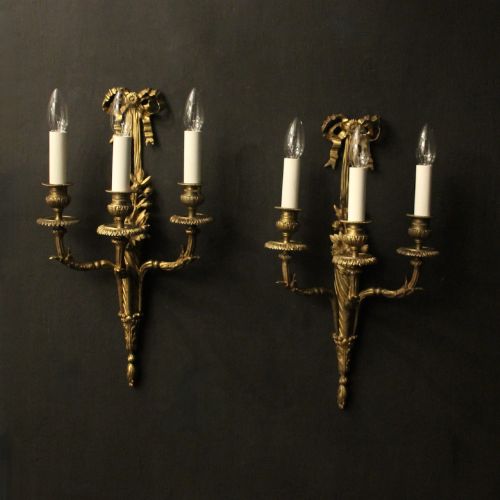
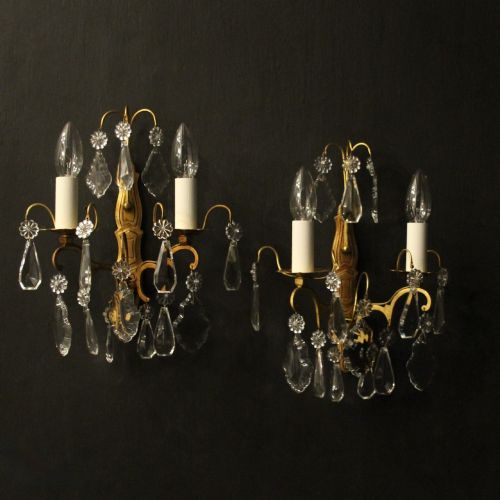
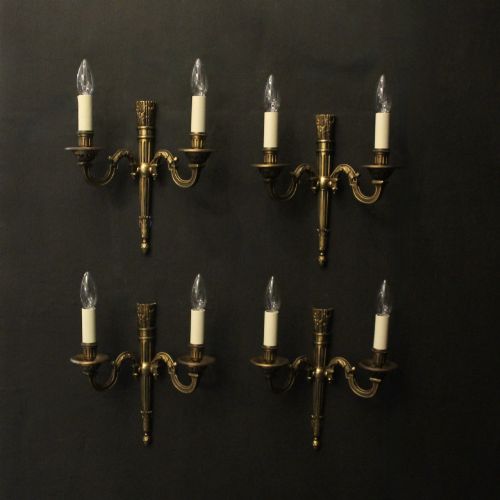
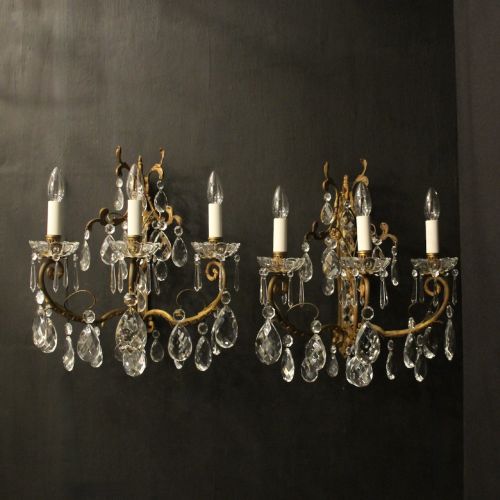
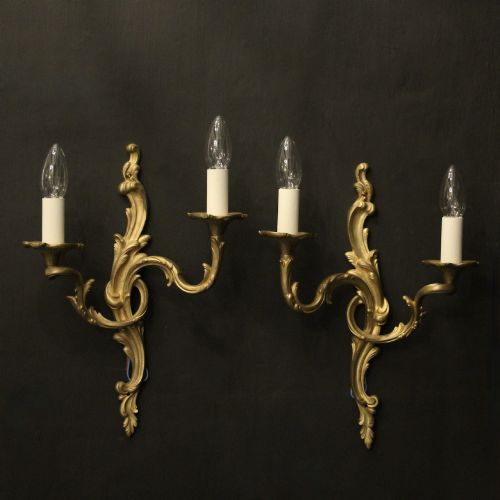
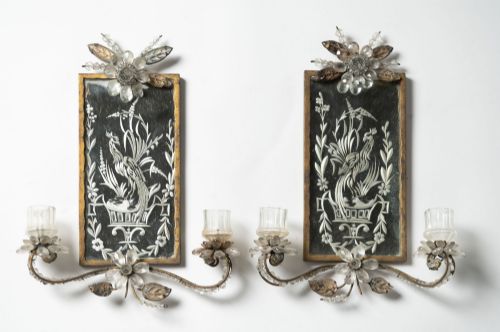
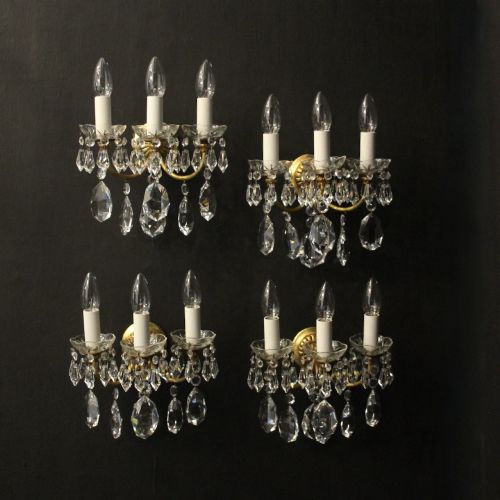
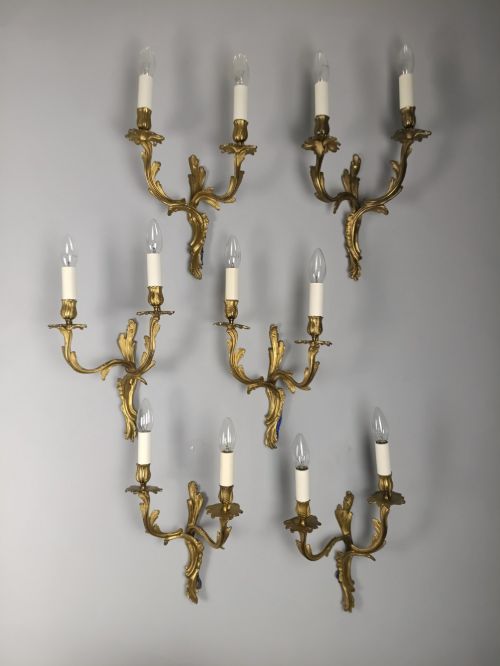
Makers produced twin arm, triple arm, and single arm configurations alongside larger sets and half lanterns. Styles draw heavily upon French Rococo, Louis XVI, Empire, and chateau aesthetics, often incorporating decorative ribbons, cherubs, and porcelain flowers.
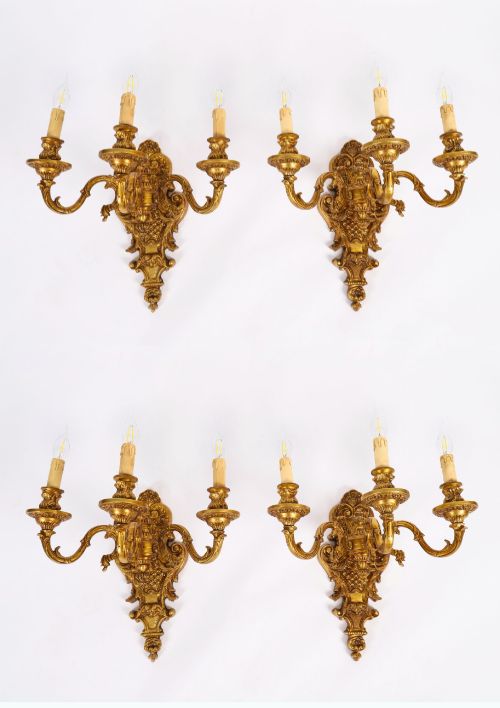
Buyers encounter matching pairs and larger sets intended for balanced placement across a room, utilised in hallways, reception rooms, and dining spaces. These fixtures function as both primary illumination sources and decorative ornaments.
How they were made
Foundries cast metal components primarily in bronze, brass, and ormolu, shaping intricate scrolling arms, backplates, and decorative mounts. Craftsmen then applied gilding to the metal surfaces to create a bright, reflective golden finish.
Workshop artisans incorporated crystal droplets and prisms into specific designs to catch and scatter light across the room. Metal mounts and structural components were joined securely to support multiple candle arms and heavy brass frames.
Several pairs include cheerful porcelain flowers and carved cherubs tucked among the candle arms.
What varies in quality
The finish of the gilding and the weight of the metal determine the visual presence of the piece on the wall. Original mercury gilding or thick fire gilding exhibits a warmer, deeper lustre compared to thin modern electroplating.
Poix Blin·Maison Baguès
The French Gilt Wall Appliques Glossary
- Applique
- A decorative wall-mounted lighting fixture designed to hold candles or bulbs. It projects light outward while ornamenting the wall surface.
- Ormolu
- Finely chased and gilt bronze used extensively in French decorative arts. The technique involves applying a gold amalgam to a bronze base and heating it.
- Rococo
- A decorative style characterised by asymmetry, scrollwork, and organic curves. It appears frequently on nineteenth-century and early twentieth-century wall lights.
- Louis XVI
- A neoclassical style marked by symmetry, straight lines, and classical motifs such as urns and ribbons. It provides a structured contrast to flowing Rococo designs.
- Sconce
- A wall-mounted lighting bracket that supports candles or electric lamps. The term is often used interchangeably with wall light and applique.
French Gilt Wall Appliques: Frequently Asked Questions
How do I wire french gilt wall appliques?
Electricians adapt these wall lights by running discreet flex through the existing mounting channels or backplates. Modern wiring meets safety standards while preserving the visible historic metalwork.
Professional installation ensures the fixture attaches securely to wall studs or pattresses, supporting the weight of bronze and crystal components safely.
How do I clean gilt bronze?
Dust the metal gently with a soft, dry brush to prevent dirt accumulation in the recessed cast details. Avoid harsh chemical polishes that strip the historic surface finish.
Crystal elements can be removed carefully and washed in warm soapy water before being dried and reattached to the brass or bronze arms.
Are these lights electrified?
Many surviving pieces have been converted from candles to electricity during their long histories, while others retain older wiring that requires updating. Listings specify the current electrical configuration of each fixture.
Rewiring allows buyers to integrate antique lighting safely into modern domestic electrical circuits without altering the exterior appearance.