

French Gilt Sconces Pair
French gilt sconces pair provide a dramatic wash of candle or electric light against a wall, bringing historical interior ornamentation directly into a room.
French Gilt Sconces Pair
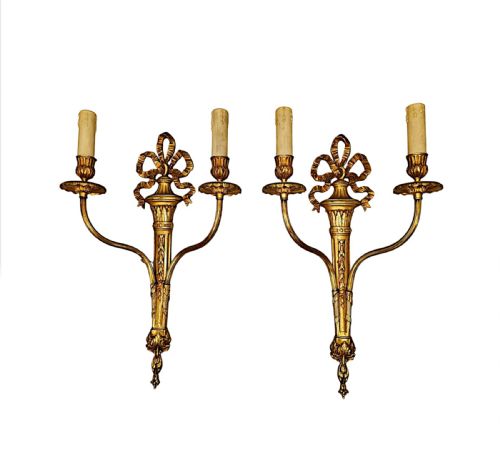
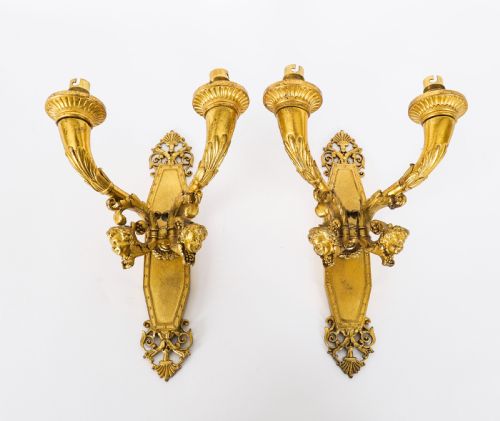
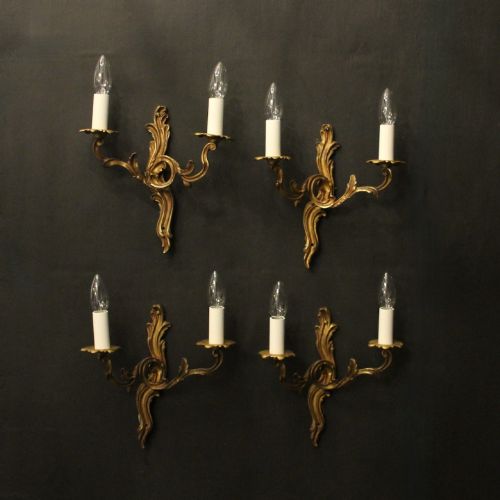
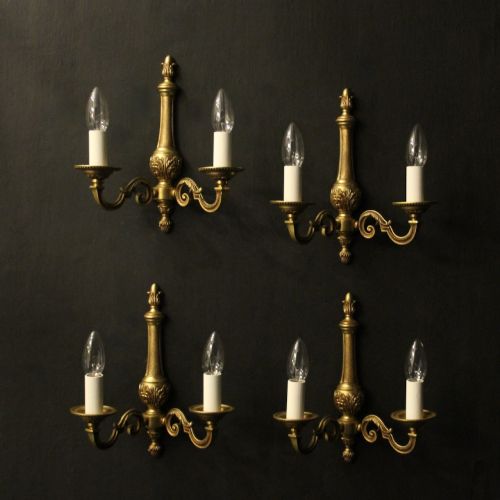
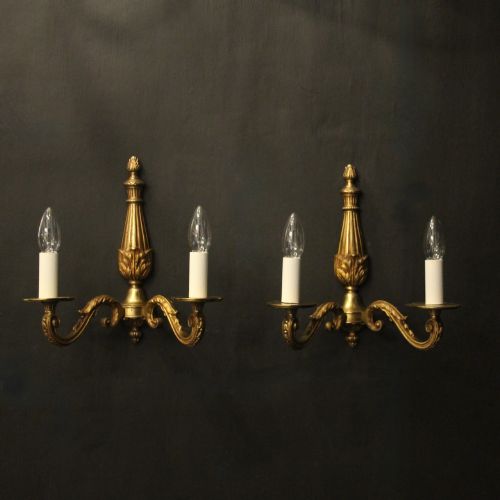
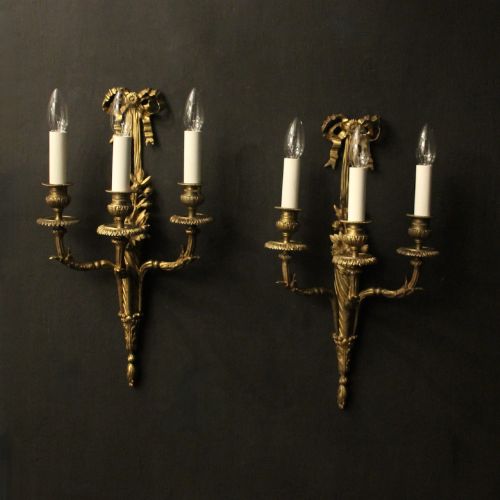
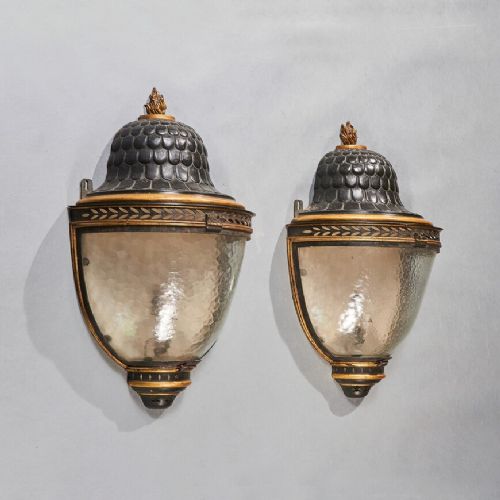
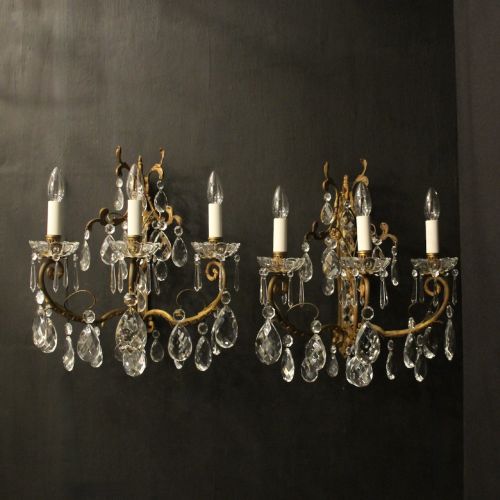
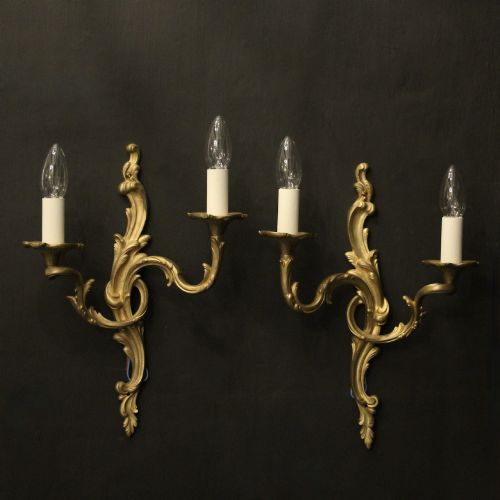
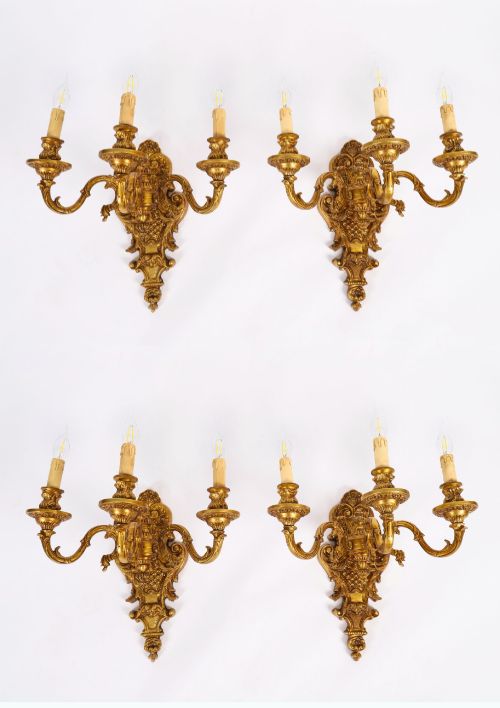
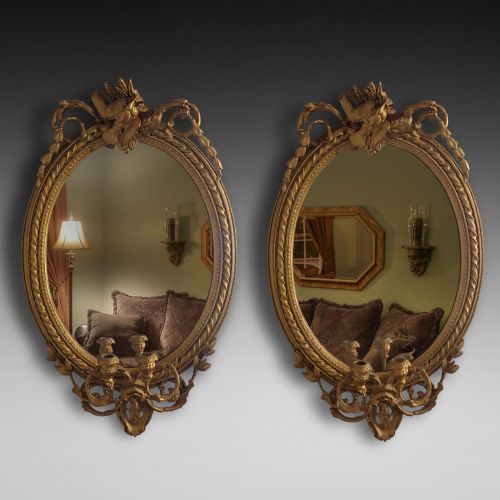
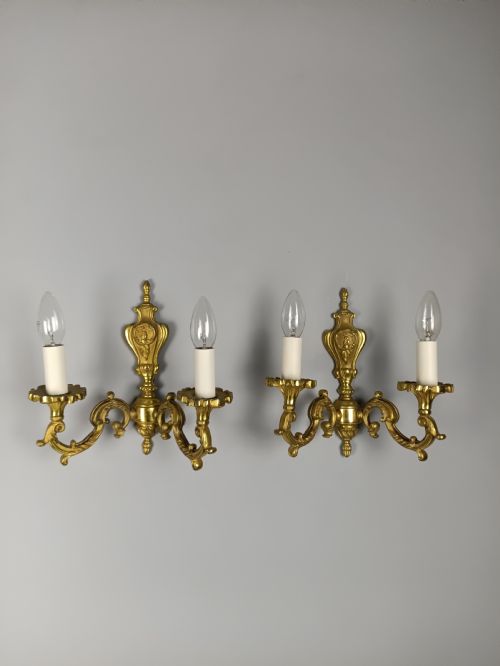
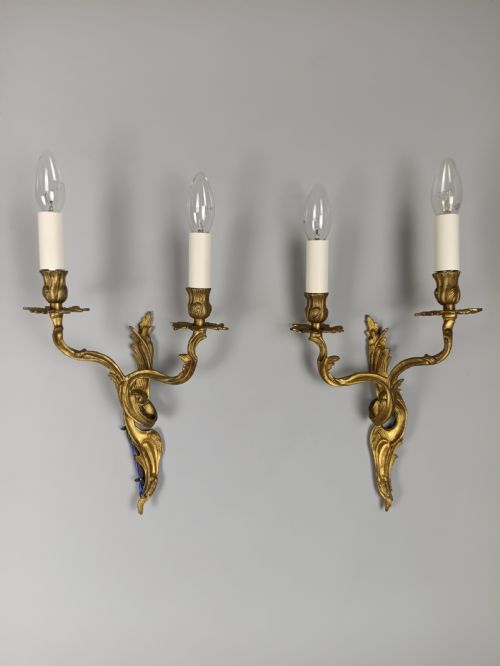
A french gilt sconces pair consists of matched wall-mounted light fittings designed to hold candles or electric bulbs, predominantly originating from the nineteenth and early twentieth centuries. These fixtures appear frequently in styles such as French Rococo, Louis XVI, and various revivals, taking the form of twin or triple arm wall lights, girandoles, and half lanterns.
Buyers encounter these objects mounted on walls to flank mirrors, fireplaces, or architectural doorways, reflecting light off metallic and glass surfaces. The selection spans robust nineteenth century castings down to lighter twentieth century brass and metal interpretations.
How they were made
Maker workshops utilised molten metals including bronze, brass, and ormolu, often casting them into ornate plant scrolls, ribbon motifs, or cherub figures. Gilt surfaces were achieved through fire gilding with mercury or through modern gold plating and paint applications over bronze and brass.
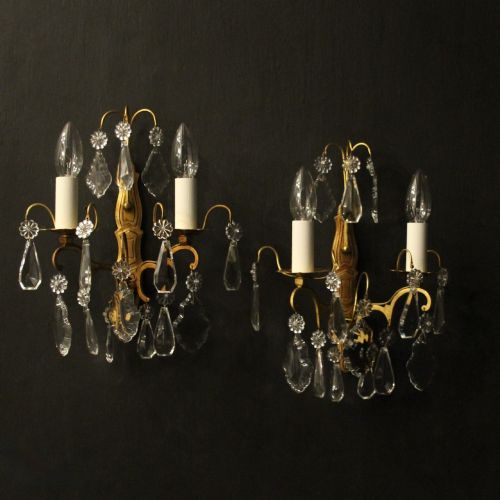
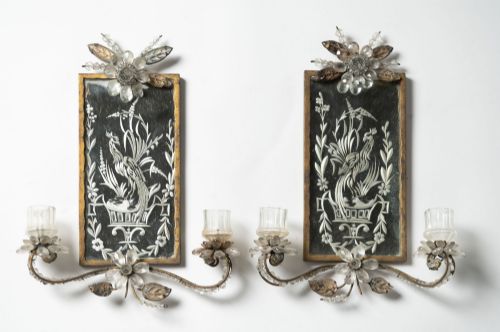
Assemblers combined these cast metallic frames with crystal drops, porcelain flowers, onyx panels, or tole peinte components to enrich the visual texture. Wooden variants rely on carved giltwood or parcel gilt timber shaped into brackets and girandole frames.
Listings feature wall lights spanning the nineteenth century through the nineteen-thirties, constructed from gilt bronze, brass, ormolu, and carved wood.
What varies in quality
Original surface gilding displays depth and varied patination that mechanical re-plating often lacks. The integration of high specification materials like cut crystal drops, champleve enamel, or hand-painted porcelain elevates the standard of a pair.
Maison Baguès·Casier·Dugourc
The French Gilt Sconces Pair Glossary
- Ormolu
- Gilded bronze produced through an amalgamation of mercury and gold applied to a bronze base. This technique creates a deep, durable metallic lustre.
- Girandole
- A branched wall light incorporating a mirror backplate. The reflective glass multiplies the illumination from the candle branches.
- Champleve
- An enamelling technique where troughs are dug into a metal surface and filled with vitreous paste before firing. The resulting patterns complement gilt bronze mounts.
- Caryatid
- A sculpted female figure serving as an architectural support. These appear on classical and neoclassical wall lights and candlesticks.
French Gilt Sconces Pair: Frequently Asked Questions
How do I wire old sconces?
Many vintage wall lights arrive adapted for modern electrical circuits with internal conduits run through the backplate. A qualified electrician can thread modern flex through the arms without compromising the structural integrity of the antique metal.
Surface-mounted fixtures require secure attachment to wall studs or proper wall anchors to support the weight of heavy bronze and crystal components.
What rooms suit wall sconces?
These decorative lights suit reception rooms, hallways, and dining spaces where ambient wall illumination creates a warm atmosphere. Positioning them symmetrically on either side of a fireplace or mirror frames a focal point.
Bedrooms also accommodate smaller twin-arm fixtures beside headboards to replace traditional bedside table lamps.
How do I date a pair?
Stylistic indicators such as heavy rococo asymmetry point towards mid nineteenth century revivals, whilst leaner neoclassical proportions often denote Louis XVI or late nineteenth century taste. Examining the backplate fixings, screw types, and casting seams provides further clues regarding age.
Materials also offer evidence, as heavy fire-gilded bronze belongs to earlier periods, whereas twentieth century iterations utilise lighter brass alloys.
Are crystal drops original?
Crystal prisms and drops often suffered breakage or loss over decades of use and cleaning. Replacements are common, so matching cut patterns and glass clarity requires close inspection.
Original drops exhibit hand-cut facets and slight irregularities in thickness compared to modern machine-made crystal replacements.