




French Gilt Leaning Mirror
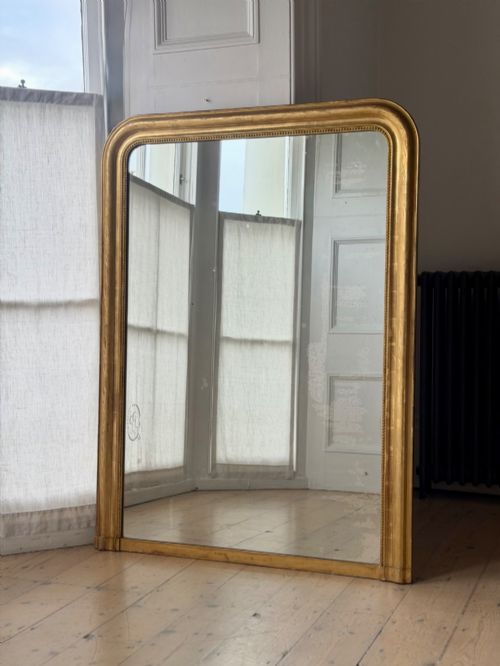
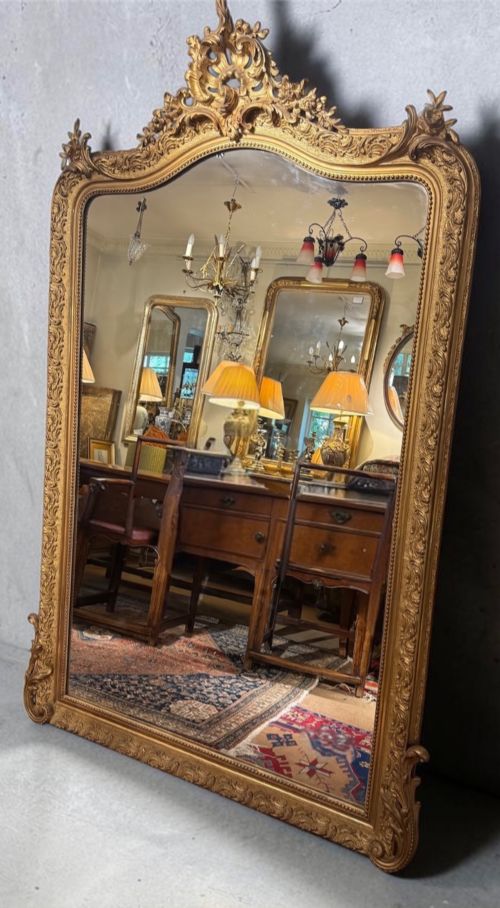
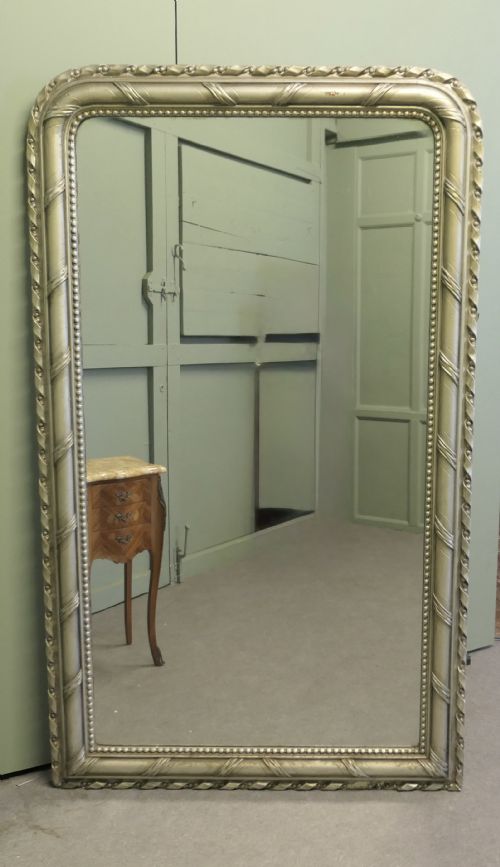
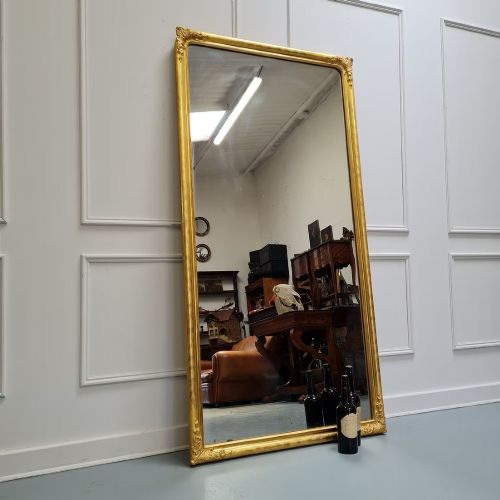
These large french gilt leaning mirror examples offer grand scale and reflective light, bringing period elegance directly to a high wall or floor.
French Gilt Leaning Mirror
A french gilt leaning mirror provides impressive vertical height designed to stand supported against a room's wall or function as an overmantle piece. Pieces of this scale appear frequently from the nineteenth century, including specific Louis Philippe formats alongside Victorian and Edwardian examples.
The forms span tall floor-standing dressing mirrors and large wall-mounted formats featuring shaped or arched tops. These substantial objects serve primarily to bounce natural light around large rooms while adding considerable architectural presence.
Materials and Construction
The foundational carcase of these pieces is typically constructed from wood such as pine, providing a sturdy structural base for the heavy glass plates. Craftsmen then applied gesso over the wooden frame to build up relief details and ornate surface ornamentation.
Giltwood, gold leaf, and silver leaf finishes were meticulously applied across the carved surfaces to achieve the characteristic metallic sheen. Original silver and gilt finishes often display a characteristic distressed character developed over decades of age.
Some nineteenth-century dressing mirrors spent their early mornings reflecting grand Parisian salons before finding their way to modern hallway floors.
Assessing Quality
Quality in these large looking glasses rests upon the depth and crispness of the carved wood and gesso ornamentation. Superior examples display finely rendered decorative details that retain their original spatial definition rather than appearing soft or smoothed over.
The integrity of the original gilt surface also dictates the character of the piece, with well-preserved gold and silver leaf surfaces offering a richer visual depth than later repainted or heavily restored iterations.
The French Gilt Leaning Mirror Glossary
- Gesso
- A plaster-like mixture applied to wood frames to create a smooth surface for gilding. It allows for intricate relief carving and decorative moulding.
- Giltwood
- Timber that has been coated with gold leaf or gold paint. This technique gives the appearance of solid gold while utilising a lighter wooden base.
- Louis Philippe
- A mid-nineteenth-century French style characterised by understated elegance, simple classical proportions, and often gentle rounded upper corners.
- Overmantle Mirror
- A large mirror specifically designed to hang or rest upon the mantelpiece above a fireplace. These pieces follow the horizontal or vertical proportions of the chimney breast.
- Silver Leaf
- Extremely thin sheets of beaten silver applied to a prepared surface to simulate solid silver metal. It tarnishes gracefully over time compared to gold leaf.
French Gilt Leaning Mirror: Frequently Asked Questions
How do I safely lean a heavy mirror?
These large frames rely on substantial weight and secure placement against a solid wall to remain stable. Many tall floor mirrors include discreet anchor points behind the frame to prevent tipping while allowing the piece to rest at an angle.
Positioning the base slightly away from the skirting board ensures the weight leans back securely into the vertical structure. Professional installation is often recommended for exceptionally tall or heavy nineteenth-century examples.
What is a Louis Philippe mirror?
A Louis Philippe mirror originates from the mid-nineteenth-century French period defined by simpler, more restrained lines than earlier heavily ornamented rococo designs. They typically feature rounded top corners and clean framing proportions.
These mirrors integrate easily into both traditional and modern interiors due to their balanced and architectural geometry.
How do I clean an antique gilt frame?
Antique gilt surfaces require gentle dusting with a soft, dry brush to remove particulate matter without disturbing the fragile gold or silver leaf. Moisture and modern chemical cleaners must be avoided entirely to preserve the original finish.
Regular careful maintenance protects the delicate gesso ornamentation and prevents the aged metallic leaf from flaking away from the wooden carcase.