

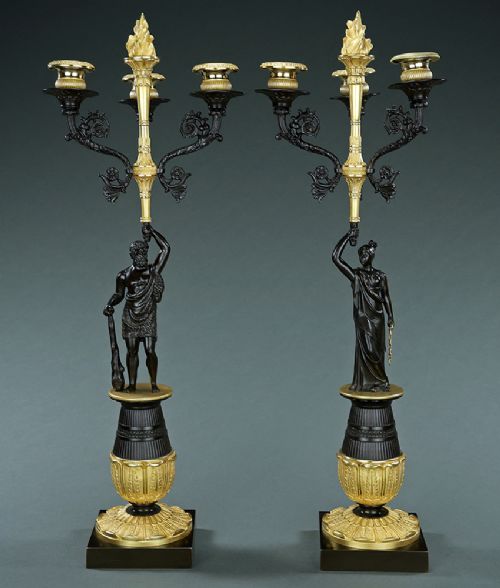
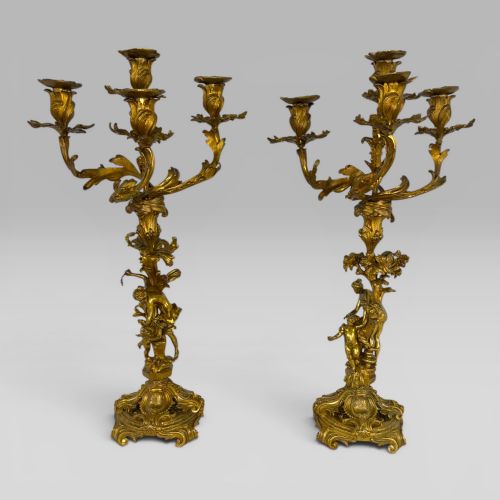
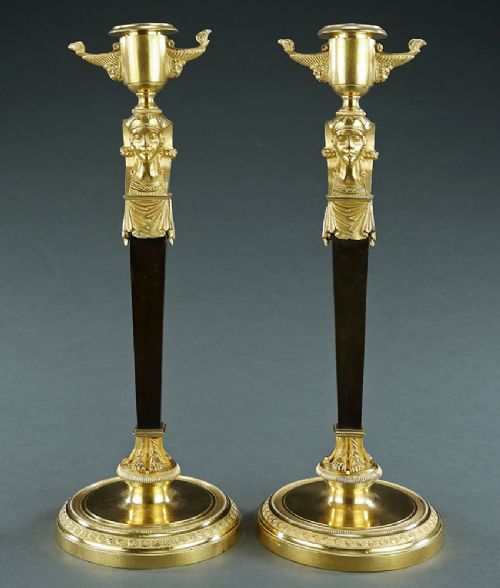
French Gilt Candelabra Pair
When you search for a french gilt candelabra pair, you enter a world of nineteenth-century lighting designed to catch every flicker of candlelight in grand rooms.
French Gilt Candelabra Pair
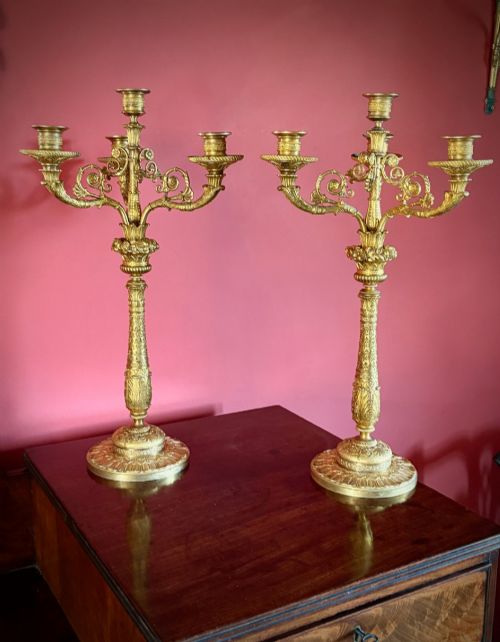
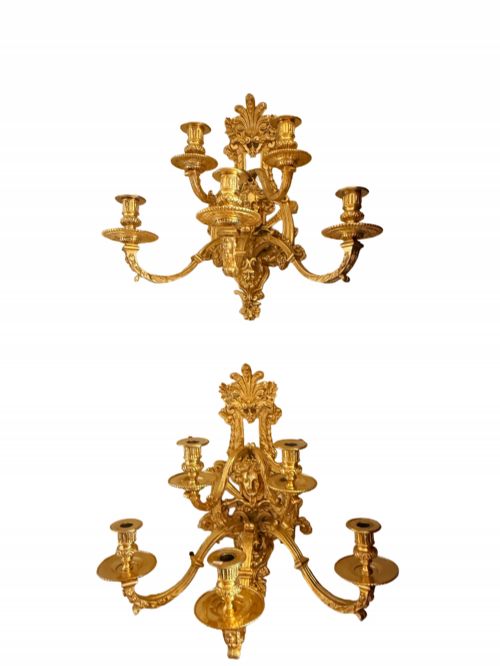
A french gilt candelabra pair provides branched candle holders designed for table or mantel display, frequently featuring two to five arms to support multiple tapers. These items emerge predominantly from the nineteenth century, spanning periods from the Empire and Restoration through to Louis XVI revivals and the Victorian era.
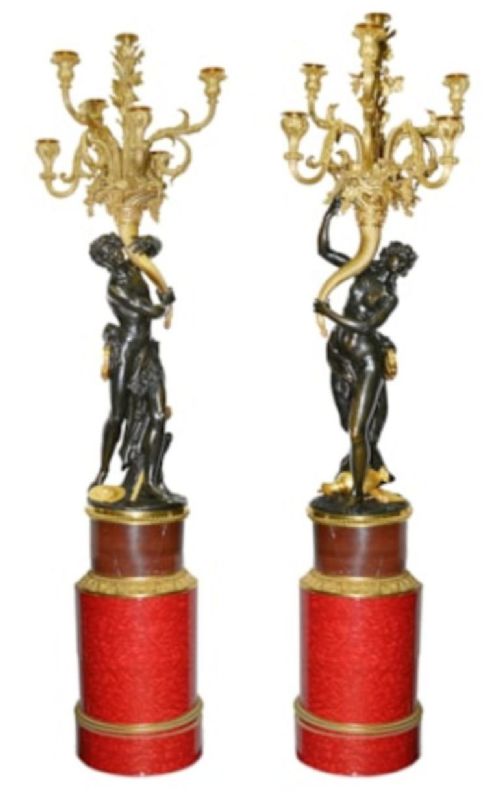
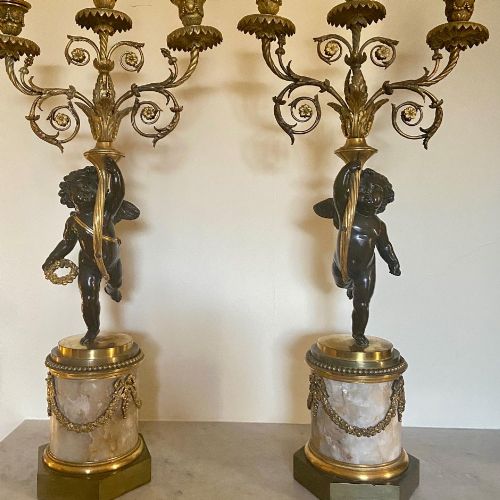
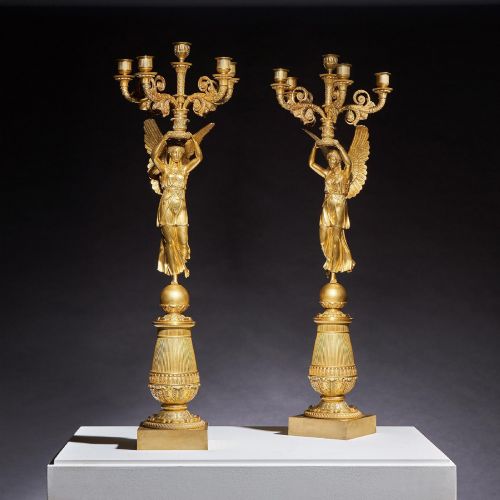
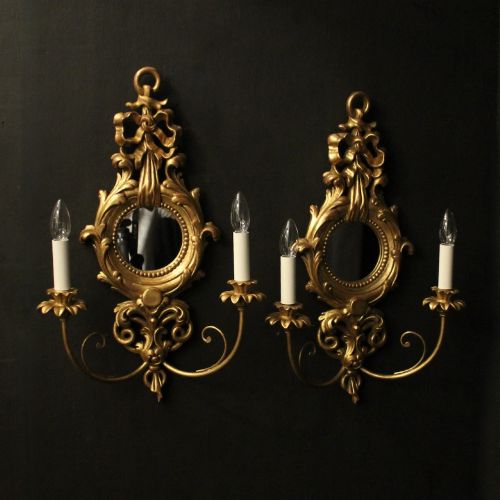
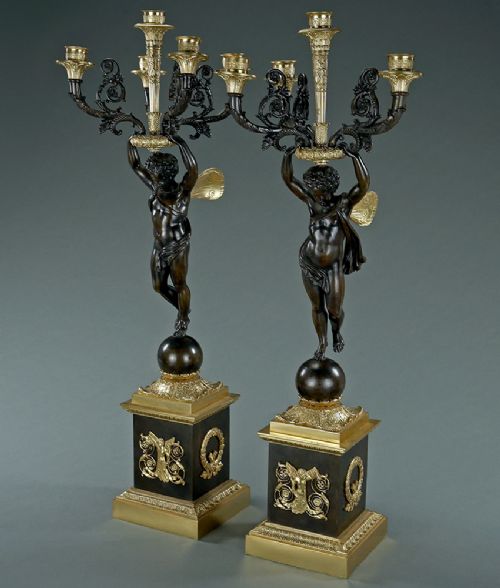
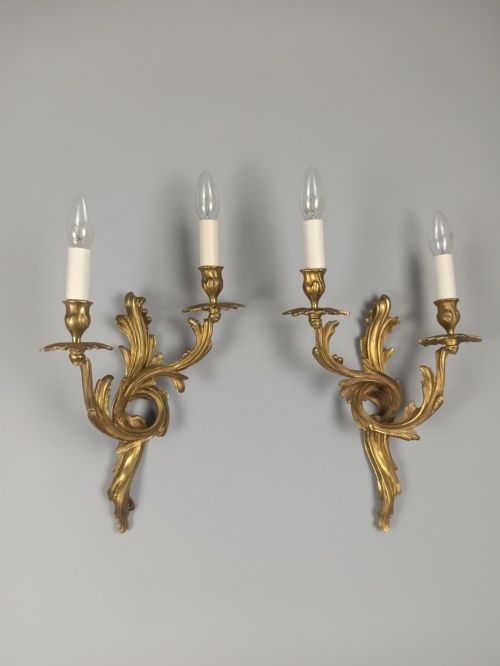
The selection here encompasses matched pairs in various formats, ranging from monumental figural bronzes incorporating putti and mythological subjects to simpler gilt metal and brass structures. Alongside standard tabletop designs, buyers encounter related lighting forms including wall sconces, girandoles, and occasional conversions to table lamps.
How they were made
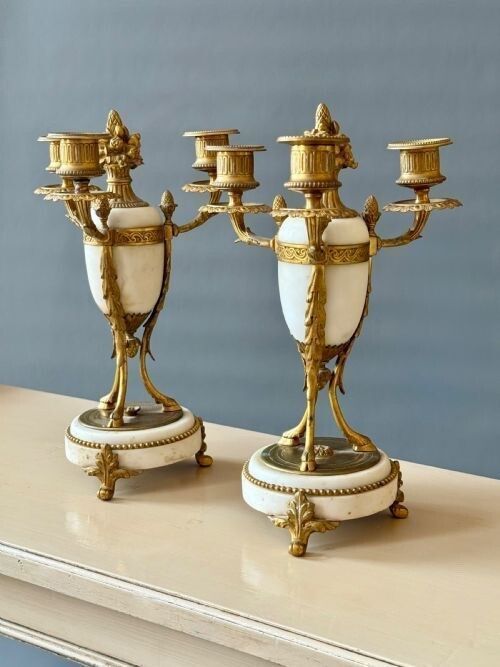
Casting forms relied heavily on bronze, brass, and gilt bronze, often referred to as ormolu, which involved applying a finely ground gold amalgam to a bronze base and firing it to drive off the mercury. Artisans combined these metallic elements with contrasting materials such as white or dark marble bases, carved wood, crystal drops, porcelain, and champlevé enamel.
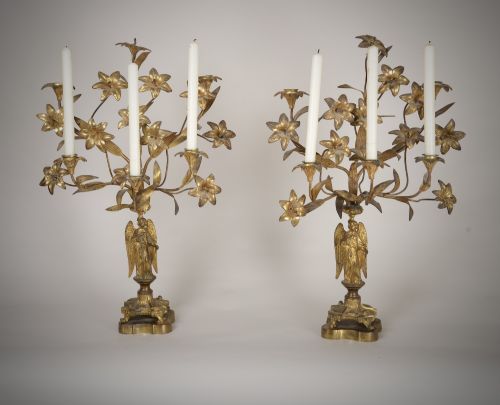
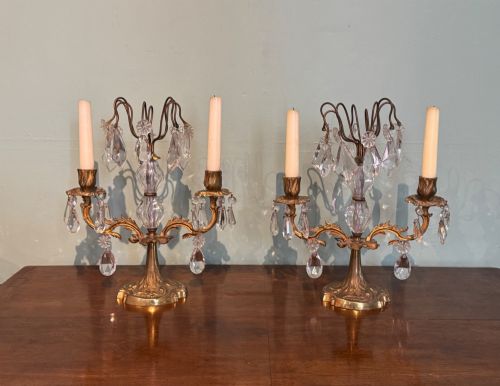
Materials recur across multiple forms, combining patinated bronze figures with ormolu branches, champlevé enamel details, crystal drops, and carved giltwood.
What varies in quality
The integrity of the mercury gilding or surface finish separates high-end workshop output from standard commercial pieces, as durable, warm ormolu retains its depth whereas inferior plating wears thin to reveal base metals. The integration of high-grade components, such as solid carved marble plinths and original crystal drops, elevates the overall execution.
Pierre Philippe Thomire·Claude Galle·Francois Redmond·Rabiat·Barbedienne
The French Gilt Candelabra Pair Glossary
- Ormolu
- Gilded bronze produced by applying a mercury and gold mixture to a bronze object and heating it until the mercury evaporates. This technique creates a durable, warm golden surface characteristic of fine French decorative arts.
- Patinated bronze
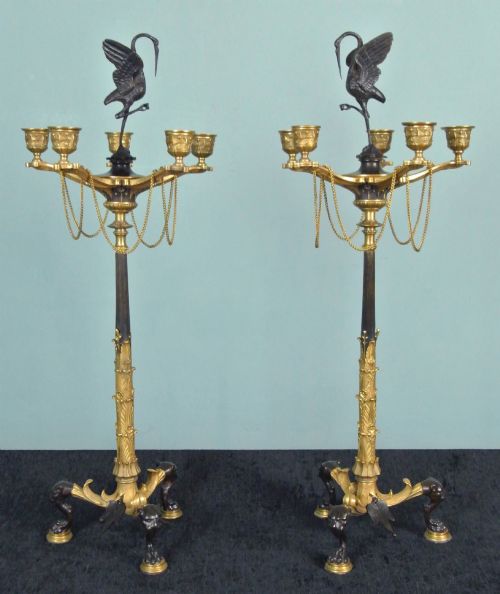
- Bronze treated with chemical solutions to produce a dark brown, green, or near-black surface colour. Makers used this contrastingly dark metal to highlight figures, animals, or central stems against bright ormolu mounts.
- Girandole
- A branched wall sconce or tabletop candelabra featuring reflective surfaces, frequently backed by a mirror or glass plate. The design multiplies the available light by bouncing the candle flame across polished metal and crystal.
- Champlevé
- An enamelling technique where troughs or cells are hollowed out of a metal surface, filled with vitreous enamel powder, and fired. The resulting coloured patterns decorate the stems and bases of nineteenth-century pieces.
- Putto
- A representation of a plump, naked male child, often winged, appearing frequently in classical and revival decorative sculpture. These figures commonly support candle arms or adorn the marble bases of nineteenth-century lighting.
French Gilt Candelabra Pair: Frequently Asked Questions
Were these candelabras converted to electricity?
Many nineteenth-century examples underwent conversion into table lamps during the twentieth century to accommodate modern domestic lighting preferences. These adaptations often involve running a cord through the central stem while retaining the original candle nozzles.
Buyers find both unmodified lighting designed strictly for wax tapers and converted electric variants across the available selection. Checking the wiring status helps determine whether rewiring by a qualified electrician is necessary.
How can I distinguish Empire style from Rococo revival?
Empire style pieces draw inspiration from ancient Roman, Greek, and Egyptian motifs, displaying strict symmetry, military trophies, sphinxes, and dark patinated bronzes paired with bright ormolu. They project a monumental, architectural gravity.
Conversely, Rococo revival designs embrace asymmetrical scrolling foliage, naturalistic curves, shell motifs, and playful putti. These later nineteenth-century interpretations favour fluid movement over classical restraint.
What does a marble base indicate about the period?
Marble plinths frequently appear on nineteenth-century French lighting, providing a weighty, stable foundation for multi-armed branch structures. White statuary marble points toward neoclassical and Louis XVI revival tastes.
Darker veined marble varieties commonly accompany Empire, Restauration, and Victorian productions. The presence of stone indicates an integration of mixed media typical of high-end Parisian workshops.