



French Gilt Bronze Casket
A french gilt bronze casket brings heavy metalwork and glass together to hold small treasures on a dressing table.
French Gilt Bronze Casket
A french gilt bronze casket is a decorative container designed for jewellery, trinkets, or stationery, built during the nineteenth century. These pieces range from small trinket boxes to large display boxes intended for boudoir or desk use.
The version most commonly met on this page combines a cast metal frame with panels of glass, porcelain, or marble. Forms span simple rectangular boxes to novelty shapes like carriages, alongside architectural styles influenced by the Second Empire and Napoleon III periods.
Materials and construction
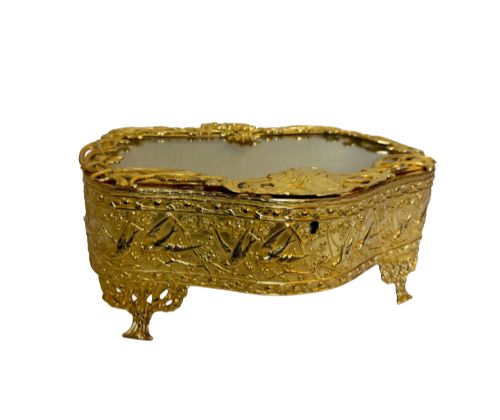
These items rely on metal casting for the primary frame, utilising ormolu, gilt bronze, brass, or gilt metal. Artisans chased the cast metal surfaces to create sharp decorative details before applying gilding.
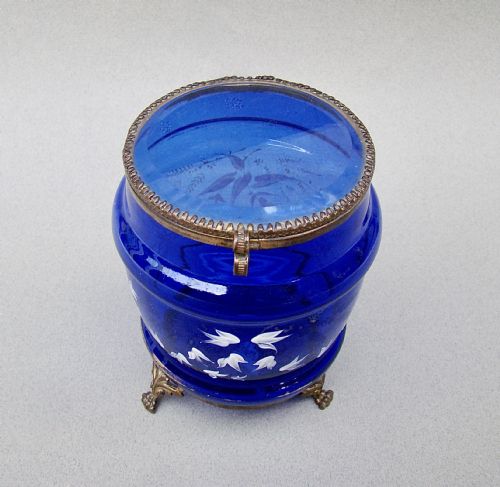
Many boxes incorporate transparent or opaque panels secured within the metal armature. Materials such as cut crystal, Bristol blue glass, opal glass, Sevres porcelain, Limoges miniatures, onyx, and marquetry wood form the walls and lids.
French Gilt Bronze Casket Retail Price Guide 2026
Typical asking prices for french gilt bronze casket among the pieces listed under this phrase on Sellingantiques today, from the lower quarter to the upper quarter. They describe what is for sale here now, not the wider market.
Materials recorded across the inventory include ormolu, gilt bronze, glass, porcelain, silk, brass, marble, onyx, and kingwood.
Assessing quality in metalwork and panels
Quality rests upon the crispness of the metal chasing and the weight of the bronze or ormolu frame. Finer boxes display deeply modelled ornament on the feet, hinges, and lid borders rather than soft, flat casting.
The integration of inset panels dictates the tier of the piece. Hand-painted porcelain plaques, heavy bevelled cut glass, or inset marble elevate a casket above standard production items.
The French Gilt Bronze Casket Glossary
- Ormolu
- Gilded bronze produced by applying a mercury-gilding amalgam to cast bronze. This technique creates a deep, durable golden finish found on nineteenth-century decorative items.
- Napoléon III
- A French design style spanning the mid to late nineteenth century. It revives past historical aesthetics with an emphasis on ornate decoration and opulent materials.
- Sevres
- A famous French porcelain manufacturer whose plaques and panels frequently appear mounted into the sides of decorative boxes. These porcelain inserts often feature hand-painted scenes or rich blue grounds.
- Palais Royal
- A Paris location associated with luxury shops selling small souvenirs, novelties, and trinket boxes during the nineteenth century. Items from this origin often include miniature carriages or novelty desk pieces.
French Gilt Bronze Casket: Frequently Asked Questions
What were french gilt bronze caskets used for?
These boxes served practical functions on nineteenth-century dressing tables and desks. Owners kept precious jewellery, letters, or small personal items secured inside them.
Over time, their decorative appeal surpassed their storage use. They became status symbols displayed in formal rooms to showcase wealth and taste.
How do I date a french gilt bronze casket?
Dating relies on stylistic clues, materials, and construction methods. Pieces bearing Napoleon III or Second Empire characteristics point to the middle and later decades of the nineteenth century.
Maker marks, hinge types, and the style of glass or porcelain panels also help narrow the decade of production. Art Nouveau examples introduce flowing, organic lines associated with the turn of the twentieth century.
How should I clean the metal mounts?
Cleaning requires extreme caution to avoid damaging the historical gilt surface. Dusting with a soft, dry brush removes surface particles without abrasion.
Liquid cleaners or metal polishes strip the original gilding away. Professional conservation is recommended for pieces showing heavy tarnish or dirt accumulation.
Are these caskets fragile?
The glass and porcelain panels inserted into the metal frames require careful handling. Moving a heavy box by its lid can strain the hinges and crack fragile corners.
Placing them on stable surfaces away from high-traffic areas prevents accidental knocks. Silk linings inside may also show wear if handled frequently.