

French Gilt Armchair
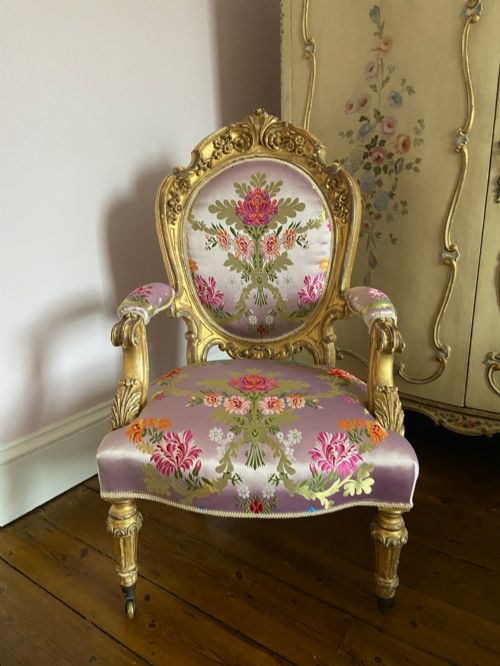
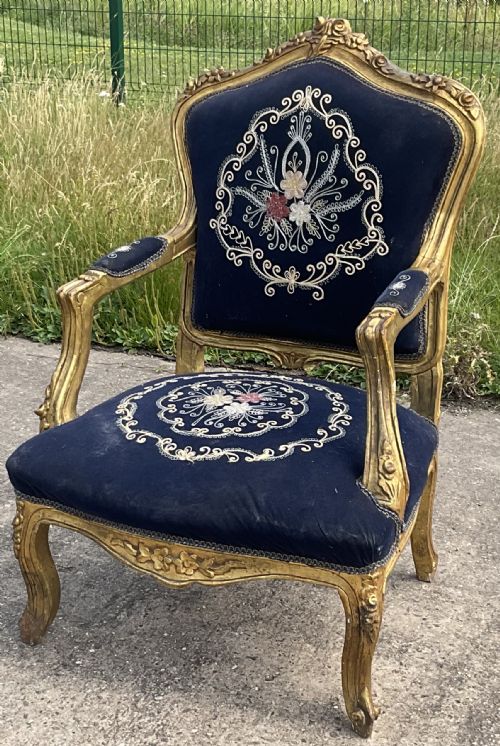
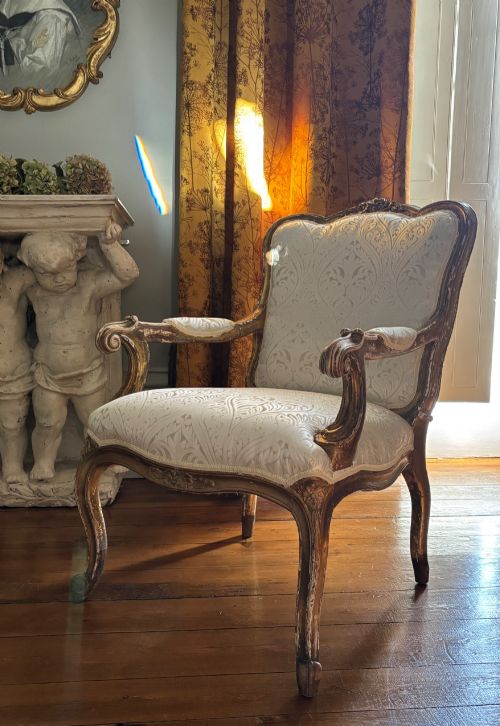
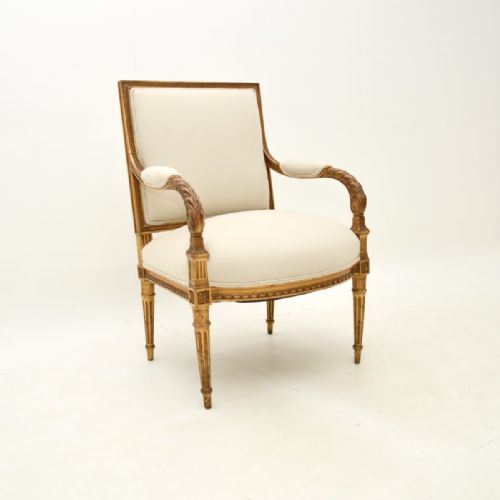
A french gilt armchair brings a rich sense of historic European elegance into a room through carved woodwork and radiant metallic finishes.
French Gilt Armchair
A french gilt armchair is a seating piece rooted in continental design traditions, most frequently appearing in revival styles such as Louis XVI, Louis XV, and French Empire. These chairs generally function as salon seats, occasional chairs, or library armchairs intended to combine decorative presence with comfortable seating.
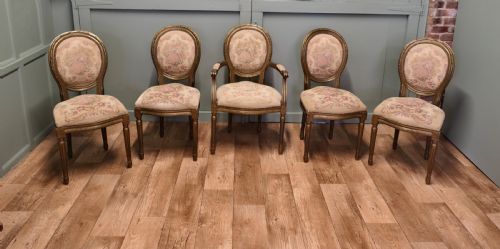
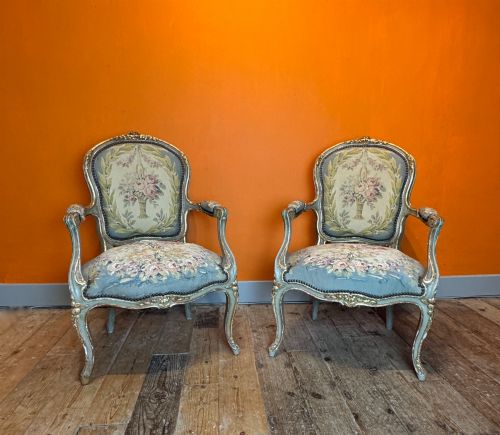
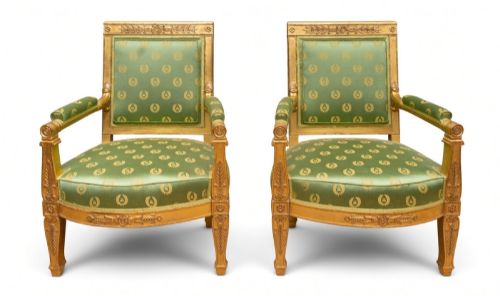
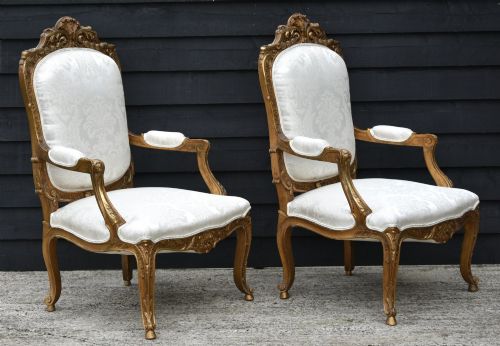
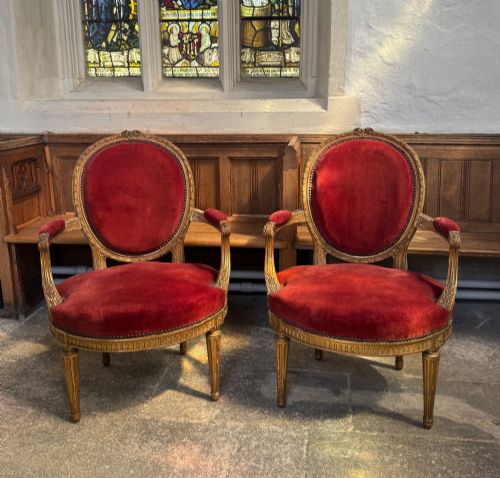
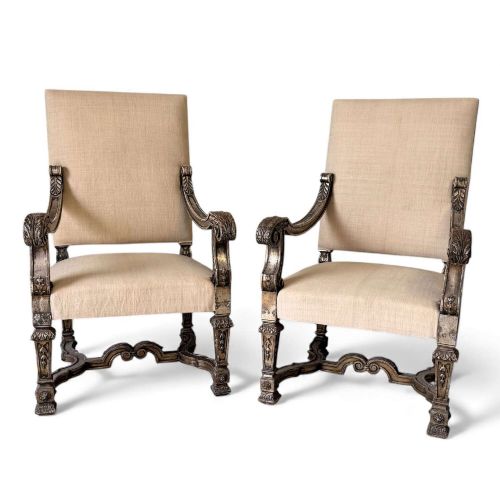
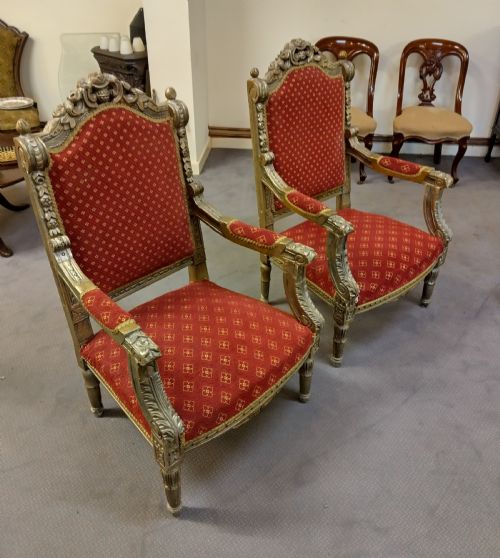
The selections recorded here span from the nineteenth century into the early twentieth century, encompassing individual statement chairs, matched pairs, and larger salon suites. Common forms include the open-armed fauteuil, the enclosed bergère, and grander throne chairs or desk chairs.
Buyers selecting one of these chairs often look for specific stylistic markers like classical columns, scroll arms, or exposed timber frames finished in gold. They serve equally well as focal points in modern interiors or as period-accurate additions to traditional room schemes.
Materials and Construction
The structural framework of these chairs relies on traditional timber selection, predominantly beech, walnut, and general hardwood or timber foundations. Carvers shaped these woods into detailed ornamentation before applying decorative surface treatments.
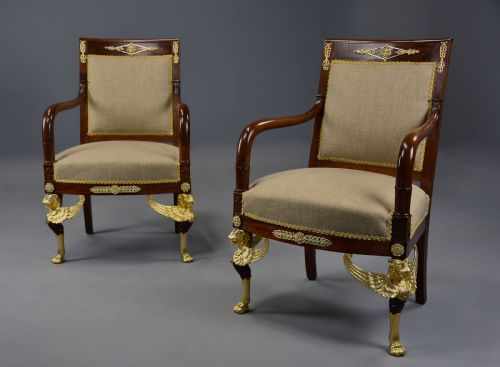
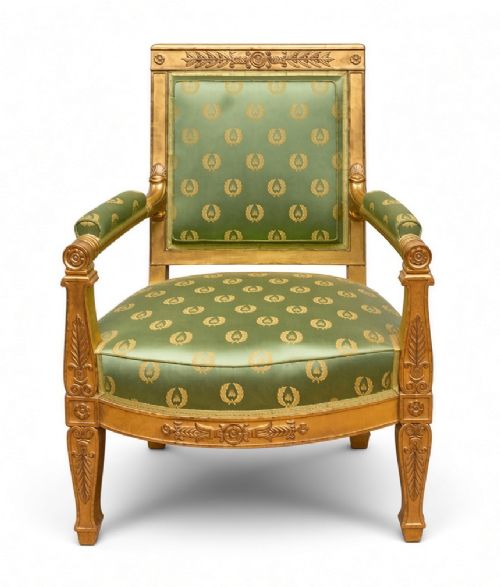
Giltwood, parcel-gilt, and painted finishes define the exterior appearance, often combined with applied bronze mounts or brass details in Empire pieces. Artisans laid gold leaf over prepared surfaces to achieve the characteristic metallic sheen.
Upholstery materials range from traditional tapestry and silk fabric to contemporary velvet and silk damask. These textiles are secured to padded seats and backs to complete the functional seating unit.
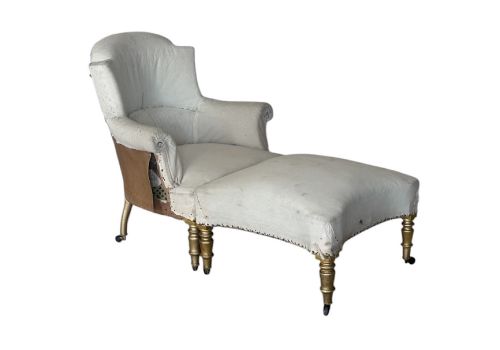
Several armchairs arrive with matching stools or double as a Duchess Brisée, ready for an afternoon nap.
Variations in Quality
Quality in these seating pieces rests upon the crispness and depth of the original wood carving. Finer examples display hand-carved details with sharp relief work, whereas simpler pieces rely on shallower ornamentation or moulded elements.
The application of the gilt finish creates a further distinction across the range. Superior gilding reflects light evenly and shows subtle signs of hand-application, while lesser versions can appear flat or uniform.
The integrity of the underlying timber frame and the quality of the upholstery textiles dictate the overall standard. Chairs that retain balanced proportions and robust joinery represent the upper tier of surviving examples.
Jacob Desmalter·Blaise Maucuy
The French Gilt Armchair Glossary
- Fauteuil
- An open-armed upholstered armchair originating in France, typically featuring an exposed wooden frame and padded armrests.
- Bergère
- An enclosed armchair with upholstered sides and a padded back, often containing a loose squab cushion.
- Giltwood
- Timber that has been coated with gold leaf or a gold-coloured finish for decorative effect.
- Parcel-gilt
- A decorative treatment where only specific portions of a painted or stained wooden surface are gilded.
- Ormolu
- Gilded bronze mounts applied to furniture, frequently seen on pieces executed in the French Empire style.
French Gilt Armchair: Frequently Asked Questions
What is the difference between a fauteuil and a bergere?
A fauteuil is an open armchair with exposed wooden armrests and sides, designed for formal sitting. A bergère is enclosed at the sides with upholstery, offering a more enclosed and lounging seat.
Both forms appear frequently within nineteenth-century French seating and serve different functional roles in a room arrangement.
How do I identify a Louis XVI style chair?
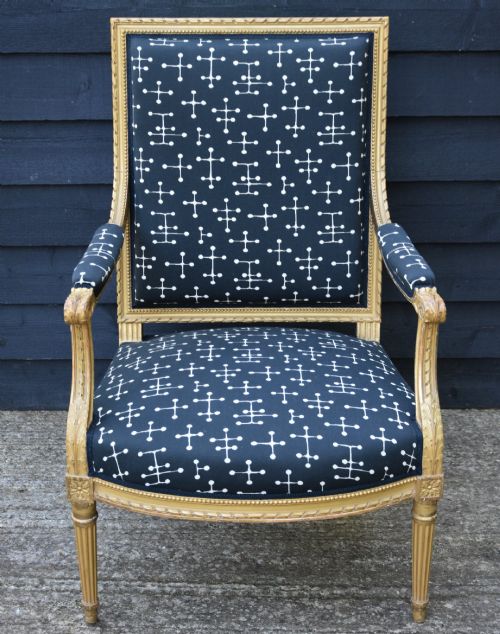
Louis XVI style chairs are characterised by straight, fluted legs, geometric frames, and neoclassical motifs like ribbons and acanthus leaves. They contrast with the curving lines typical of earlier rococo designs.
These structural elements help distinguish the revival pieces common in the later nineteenth century from older examples.
Are these chairs suitable for daily use?
Most antique gilt armchairs are structurally robust enough for regular sitting, provided the frame and joints remain sound. Historic seating often benefits from careful placement away from direct heat sources.
Modern upholstery updates on period frames allow these chairs to combine historic aesthetics with contemporary comfort.
What does parcel gilt mean?
Parcel gilt describes a finish where gilding is applied only to selected carved details rather than the entire surface of the timber. This technique highlights specific decorative elements against a painted or polished wood background.
It is commonly found on nineteenth-century salon chairs and decorative seating.