

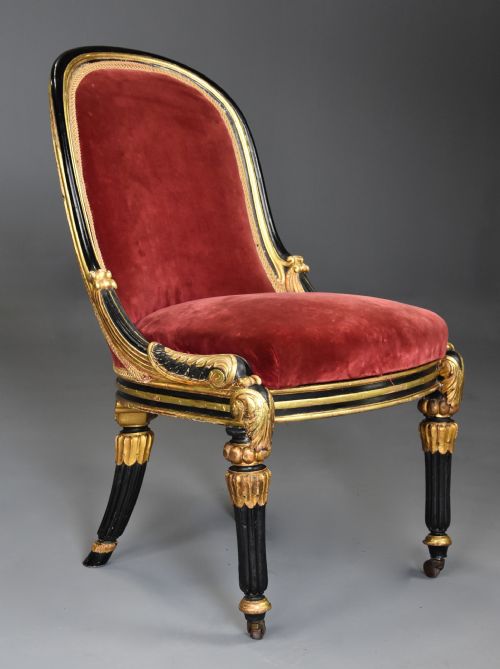


Carved Gilt Desk Chair
A carved gilt desk chair brings gilded warmth and architectural presence to a room, offering both decorative splendour and a firm seat for writing.
Carved Gilt Desk Chair
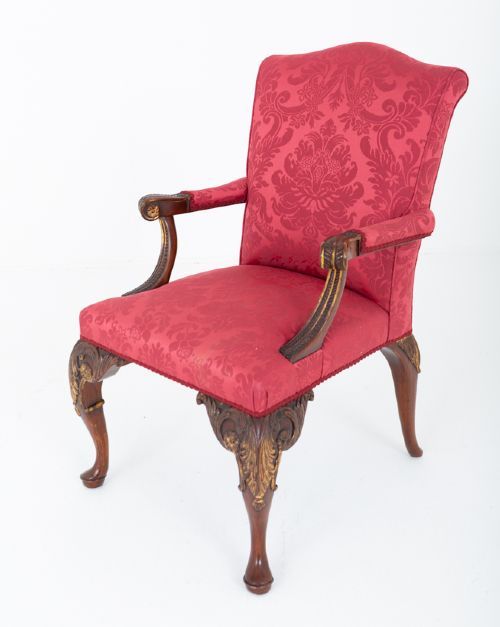
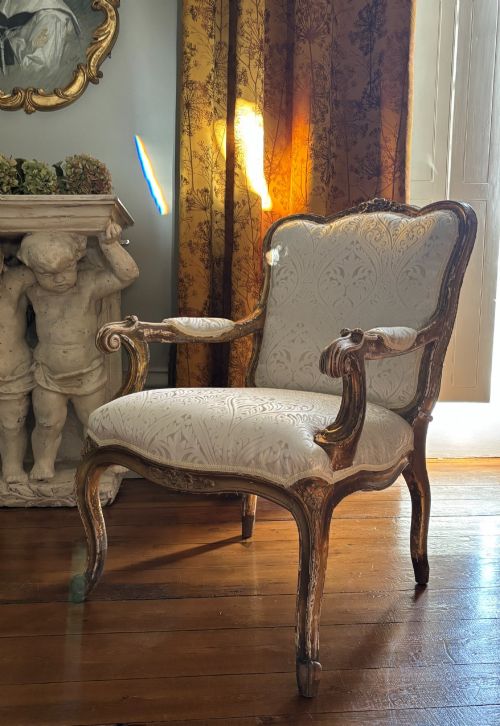
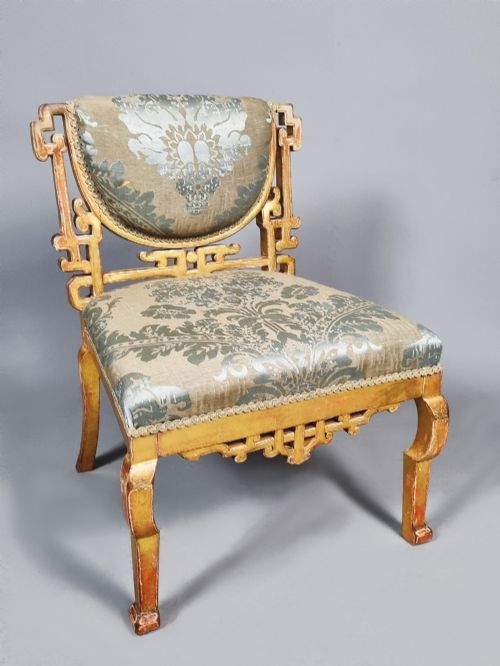
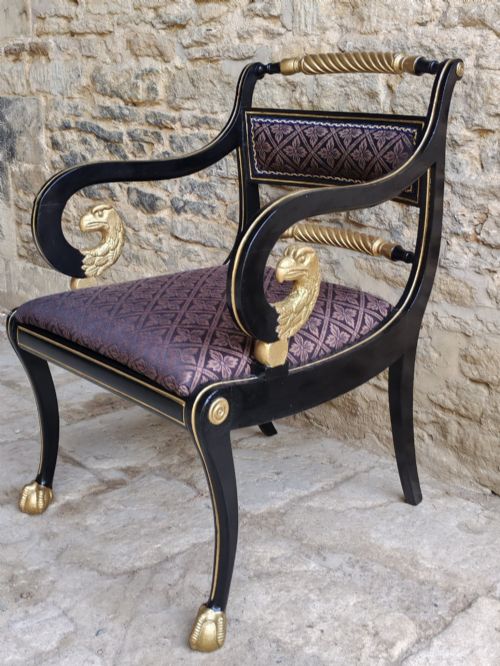
The forms range from side chairs and armchairs to library chairs, occasional chairs, and bedroom chairs. Makers and workshops drew upon diverse aesthetic traditions, including Chinese Chippendale, Regency, Louis XVI style, French Rococo revival, and Empire revival.
You are most likely to meet nineteenth century Continental gilt side chairs or French occasional chairs with scroll arms and giltwood frames. Examples also appear in ebonised wood, simulated bamboo, and gilt walnut, upholstered in fabric, velvet, or silk damask.
How they were made
Cabinetmakers shaped the structural frames from beech, walnut, and other timbers, occasionally employing ebonised wood or simulated bamboo for distinct visual effects. Carvers then executed the decorative details by hand directly into the wooden substrate.
Workers applied gold leaf or ormolu mounts to the prepared wooden surfaces to achieve the characteristic metallic lustre seen on these chairs. Traditional upholstery methods completed the piece, securing materials like silk damask, velvet, and patterned fabrics over internal padding.
Carved Gilt Desk Chair Retail Price Guide 2026
Typical asking prices for carved gilt desk chair among the pieces listed under this phrase on Sellingantiques today, from the lower quarter to the upper quarter. They describe what is for sale here now, not the wider market.
This site's listings feature pieces from the Regency era, the nineteenth century, nineteen twenty, and the Edwardian period.
What varies in quality
Quality rests upon the crispness and depth of the hand carving on the wooden frame, where sharper, more fluid execution distinguishes finer examples from simpler production. The application of gold leaf and the handling of ebonised or giltwood surfaces dictate the visual depth of the finish.
Structural integrity depends on the robustness of the timber and the joinery hidden beneath the upholstery, particularly in armchairs and library chairs subject to daily use. The choice of covering materials, from standard fabric to silk damask, reflects the original commission's standing and ambition.
Waugh And Son
The Carved Gilt Desk Chair Glossary
- Giltwood
- Wood that has been coated with gold leaf or a metallic substitute. This finish provides a bright, reflective surface characteristic of formal period seating.
- Ebonised wood
- Timber treated to resemble ebony through staining or painting. This dark finish creates a strong contrast against gilt highlights.
- Ormolu
- Gilded bronze or brass mounts applied to furniture for decoration. These metal elements accentuate the architectural lines of the chair.
- Silk damask
- A reversible figured fabric woven from silk. It appears frequently as upholstery on high-status nineteenth century chairs.
Carved Gilt Desk Chair: Frequently Asked Questions
What is a carved gilt desk chair?
A carved gilt desk chair is a wooden seat adorned with gold leaf or gilt finish, designed for use at a writing table or in a library. These chairs combine decorative carving with functional seating dimensions.
They appear in various revival styles, featuring materials such as beech, walnut, and upholstered fabrics.
How do I date a gilt chair?
Dating relies on the stylistic markers of the frame, the carving technique, and the materials employed. Regency and nineteenth-century pieces often display distinct classical or revival motifs.
Evidence from listings points to periods spanning the early nineteenth century through to the nineteen twenties.
Where were these chairs used?
These chairs were placed in studies, libraries, boudoirs, and principal reception rooms where formal appearance mattered. They served both as functional seating for writing and as decorative elements.
Their varied forms include armchairs, side chairs, and specific bedroom or occasional seating.
What materials make up the frame?
Frames are constructed from solid timbers such as beech and walnut, sometimes ebonised or shaped to simulate bamboo. The visible surfaces receive a giltwood finish or gold leaf application.
Ormolu mounts and carved wooden details add ornamental depth to the structure.