


French Furniture Planter
A French furniture planter brings botanical charm inside, combining decorative timber frames with metal liners to hold live blooms or serve as wine coolers.
French Furniture Planter
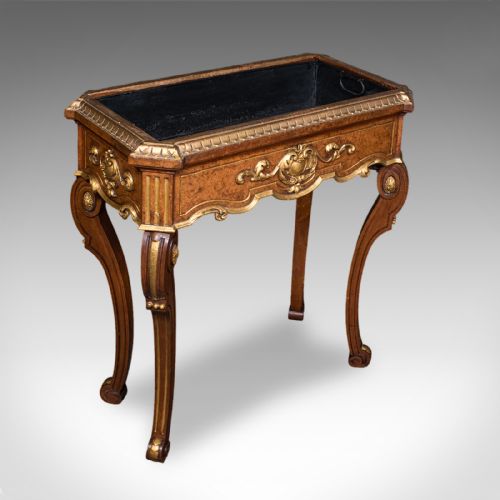
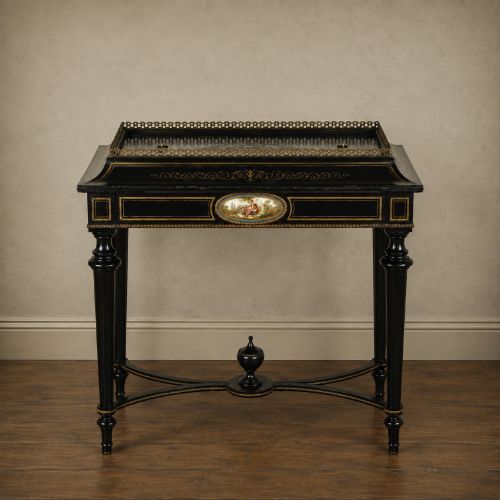
A French furniture planter combines decorative plant display with functional table design, taking the form of jardiniere tables, plant stands, and occasional tables. These pieces emerge in styles like Louis XV Revival, Napoleon III, and French Empire.
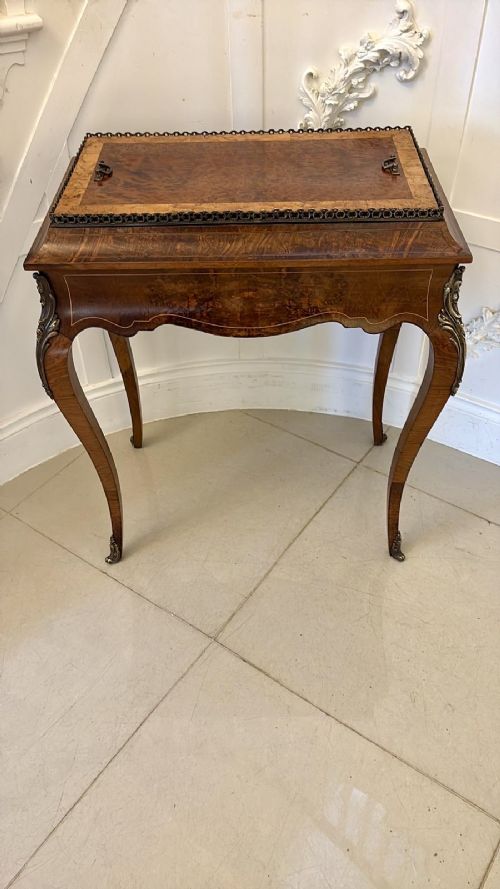
The buyer meets variations spanning walnut, burr walnut, ebonised wood, and golden oak, often fitted with metal or lined interiors. Many examples double as wine coolers or cellarettes, demonstrating the dual purpose common in nineteenth-century reception rooms.
Materials and construction methods
Cabinet makers utilised rich timbers including walnut, burr walnut, satinwood, and ebonised wood, frequently applying marquetry inlay or giltwood finishes to the frames. Caning and painted porcelain plaques also appear on select stands.
Mounts and liners in ormolu and brass provide structural contrast and waterproof protection for the timber frames. These metal elements define the aesthetic of nineteenth-century French and Regency examples.
Several pieces shift identities seamlessly, doubling as respectable plant stands by day and wine coolers by evening.
Assessing quality in design and execution
The distinction between tiers of quality rests on the selection of timbers, such as figured burr walnut against plain hardwoods, and the crispness of ormolu mounts. Finer pieces integrate painted porcelain plaques or intricate marquetry rather than relying on simple joinery.
Proportion and structural integrity dictate the success of the piece, particularly where two-tiered frames or caned elements bear weight. The integration of the metal liner into the wooden carcass shows the level of workshop care.
The French Furniture Planter Glossary
- Jardiniere
- An ornamental stand or container designed to hold growing plants or flowers indoors. They frequently double as wine coolers in nineteenth-century interiors.
- Ormolu
- Gilded bronze mounts applied to furniture for decorative accent. This technique characterises French Rococo Revival and Louis XV style pieces.
- Marquetry
- Decorative veneer work forming geometric or floral patterns on timber surfaces. Craftsmen utilise this to ornament burr walnut and satinwood tables.
- Cellarette
- A lockable container or fitted stand for holding bottles of wine or spirits. In period listings, this term often overlaps with jardiniere tables.
- Ebonised
- Timber treated to imitate the dark appearance of ebony. This finish appears frequently on Napoleon III stands alongside porcelain plaques.
French Furniture Planter: Frequently Asked Questions
What is a French furniture planter?
A French furniture planter is a decorative stand or table designed to hold indoor plants, featuring a waterproof metal liner within a timber frame. These pieces often double as wine coolers or cellarettes.
Originating in various nineteenth-century revival styles, they bring botanical display and refined cabinet making together into a single household object.
How were these planters used historically?
These pieces served primarily to display potted plants within reception rooms, allowing greenery to inhabit domestic spaces without damaging furniture surfaces. Their waterproof linings made them suitable for holding ice and bottles.
Owners utilised them during gatherings as dual-purpose items that functioned as occasional tables, side tables, or wine coolers.
How do I identify a Louis XV style planter?
Louis XV style planters typically exhibit curved wooden lines, cabriole legs, and ornate ormolu mounts that reflect the Rococo revival of the nineteenth century. Burr walnut and marquetry inlay frequently enrich the surfaces.
They emphasise decorative botanical motifs and flowing contours rather than the strict symmetry found in earlier Empire pieces.
Can I still use these for live plants?
Many surviving pieces retain their original metal liners, which make them suitable for holding potted plants provided you protect the interior from standing water. Placing a smaller pot inside the liner prevents moisture damage to the antique metal.
Careful watering ensures the surrounding timber framework and gilt mounts remain safe from dampness over time.
What woods were used in these pieces?
Cabinet makers relied on walnut, burr walnut, satinwood, and golden oak for the main body of the stands. Ebonised wood also appears on specific revival pieces.
These timbers were often paired with brass, ormolu, and porcelain plaques to create decorative contrast across different nineteenth-century periods.