


Burr Walnut Planter
A burr walnut planter brings rich grain and classical French proportion to a room, functioning as a jardiniere table or standing vessel.

Burr Walnut Planter
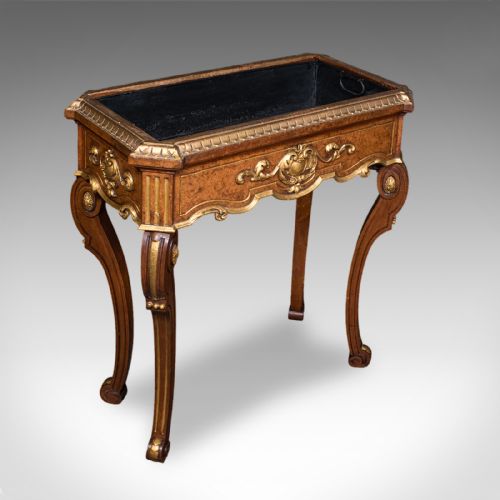
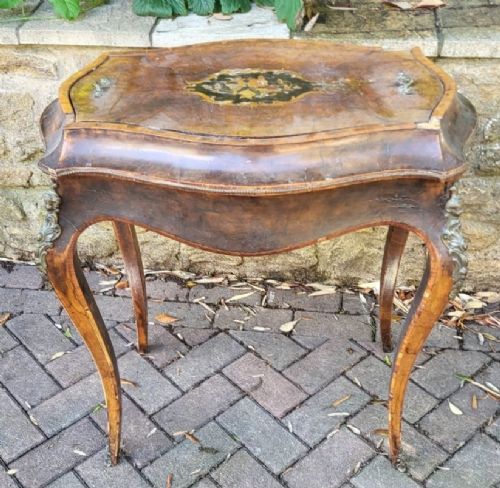
A burr walnut planter combines the decorative figure of burr wood with the functional form of a jardiniere or plant stand, often taking the shape of a table with an integrated basin. These pieces appear across the nineteenth century, with strong representation from the Victorian period and the Regency era.
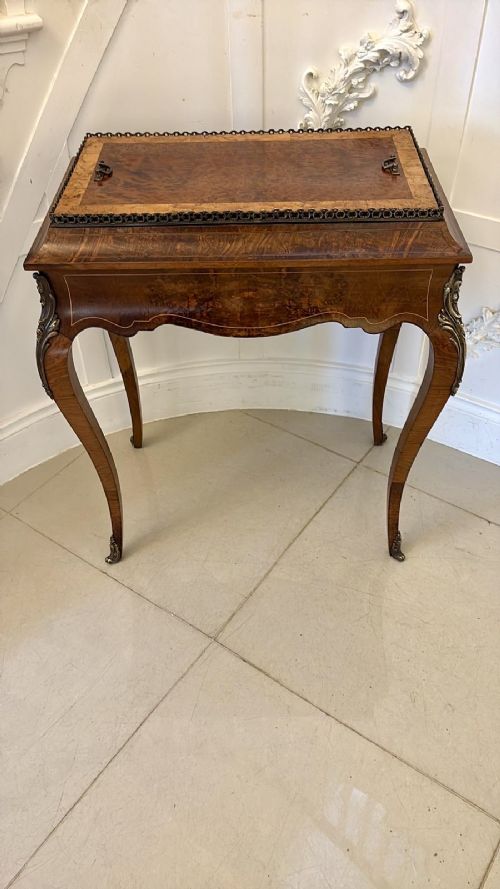
Makers fashioned these vessels as freestanding tables, side tables, or cellarettes, frequently incorporating lift-off lids or removable liners in zinc and metal. The French Louis XV style and Rococo Revival heavily influence the design vocabulary, showing serpentine outlines and elaborate marquetry inlay.
Buyers encounter forms that range from simple inlaid boxes to elaborate French jardiniere tables mounted with ormolu. The historical record shows them serving dual purposes as wine coolers or plant holders, uniting utility with ornamental display.
What varies in quality
The sophistication of the timber selection and the precision of the marquetry define the upper tiers of these pieces, alongside the crispness of the cast ormolu mounts. Finer examples display meticulous grain matching across complex curves and serpentine forms.
Structural complexity also separates standard items from exceptional ones, particularly where pieces combine lift-off lids with fitted metal or zinc liners, or incorporate Sevres-type porcelain plaques within walnut and kingwood frameworks.
The recorded pieces span the nineteenth century, clustering around Victorian manufacture, 1860, and Regency periods alongside French Louis XV styles.
The Burr Walnut Planter Glossary
- Burr walnut
- A veneer taken from the warted growths of walnut trees, yielding intricate, swirling grain patterns. It requires expert application to prevent lifting over large surface areas.
- Jardiniere
- An ornamental pot or stand designed to hold growing plants or flowers. In nineteenth-century furniture, these often took the form of enclosed tables with metal liners.
- Ormolu
- Gilded bronze used for decorative mounts and feet on nineteenth-century furniture. The technique involves applying a mercury-gold amalgam to cast bronze.
- Marquetry
- The art of applying thin slices of wood veneer to a structure to form decorative patterns. Craftsmen use contrasting timbers to create pictorial or geometric designs.
- Cellarette
- A lockable container or stand originally used for storing wine bottles. These forms sometimes overlap with jardiniere tables in nineteenth-century domestic interiors.
Burr Walnut Planter: Frequently Asked Questions
What is a burr walnut planter used for?
These vessels serve primarily as indoor plant stands or jardiniere tables, designed to display potted ferns and flowering plants within principal reception rooms.
Many examples feature removable zinc or metal liners to protect the wooden structure from moisture, while others double as side tables or decorative bins.
How do I care for burr walnut?
Burr walnut veneer requires stable indoor humidity and protection from direct sunlight to prevent the timber from drying out or fading over decades.
Polishing should be kept to a minimum using traditional wax, avoiding modern silicone sprays that can damage the historical polish.
How do I distinguish French styles?
French Louis XV and Rococo Revival pieces typically display flowing serpentine outlines, asymmetric curves, and substantial ormolu mounts cast with scrollwork.
Victorian interpretations often adapt these continental motifs into more restrained freestanding tables or incorporate detailed marquetry inlay.