
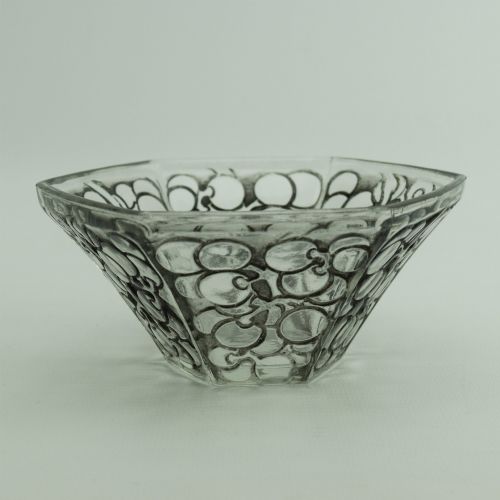


French Frosted Glass Bowl
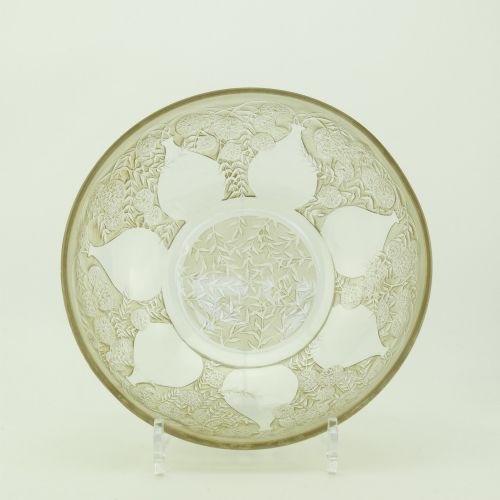
These french frosted glass bowl pieces combine tactile texture with striking design, offering a sophisticated centrepiece for any surface.
French Frosted Glass Bowl
A french frosted glass bowl embodies the elegance of twentieth-century design, bringing sculptural form and diffused light into domestic spaces. These vessels function primarily as decorative bowls, powder boxes, and table centrepieces.
The pieces appearing on this page span the 1910s through the mid-twentieth century, capturing the stylistic shifts from Art Nouveau curves to geometric Art Deco lines. Collectors frequently encounter opalescent finishes alongside clear and frosted surfaces.
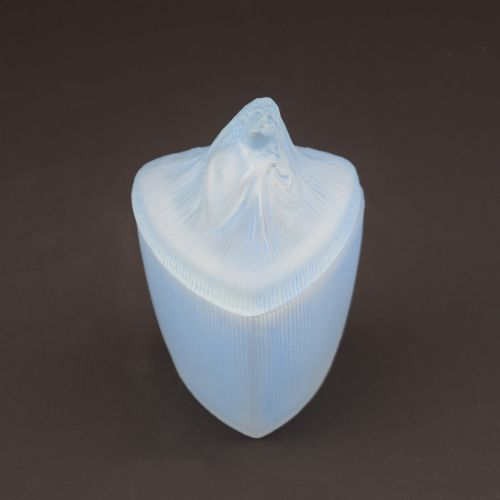
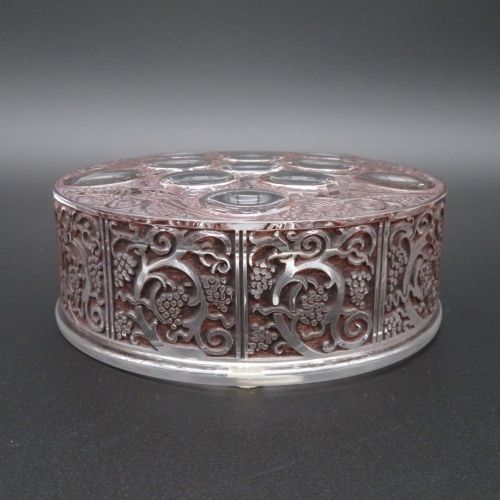
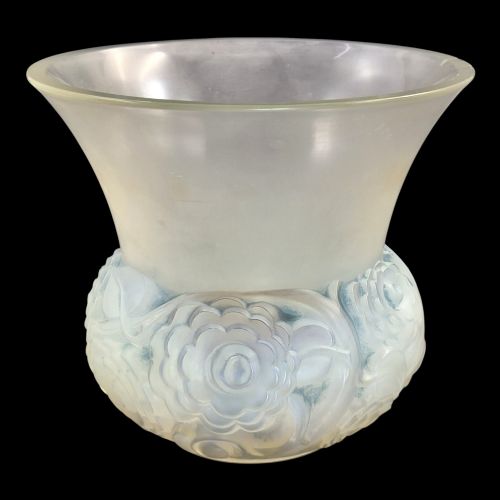
Moulded motifs range from botanical themes like dahlias and cherries to figurative subjects such as fish and female heads. The inventory reflects diverse making traditions, occasionally pairing glass with carved wood or brass mounts.
Materials and Working Methods
The manufacturing process relies primarily on pressed and moulded glass techniques, where molten material is forced into intricate metal moulds to capture sharp relief. Acid-etching and sandblasting then create the characteristic matte, tactile surface known as frosted glass.
Certain pieces incorporate opalescent glass, which shifts in colour tone depending on the angle of light, while others utilise grey staining or enamelling to accentuate carved details. Supporting structures introduce carved wood, brass, and crystal components to create complex epergnes and chandeliers.
Several pieces double as powder boxes, proving that early twentieth-century vanity routines involved a surprising amount of sculptural drama.
Assessing Quality and Execution
Quality rests upon the crispness of the moulded relief and the depth of the surface finish, where superior examples exhibit sharp botanical or figurative details without softening from worn moulds. The play of light across opalescent and frosted surfaces distinguishes finer works from flatly executed production.
The integrity of signatures and moulded marks provides a clear indicator of origin, while the harmony between the glass body and any secondary materials like brass or carved wood determines the overall execution of complex centrepieces.
Rene Lalique·G Vallon·Julien Glass France·Verrerie Des Vosge·Paul Nicolas
The French Frosted Glass Bowl Glossary
- Frosted glass
- Glass treated to achieve a matte, non-reflective surface through acid-etching or sandblasting. This technique diffuses light and highlights moulded relief.
- Opalescent glass
- Specialised glass that appears milky-blue in transmitted light and warm amber or orange in reflected light. It creates an iridescent visual depth.
- Plafonnier
- A ceiling-mounted bowl light fixture typical of the Art Deco period. These diffuse illumination downwards into a room.
- Epergne
- An ornamental centrepiece structure designed to hold fruit or flowers, combining glass bowls with branching metal or carved wood supports.
- Coupe
- A wide, shallow bowl form often utilised for decorative display or as a footed centrepiece.
French Frosted Glass Bowl: Frequently Asked Questions
Where should I place a centrepiece bowl?
Position these bowls on dining tables, sideboards, or mantelpieces where natural or interior light can interact with the frosted and opalescent surfaces. Ensure the location is stable and away from heavy household traffic to protect the rim.
If the bowl functions as a powder box or decorative plate, consider placing it on a mirrored tray to reflect light upwards through the glass base.
How do I date an Art Deco glass bowl?
Examine the stylistic motifs, such as stylised floral patterns, geometric symmetry, and animal or figurative reliefs characteristic of the 1920s and 1930s. Moulded signatures and registry numbers also provide chronological clues.
Compare the weight and thickness of the glass against known production standards from French glasshouses of the period. Maker marks often evolve across different decades of production.
Can these bowls be used for food?
Most antique decorative bowls and powder boxes are designed for display rather than functional dining use, due to the delicate nature of vintage glass compositions. Acid-etched and frosted surfaces can also stain easily if exposed to acidic foods.
Utilise them primarily for dry potpourri, display, or as standalone sculptural objects rather than serving wet or oily dishes.