
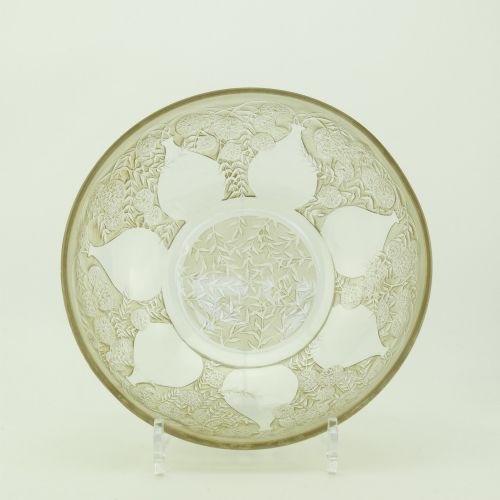


1920s Decorative Glass Dish
A 1920s decorative glass dish brings tactile Art Deco design to a table, combining opalescent finishes with moulded detail.
1920s Decorative Glass Dish
A 1920s decorative glass dish embodies the sculptural ambition of the interwar period, taking the form of low bowls, shallow plates, and wide salvers. These pieces function primarily as centrepieces or display items rather than utilitarian tableware, designed to catch light across moulded surfaces.
The examples gathered here demonstrate the dominant aesthetic of the era through distinct Art Deco styling. Buyers encounter pieces created across the 1920s alongside occasional overlap into Edwardian and 1930 production dates.
Moulded forms dominate the available selection, ranging from footed bowls decorated with flower heads to plates featuring aquatic themes. Each object relies on its tactile relief and subtle optical effects to create visual depth.
How they were made
Moulded glass techniques formed the structural basis for these items, allowing makers to press molten material into intricate relief patterns. The process captured fine details such as stylised flora and figurative motifs directly in the body of the glass.
Opalescent glass treatments introduced a milky, iridescent quality that shifts from blue to amber depending on the angle of the light. Selected surfaces also received sepia stain or contrasting frosted finishes to emphasise the depth of the moulded design.
Fish, sirens, and flower heads populate the glass surfaces, turning dinnerware into an aquarium.
What varies in quality
The clarity and distribution of the opalescent effect define the visual success of a piece, separating dynamic examples from flat ones. Subtle shifts in colour within the glass body reveal the skill involved in the initial thermal manipulation.
The sharpness of the moulded relief dictates the definition of the design, where crisp contours maintain the intended Art Deco geometry. Strong definition ensures that figurative elements and floral motifs read clearly across the surface of the bowl or plate.
Rene Lalique·R. Lalique·René Lalique
The 1920s Decorative Glass Dish Glossary
- Opalescent glass
- A type of glass that appears milky bluish-white when viewed by transmitted light and warm brownish-orange by reflected light. This optical property creates a characteristic shimmering effect across curved surfaces.
- Moulded glass
- Glass shaped by pressing molten material into a metal or wooden form to impart a pattern. This technique allowed for consistent production of complex decorative reliefs.
- Frosted glass
- Glass treated to achieve a textured, matte surface finish rather than a transparent one. This treatment diffuses light and softens the overall appearance of the object.
- Salver
- A flat tray or decorative plate used for presentation. In this context, it describes wide, shallow dishes designed to rest on a surface.
- Coupe
- A broad, shallow bowl with a smooth or patterned rim. These forms often stand on a small footed base.
1920s Decorative Glass Dish: Frequently Asked Questions
What were 1920s decorative glass dishes used for?
These items served primarily as ornamental centrepieces, fruit bowls, or display salvers on dining tables and sideboards.
Their substantial weight and intricate relief meant they were valued more for their artistic presence than for everyday serving tasks.
How do I identify Art Deco glass dishes?
Look for stylised floral motifs, symmetrical geometric patterns, and deep moulded reliefs characteristic of the 1920s aesthetic.
Many examples also utilise opalescent or frosted finishes that accentuate the sculptural qualities of the design.
Can I use these bowls for serving food?
While technically possible, most collectors treat them as decorative display objects to preserve the delicate opalescent surfaces.
Frequent use and washing can risk damage to the specialised stains and frosted textures applied to the glass.
How should I clean opalescent glass dishes?
Dust gently with a soft, dry cloth or wash by hand in lukewarm water using mild, non-abrasive soap.
Avoid harsh scrubbing or chemical cleaners that might affect the delicate surface treatments and coloured patination.