


French Folk Art Pottery
These french folk art pottery pieces bring rustic charm to a room, offering hand-painted regional character from the nineteenth century.
French Folk Art Pottery
When you search for french folk art pottery, you are looking at utilitarian and decorative items made in provincial workshops during the nineteenth century. These items include serving dishes, pin trays, bowls, and sculptural figures that reflect rural traditions.
The pieces you are most likely to meet on this page originate from specific regional centres like Quimper, Desvres, and Bavent in Normandy. They range from hand-painted tin-glazed earthenware dishes to sculptural terracotta animal figures.
How they were made
Potters shaped local clays into plates, bowls, and whimsical animal sculptures such as cats and pigs, sometimes utilising roof tile techniques for figures. These objects received tin glazes or simple earthenware finishes.
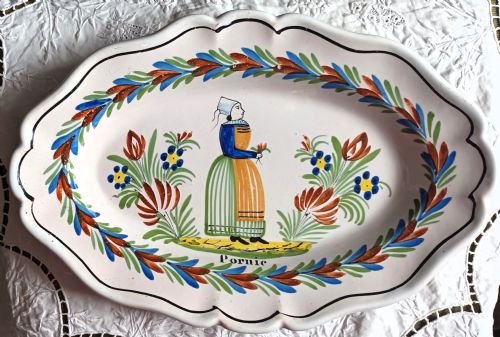
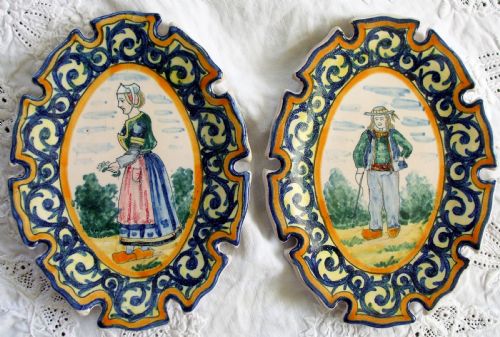
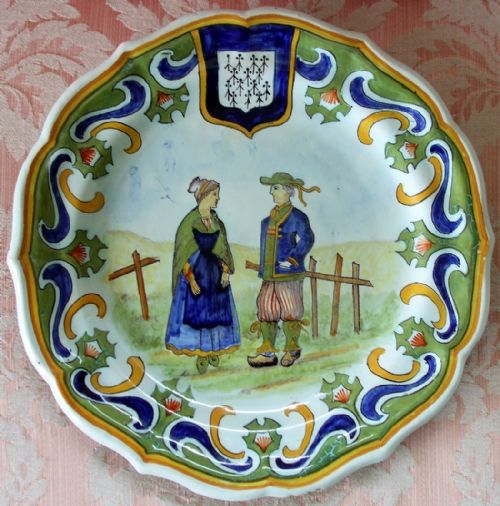
Artisans applied hand-painted pigments directly onto the tin glaze to depict regional figures, floral motifs, and inscriptions. Firing in traditional kilns fixed the colours and created the characteristic surface variations.
A terracotta cat figure on this page began life as a decorative roof tile element in Normandy before finding a permanent indoor home.
What varies in quality
The artistry of the hand-painted decoration determines the visual appeal of a piece, with freehand regional costumes showing greater expression than rigid transfer designs. Crisp brushwork and well-defined painted details elevate the status of a dish or bowl.
Sculptural forms rely on the crispness of the modelling, particularly in terracotta animal figures from Normandy. Expressive shaping and careful surface detailing distinguish superior sculptural works from simpler items.
The French Folk Art Pottery Glossary
- Faience
- Tin-glazed earthenware decorated with opaque colours before firing. This technique provides a smooth white background for hand-painted regional scenes.
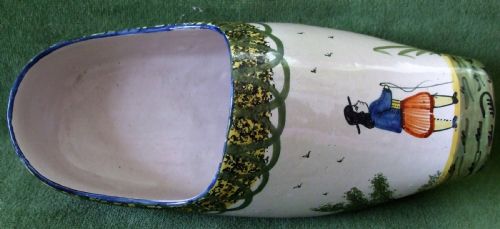
- Sabot
- A traditional wooden shoe shape rendered in ceramic or faience. These decorative items often feature hand-painted figures and floral motifs.
- Tin Glaze
- An enamel glaze containing tin oxide that turns white and opaque during firing. It forms the classic glossy surface found on many French provincial plates and dishes.
- Terracotta
- Unglazed or clear-glazed fired clay of a brownish-red colour. Sculptors utilise this material for regional animal figures and architectural ornaments.
French Folk Art Pottery: Frequently Asked Questions
What is french folk art pottery?
These items comprise regional nineteenth-century ceramics, including hand-painted faience dishes and terracotta animal sculptures from workshops in Quimper, Desvres, and Normandy.
They represent the everyday utilitarian and decorative output of French provincial makers, valued for their distinct local character.
How were these pottery pieces used?
Many items served practical dining and domestic purposes as serving dishes, bowls, and pin trays for daily household routines.
Others, such as the ceramic pig and cat figures, functioned as decorative ornaments and architectural roof tile elements in rural homes.
How do I date these ceramics?
Dating relies on identifying regional pottery marks, workshop styles, and materials characteristic of the nineteenth century and early twentieth century.
Changes in tin glaze composition and painting style help separate earlier pieces from later regional productions.
How should I display them?
Plates and dishes look effective mounted on walls or displayed on dressers where their hand-painted regional details remain visible.
Sculptural animal figures and ceramic sabots suit placement on mantels, sideboards, or bookshelves as distinct decorative accents.