

French Floral Inlay Table
A French floral inlay table brings continental refinement to a room through intricate wood veneers and decorative mounts.
French Floral Inlay Table
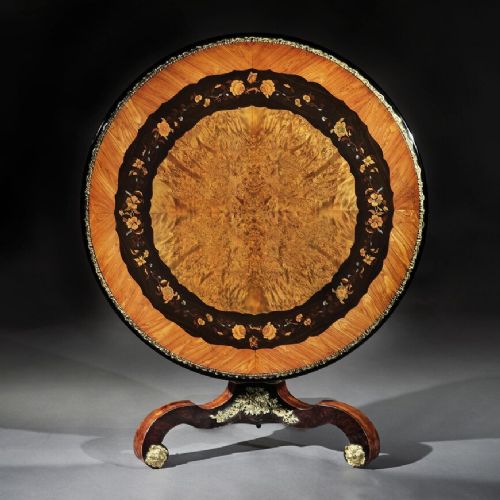
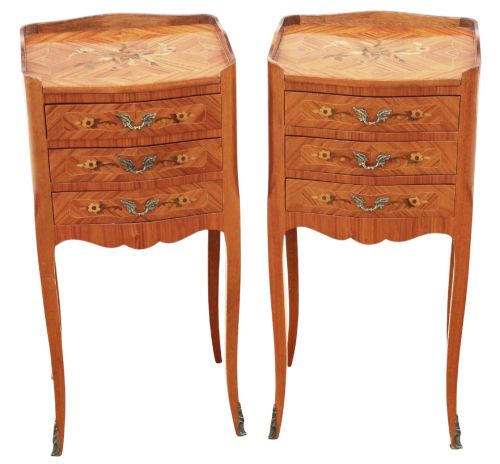
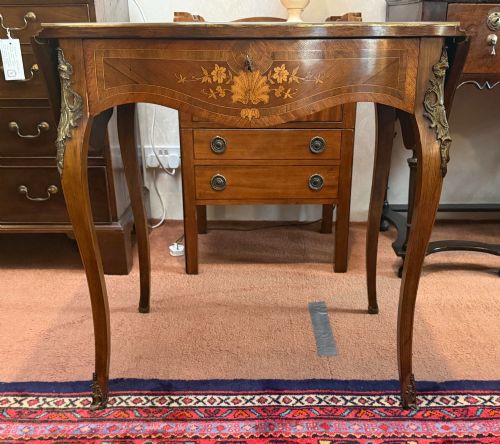
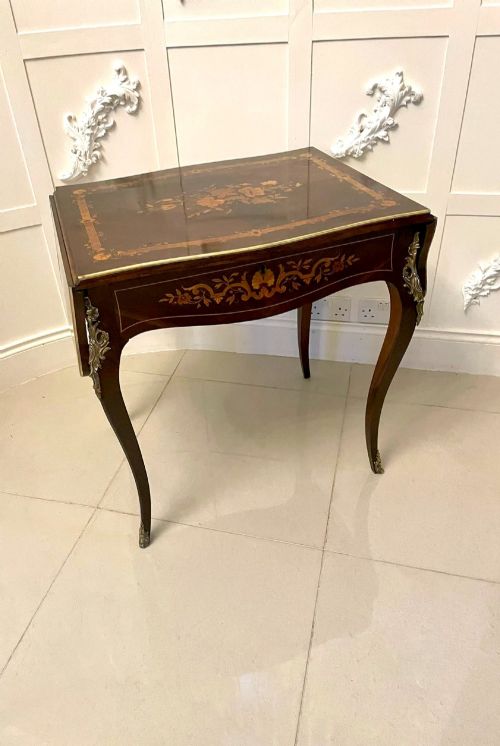
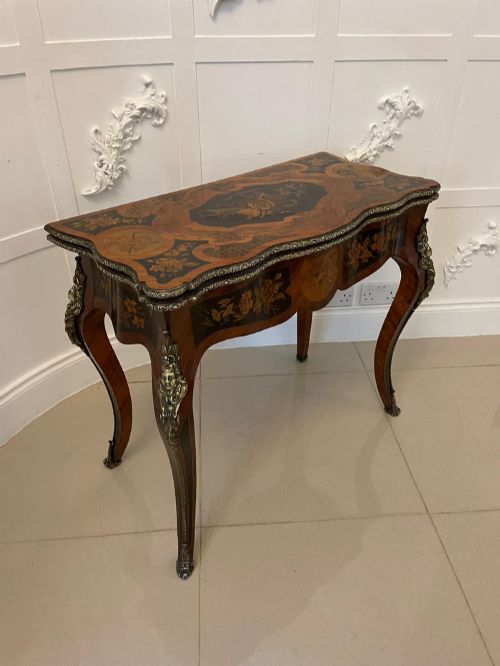
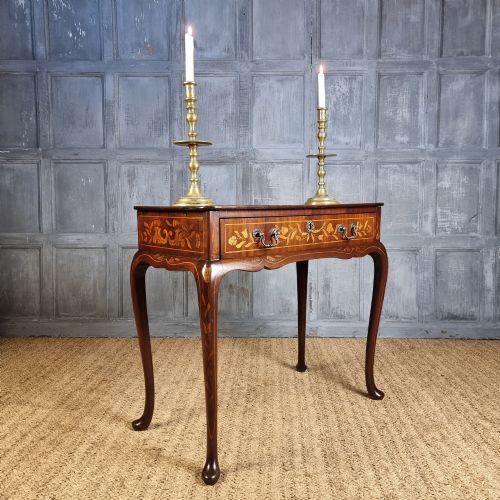
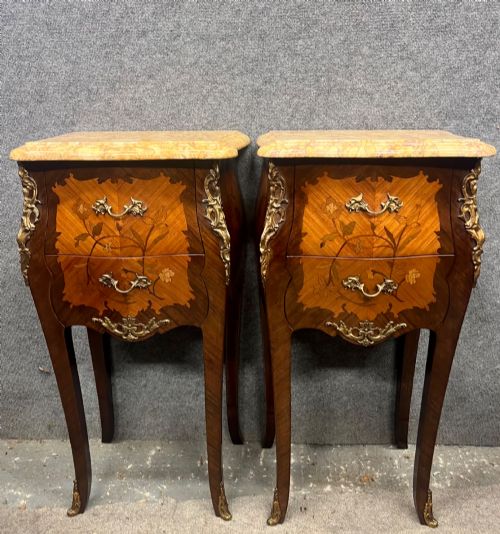
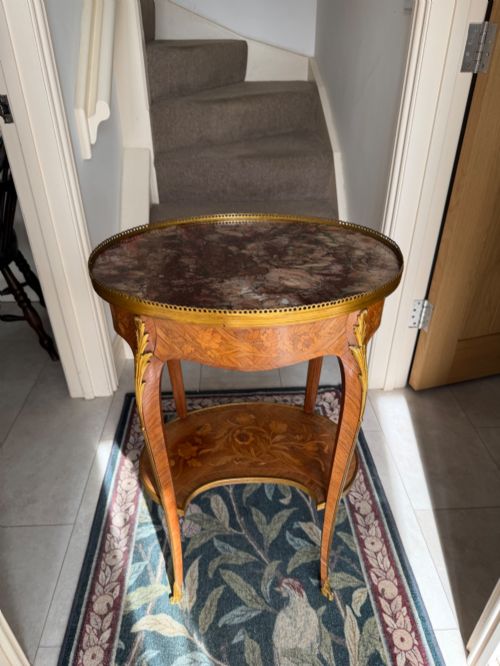
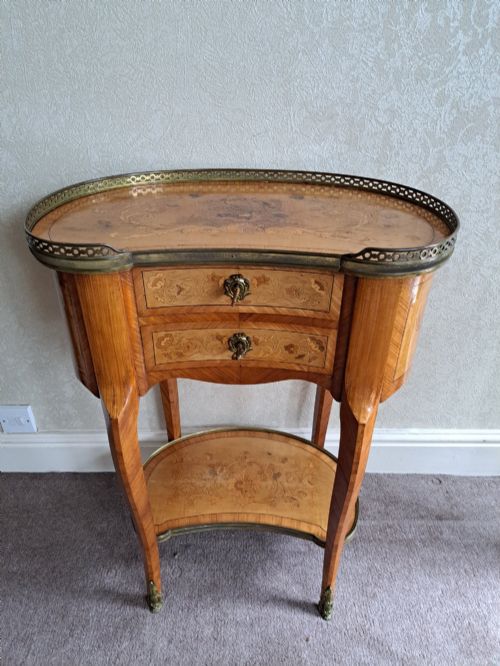
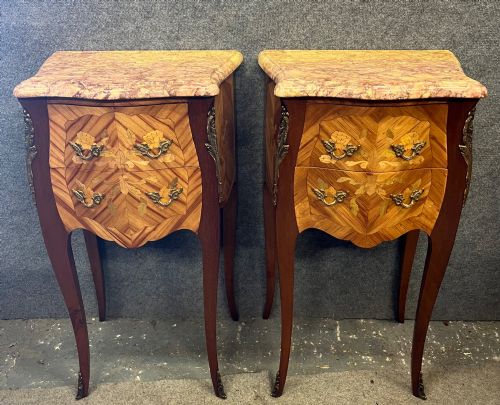
A french floral inlay table encompasses various forms including centre tables, bedside tables, writing tables and occasional tables created in revival styles such as Louis XV and Napoleon III. These pieces serve functional roles while displaying intricate botanical patterns across their surfaces.
The version most commonly met on this page dates from the nineteenth century, reflecting periods like the Victorian era alongside twentieth-century examples from nineteen thirty. Makers utilised woods such as walnut, kingwood, rosewood and satinwood as a base for detailed pictorial decoration.
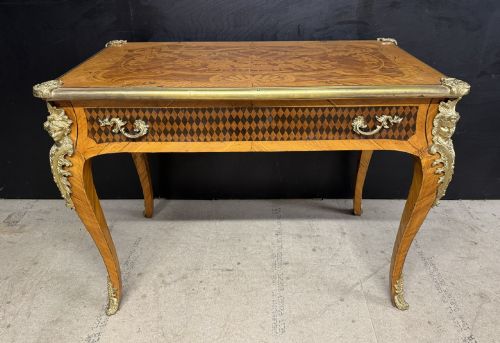
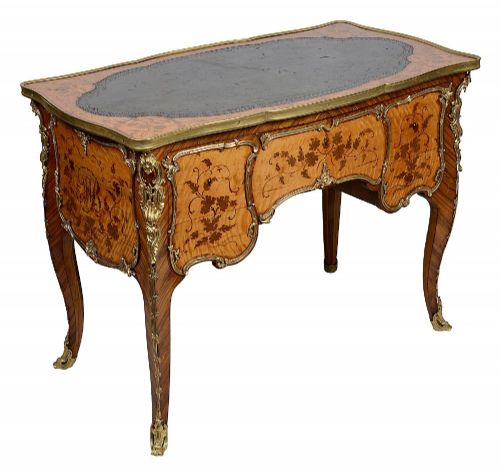
Forms range from freestanding centre pieces to compact lamp tables and desks, often shaped with serpentine edges or supported by slender cabriole legs. Each format adapts floral marquetry to a specific domestic utility, whether for writing, bedside storage or display.
Materials and Construction
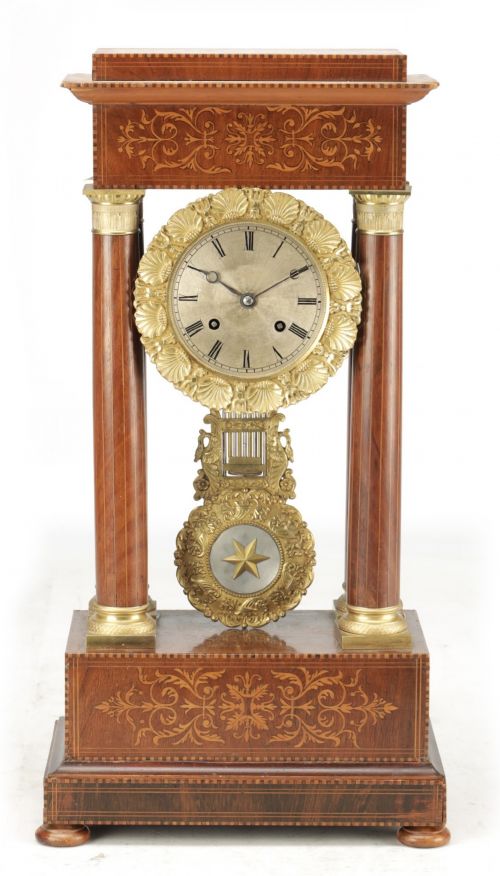
Cabinet makers constructed the foundational carcass using timbers like walnut, kingwood and rosewood, applying fine veneers across the top and sides. Marquetry inlay involved cutting contrasting woods, including fruitwood, to form floral and foliate motifs assembled into decorative panels.
Ormolu mounts cast in brass added gilt highlights to corners, legs and edges, protecting vulnerable areas while enhancing the decorative scheme. Marble tops occasionally provided a solid, polished surface for console and bedside variations.
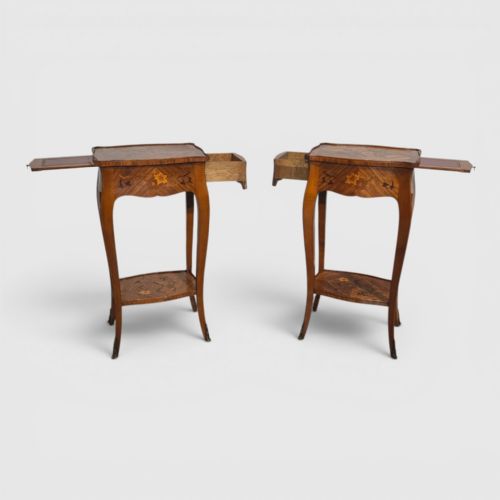
Joinery techniques united curved aprons and cabriole legs to support the veneered surfaces without warping. Hand-cut dovetails and precise veneer matching defined the construction of drawers and tops across these tables.
Some nineteenth-century tables hide delicate stationery drawers ready for secret correspondence.
Determinants of Quality
The precision and complexity of the marquetry cutting dictate the visual fidelity of the floral design, separating simple geometric borders from elaborate pictorial compositions. Finer examples employ a wider palette of shaded fruitwoods to render petals and leaves with naturalistic depth.
The integration of cast ormolu mounts determines the refinement of the piece, with chased and gilded bronze fittings sitting flush against the wood. Secondary timbers and internal drawer construction reveal the diligence applied by the workshop during assembly.
Proportion and balance across serpentine forms and cabriole legs govern the architectural success of the table. Pieces retaining their original marble tops or authentic period mounts command greater stylistic coherence.
Edward Holmes Baldock·Edwards & Roberts
The French Floral Inlay Table Glossary
- Marquetry Inlay
- The art of applying small pieces of veneer to a structure to form decorative patterns or pictures. Craftsmen cut various coloured woods together to create seamless floral designs.
- Ormolu
- Gilded bronze mounts applied to furniture for decorative and protective purposes. This cast metalwork adds ornamental trim to edges and legs.
- Kingwood
- A dense, richly grained timber frequently used in nineteenth-century cabinet making. Its dark purple-brown hue with lighter streaks provides a striking background for inlay.
- Cabriole Leg
- A furniture leg that bends outward and then tapers inward, finishing in a pad or scroll foot. This shape characterises Louis XV revival designs.
- Bureau Plat
- A large, flat-topped writing desk fitted with drawers. These tables often feature leather writing surfaces and elaborate veneer work.
French Floral Inlay Table: Frequently Asked Questions
How do I identify a nineteenth-century piece?
Nineteenth-century examples often display rich kingwood or rosewood veneers paired with cast ormolu mounts and hand-cut marquetry. Examining the secondary timbers underneath provides further clues to the period of construction.
Construction methods such as hand-dovetailed drawers and traditional glue formulations distinguish these older tables from later reproductions. The wear patterns on the finish also indicate genuine age.
What is the difference between a centre table and an occasional table?
A centre table is designed to stand free in the middle of a room, finished with detailed marquetry on all sides. An occasional table is smaller and typically positioned against a wall or beside seating.
Centre tables often feature grander proportions and more complex ormolu mounts suited to prominent display. Occasional tables prioritise versatility and compact dimensions for everyday domestic use.
How should I care for a veneered wooden surface?
Veneered surfaces require protection from direct sunlight and excessive moisture to prevent fading and veneer lifting. Maintaining a stable indoor temperature preserves the integrity of the antique wood.
Applying a suitable wax polish periodically nourishes the timber and maintains the subtle sheen of the French polish. Avoid placing hot or wet items directly on the marquetry top.
Were these tables used for writing or display?
Specific forms like the bureau plat or writing table served administrative duties with fitted drawers and flat tops. Other variants acted as lamp tables, etageres or decorative supports for ornaments.
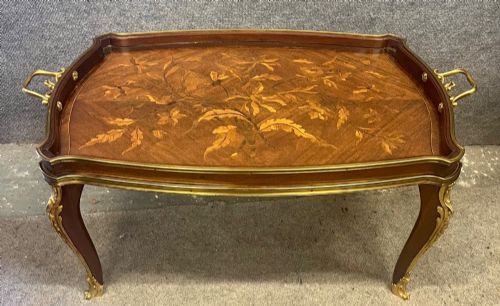
The inclusion of leather inserts or inkwell compartments clearly indicates a writing function. Simpler tray tops and side tables were intended for holding small objects or drinks.