



French Flame Mahogany Chest
A french flame mahogany chest brings commanding wood grain and substantial weight into a room, offering both sculptural presence and deep storage.
French Flame Mahogany Chest
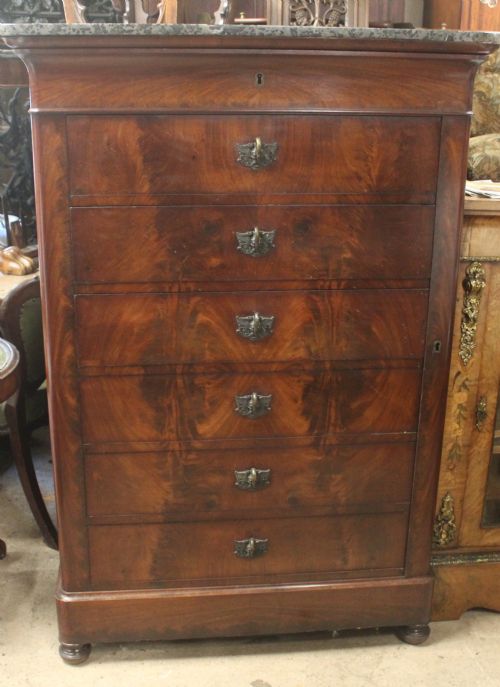
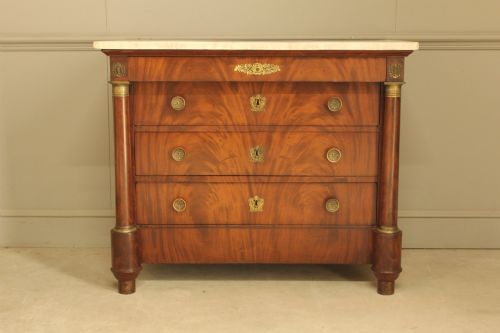
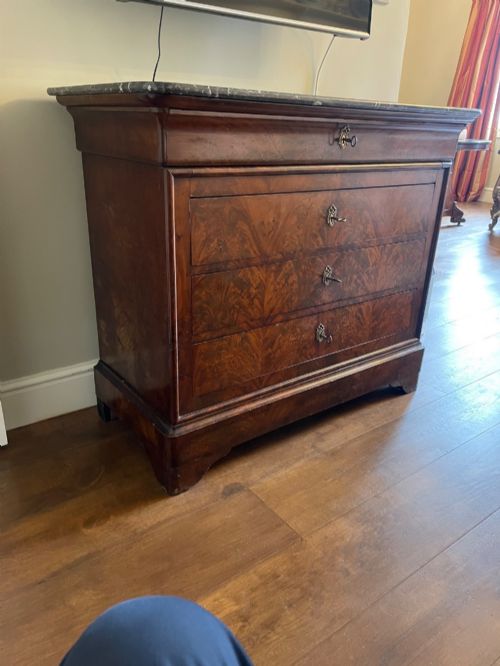
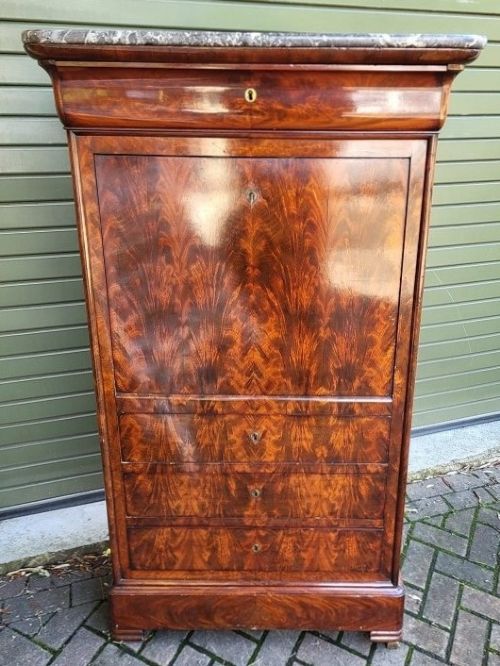
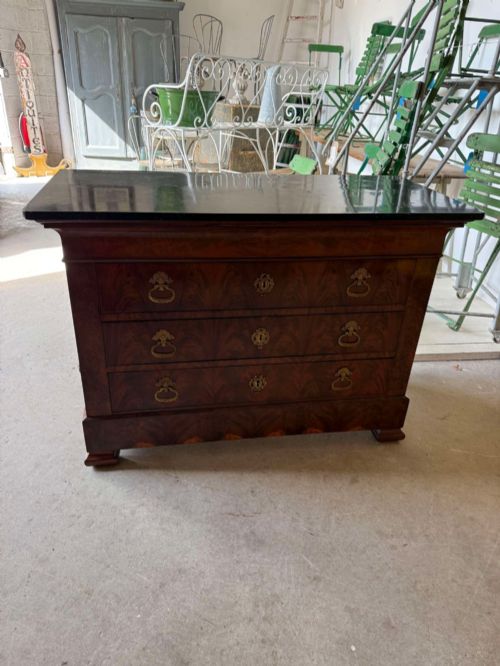
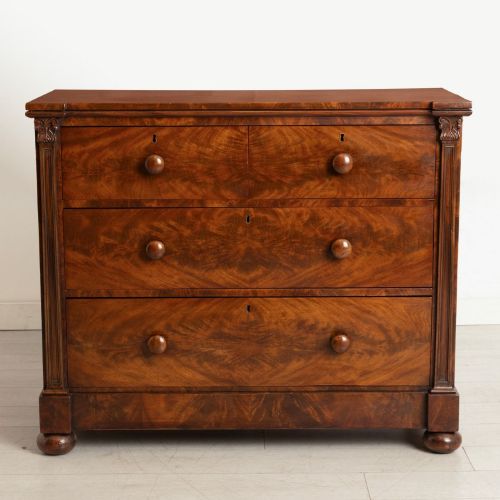
A french flame mahogany chest is a substantial storage piece defined by rich, figured wood grain and classical proportions. The selections span periods such as the 19th Century, Regency, and Victorian eras, often taking the form of commodes, secretaire desks, and tall semainiers.
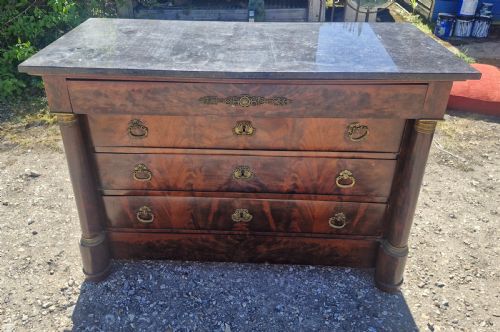
The aesthetic leans heavily towards French Empire, Louis XVI, and Louis Philippe styles, bringing architectural columns, brass mounts, and contrasting marble tops together. These pieces function primarily as statement storage in bedrooms and principal reception rooms.
Buyers will encounter both wider commodes and narrower vertical formats like the semainier or tall chest of drawers. Many incorporate writing surfaces through drop-front abattants or pull-out writing drawers hidden within the upper tiers.
Materials and Construction
Makers utilised flame mahogany and flame mahogany veneer over structural woods like pine, laying the intensely figured grain across drawer fronts to create striking patterns. This timber choice defined the visual rhythm of the piece, often bookmatched for symmetry.
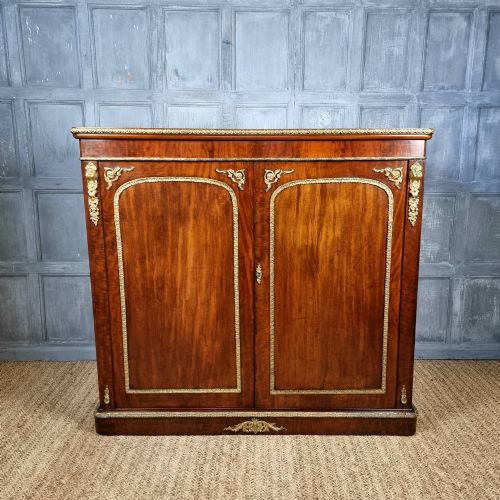
Surfaces frequently feature heavy marble tops, ranging from standard variants to fossil marble, which added weight and a durable working surface. Ormolu and brass mounts provide structural accents, keyhole escutcheons, and decorative framing.
Interior construction relies on secondary timbers hidden behind the polished facades, housing traditional hand-dovetailed drawers designed to support the heavy timber construction.
French Flame Mahogany Chest Retail Price Guide 2026
Typical asking prices for french flame mahogany chest among the pieces listed under this phrase on Sellingantiques today, from the lower quarter to the upper quarter. They describe what is for sale here now, not the wider market.
The listings demonstrate a strong presence of 19th Century French Empire and Louis Philippe designs, combining flame mahogany with marble and ormolu.
Quality and Craftsmanship
The tier of a french flame mahogany chest is determined largely by the intensity and bookmatching of the veneer work across the primary facade. Finer examples display continuous, symmetrical flame patterns that align precisely across multiple drawers.
The integration of secondary materials such as heavy marble slabs, cast ormolu mounts, and secondary woods like oak or pine dictates the structural integrity and period authority. Superior pieces maintain crisp architectural moulding and original brass hardware without replacement.
Henry Dasson·Weisweiler·Gillows
The French Flame Mahogany Chest Glossary
- Flame mahogany
- A veneer cut from the fork of the mahogany tree where the branch meets the trunk, producing a rippling, flame-like grain pattern.
- Ormolu
- Gilded bronze or brass applied as mounts, handles, and decorative feet on furniture from the Empire and Louis periods.
- Semainier
- A tall, narrow chest of drawers traditionally designed with seven drawers, one for each day of the week.
- Secretaire à abattant
- A tall case piece featuring a drop-front writing flap that conceals a fitted interior of small drawers and compartments.
- Commode
- A low, robust chest of drawers or cabinet originating in France, typically standing on short legs and topped with stone or marble.
French Flame Mahogany Chest: Frequently Asked Questions
What is a semainier chest?
A semainier is a tall, narrow chest traditionally containing seven drawers, one for each day of the week.
These pieces were originally designed for bedrooms to hold weekly undergarments and linens while occupying minimal floor space.
How do I care for flame mahogany veneer?
Protect the polished surface by keeping the piece away from direct sunlight and maintaining stable room humidity.
Dust regularly with a soft, dry cloth and apply periodic wax polish formulated for antique timber to nourish the wood.
What distinguishes an Empire style commode?
Empire pieces feature heavy, classical proportions, often incorporating architectural columns, dark mahogany tones, and bold ormolu mounts.
The aesthetic draws inspiration from ancient Roman and Greek design, favouring symmetry and imposing presence.