

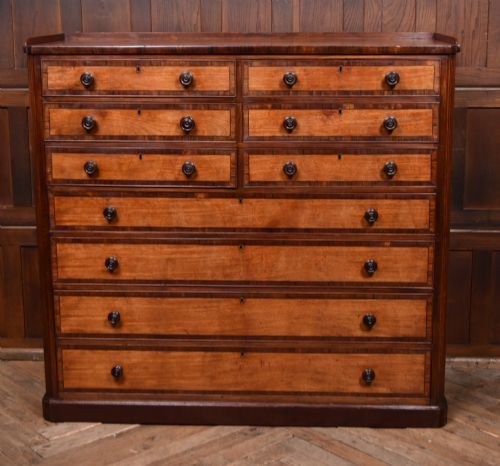
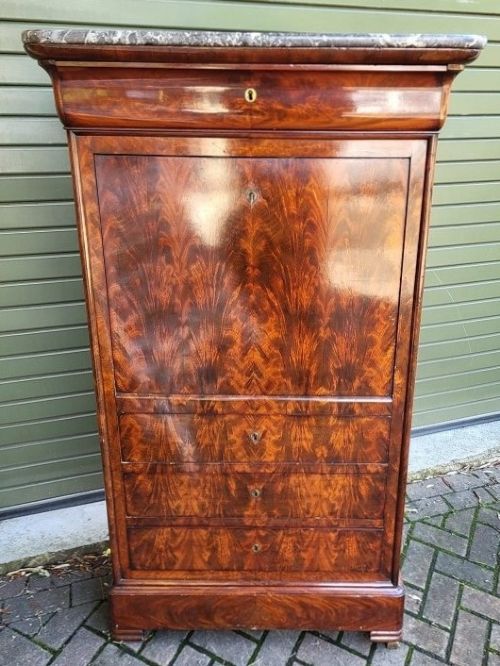
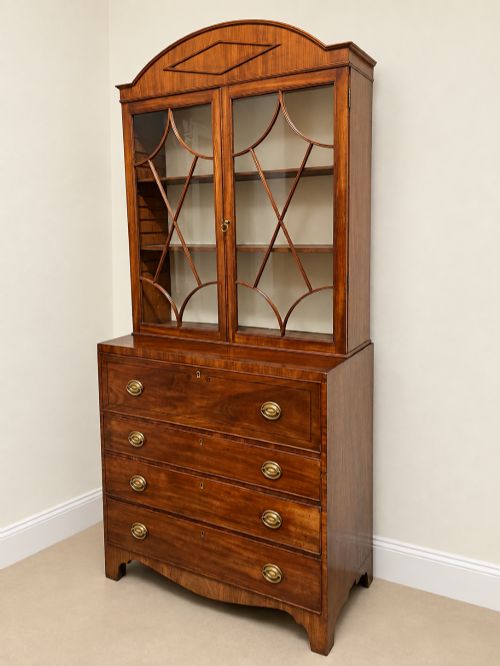
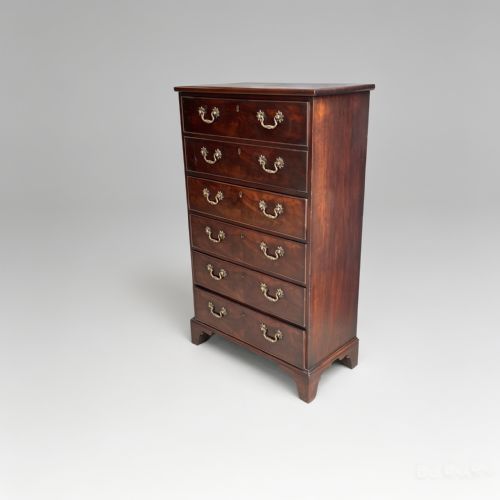


Mahogany Tall Writing Chest
These mahogany tall writing chest examples combine deep timber with a hidden writing drawer, offering substantial storage and a compact footprint.
Mahogany Tall Writing Chest
A mahogany tall writing chest brings together high vertical storage and a fitted desk compartment behind a drop-down or drawer front. You will most frequently encounter Georgian and Victorian iterations, spanning bureau bookcases, secretaire chest on chest designs, and narrow escritoires.
The form developed to serve practical domestic writing needs without sacrificing floor space in the bedroom or study. Makers adapted standard chest formats by incorporating a fall-front writing drawer fitted with small interior compartments and pigeonholes.
Pieces range from simple eighteenth-century tall and shallow forms to elaborately glazed secretaire bookcases and marble-topped French abattants. Each variation provides a distinct architectural profile while maintaining the core upright writing function.
How they were made
Constructed primarily from solid mahogany and flame mahogany veneer, these pieces rely on dense tropical hardwoods applied to secondary carcasses of pine or oak. Cabinetmakers utilised figured veneers on primary drawer fronts and fall-front panels to create striking grain patterns.
Mounts, handles, and escutcheons are cast from brass, securing the structural joints and operating mechanisms of the drop-fronts and drawers. Glass panels appear in upper bookcase sections, while occasional examples integrate marble tops or leather writing surfaces into the secretaire drawers.
Mahogany Tall Writing Chest Retail Price Guide 2026
Typical asking prices for mahogany tall writing chest among the pieces listed under this phrase on Sellingantiques today, from the lower quarter to the upper quarter. They describe what is for sale here now, not the wider market.
Some pharmacy chests escaped the apothecary to serve domestic letter-writing duties.
What varies in quality
Quality rests in the handling of the timber and the precision of the interior fittings within the writing section. Superior examples display continuous grain matching across drawer fronts and finely dovetailed pigeonholes inside the secretaire drawer.
The architectural integration of cornices, bracket feet, and brass hardware distinguishes standard utility pieces from high-status workshop production. Heavier reliance on secondary woods and simpler secondary drawer construction mark the more utilitarian ends of the surviving range.
Druce & Co.
The Mahogany Tall Writing Chest Glossary
- Secretaire
- A piece of furniture incorporating a writing drawer or fall-front compartment with internal pigeonholes and small drawers. It allows a chest of drawers to double as a desk.
- Tallboy
- A tall chest of drawers, often constructed in two sections with a smaller upper chest resting on a wider lower base. This form maximises vertical storage capacity.
- Escritoire
- A small writing cabinet or desk, usually featuring a vertical door or fall front that conceals fitted interior compartments. The term denotes a refined writing station.
- Flame mahogany veneer
- Timber sliced to reveal a rippling, flame-like grain pattern applied over a stable secondary wood base. It was prized for decorative drawer fronts.
Mahogany Tall Writing Chest: Frequently Asked Questions
What is a mahogany tall writing chest?
A tall chest of drawers featuring a dedicated writing drawer with a drop-down front or fall panel. It combines vertical storage with a functional desk surface.
These pieces emerged to save floor space in domestic interiors while providing secure storage for correspondence and writing materials.
How do I use a secretaire drawer?
The drawer front drops down on hinges or pulls forward to reveal a writing surface lined with leather or wood. Small interior drawers and pigeonholes sit behind this panel for stationery.
Support arms or side stays pull out automatically or manually to bear the weight of the writing flap when opened.
How can I tell Georgian from Victorian pieces?
Georgian examples often feature cleaner architectural lines, bracket feet, and solid proportions dating from the eighteenth to early nineteenth century. They tend to use simpler brass pull handles and understated mouldings.
Victorian pieces from the mid-to-late nineteenth century frequently display heavier cast brass hardware, darker finishes, and occasionally flame mahogany veneers or marble tops.
Where were these chests placed originally?
They sat in private studies, bedrooms, and drawing rooms where residents managed personal correspondence and household accounts. Their vertical orientation suited rooms with limited floor space.
The upper sections of bookcase variants also housed personal libraries and reference volumes.