


French Fire Guard
A french fire guard keeps sparks in check while bringing ornate metalwork to the hearth.
French Fire Guard
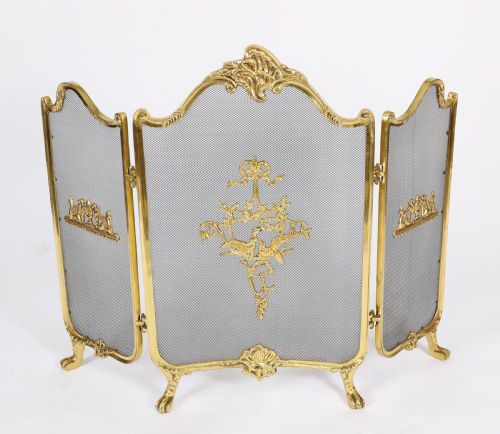
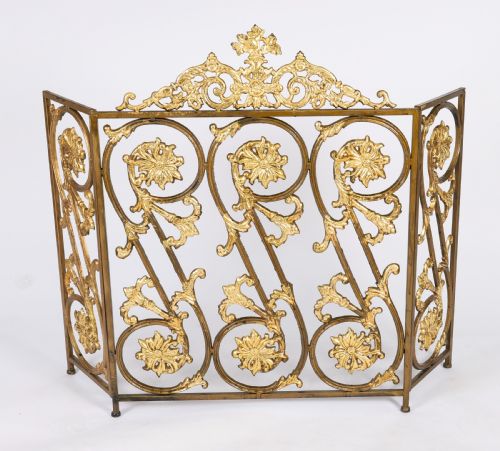
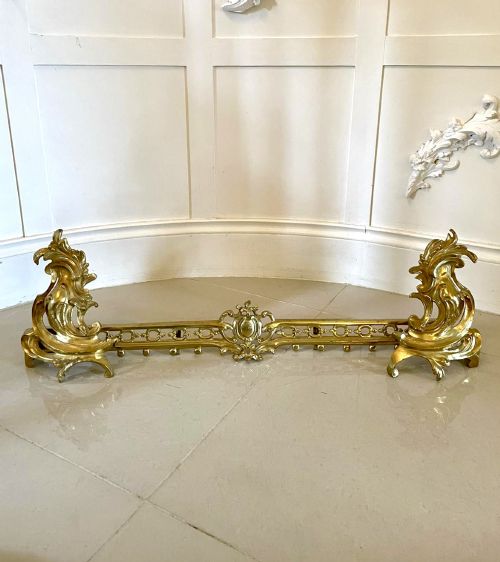
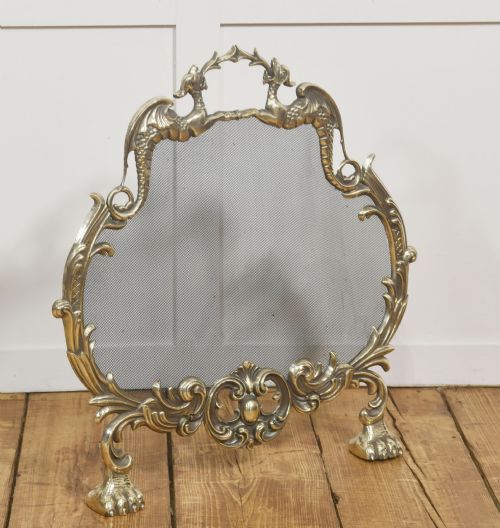
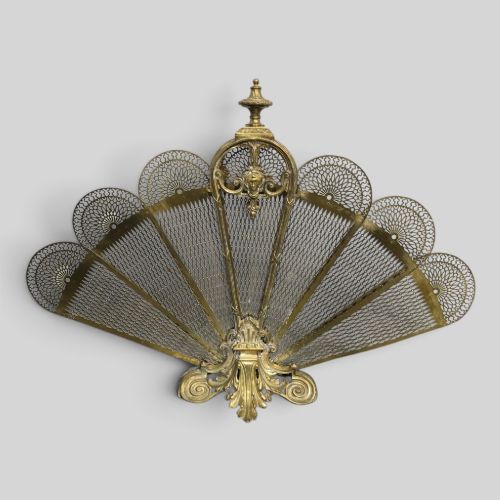
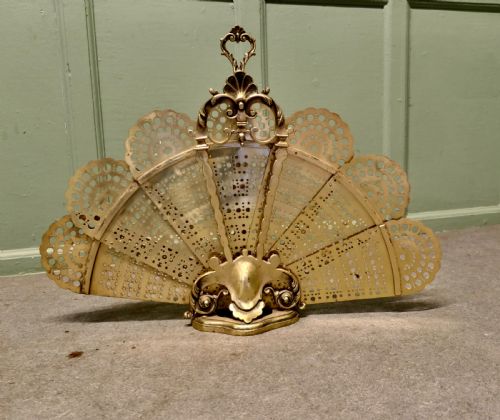
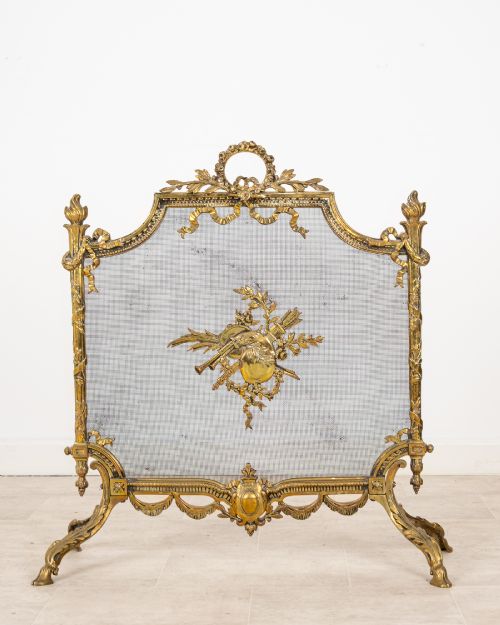
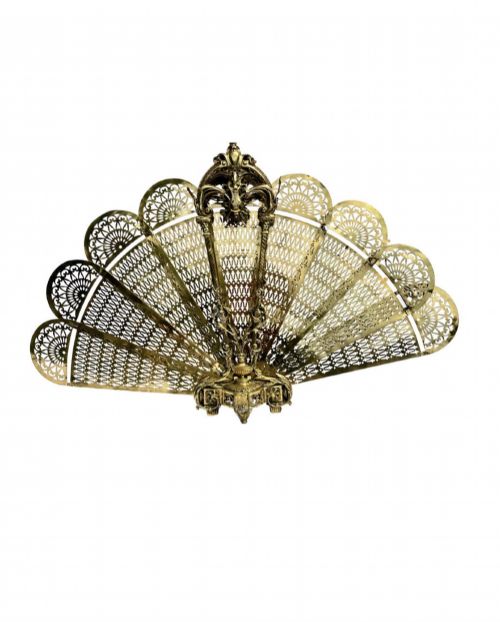
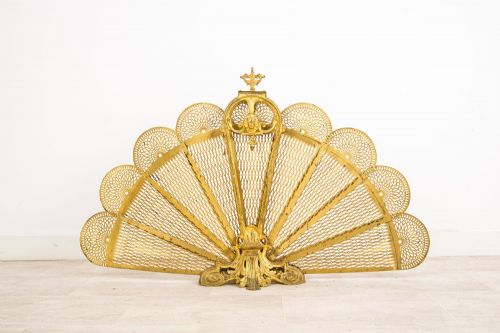
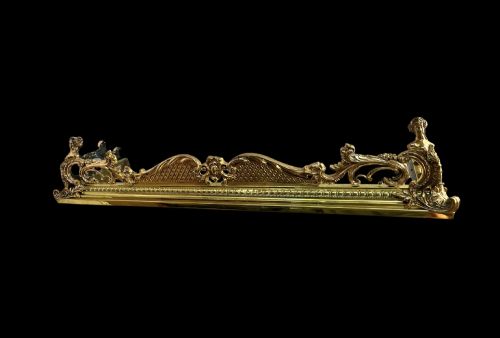
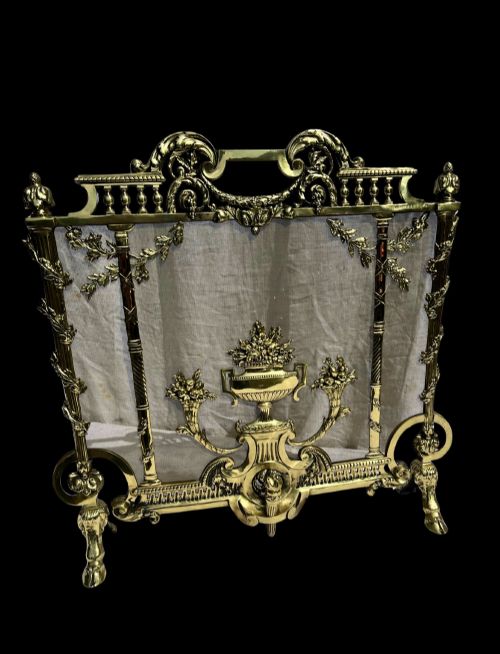
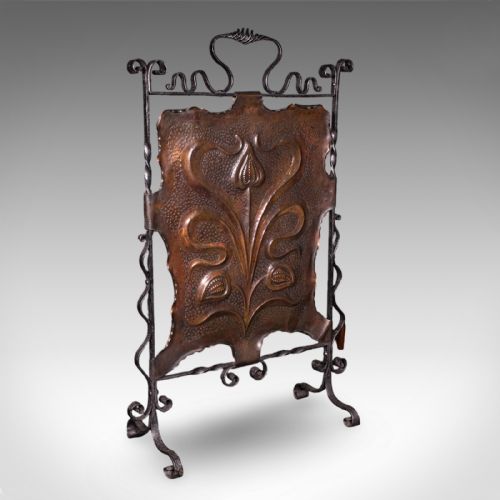
A french fire guard usually takes the form of a folding fan, a triple screen, or an adjustable fender designed to sit before an active fireplace. These hearth accessories appear frequently from the nineteenth century, reflecting periods such as the Victorian era and revivals of Louis styles.
The objects serve primarily as spark guards while doubling as decorative room furnishings during warmer months when the hearth remains unlit. Buyers encounter folding peacock designs alongside rigid frames featuring pierced brass or wire mesh panels.
How they were made
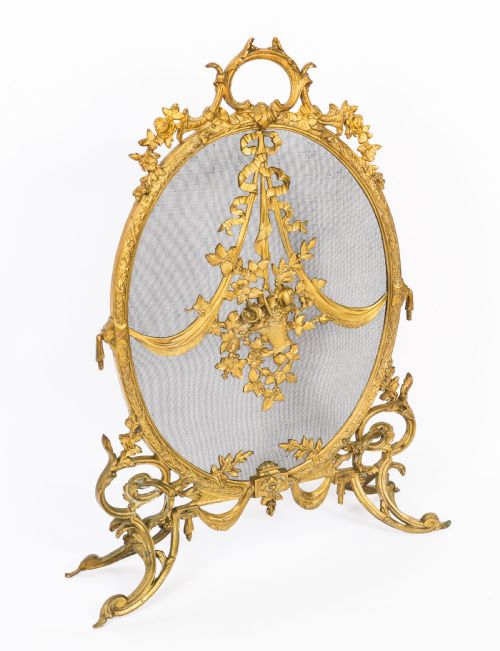
Craftsmen utilised metals including brass, bronze, copper, and cast iron, often applying a gilt or ormolu surface finish to achieve a rich golden lustre. Wire mesh and articulated folding blades required precise metalworking to ensure movable sections operated smoothly.
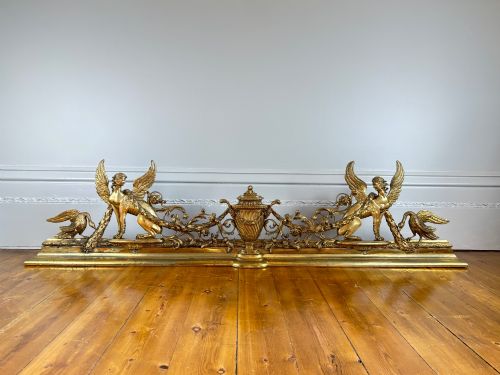
Decorative mounts, flaming torches, and musical trophies were cast separately and fixed to frames fashioned in the Rococo, Empire, or Neo-Classical manner.
What varies in quality
The distinction between standard examples and superior pieces rests on the crispness of the cast ornamentation and the weight of the metal utilised. Heavy gilt bronze castings with finely chased musical trophies or classical motifs stand apart from simpler stamped brass screens.
Complexity of construction also dictates quality, with multi-fold peacock fans and fully articulated extending fenders showing superior mechanical execution compared to fixed single-panel screens.
E F Caldwell New York
The French Fire Guard Glossary
- Ormolu
- Gilded bronze applied to ornamental metalwork. This technique creates a rich golden finish seen on many nineteenth-century fireplace screens.
- Chenet
- An alternative term for firedogs placed on the hearth. These metal supports often accompany fenders in period fireplace settings.
- Fender
- A low metal guard placed around the hearth opening. Adjustable versions allow the piece to fit varying fireplace widths.
- Peacock Fire Screen
- A folding fire guard comprising radiating metal blades that fan outwards. The design resembles a peacock tail when fully expanded.
- Rococo Revival
- A decorative style characterised by asymmetrical scrollwork, floral motifs, and shell shapes. This aesthetic heavily influences nineteenth-century French fire guards.
French Fire Guard: Frequently Asked Questions
How do folding fire guards work?
Folding fire guards operate through articulated metal blades that pivot open into a fan shape or fold flat against each other. This mechanism allows the guard to expand across the hearth opening or contract for compact storage.
Users adjust the spread depending on the heat output and the size of the fireplace opening during use.
What is the difference between a fire screen and a fender?
A fire screen stands upright to block radiant heat and contain sparks thrown from the burning fuel. These pieces usually feature decorative mesh, glass, or solid metal panels.
A fender sits low on the floor directly against the hearth perimeter to keep logs and embers from rolling out onto the room flooring.
How do I date a brass fire guard?
Dating relies on stylistic clues such as the presence of Rococo Revival scrollwork, Empire classical trophies, or Art Nouveau lines. Nineteenth-century examples often display heavier cast brass or bronze components compared to later reproductions.
Maker marks and the specific construction of hinges or mesh also provide indicators of age and origin.
Can these fire guards be used with an open fire?
Most antique guards with wire mesh or solid metal panels function effectively to catch sparks and embers from an active fire. Folding fan designs perform well for this purpose when fully expanded across the hearth.
Buyers should check that the metal structure remains stable and the mesh intact before exposing the piece to high heat.