

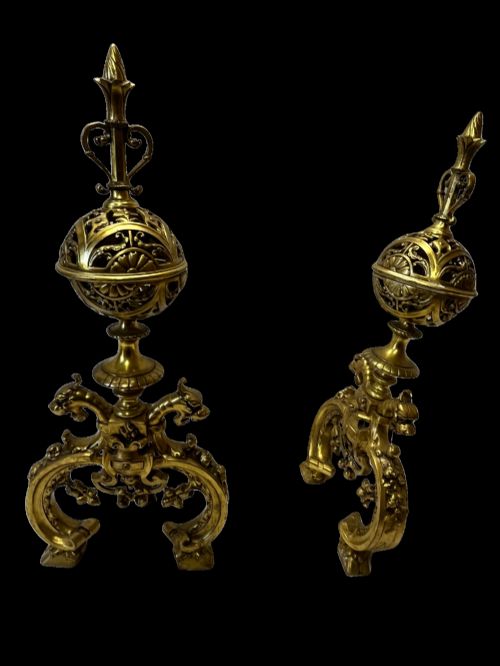


French Fire Dogs
French fire dogs bring sculptural metalwork and hearth presence to a room, supporting logs above the hearth floor.
French Fire Dogs
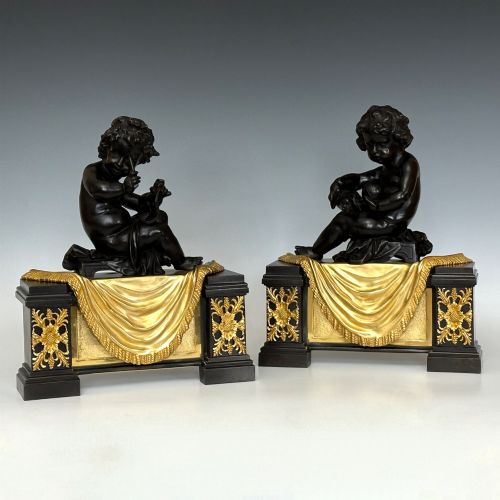
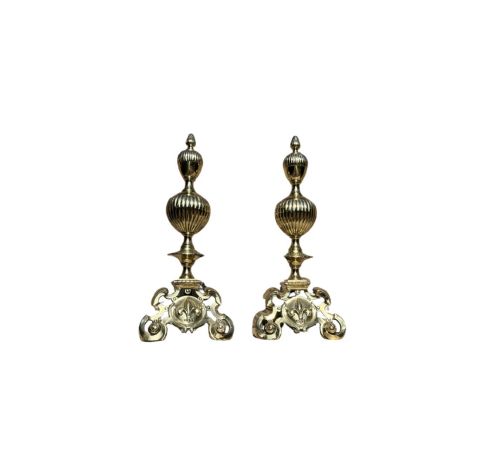
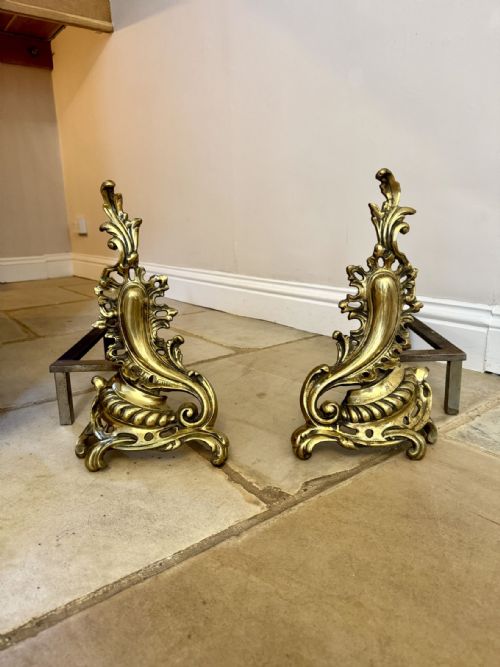
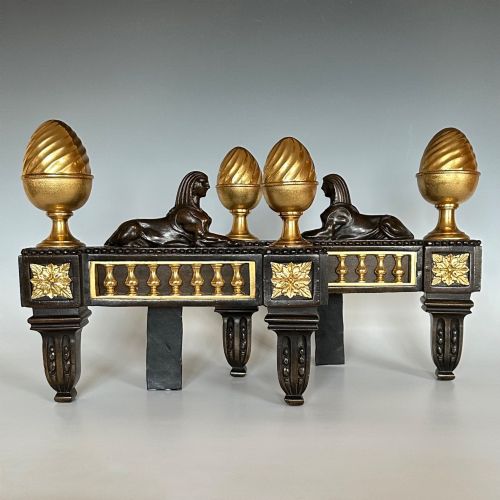
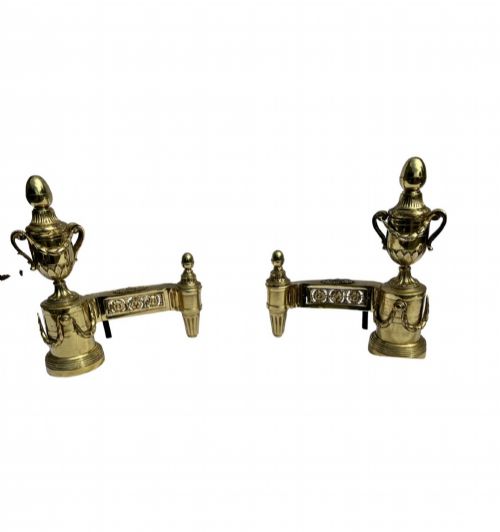
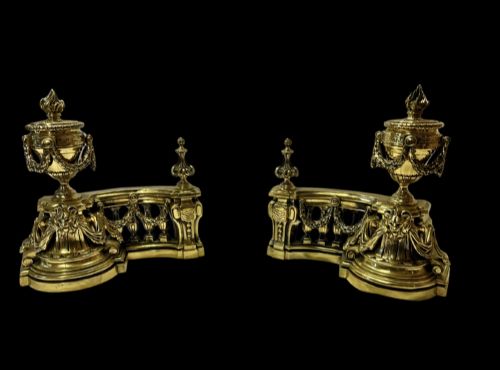
French fire dogs, also known as chenets or andirons, sit within hearths to hold logs in place and promote airflow beneath the fire. The pieces found here span the nineteenth century and the Regency period, appearing in matched pairs intended to frame the fireplace opening. Common forms range from heavy utility iron supports to ornate decorative designs styled after Rococo, Baroque, and Empire tastes.
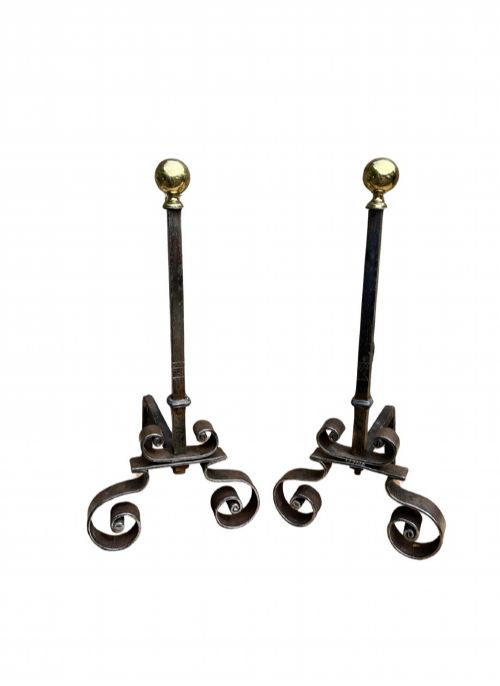
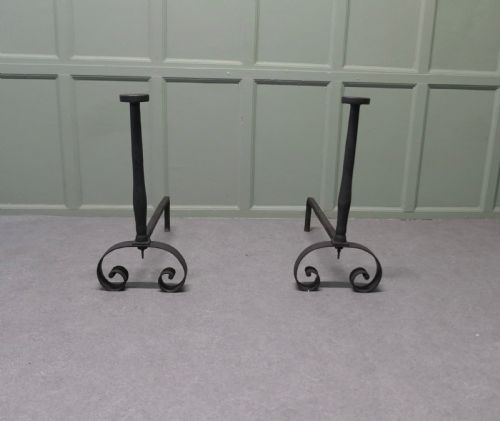
Buyers will frequently encounter cast brass, ormolu, and gilt bronze examples decorated with scrolls, cherubs, and asymmetrical foliage. Iron variants often display hand-forged elements, sometimes paired with brass mounts or tool rests for functional hearth maintenance. These objects serve both structural roles in holding fuel and decorative roles as focal points within the domestic interior.
Quality differences
Simpler iron pieces depend on the purity of the forge work, with clean lines and balanced proportions distinguishing them from crude utility castings. The thickness of the metal and the integrity of the joints determine whether a pair remains stable under the thermal stress of a burning fire.
Listings feature materials spanning cast iron, wrought iron, brass, bronze, and ormolu across the nineteenth century and the Regency period.
The French Fire Dogs Glossary
- Chenet
- An alternative term for a fire dog or andiron, frequently used in French decorative contexts. These metal supports sit on the hearth floor.
- Ormolu
- Finely ground high-carat gold applied to a bronze base, often using a mercury amalgamation process. It provides a bright golden finish on decorative mounts.
- Andiron
- A horizontal metal support raised on legs, used in pairs to hold logs above the hearth. They often feature an upright decorative front.
- Patination
- The surface alteration of metal resulting from age, wear, or chemical treatment. It adds depth and character to bronze and iron surfaces.
- Billet bar
- The horizontal iron bar extending backward from the front decorative upright to support the burning logs. It bears the direct weight of the fire.
French Fire Dogs: Frequently Asked Questions
How do you use French fire dogs?
French fire dogs stand in pairs inside the hearth fireplace to elevate logs above the floor. This elevation allows air to circulate underneath the wood, promoting a steadier and more efficient burn.
They also function as decorative anchors for the room when the fireplace is not in active use. Some examples include integrated rests designed to hold companion fire irons.
What is the difference between andirons and chenets?
The terms are largely interchangeable, though chenet is the traditional French word for the object. Both describe the metal supports placed in hearths to hold firewood.
In marketplace descriptions, chenet often points toward more decorative or gilt bronze items, while andiron can refer to heavier utility iron pieces.
How do you clean antique brass fire dogs?
Dust accumulation should be managed with a soft, dry cloth to protect the underlying metal surface. Aggressive metal polishes can strip away historical patination and damage gilt layers.
For unlacquered brass or bronze, gentle cleaning with mild soapy water and a soft brush removes soot without harming the finish.
Can these fire dogs hold real logs?
Many heavy iron and bronze pairs were built for active hearth use and can support standard firewood. Lighter ormolu and gilt decorative pairs are often better suited for display or decorative grates.
Buyers should examine the thickness and condition of the rear billet bars before exposing antique metal to high heat.