



French Extending Dining Table
A french extending dining table brings continental hospitality to the room, expanding effortlessly to seat larger gatherings without losing its regional character.
French Extending Dining Table
A french extending dining table combines everyday utility with practical engineering designed to accommodate extra guests. These tables trace their origins back through nineteenth-century country kitchens, provincial farmhouses, and metropolitan workshops.
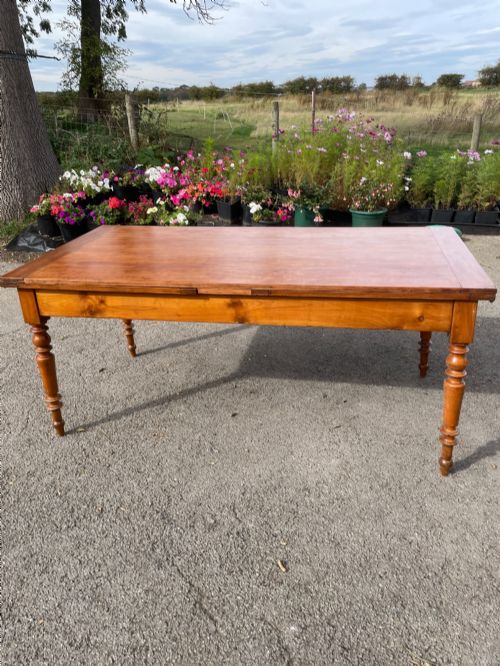
Buyers meet several distinct variations on this page, ranging from rustic fruitwood farmhouse pieces to polished walnut parquetry and rosewood Art Deco designs. Oak, cherry, and chestnut versions appear frequently alongside occasional mahogany and pine examples.
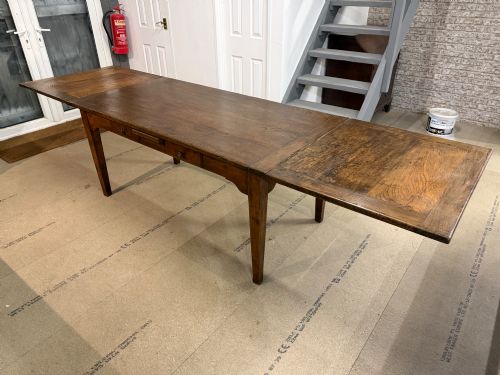
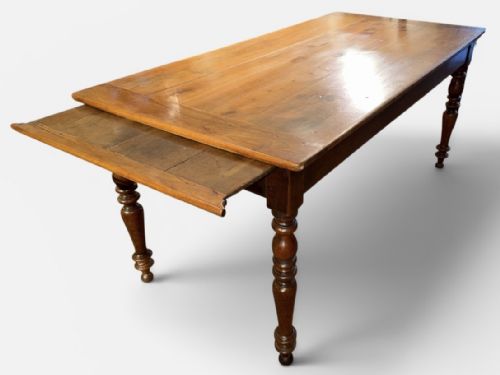
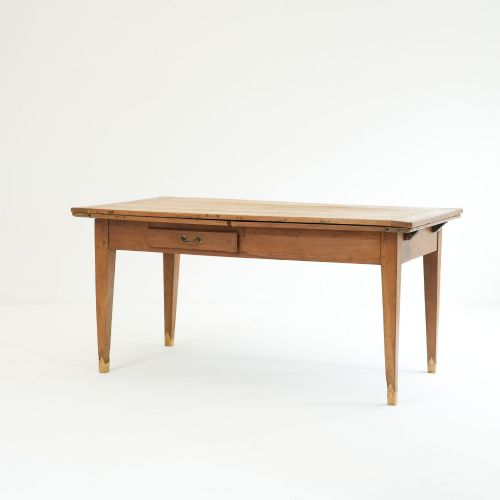
The mechanisms vary from traditional draw-leaf leaves tucked beneath the main surface to double extending systems and clever bread slides. Formats span from compact provincial dining tables to large refectory boards measuring several metres in length.
How They Were Made
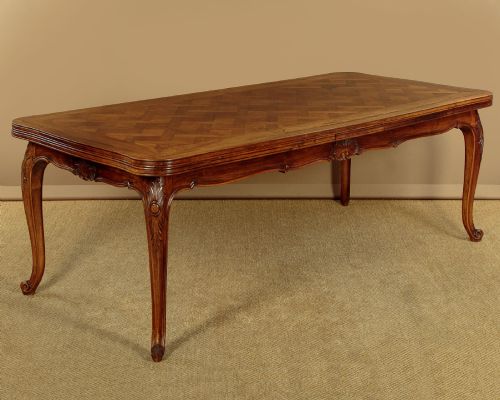
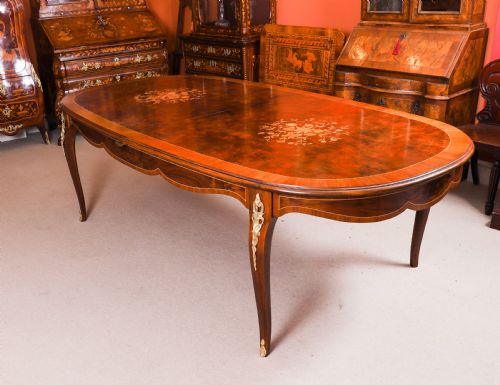
Cabinetmakers constructed these tables using solid regional timbers such as oak, fruitwood, cherry, and walnut, frequently pairing them with contrasting parquetry tops. Brass fittings and cast or chased ormolu mounts add decorative weight to finer revival and Art Deco pieces.
Extension mechanisms rely on sturdy wooden runners, draw leaves, and bread slides designed for smooth daily operation. Joinery methods include pegged mortise and tenon frames alongside precise inlaid parquetry patterns.
Listings feature timbers including oak, fruitwood, walnut, rosewood, pine, cherry, and chestnut across periods from the seventeenth century onward.
What Varies in Quality
Quality rests upon the selection of timber and the precision of the extension mechanism. Heavy oak parquetry tops and finely figured walnut or rosewood veneers show a higher degree of workshop ambition than simple pine or utility boards.
The crispness of carved cabriole legs, decorative brass mounts, and the smooth alignment of draw-leaf leaves set finer nineteenth-century examples apart from standard provincial pieces.
The French Extending Dining Table Glossary
- Draw-leaf
- A table equipped with additional leaves stored beneath the main top that pull out from each end. This mechanism extends the surface quickly without requiring loose boards stored separately.
- Parquetry
- Geometric wood mosaic work arranged in patterns such as chequers or diagonals to form a decorative tabletop. It demonstrates considerable cabinetmaking skill.
- Bread slide
- A pull-out wooden board located beneath the main surface, originally used for slicing bread or resting hot dishes. It provides extra utility near the ends of the table.
- Ormolu
- Gilt-bronze decorative mounts applied to furniture, typical of Louis Revival and formal nineteenth-century pieces. The term derives from the French for milled gold.
- Cabriole leg
- A furniture leg that curves outward at the knee and tapers inward at the ankle, ending in a simple foot. This shape draws inspiration from animal limbs and appears widely on period provincial tables.
French Extending Dining Table: Frequently Asked Questions
How do draw leaf tables work?
The main top remains fixed while two secondary leaves slide out from beneath the ends on wooden runners. Lifting the main top slightly allows the leaves to drop into place for a flush surface.
This clever design keeps the extensions stored securely within the frame when not in use, making it ideal for daily dining.
What timber is best for a dining table?
Oak, walnut, and fruitwood offer exceptional durability and take daily use in stride. Oak provides a robust, traditional farmhouse aesthetic, while cherry and walnut offer warmer tones and finer grain patterns.
Selection depends entirely on the interior atmosphere you wish to create in your dining space.
How do I date a french extending dining table?
Dating relies on stylistic clues such as cabriole legs, parquetry patterns, ormolu mounts, and construction marks. Nineteenth-century examples often feature hand-cut joints and rich fruitwood patina.
Art Deco pieces from the 1920s introduce geometric rosewood veneers, while earlier farmhouse tables display simple pegged frames and generous proportions.
Will an antique table handle daily family meals?
These tables were built precisely for heavy use in busy farmhouses and kitchens. Their solid timber construction handles daily life remarkably well.
Routine care and sensible precautions against extreme heat and moisture keep the surfaces looking handsome for generations.