






French Etagere Table
When you search for a french etagere table, you discover multi-tiered pieces designed to display ornaments and serve tea in style.
French Etagere Table
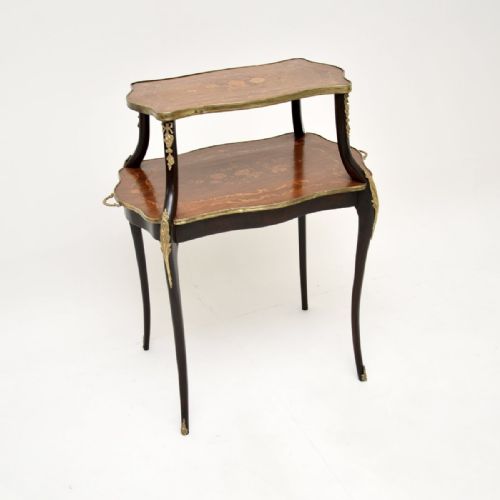
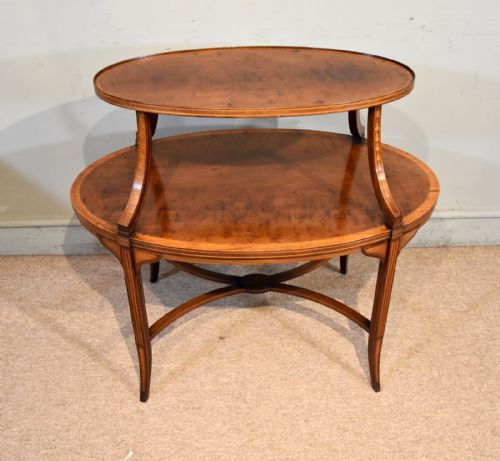
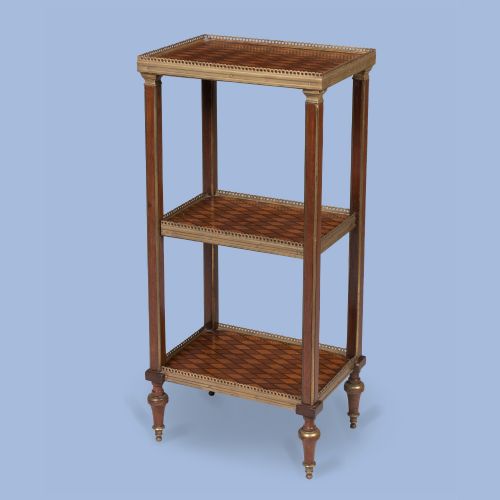
A french etagere table is a tiered display surface created to hold decorative items, books, and small personal belongings across multiple levels. You will frequently encounter two-tier and three-tier formats functioning as side tables, occasional tables, and display stands.
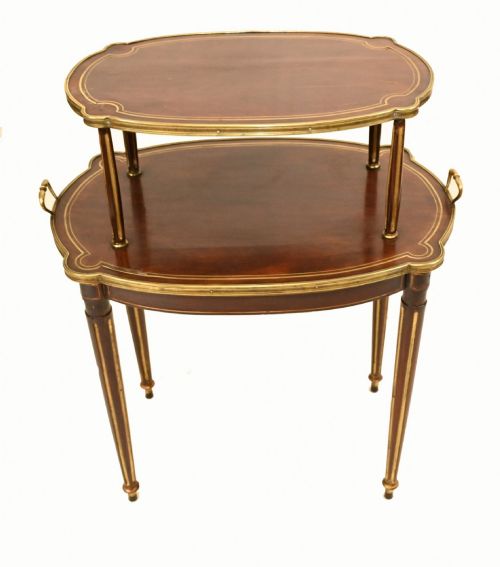
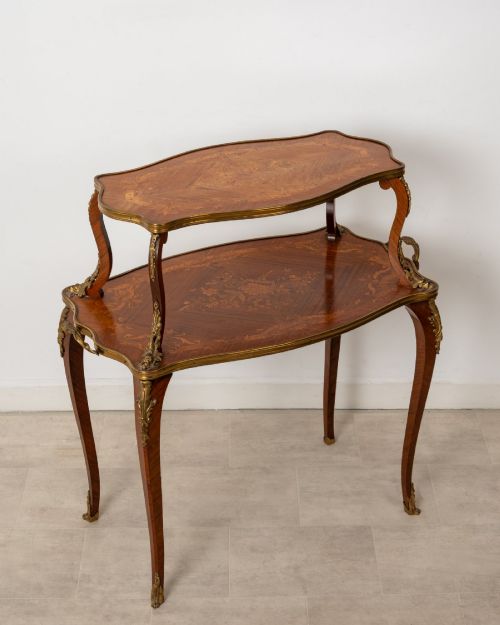
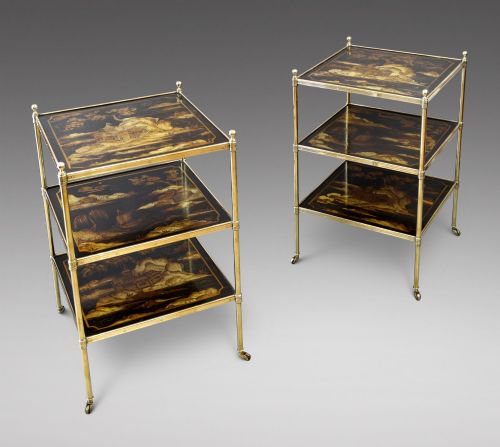
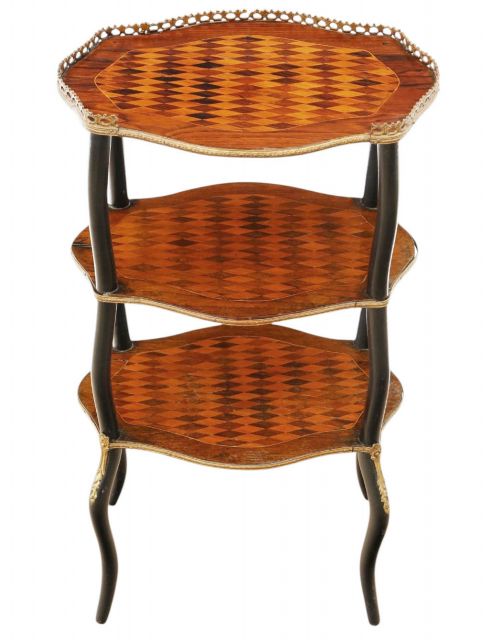
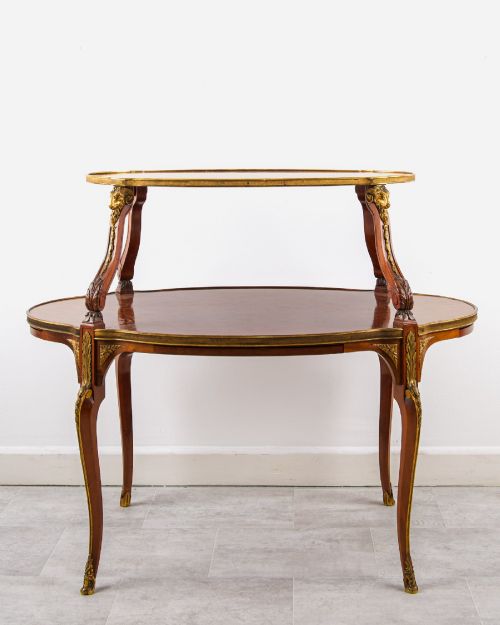
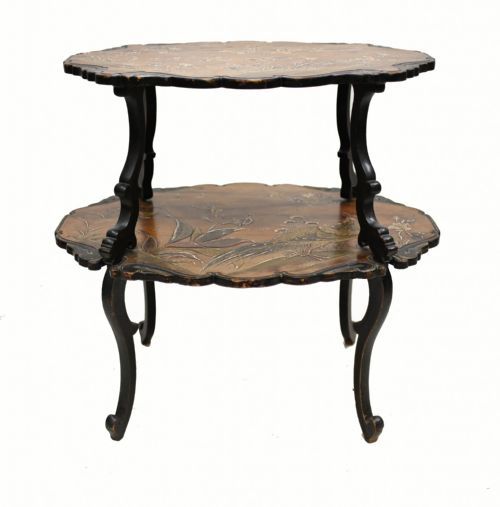
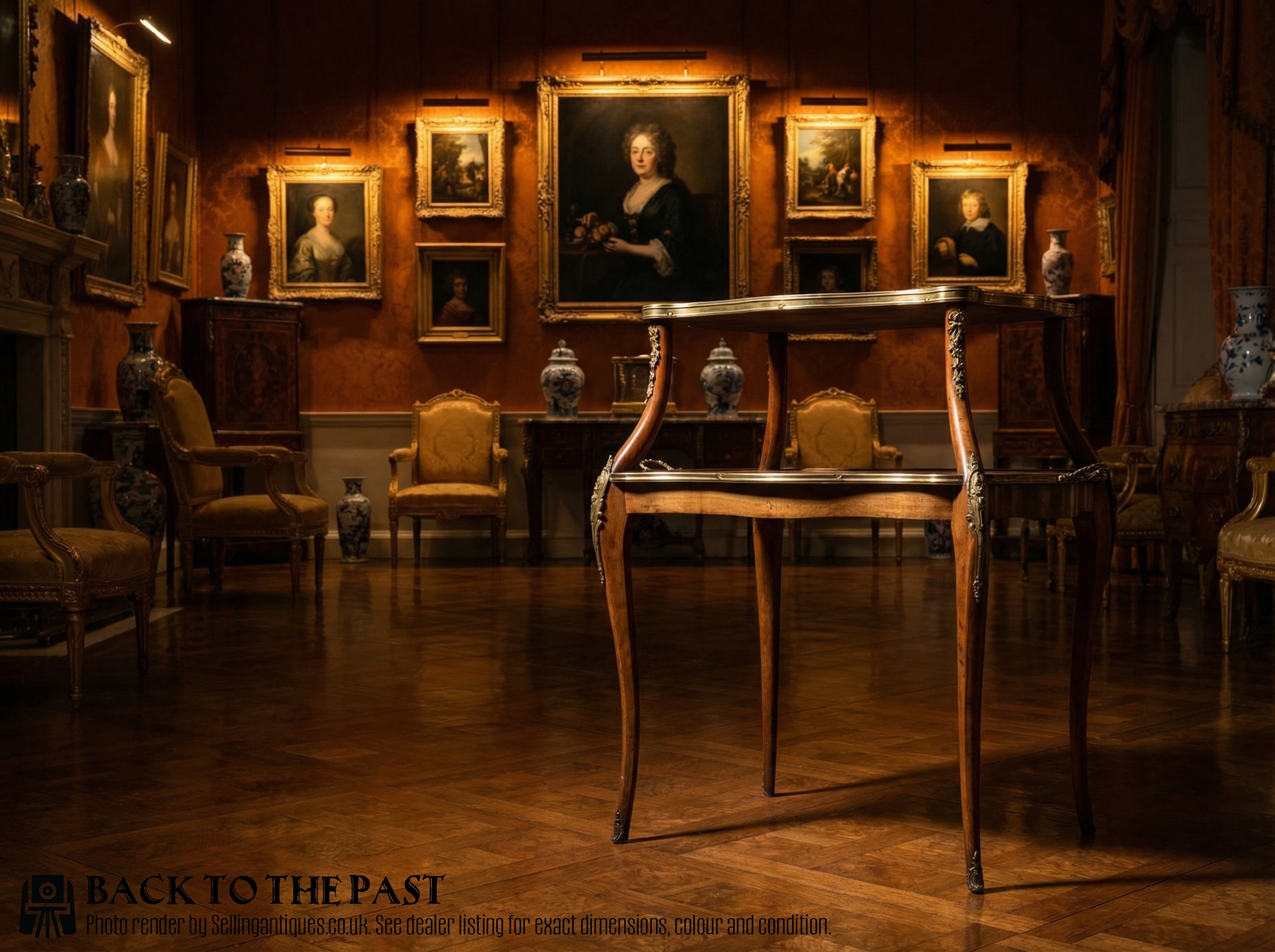
The pieces appearing here span from the nineteenth century into the early twentieth century, showing distinct influences from Louis XV style, Louis XVI manner, Napoleon III, and French Provincial aesthetics. Makers utilised diverse forms ranging from oval centre tables to galleried occasional pieces and corner whatnot shelves.
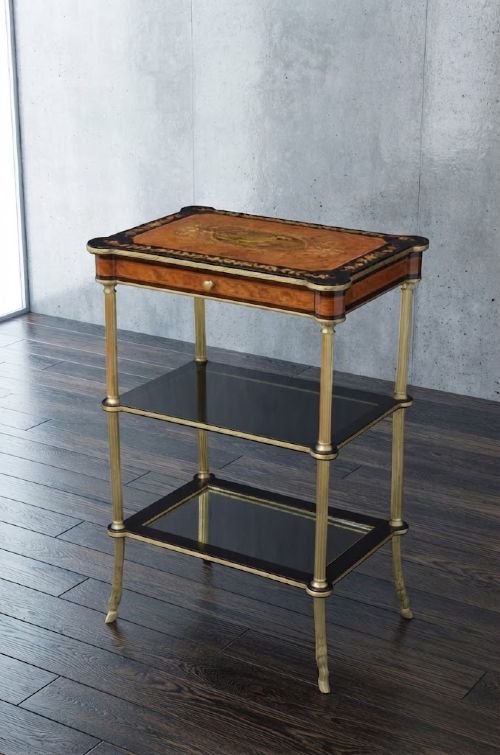
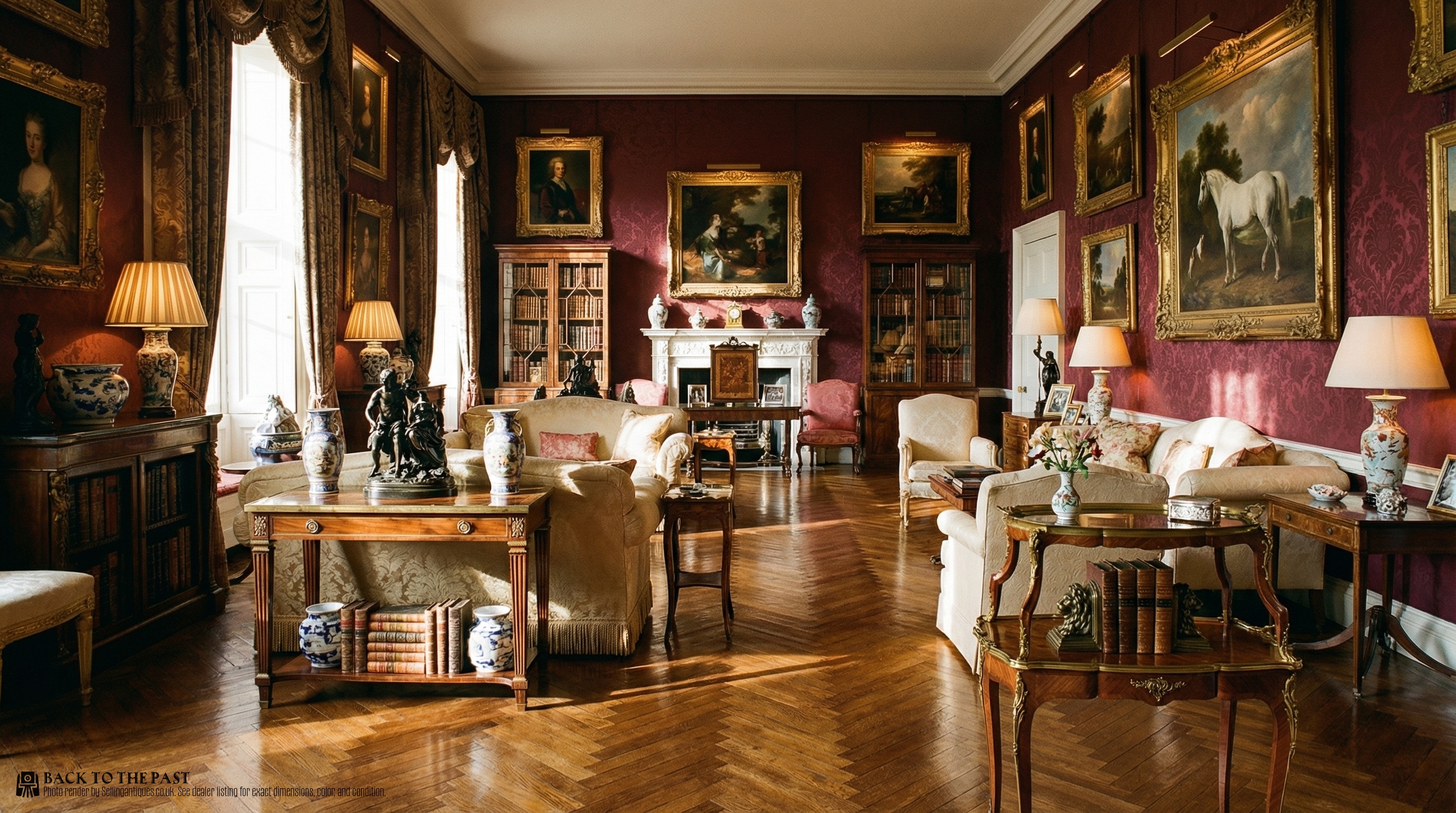
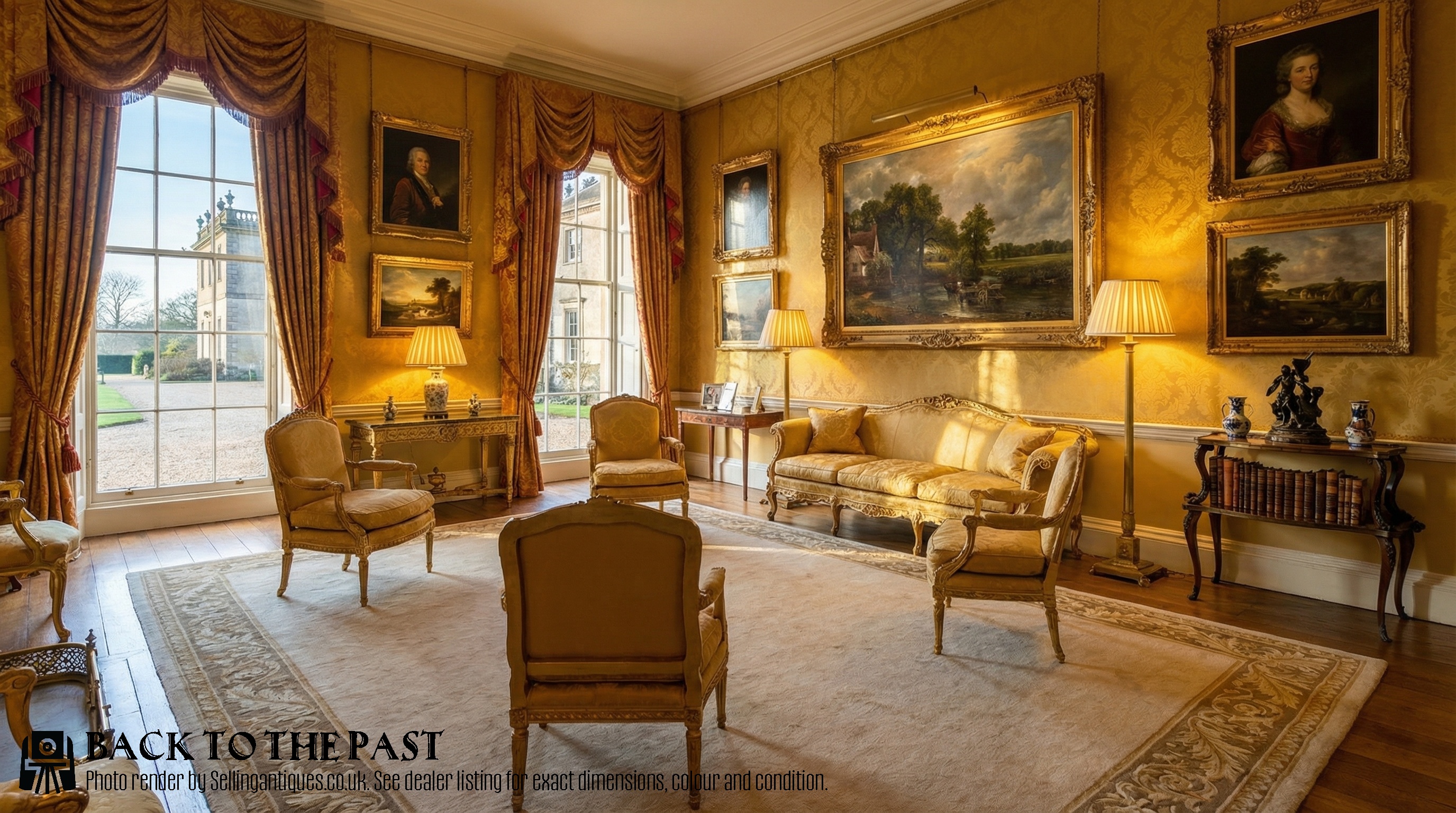
Makers constructed these tables to serve multiple domestic functions within drawing rooms, boudoirs, and parlours. The inclusion of mirrored tiers, glass trays, and removable top sections demonstrates their versatility for entertaining and display.
How they were made
Craftsmen built the underlying structures using woods such as walnut, mahogany, kingwood, rosewood, amboyna, and ebonised timber. They applied intricate marquetry, parquetry, and geometric wood inlay across the tiers, often incorporating contrasting satinwood and floral motifs.
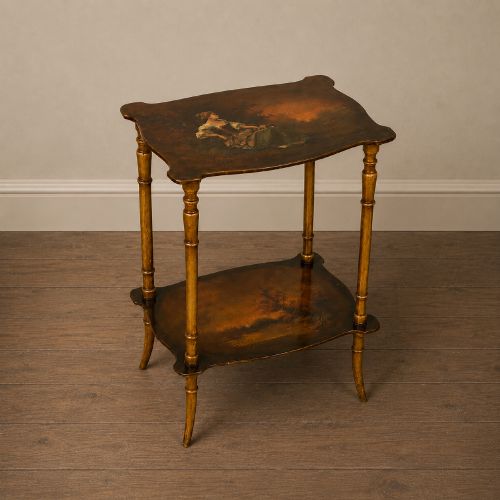
Metalwork played a defining structural and decorative role, with makers mounting ormolu, bronze, and brass around shelves, legs, and galleries. Some examples integrate turned wooden legs, marble slabs, painted finishes, and japanning alongside delicate brass stringing.
French Etagere Table Retail Price Guide 2026
Typical asking prices for french etagere table among the pieces listed under this phrase on Sellingantiques today, from the lower quarter to the upper quarter. They describe what is for sale here now, not the wider market.
What varies in quality
The refinement of the wood marquetry and parquetry patterns dictates the visual distinction between standard examples and exceptional pieces. Elaborate pictorial inlay work and detailed sunburst motifs demand superior hand-cutting skills compared to basic geometric borders.
The quality and weight of the cast ormolu and brass mounts separate workshop tiers. Crisp chasing on bronze mounts and substantial brass galleries indicate higher craftsmanship than simpler stamped metal edges.
Edwards and Roberts·Donald Ross·Druce and Co
The French Etagere Table Glossary
- Étagère
- A piece of furniture consisting of a set of open shelves for displaying small objects or ornaments. These tiers rise vertically to maximise display space.
- Marquetry
- Decorative woodwork where pieces of veneer are fitted into a design on a structural panel. Makers used contrasting timber grains to picture flowers and landscapes.
- Ormolu
- Gilded bronze mounts applied to the edges and legs of furniture. This technique adds metallic highlights and structural protection to high-end tables.
- Parquetry
- Geometric mosaic woodwork formed by small pieces of timber arranged in patterns. It creates regular repeating motifs across table surfaces.
- Japanning
- A European imitation of East Asian lacquerwork applied to furniture surfaces. This finish involves layered varnishes cured to create a glossy decorative sheen.
French Etagere Table: Frequently Asked Questions
What is an etagere table?
An etagere table is a multi-tiered piece of furniture designed specifically for holding small decorative objects, books, and tea sets across several open levels.
These tables combine the surface utility of a standard side table with the vertical display capacity of shelving units.
How were etagere tables used?
Historical interiors utilised these tiered tables as prominent display stands for porcelain, ornaments, and precious curiosities within principal reception rooms.
They also served practical functions as tea tables, sewing tables, and bedside lamp surfaces during the nineteenth and early twentieth centuries.
How do I identify Napoleon III style?
Napoleon III pieces frequently combine ebonised wood surfaces with elaborate brass inlay, gilt bronze mounts, and rich marquetry panels.
This eclectic nineteenth-century aesthetic drew heavy inspiration from earlier French court styles while embracing modern manufacturing techniques.