
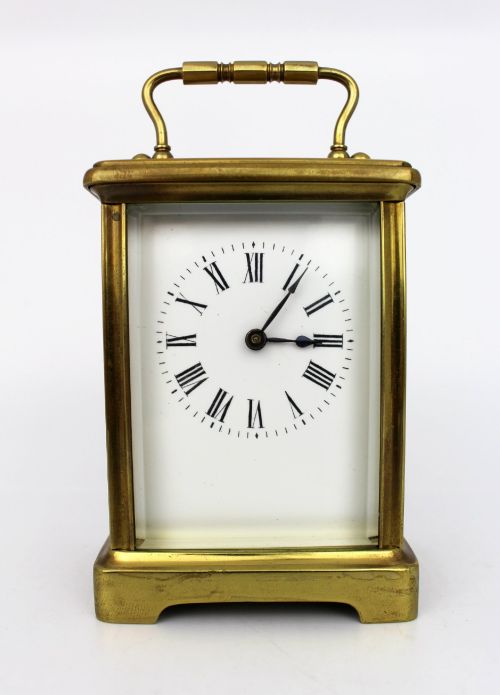
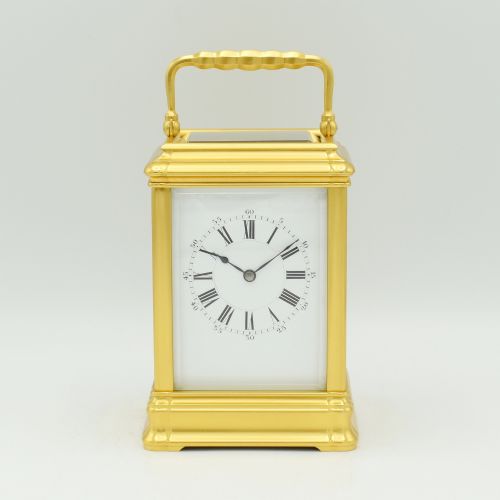
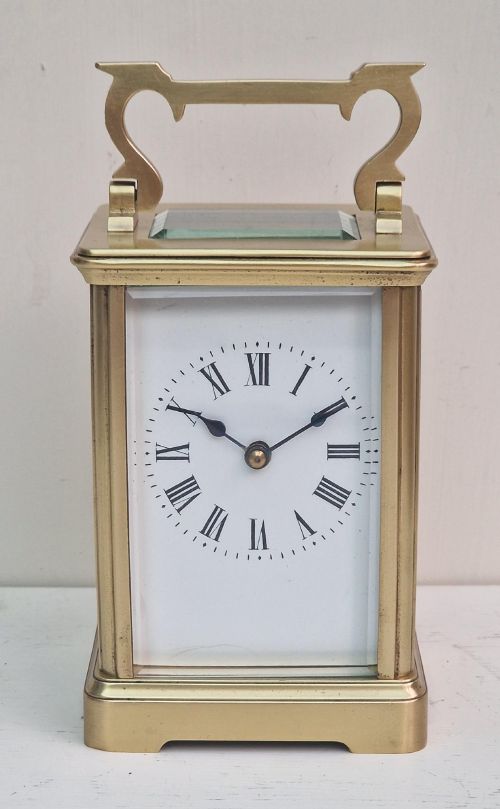
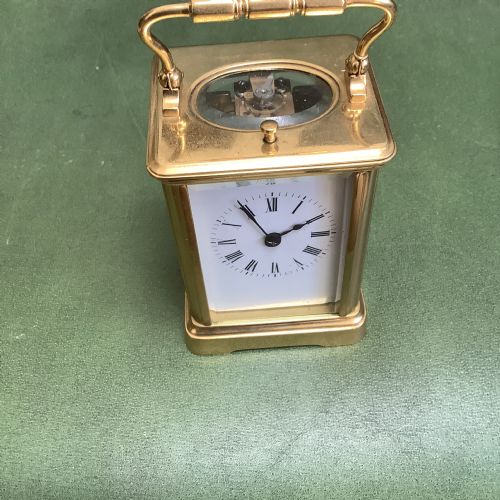
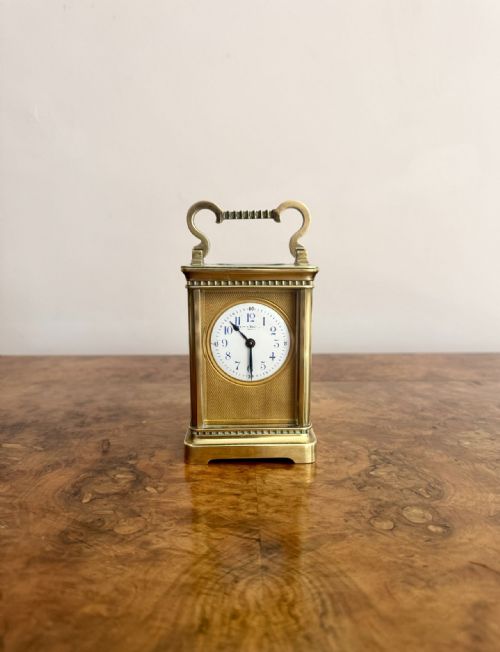
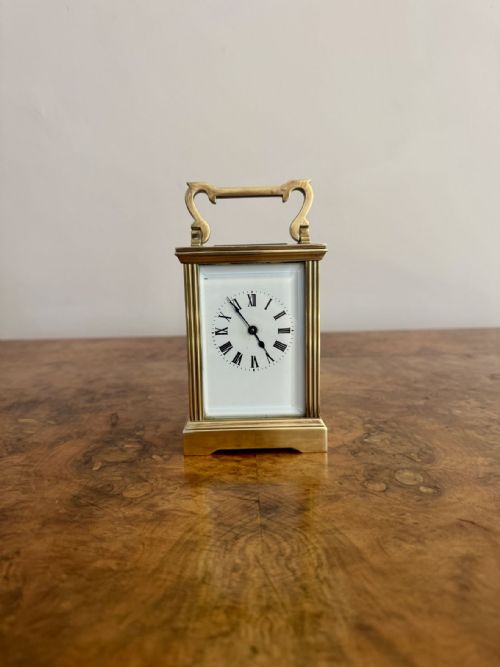
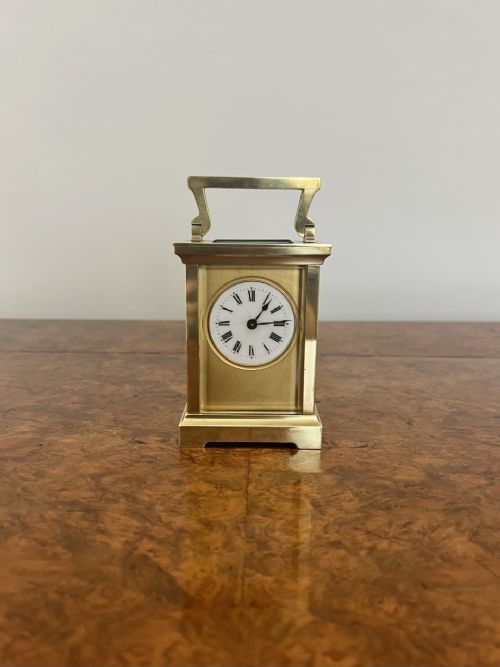


French Enamel Mantle Clock
These French enamel mantle clock pieces combine brass, ormolu, and champlevé enamel to anchor a room with nineteenth-century weight and decorative polish.
French Enamel Mantle Clock
A french enamel mantle clock sits on a chimney piece or shelf, combining a mechanical movement with decorative enamel panels and gilt metal. These pieces belong predominantly to the nineteenth century, spanning periods from the Victorian era through the early twentieth century.
Most examples encountered here are carriage clocks or mantel clocks fashioned in brass, ormolu, and bronze. Makers housed these mechanisms in glass-sided cases or cast brass housings adorned with coloured enamel dials and painted panels.
Origins trace directly to French workshops and Paris makers, with revival styles such as Louis XVI and Rococo influencing the cast bronze and ormolu mounts. Buyers select them for their combination of mechanical utility and decorative presence.
What varies in quality
The precision of the casting and the crispness of the chased mounts separate standard pieces from superior examples. Heavier ormolu and detailed bronze work indicate greater labour in the original workshop.
The intricacy of the enamel work dictates distinction, with hand-painted dial scenes or deep champlevé patterns requiring specialist skill. Maker attribution to known French firms adds further weight to an individual piece.
Object forms include standard mantel clocks, decorative garniture sets, and brass carriage clocks equipped with travel cases.
Henri Jacot·C Detouche Paris·Margaine Of France·Henry Jacob·Japy Freres·Charles Frodsham·Holingue Freres
The French Enamel Mantle Clock Glossary
- Ormolu
- Gilded bronze used extensively for decorative mounts on nineteenth-century French clocks. This technique involves applying a gold amalgam to a bronze base before heating.
- Champlevé
- An enamelling technique where troughs are dug into a metal surface and filled with vitreous enamel before firing. It creates rich patterns on clock cases and dials.
- Carriage clock
- A portable spring-driven timepiece designed for travel, housed in a brass case with glass panels. These typically feature a swinging handle on top.
- Gorge case
- A specific stepped-profile brass carriage clock case style popular in the nineteenth century. It provides a robust housing for the movement and enamel dial.
- Cloisonné
- Enamelling where thin metal wires are soldered to a metal base to form compartments for coloured glass paste. The piece is then fired and polished flat.
French Enamel Mantle Clock: Frequently Asked Questions
How do I wind a carriage clock?
Insert the key into the winding arbor located on the underside or back plate of the movement. Turn it gently clockwise until you feel resistance.
Take care not to over-wind the mainspring, as this can damage the internal mechanism. Most nineteenth-century models require winding every eight days.
What is a repeater mechanism?
A repeater mechanism strikes the last hour and quarters on demand when you press a button or lever on the case. This allowed owners to check the time in the dark.
These complications require complex train gears inside the brass housing, making them desirable among collectors.
How do I clean the brass case?
Dust the brass and glass surfaces regularly with a soft, dry cloth to prevent grime accumulation. Avoid liquid polishes, which can seep into enamel panels and ruin the finish.
Original gilding on ormolu surfaces is delicate and easily worn away by abrasive cleaning methods.
How do I date a French mantel clock?
Examine the movement backplate for maker stamps, serial numbers, and exhibition medals that narrow down the production decade. Stylistic cues such as heavy bronze casting or champlevé enamel point to specific Victorian periods.
Enamel dial signatures often name the retailer or Paris maker who assembled the finished piece.