



French Empire Timepiece
A french empire timepiece commands attention with polished ormolu, patinated bronze, and neoclassical design.
French Empire Timepiece
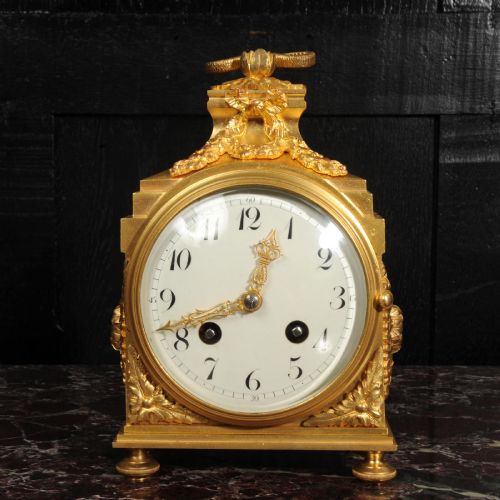
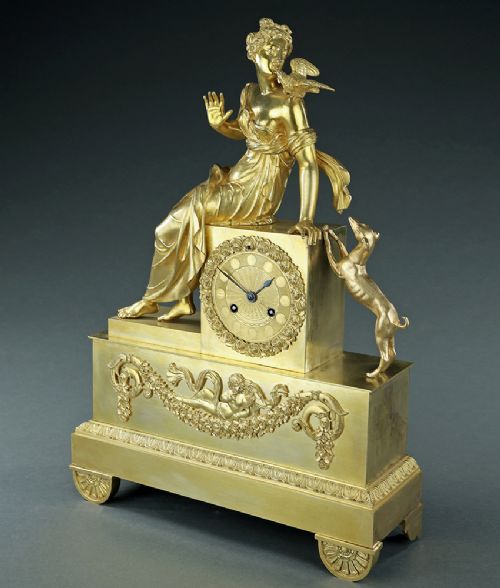
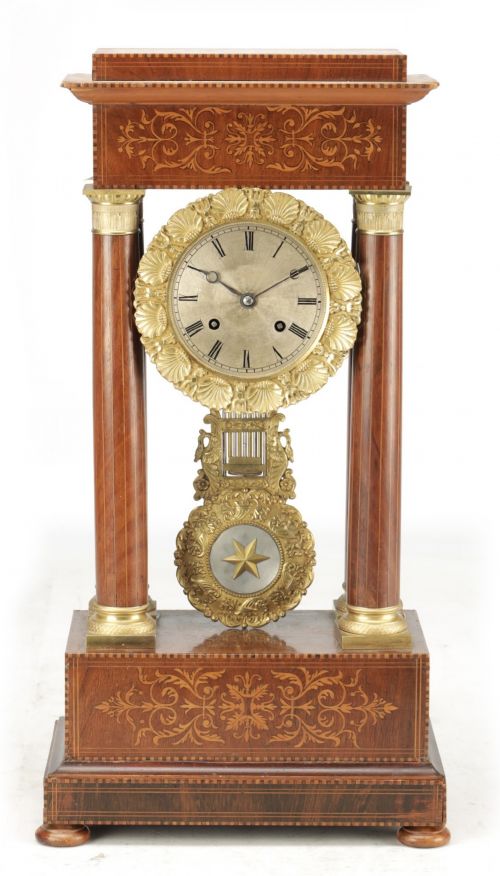
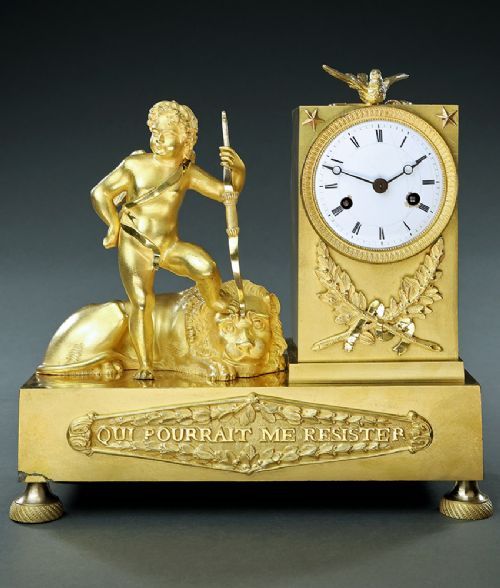
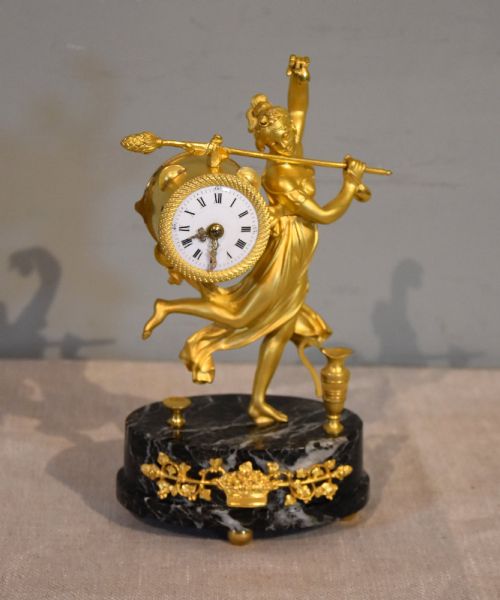
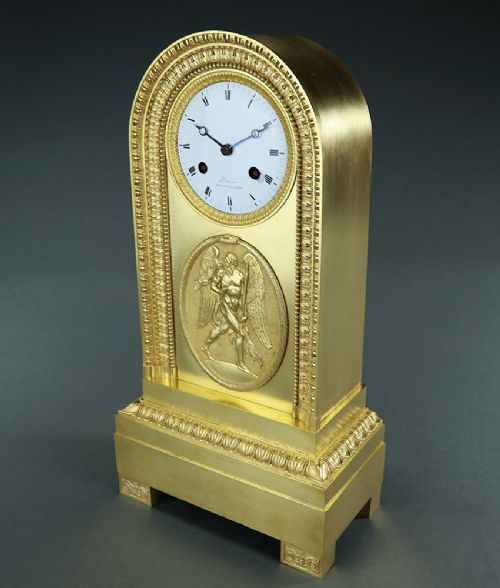
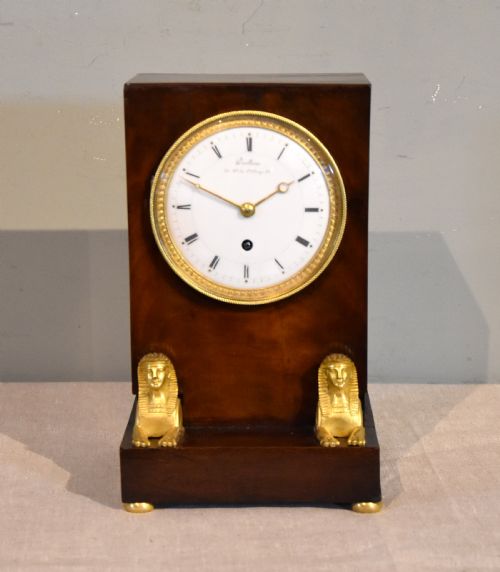
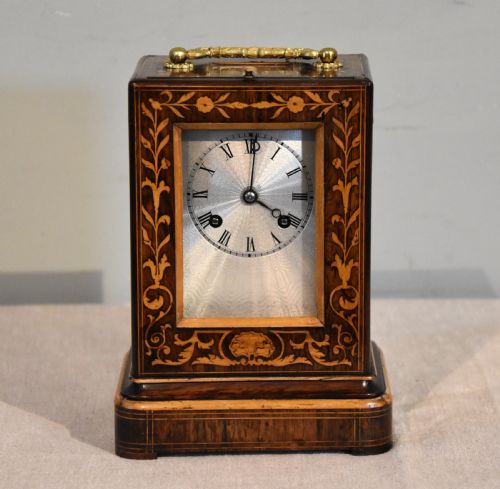
A french empire timepiece is a decorative mechanical clock or mantel clock originating from the nineteenth century, reflecting classical motifs and formal symmetry. These pieces often take the form of portico clocks, figural mantel clocks, or carriage clocks designed to sit centrally on a fireplace mantle or side table.
Buyers encountering this selection will frequently find examples labelled under nineteenth century, Victorian, or Regency periods, with styles spanning strict Neoclassical lines to French Empire Revival. Many incorporate allegorical subjects such as love, fidelity, or historical figures like Napoleon.
The objects serve as both functional timekeepers and sculptural centerpieces, combining bronze figures, marble plinths, and visible clock dials into a unified decorative arrangement.
What Varies In Quality
The integration of materials also dictates the standard of the piece, with solid marble bases and signed dial miniatures or maker inscriptions elevating the piece. The complexity of the movement, such as fusee mechanisms or repeating carriage work, distinguishes standard production clocks from masterwork commissions.
Several clocks depict unusual animal subjects, including bronze poodles and climbing goats near palm trees.
Samuel Marti·Deniere Et Fils·Victor Paillard·Hessen Paris·Pons De Paul
The French Empire Timepiece Glossary
- Ormolu
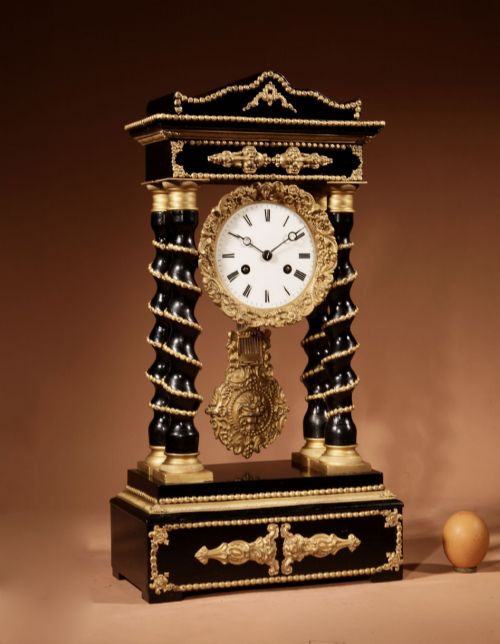
- Gilded bronze produced by applying a mercury and gold amalgam to a bronze base and heating it until the mercury vaporises. This technique creates a durable, bright golden finish characteristic of formal nineteenth-century pieces.
- Portico clock
- A mantel clock design supported by four or more slender columns resembling a classical temple facade. These architectural cases often house a suspended pendulum within the central opening.
- Garniture
- A set consisting of a central clock flanked by matching decorative objects such as urns or candelabras. They were manufactured to create a balanced display across a mantelpiece.
- Fusee
- A conical pulley used in clock movements to maintain an even pull on the gear train as the mainspring unwinds. This mechanism improves the timekeeping accuracy of the clock.
- Pendule d'Officier
- A portable military-style table clock fitted with a carrying handle on top. These travel clocks were widely produced in France during the early nineteenth century.
French Empire Timepiece: Frequently Asked Questions
What is a french empire timepiece?
A french empire timepiece is an antique clock produced during the nineteenth century, heavily influenced by neoclassical design and French military aesthetics. These decorative objects combine bronze casting, marble bases, and mechanical movements.
They were designed primarily for domestic display in formal rooms, serving both as precise instruments and sculptural ornaments.
How do you wind these clocks?
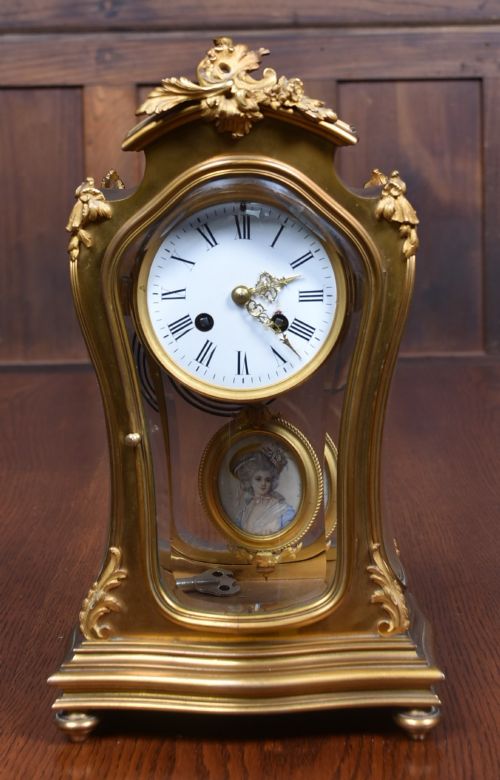
These timepieces typically use a key inserted directly into winding holes on the enamel dial to tension the internal springs. Most feature eight-day movements requiring weekly maintenance.
Care must be taken not to overwind the mechanism to preserve the vintage spring steel.
Where were they placed originally?
In nineteenth-century interiors, these clocks sat prominently on fireplace mantels, often accompanied by side garniture urns or candelabras. They also occupied console tables and entrance halls.
Their substantial weight and architectural presence required sturdy furniture support.
How are different periods identified?
Periods are distinguished by stylistic shifts, moving from the strict classical symmetry of early nineteenth-century Empire design to the ornate curves of later Victorian revivals. Materials like Sienna marble or ebonised wood also point towards specific decades.
Maker signatures and dial inscriptions offer further clues to the exact era of production.