

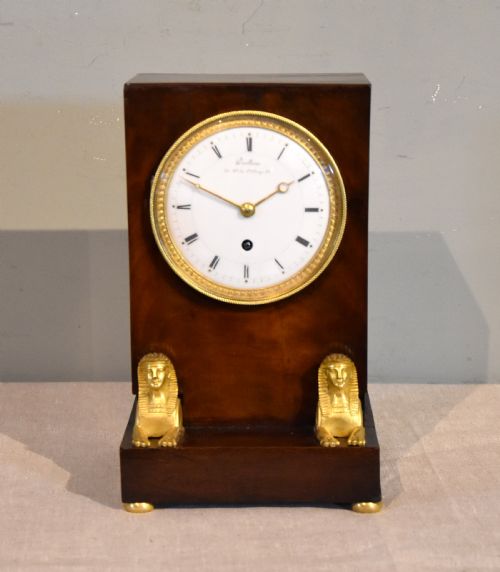
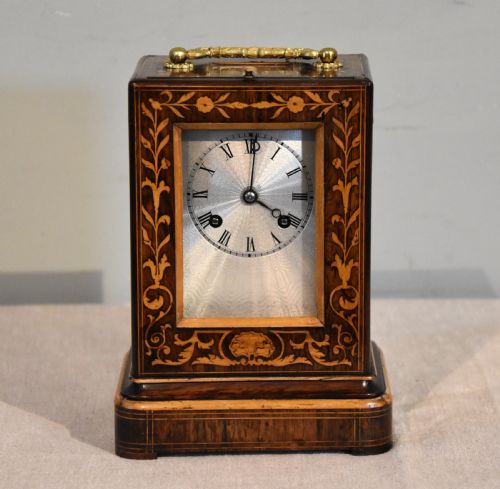
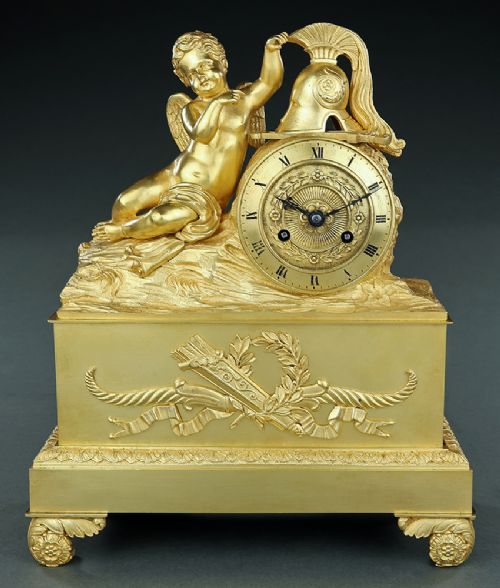
French Empire Table Clock
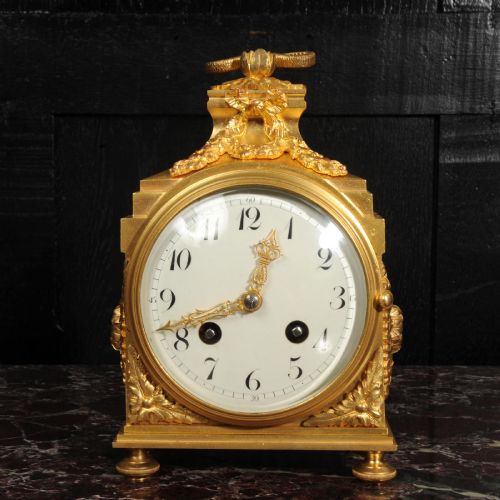
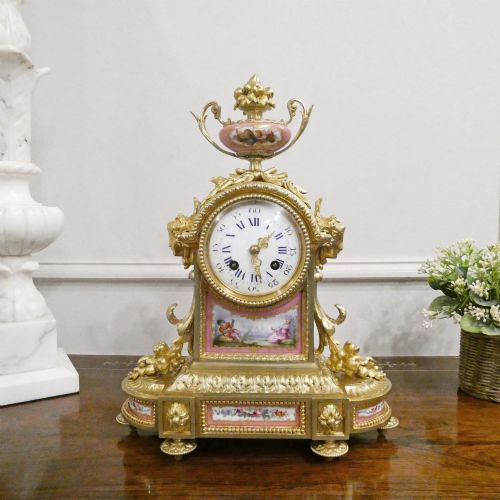
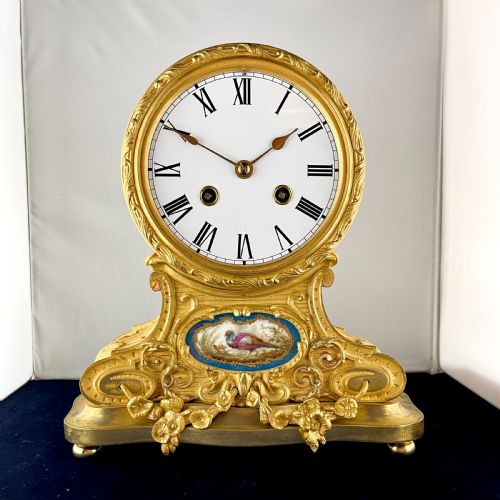
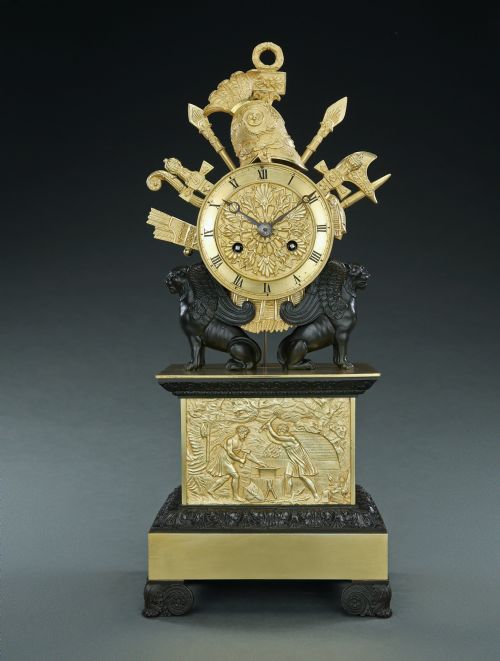
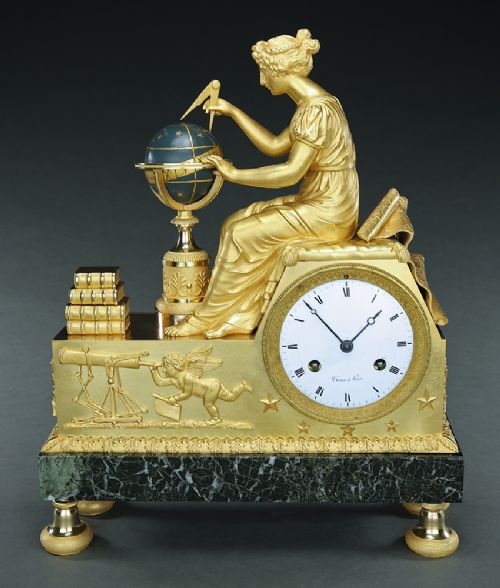
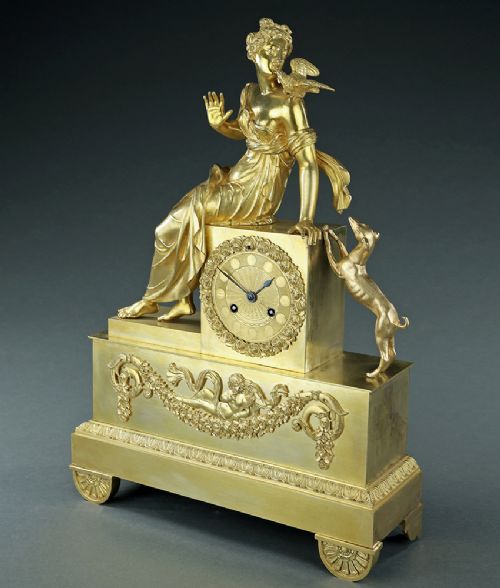
These french empire table clock examples combine heavy gilt bronze, patinated metal, and marble to anchor a room with nineteenth-century presence.
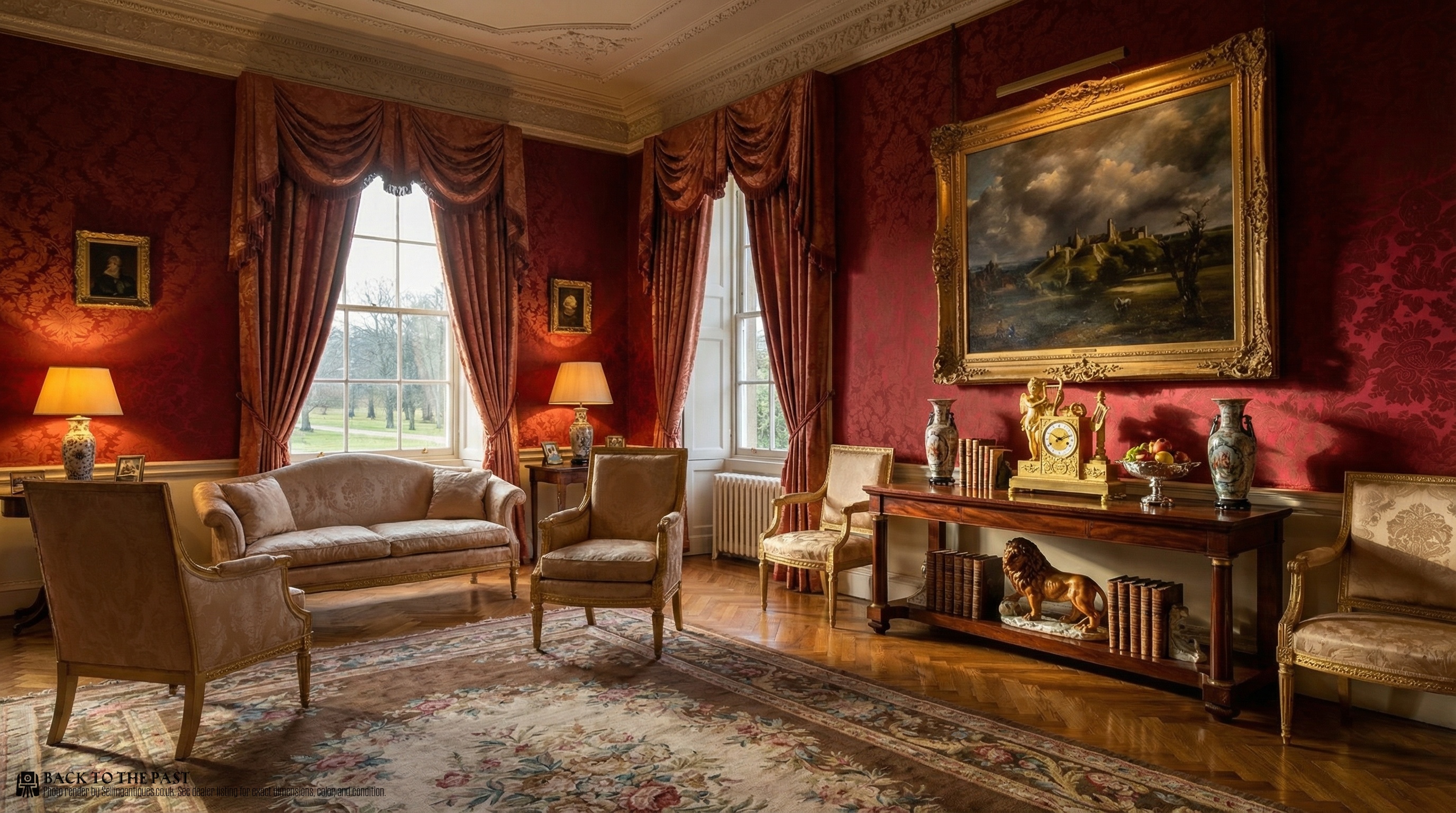
French Empire Table Clock
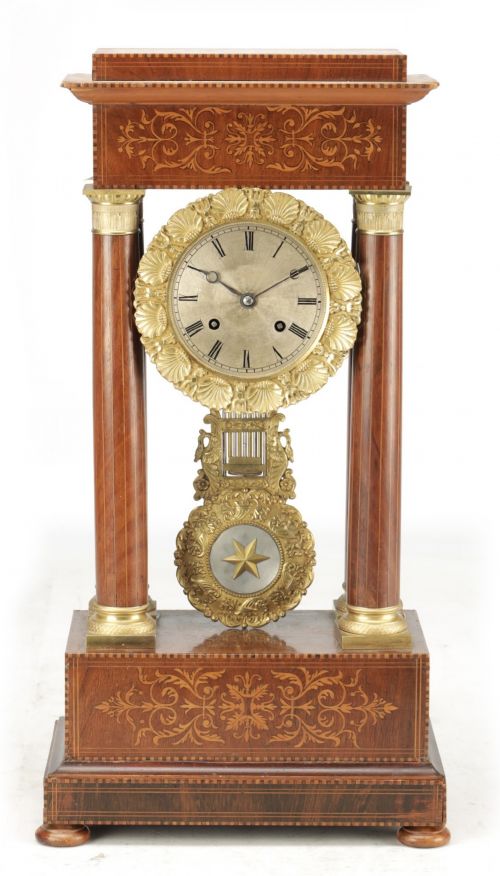
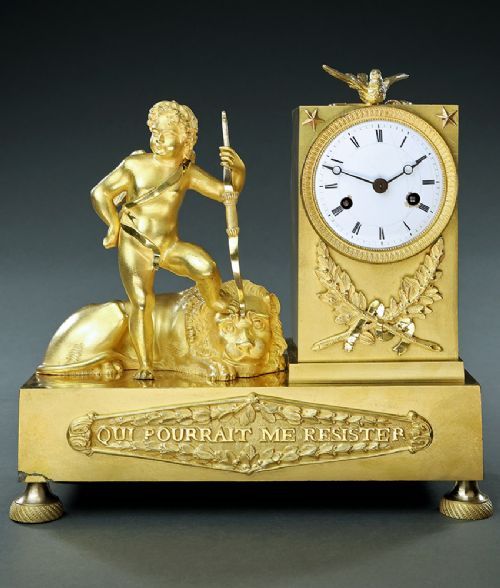
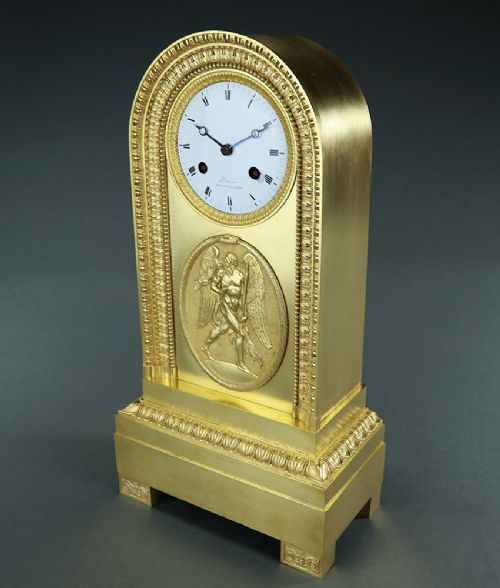
A french empire table clock takes the form of a mantel timepiece, drumhead clock, or portico clock, often featuring allegorical subjects like love, fidelity, or astronomy.
The selections span the nineteenth century, including Victorian imports, Charles X works, and revival styles referencing the early 1800s.
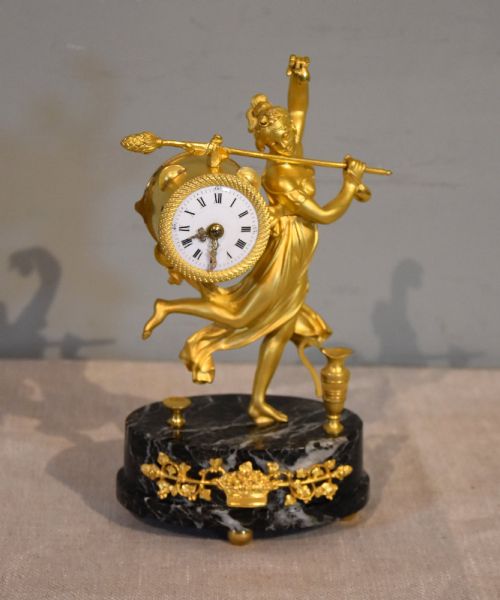
Many items appear as clock garnitures accompanied by matching side ornaments, utilising marble bodies in rouge or green tones paired with metalwork.
How they were made
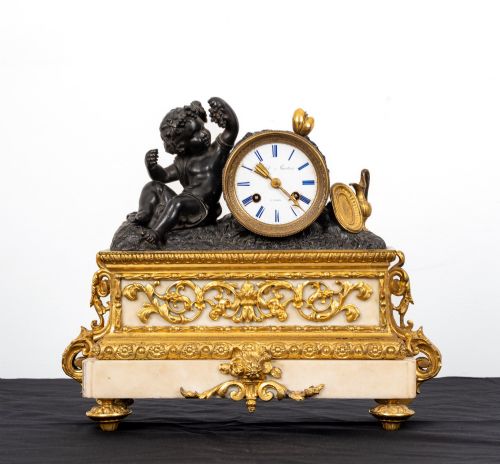
Makers cast figures and mounts in bronze or brass before applying gold gilding or ormolu to create contrasting finishes against patinated elements.
Cases incorporate carved marble, mahogany, rosewood, and glass panels, housing enamel dials and intricate mechanical movements driven by springs or weights.
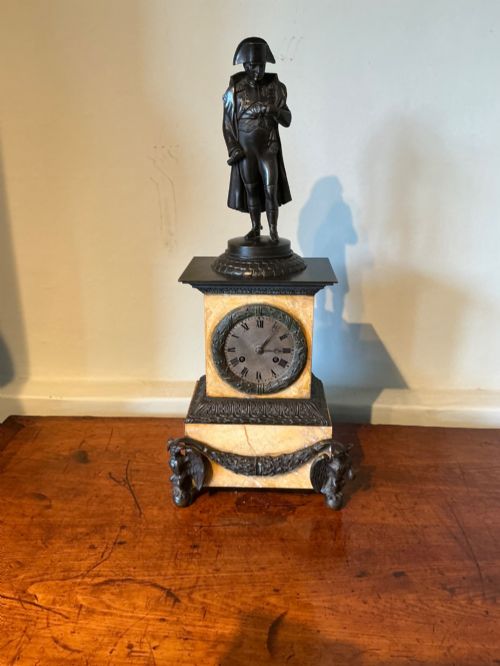
Napoleon occasionally stands atop the clock face, reminding everyone who is running the household schedule.
What varies in quality
The crispness of the bronze chasing and the depth of the ormolu finish dictate the visual strength of the piece.
Integration between the figural subject, such as Napoleon or classical deities, and the architectural clock body determines the overall design cohesion.
Japy Freres·Siffel and Cartier·Canaillor of Paris·Berger Paris·Reiche
The French Empire Table Clock Glossary
- Ormolu
- Gilded bronze achieved through a mercury amalgamation process or modern electroplating methods. This technique creates a rich golden surface characteristic of classical French clock cases.
- Portico clock
- A architectural clock design supported by four columns, often constructed in wood or marble. These models frequently house a suspended pendulum within the central opening.
- Garniture
- A set comprising a central clock flanked by matching decorative objects such as urns or candelabra. They were designed to sit harmoniously upon a mantelpiece.
- Pendule d'Officier
- A portable military-style timepiece featuring a freestanding case with a carrying handle on top. They originated for travel use by officers during the campaign periods.
- Patinated bronze
- Metal treated with chemical solutions to produce a darkened, aged surface finish. This dark tone creates visual contrast against bright ormolu mounts.
French Empire Table Clock: Frequently Asked Questions
What is a french empire table clock?
A french empire table clock is a mantel timepiece produced during the nineteenth century, drawing on classical motifs and military themes from the Napoleonic era.
These pieces typically combine cast bronze, ormolu, and marble bases to house mechanical clockwork movements.
How do portico clocks differ from standard mantel clocks?
Portico clocks use a distinct architectural frame supported by columns, creating an open vertical space where the pendulum swings visibly.
Standard mantel clocks rely on a solid box or figural base to enclose the mechanism entirely.
What materials make up these clock cases?
The primary structural materials include gilt bronze, ormolu, patinated bronze, brass, and various marbles such as rouge and green.
Wood elements like mahogany and rosewood also appear in specific nineteenth-century variants.
How do you identify an empire style clock?
Empire style items feature strict symmetry, classical mythological figures, military trophies, and symbols of triumph or astronomy.
The metalwork contrasts polished ormolu against dark patinated bronze surfaces.