


French Empire Style Chandelier
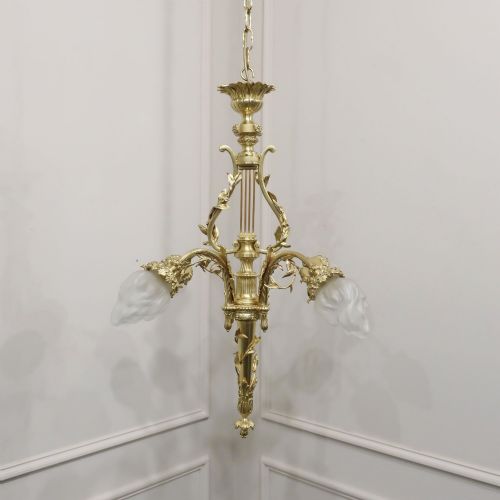
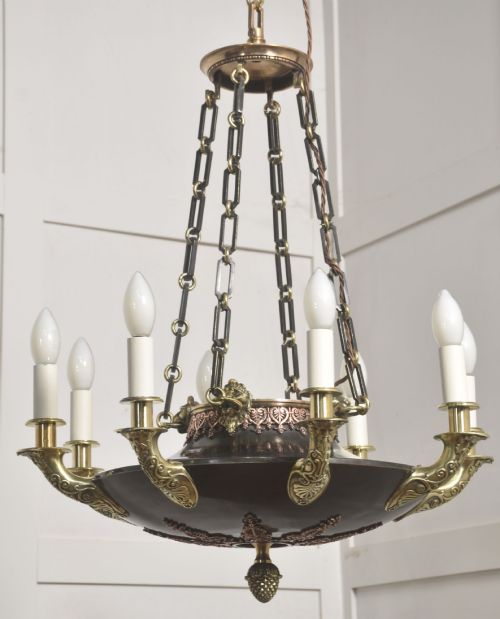
A french empire style chandelier brings monumental neoclassical form and shimmering crystal to high ceilings, casting a dramatic, diffused light across a room.
French Empire Style Chandelier
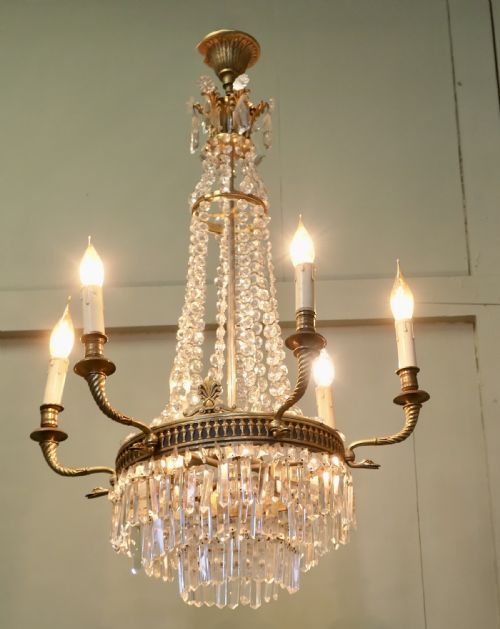
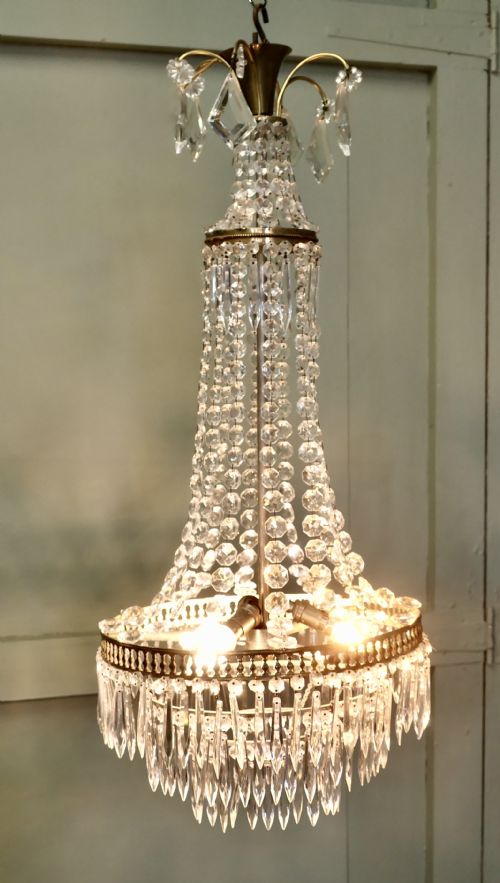
A french empire style chandelier unites classical proportion with opulent illumination, drawing heavily upon neoclassical motifs. These fixtures appear across a span of periods, ranging from the eighteenth century through nineteenth-century revivals and into early twentieth-century interpretations.
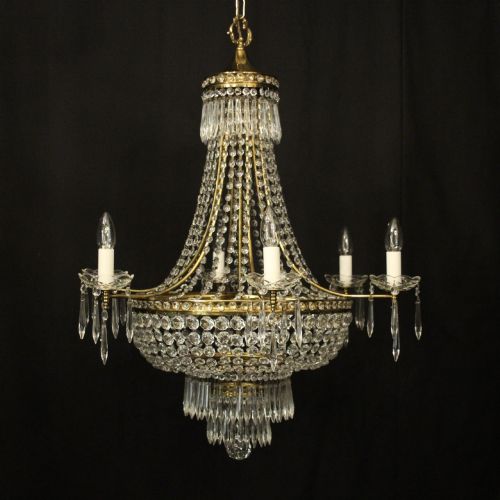
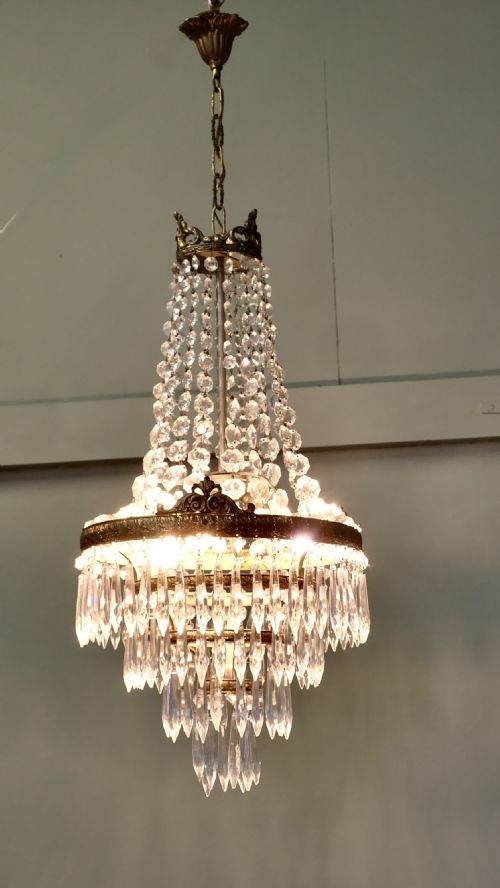
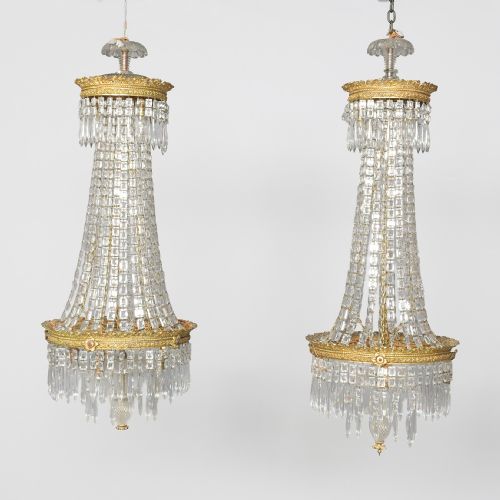
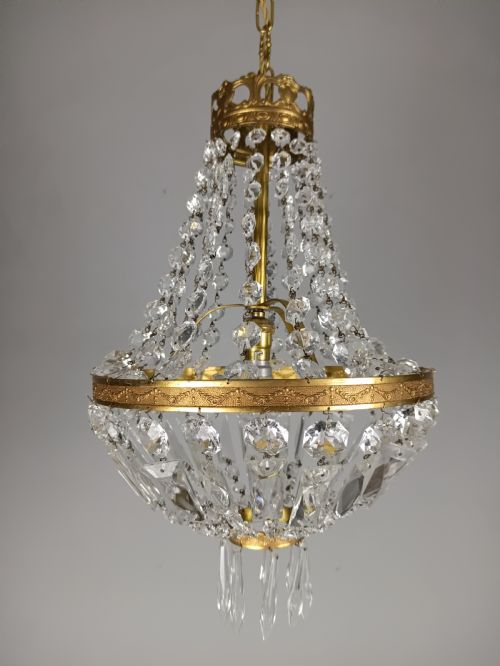
The most common formats met on this page include basket chandeliers, multi-light tent and waterfall designs, and single-light variations. Formats stretch from small petite baskets to very large multi-branch statement pieces.
How they were made
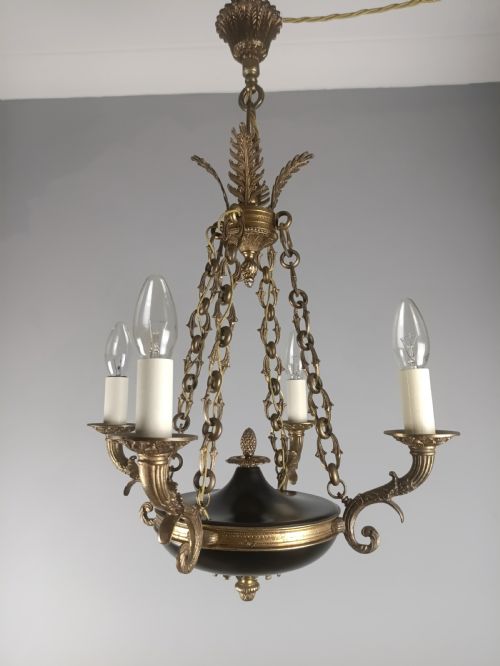
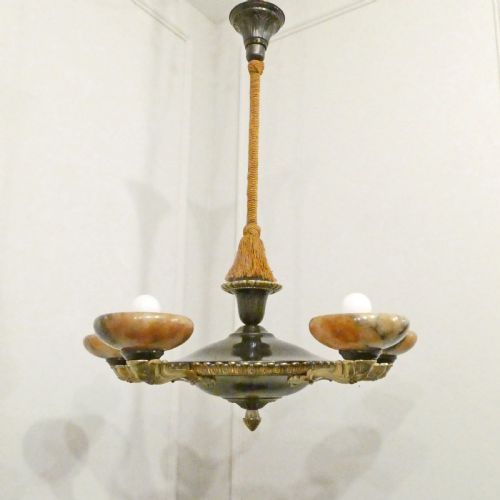
Metalwork forms the structural spine of these pieces, utilising brass, copper, patinated bronze, and gilded bronze or ormolu. Metal components are cast, chased, and fixed together to support heavy tiers of drops.
Glass and crystal elements create the characteristic sparkle, featuring cut glass, moulded crystals, and strung beads arranged in tents, cascades, and baskets.
The inventory includes single-light basket fixtures alongside grand sixteen-light tent and waterfall chandeliers.
What varies in quality
The sophistication of the metalwork separates ordinary pieces from finer examples, with hand-chased gilt bronze offering sharper detail than simpler stamped brass. Heavier casting and crisper neoclassical ornamentation indicate superior workshop output.
The clarity, cut, and completeness of the crystal drops dictate overall optical brilliance. Original uniform prisms and meticulously strung bead arrangements hold greater distinction than mismatched replacements.
The French Empire Style Chandelier Glossary
- Tent and waterfall
- A configuration where strings of glass beads form an upper conical tent shape that cascades down into a wider waterfall of drops. This arrangement maximises light refraction across multiple tiers.
- Basket chandelier
- A lighting form where glass drops are suspended in a dense, curved mesh beneath the frame to resemble an open basket. These compact designs concentrate illumination directly downwards.
- Gilt bronze
- Metal cast from a copper-alloy and treated with a gold amalgam or leaf finish. It provides a rich, warm metallic surface that resists tarnishing over decades.
- Prism
- A cut glass or crystal pendant designed to refract light into spectral colours. Prisms hang from the arms and rings of the fixture.
- Ormolu
- A finely finished gilded bronze applied to decorative arts and lighting fixtures. The technique delivers a bright, luxurious golden sheen.
French Empire Style Chandelier: Frequently Asked Questions
How do I hang a heavy empire chandelier?
These fixtures require secure anchoring directly into ceiling joists or structural nogging using appropriate steel fixings. Due to the substantial weight of cast bronze and crystal components, professional electrical and structural installation is strongly recommended.
Ceiling height dictates the hanging drop, ensuring the lower finial clears head height while maintaining visual balance within the room.
What periods do these chandeliers come from?
The pieces span from the eighteenth century through nineteenth-century revivals like the Napoleon III period and into twentieth-century interpretations from the nineteen-twenties and thirties. Revival pieces faithfully replicate earlier neoclassical designs while employing methods of their own time.
Stylistic influences cross paths with Art Deco and Edwardian aesthetics in later twentieth-century iterations.
How do I clean the crystal drops?
Individual crystal drops and glass beads benefit from gentle hand cleaning with a mild solution of warm water and professional glass cleaner. Removing the prisms allows for thorough cleaning without straining the fragile wire connections.
Careful handling ensures that delicate brass pins and aged wiring remain undisturbed during the process.
What is a prison bag chandelier?
This descriptive term refers to a specific compact bag-shaped fixture featuring dense clusters of enclosed crystal drops. The form derives its traditional nickname from the cage-like containment of the glass elements.
They offer a concentrated spread of illumination suited to smaller spaces or lower ceilings.