



French Empire Giltwood
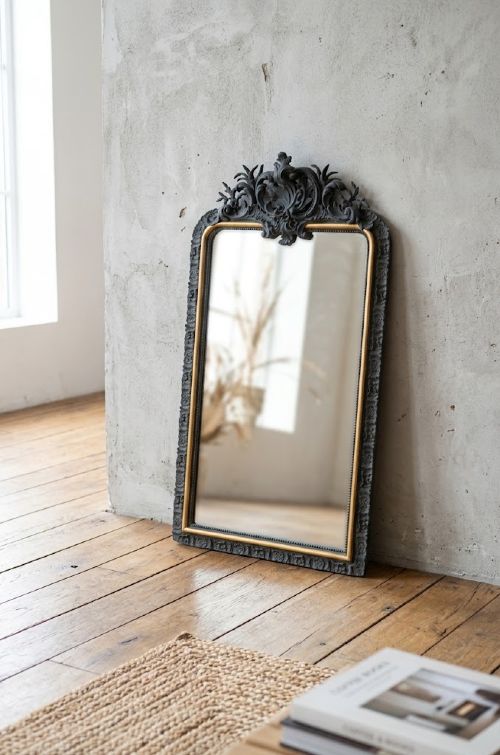
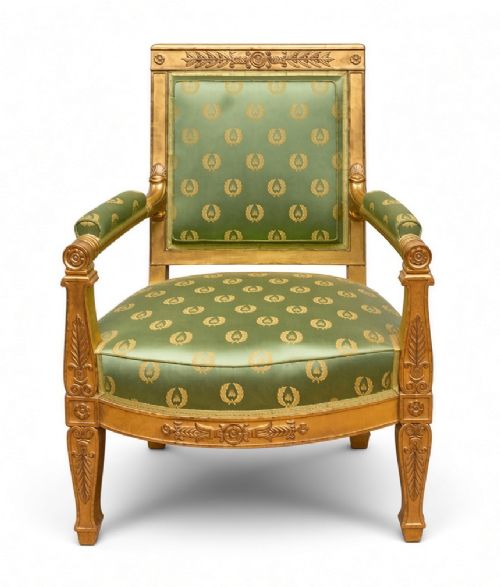
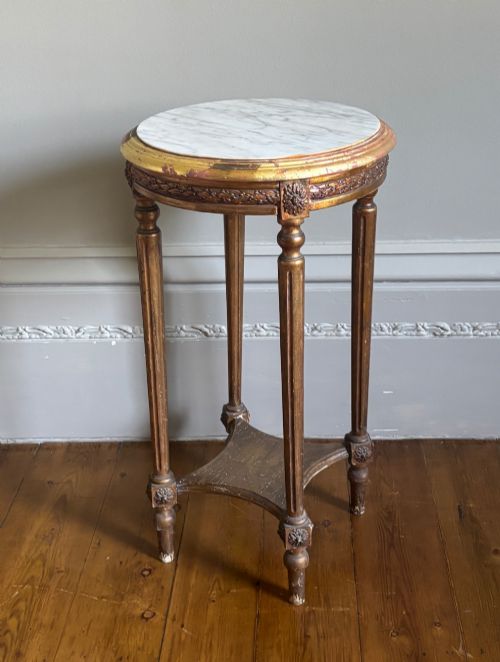
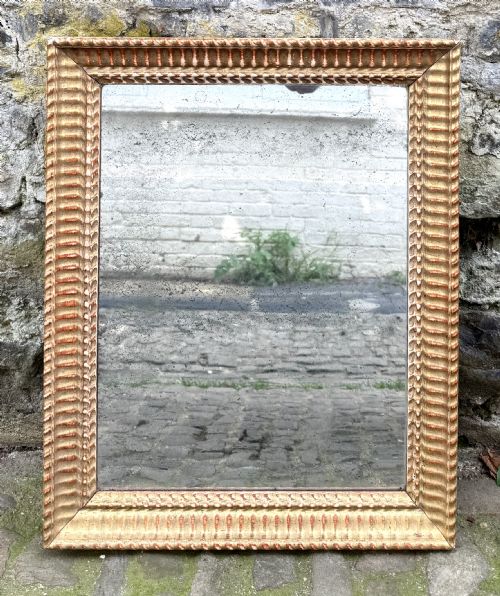
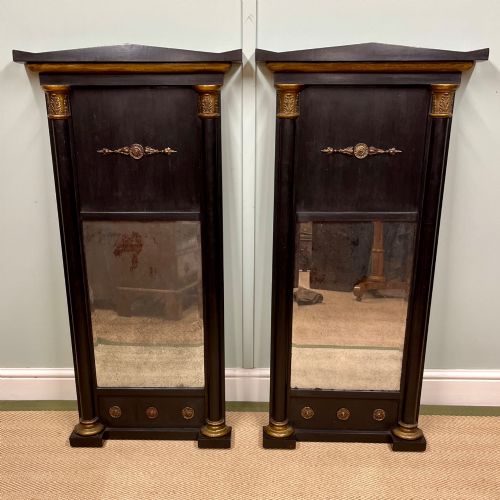
French empire giltwood brings neoclassical symmetry and rich gilded surfaces into a room, combining classical motifs with commanding scale.
What varies in quality
The precision of the wood carving dictates the initial visual impact, separating sharp, deeply undercut foliage and classical figures from softer, mechanically cast or shallow mouldings. High-grade pieces display meticulous hand-tooling across every visible surface.
The application and retention of the gold leaf establish the richness of the finished surface, where superior examples exhibit layered gilding that reveals subtle tonal shifts rather than flat, uniform paint.
Structural integrity in large mirrors and seating relies on robust original joinery and stable base woods, ensuring the heavy gilded frames support their own weight without distortion.
Jacob-Desmalter·A.M.E. Fournier
The French Empire Giltwood Glossary
- Giltwood
- Wood that has been coated with gold leaf or gold paint. This technique gives furniture and mirrors a bright, metallic sheen.
- Gesso
- A plaster-like mixture applied to wood surfaces as a base before gilding. It provides a smooth ground for carving fine details.
- Fauteuil
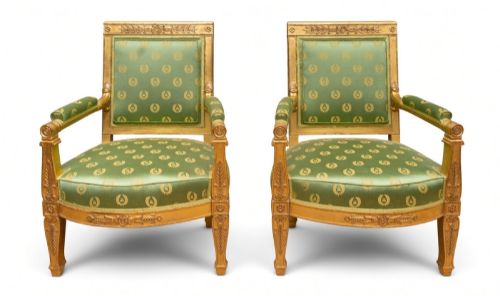
- An open-armed upholstered armchair with exposed wooden sides. These seats were prominent in formal French reception rooms.
- Trumeau
- A decorative wall mirror fitted with a painted or carved panel above the glass. It typically hangs between windows or over a mantelpiece.
- Curule
- An ancient Roman stool design featuring intersecting curved legs forming an X-shape. This classic form was revived during the Empire period.
Swans appear frequently as carved arm supports and table bases, reflecting the favourite motifs of the imperial court.
French Empire Giltwood: Frequently Asked Questions
How do I style a large pier mirror?
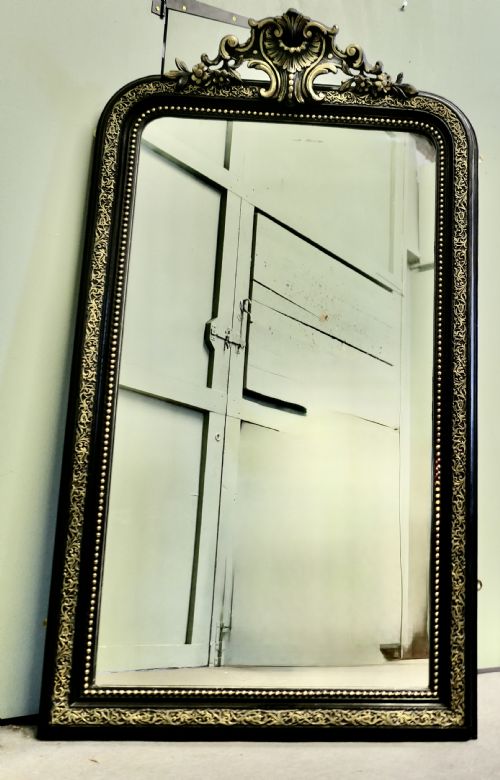
Large pier mirrors work best when mounted above low console tables or directly opposite a window to reflect light across the room. Their vertical proportions elongate wall space and establish a formal focal point.
Keep surrounding decor restrained to let the carved giltwood frame and classical motifs command attention without visual clutter.
Where were these pieces used originally?
These furnishings populated the grand salons, state rooms, and private chambers of French chateaux and townhouses during the nineteenth century. They conveyed authority, culture, and alignment with classical imperial aesthetics.
Today, the same pieces transition easily into domestic hallways, living rooms, and bedrooms seeking architectural presence.
How do I care for antique gilded surfaces?
Dust gilded wood gently using a soft, dry ostrich feather duster or a clean microfibre cloth without applying pressure. Avoid chemical cleaners, polishes, or damp cloths, which can lift the delicate gold leaf and underlying gesso.
Position pieces away from direct sunlight and strong heat sources to prevent the wood from shifting and cracking the gilt finish.
How do I distinguish Empire from Restauration pieces?
Empire pieces, produced during the Napoleonic reign, favour heavy military symbolism, dark woods, and commanding neoclassical symmetry. Giltwood mounts and frames lean towards monumental proportions and bold classical iconography.
Restauration pieces, dating from the subsequent decades, introduce slightly lighter forms and more domestic intimacy while retaining classical lines.