



French Egyptian Revival
French Egyptian revival pieces bring the timeless drama of the Pharaohs into European interiors through striking bronze work and architectural marble.
French Egyptian Revival
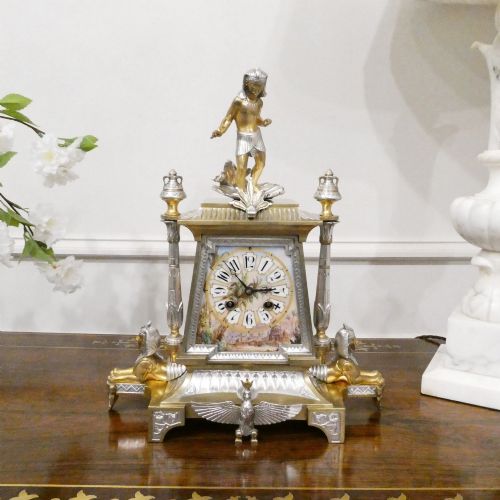
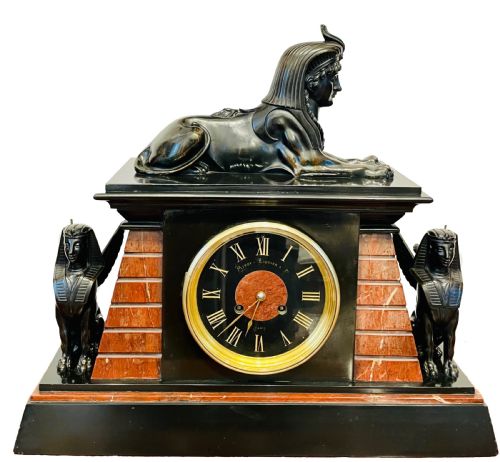
When you search for French Egyptian revival, you are looking at decorative objects and furnishings that draw directly upon the art and architecture of ancient Egypt, reinterpreted through a continental lens. These pieces emerge chiefly across the nineteenth century and extend into later twentieth-century movements like Art Deco, capturing a fascination with archaeological discovery that swept through France.
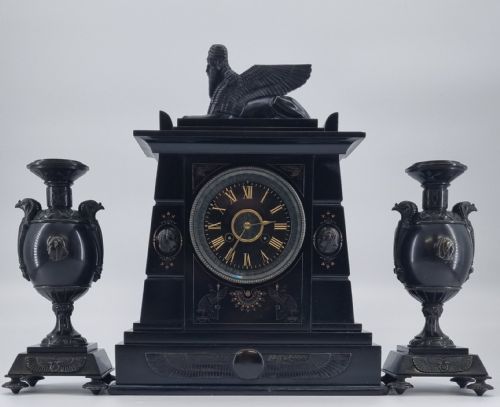
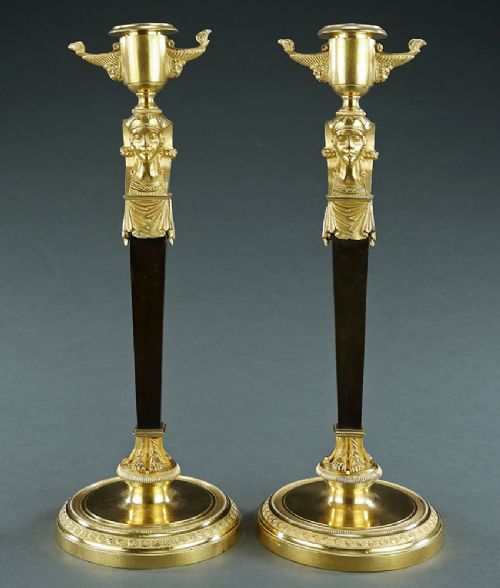
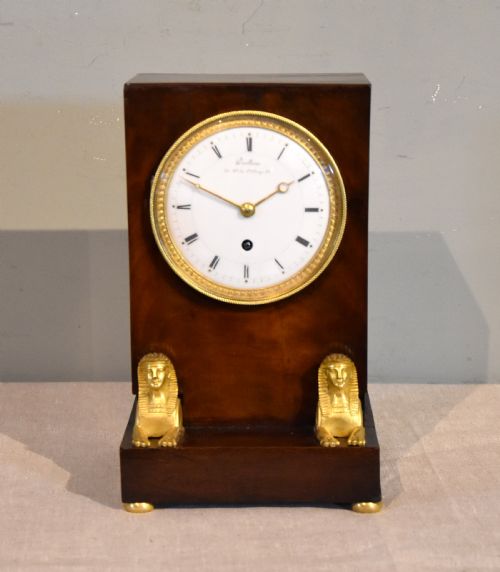
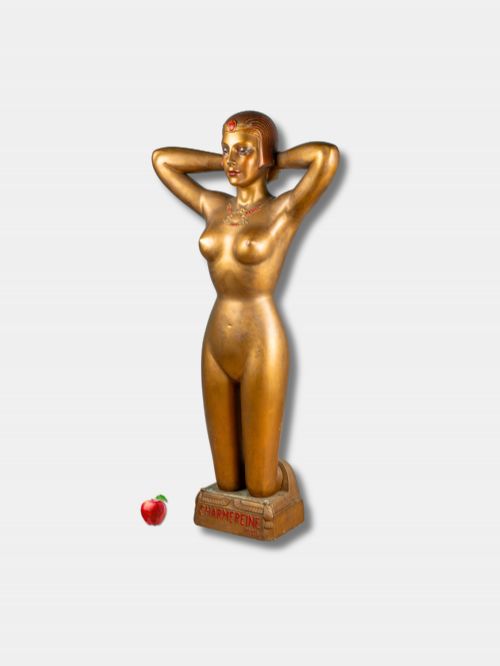
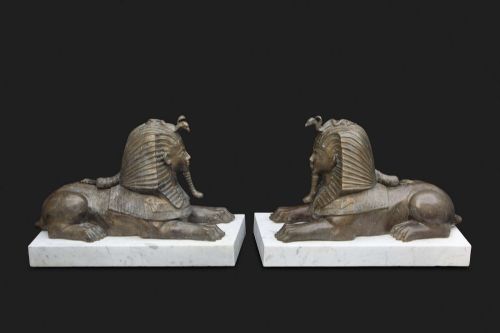
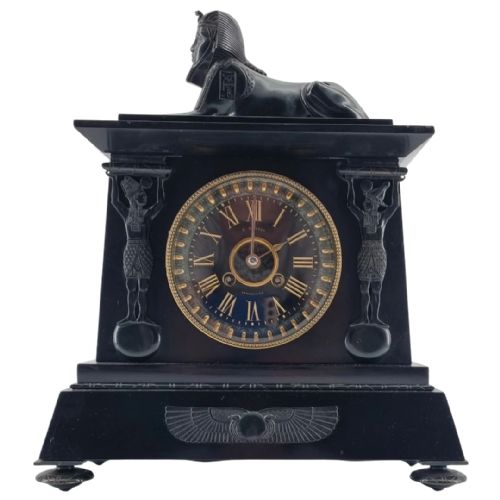
You are most likely to meet mantel clocks, heavy bronze sphinx sculptures, and matched pairs of candlesticks on this page, often mounted upon pedestals of black slate or marble. Alongside these timepieces and figures, the selection occasionally encompasses occasional seating, cabinets, and decorative desk items bearing distinct exotic motifs.
The aesthetic bridges several periods, drawing heavily on the Napoleonic 'Retour d'Egypte' campaigns as well as later Victorian revivals and twentieth-century interpretations. These forms command attention through their bold symmetry, mythical imagery, and solid, enduring construction.
How they were made
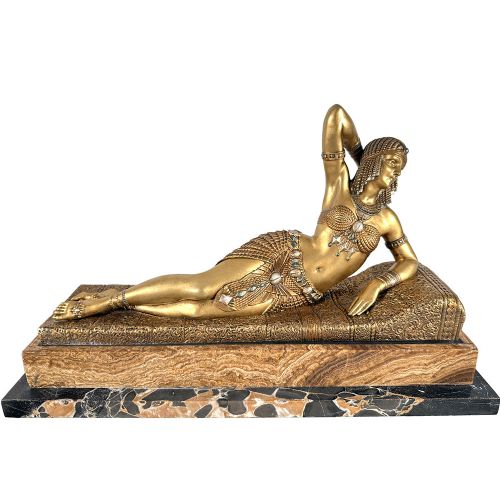
The makers of these items relied heavily on cast bronze and ormolu, employing intricate methods to shape metal into figures of sphinxes, dancers, and classical deities. These metal elements were frequently gilt or patinated, then paired with substantial bases of marble, alabaster, or black slate to create heavy, architectural compositions.
Cabinetry and larger furnishings utilise dense woods such as mahogany, sometimes enhanced by painted and gilded finishes that echo ancient decorative schemes. Smaller decorative objects incorporate enamel and glass, showing a high degree of craftsmanship in mounting delicate components onto sturdy metal frameworks.
Listings demonstrate a strong representation of nineteenth-century mantel clocks alongside twentieth-century bronze sculptures and marble obelisks.
What varies in quality
The integration of materials dictates the upper tier of the range, seen where marbles are impeccably polished and fitted without gaps to heavy metal mounts. Signed movements in mantel clocks and attributed sculptural figures elevate a piece considerably above unsigned workshop alternatives.
Richard et Cie·Demetre Chiparus·Achille Brocot·Piel Freres
The French Egyptian Revival Glossary
- Ormolu
- A technique of applying finely ground, high-carat gold to a bronze object using a mercury amalgam. This process creates a rich, lasting golden surface that resists tarnish.
- Garniture
- A set of decorative ornaments designed to match and sit alongside a central mantel clock. These usually consist of matching candlesticks or urns.
- Sphinx
- A mythical creature with the body of a lion and a human head, frequently utilised as a primary structural support or decorative motif in these designs.
- Chasing
- The manual finishing of a metal casting using small hammers and punches to sharpen details and texture the surface. Fine chasing distinguishes superior bronze sculptures.
- Retour d'Egypte
- A specific decorative style popularised in France following Napoleon's campaign in Egypt. It directly predates and informs the broader nineteenth-century revival movements.
French Egyptian Revival: Frequently Asked Questions
What is French Egyptian revival?
It is a decorative style that adapts ancient Egyptian motifs, such as sphinxes, obelisks, and hieroglyphs, into European furniture, clocks, and sculptures.
Originating during the Napoleonic campaigns and recurring through the nineteenth and twentieth centuries, the aesthetic combines classical archaeology with ornate craftsmanship.
How do I style a mantel clock?
These heavy clocks serve as commanding centrepieces on mantelpieces, credenzas, or large bookshelves.
Pacing them alongside matched garnitures or architectural objects like marble obelisks helps balance their substantial visual weight.
Are bronze sculptures heavy?
Yes, authentic period pieces are typically cast in solid bronze and mounted on dense stone bases like marble or slate.
This substantial weight provides the necessary stability for large figures and complex architectural clock cases.
How do I date a piece?
Dating relies on identifying the underlying material styles, maker signatures, and the specific historical revival movement represented.
Nineteenth-century examples often feature elaborate brass movements and classical patination, while later twentieth-century iterations lean toward streamlined Art Deco geometries.