



French Bronze Sphinx
These french bronze sphinx figures are sculptural and architectural ornaments drawn from Egyptian Revival and Regency design, bringing classical mythology into period interiors.
French Bronze Sphinx
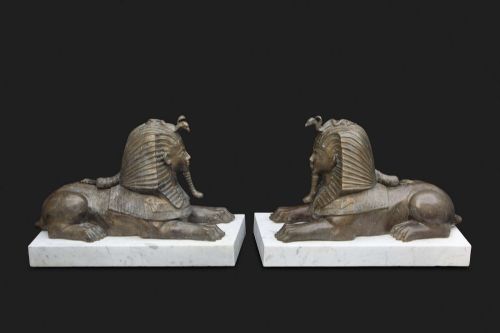
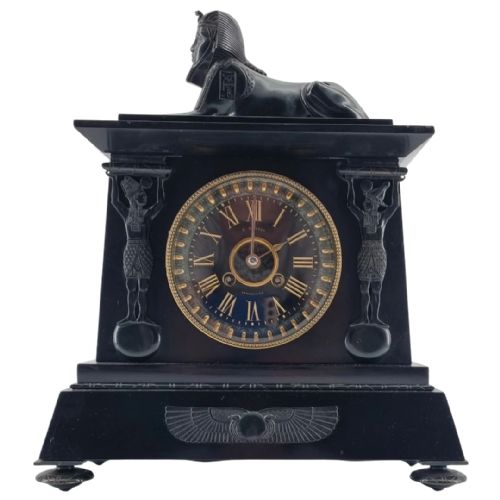
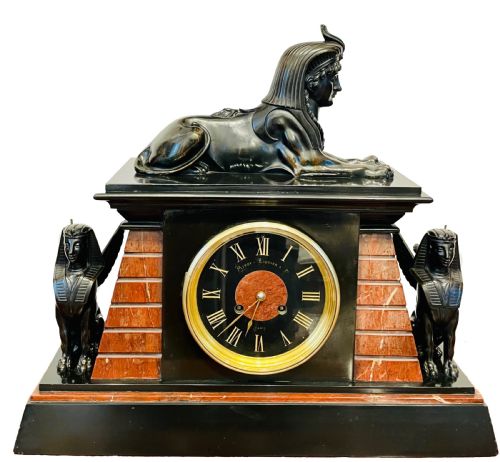
When you search for french bronze sphinx, you are looking at cast metal mythical creatures that appear as standalone sculptures, mantel clock figures, and fireplace furnishings. They combine the head of a human with the body of a lion, translating classical iconography into decorative objects for nineteenth-century interiors.
The versions you are most likely to meet on this page date from the nineteenth century and the early twentieth century. They adopt Egyptian Revival, Neoclassical Revival, and French Empire styles, frequently mounted upon marble or black slate plinths.
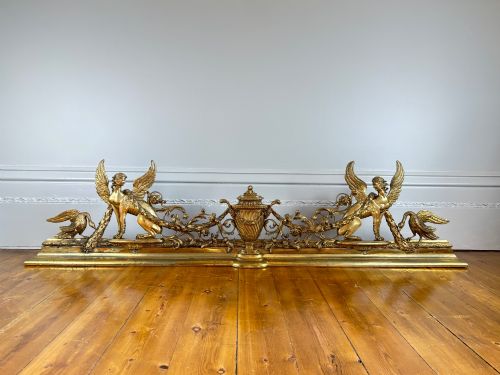
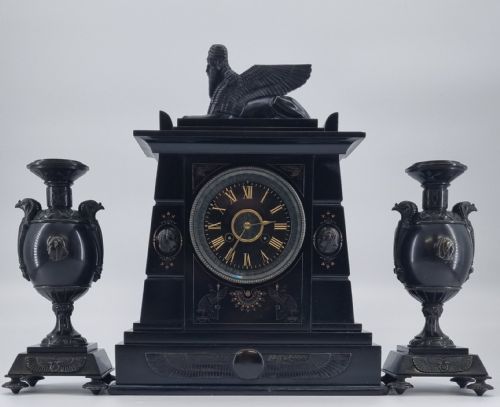
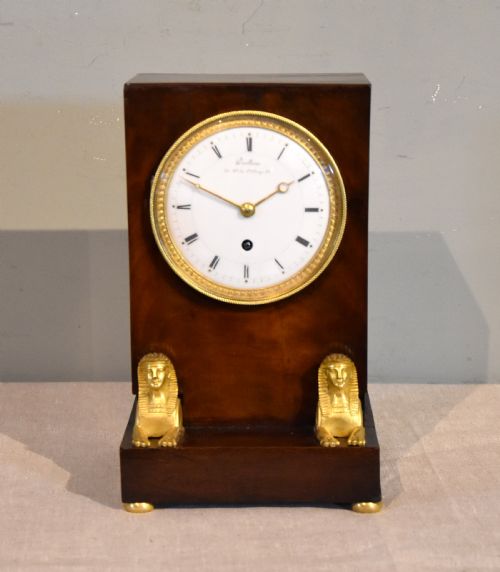
Beyond standalone bronze figures, the forms extend to mantel clocks complete with matching garnitures, desk timepieces, and heavy fireplace fenders or chenets. These functional objects integrate the sphinx motif directly into domestic metalwork.
How they were made
Clock movements and timepieces incorporate brass and enamel components set within the bronze and slate housings. Surface finishes range from natural dark patination to heavy gilding, highlighting the sculptural details against polished stone plinths.
The object forms on this page span mantel clocks, sculptures, timepieces, fireplace fenders, and fireplace accessories.
What varies in quality
Material pairing also divides the range. Superior objects use solid marbles like Carrara or dense black slate foundations, and integrate fire-gilded ormolu rather than superficial surface paint, ensuring the patination ages with depth.
E F Caldwell New York·D. Munsey of Cambridge·Achille Brocot
The French Bronze Sphinx Glossary
- Ormolu
- Gilded bronze produced by applying a mixture of gold and mercury to a bronze base and heating it. This technique creates a durable, golden surface finish seen on many Regency and Empire pieces.
- Garniture
- A set of decorative ornaments, typically a clock paired with matching side vases or urns. They are designed to sit together on a mantelpiece.
- Chenets
- Decorative metal fire dogs placed at the front of a hearth to support logs. They frequently feature cast figural mounts such as sphinxes.
- Egyptian Revival
- An architectural and decorative style that draws heavily on motifs from ancient Egypt. It gained popularity in Europe and America during the nineteenth century following major archaeological discoveries.
French Bronze Sphinx: Frequently Asked Questions
What periods do these sphinxes come from?
The pieces originate predominantly from the nineteenth century, with examples spanning the Regency period, the Victorian era, and into the early twentieth century.
Design influences draw on French Empire and Egyptian Revival movements, reflecting nineteenth-century archaeological interest.
How were sphinx figures used in homes?
They served as decorative sculptures on tabletops and desks, or as structural mounts on mantel clocks and timepiece housings.
Heavier bronze versions were also cast as fireplace fenders and chenets to decorate nineteenth-century hearths.
What materials are combined with the bronze?
Many examples are mounted on heavy plinths made of Carrara marble or black slate to provide a stable base.
Clock elements additionally incorporate enamel dials, brass movements, and gilt bronze or ormolu highlights.
Are mantel clocks with sphinxes functional?
The mantel clocks and timepieces house mechanical movements designed to tell time, though older movements may require professional servicing for daily use.
Many survive alongside matching garniture sets intended as decorative mantelpiece displays.