
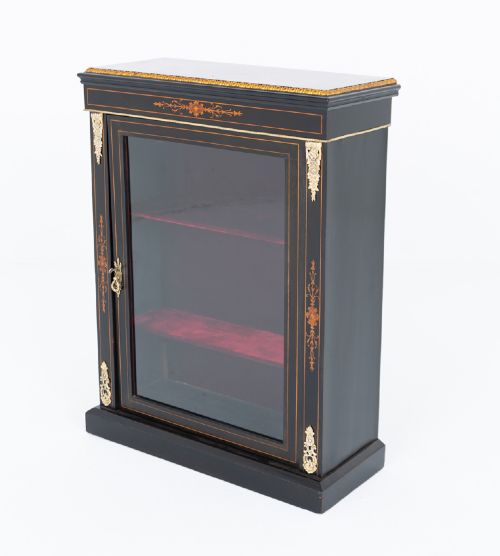


French Ebonised Display Cabinet
A French ebonised display cabinet brings dark timber and gilt mounts together to showcase treasured possessions with dramatic contrast.
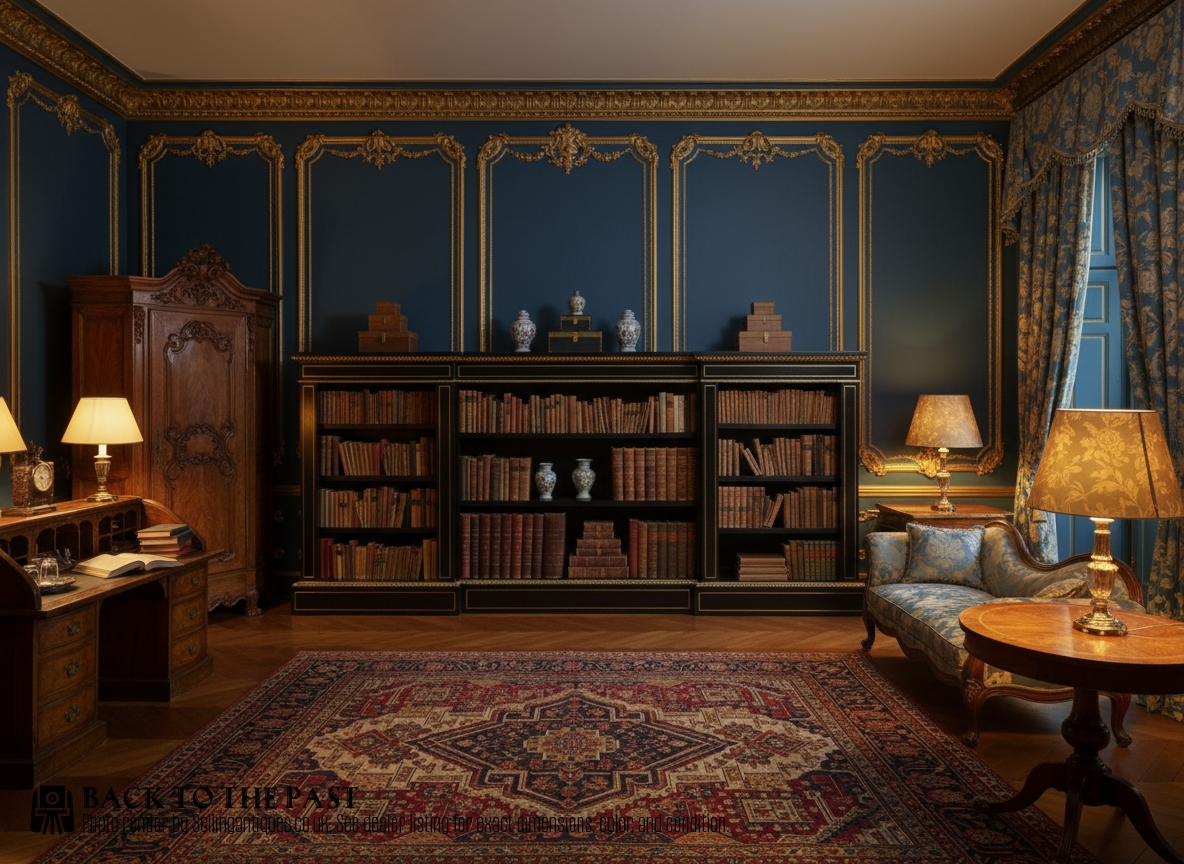
French Ebonised Display Cabinet
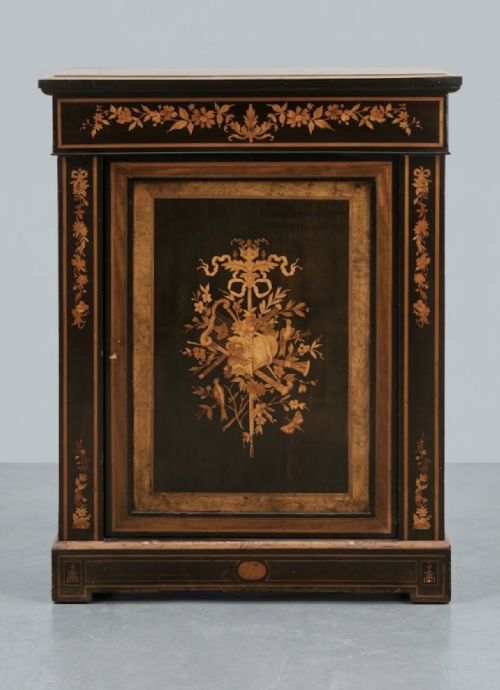
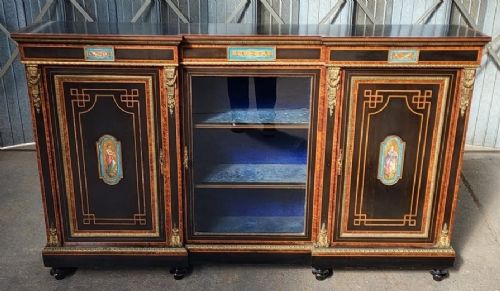
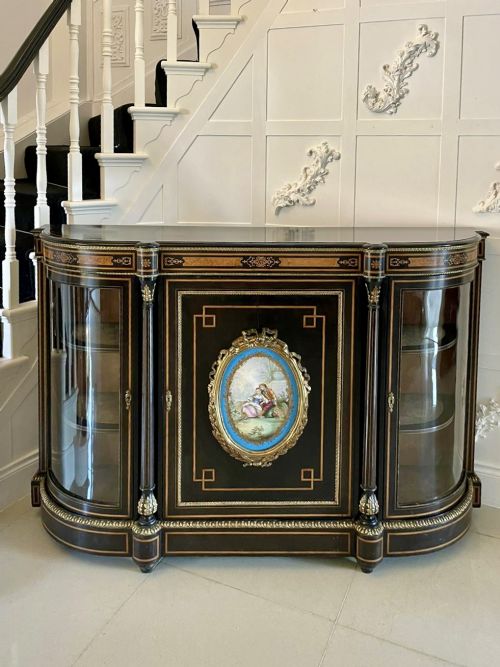
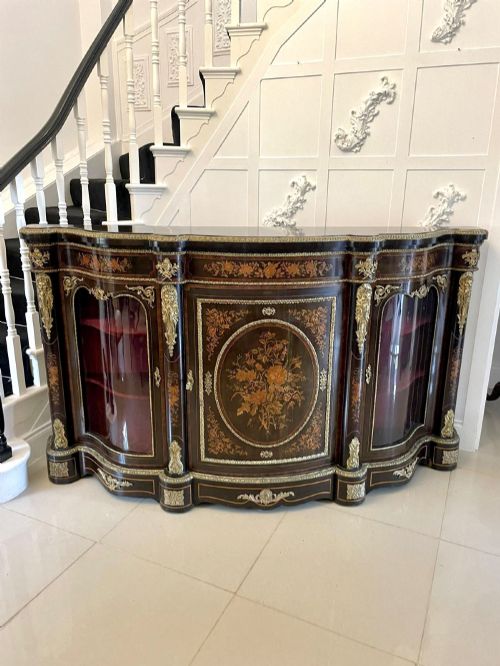
A french ebonised display cabinet takes many forms on this page, appearing as credenzas, pier cabinets, bookcases, and side cabinets. These pieces date principally from the nineteenth century, including Victorian and Napoleon III periods, alongside examples from the early twentieth century.
Buyers encounter both single-door pier cabinets and larger multi-door credenzas or bookcases. Many examples reflect French revival styles, incorporating glass panels to exhibit porcelain and decorative objects.
How They Were Made
Cabinet makers utilised dark timber bases, frequently applying ebonisation to mimic ebony, paired with intricate brass and tortoiseshell boulle inlay or floral marquetry. Structural forms often incorporate walnut or amboyna beneath the dark finish.
Gilt bronze and ormolu mounts punctuate the dark surfaces, while porcelain plaques, marble tops, and pietra dura panels provide additional decorative detail.
Tortoiseshell and brass dance across the door panels, ensuring the cabinet catches the light even when the room is dim.
What Varies in Quality
The sophistication of the marquetry and the crispness of the cast ormolu mounts define the upper tier of these cabinets. Finer pieces demonstrate precise brass inlay alongside hand-chiseled bronze mounts rather than simpler cast decoration.
The integration of hand-painted porcelain plaques and pietra dura panels elevates certain credenzas and pier cabinets above standard production models of the period.
The French Ebonised Display Cabinet Glossary
- Ebonised
- Wood treated to resemble expensive ebony. This finish is achieved through staining or painting dark pigments onto a timber substrate.
- Ormolu
- Gilded bronze mounts applied to furniture. These decorative elements provide metallic contrast against the dark ebonised wood.
- Boulle
- An elaborate marquetry technique using brass and tortoiseshell. It appears frequently on French and Victorian Napoleon III pieces.
- Pier Cabinet
- A narrow display cabinet designed to stand against a wall between windows. These vertical pieces house porcelain and small ornaments.
- Credenza
- A low cabinet featuring cupboards, often fitted with glass doors for display. Nineteenth-century examples frequently incorporate extensive marquetry and mounts.
French Ebonised Display Cabinet: Frequently Asked Questions
Where should I place a display cabinet?
These cabinets suit reception rooms or hallways where glazed doors protect contents from dust while offering clear visibility.
Their dark timber finishes require careful placement away from direct sunlight to preserve the ebonised surfaces and inlay.
How do I identify Napoleon III pieces?
Napoleon III pieces often feature rich boulle inlay, ormolu mounts, and ebonised woodwork reflecting nineteenth-century French revival tastes.
Comparing the mount quality and timber grain helps distinguish these items from later revival furniture.
What is the difference between a credenza and a pier cabinet?
A credenza is typically a broad, low cabinet with multiple doors designed for larger wall spaces.
In contrast, a pier cabinet is tall and narrow, built to fit specific wall sections between architectural openings.
How do I care for ebonised wood?
Maintain the dark finish by dusting regularly with a soft cloth and avoiding silicone-based polishes.
Keep the cabinet in stable humidity conditions to protect the delicate brass inlay and wood joints.