




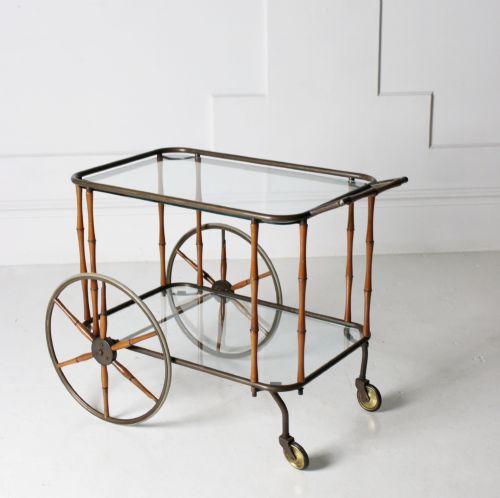
French Drinks Cart
These French drinks cart examples bring vintage glamour to a room, offering practical surface space combined with striking period design.
French Drinks Cart
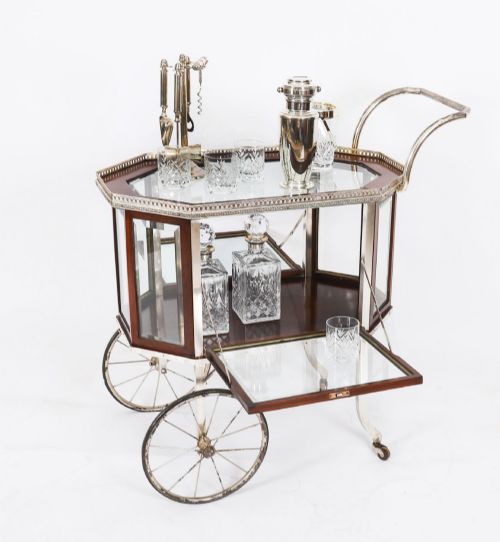
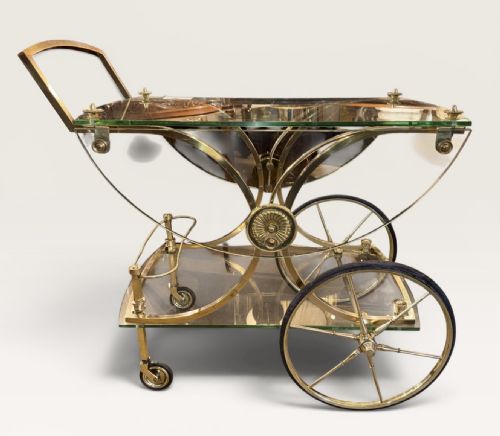
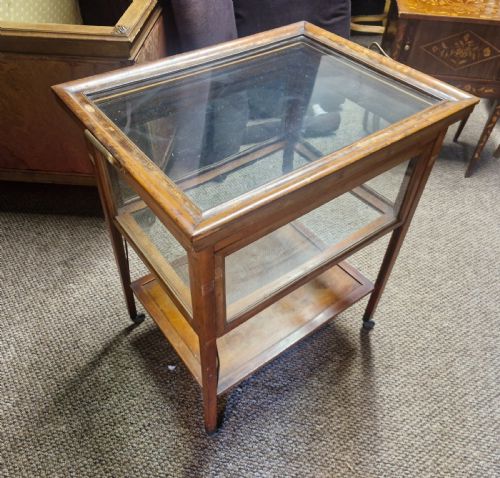
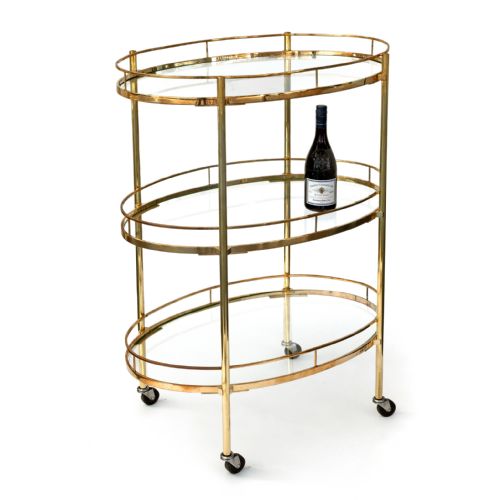
A french drinks cart functions as a mobile surface for serving and displaying bottles, glassware and cocktail accessories. These pieces range from compact two-tier brass etagères to substantial drop-side tea trolleys and tiered display stands.
The selections on this page span the early twentieth century through to later decades, capturing key decorative shifts. Buyers frequently encounter iconic forms executed in brass, glass and rich woods like burr amboyna.
How they were made
Construction relies on structural frames formed from polished brass, chrome, or painted metal combined with wooden elements. Timber frames often feature distinctive veneers such as burr amboyna to create striking visual depth.
Transparent and mirrored glass tiers provide the primary surfaces for holding glassware and bottles. Metal components are frequently cast or plated, incorporating galleries and bamboo-moulded details for both decoration and utility.
Periods represented span from nineteen-ten through the nineteen-thirties and extend later than nineteen-sixty.
What varies in quality
Quality separates ordinary utility pieces from exceptional decorative examples through the refinement of the metalwork and the choice of veneers. Heavier gauge brass frames and richly figured burr amboyna indicate superior craftsmanship.
Proportion and detailing drive the distinction between standard trolleys and high-style designs. Pieces attributed to distinguished makers demonstrate superior casting precision and more cohesive stylistic execution.
Maison Bagues·Maison Baguès·Maison Jansen
The French Drinks Cart Glossary
- Art Deco
- A design style characterised by sleek geometric shapes, streamlined forms and rich materials. It dominates much of the twentieth-century metalwork and cabinetry seen in these pieces.
- Burr Amboyna
- A highly prized wood veneer known for its swirling, dense grain patterns. It adds luxurious texture and warmth to cocktail carts.
- Etagere
- An open piece of furniture with multiple tiers for displaying objects. These are frequently utilised in three-tier brass serving trolley designs.
- Silver Plate
- A thin layer of silver applied to a base metal surface. This finish provides a bright, reflective quality to cocktail shakers and serving accessories.
- Gallery
- A raised rim or railing around the edge of a shelf or tray. It prevents glassware and bottles from sliding off while the trolley is in motion.
French Drinks Cart: Frequently Asked Questions
What periods do these carts come from?
The listings on this page primarily date from the early twentieth century, specifically spanning the nineteen-tens through to the nineteen-thirties, with occasional later twentieth-century examples.
These dates reflect dominant periods of decorative arts production in France, capturing shifts from Edwardian utility to bold Art Deco and Hollywood Regency aesthetics.
How were these trolleys originally used?
These pieces served as portable furniture for hosting guests, transporting tea, or presenting after-dinner drinks and cocktails within domestic settings.
Drop sides and multiple tiers allowed hosts to expand their serving area easily and keep glassware organised away from the main dining table.
Can I use an antique cart for daily serving?
Yes, sturdy brass and glass constructions remain functional for holding bottles and glassware during gatherings.
Care should be taken with vintage surfaces, particularly older silver plate and delicate wooden veneers, to preserve their finish during regular use.
How do I identify an Art Deco trolley?
Art Deco examples typically display geometric lines, streamlined metal framing, and luxurious materials such as burr amboyna or gleaming chrome.
These pieces often embrace functional elegance, combining tiered glass shelving with polished metallic structures characteristic of the interwar period.