
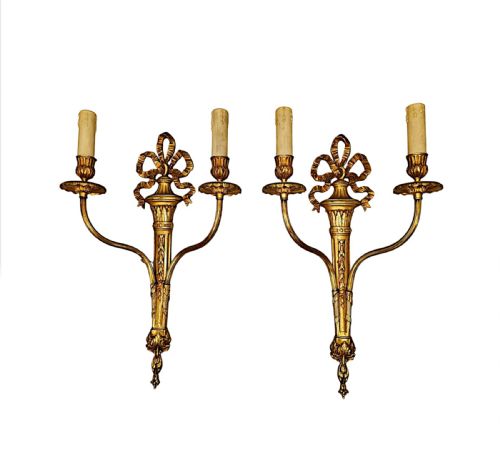
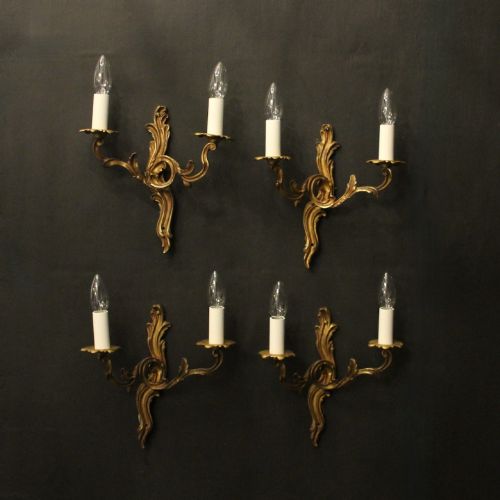

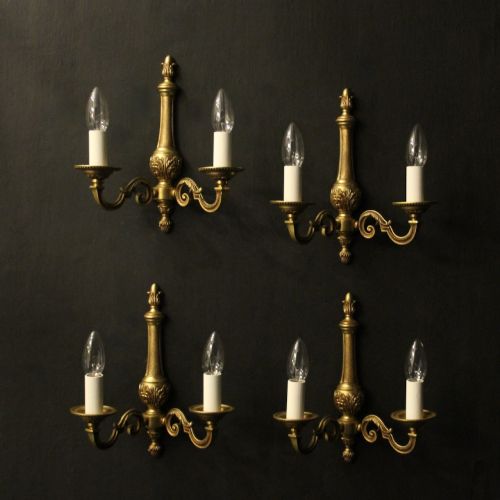
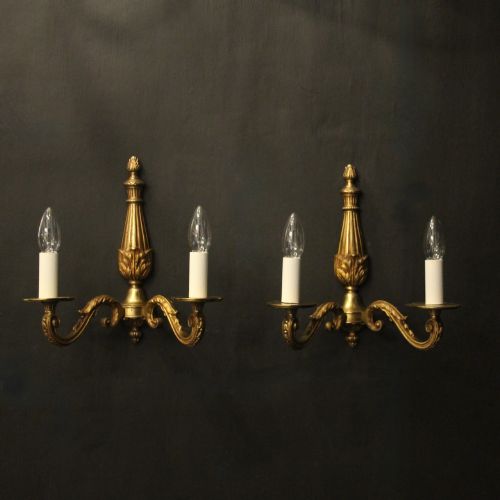
French Double Wall Sconce
A french double wall sconce brings period illumination and sculptural warmth to a room, cast in bronze or brass with twin arms.
French Double Wall Sconce
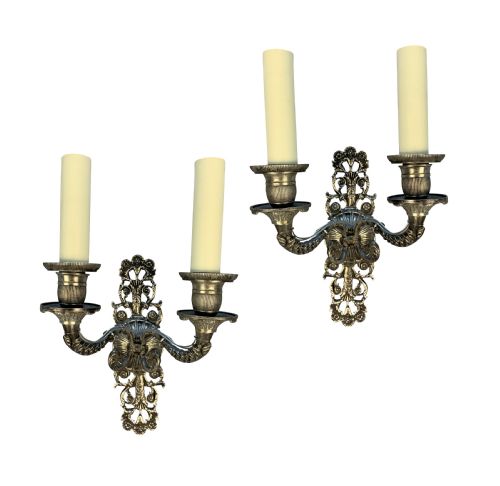
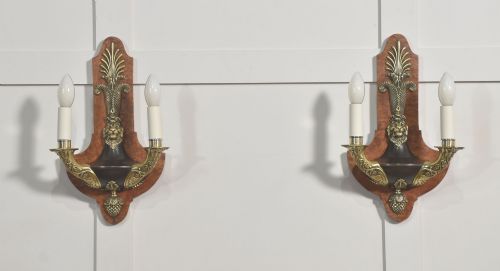
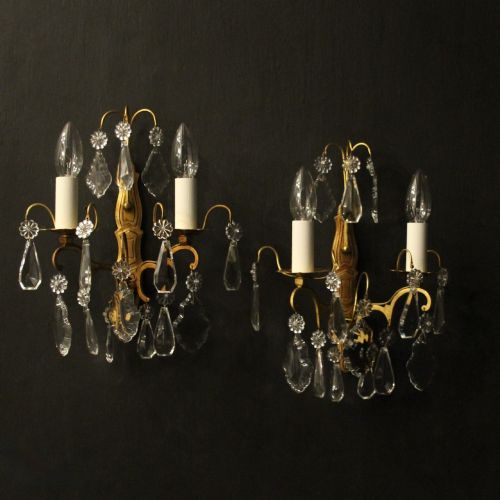
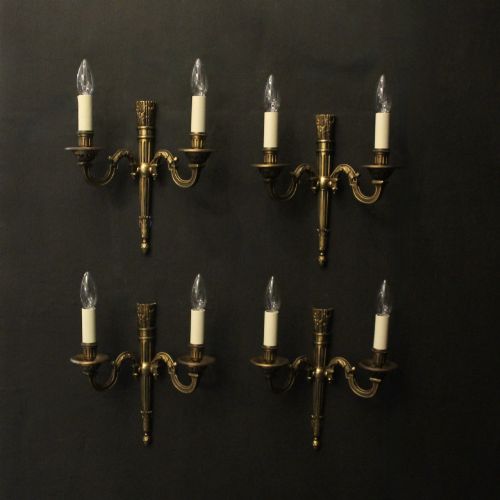
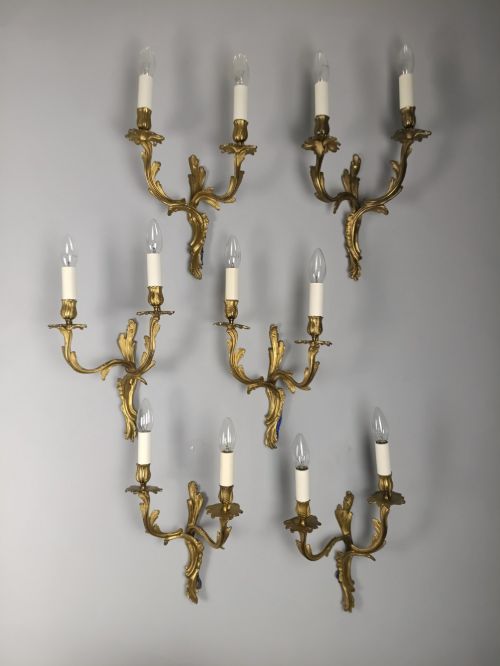
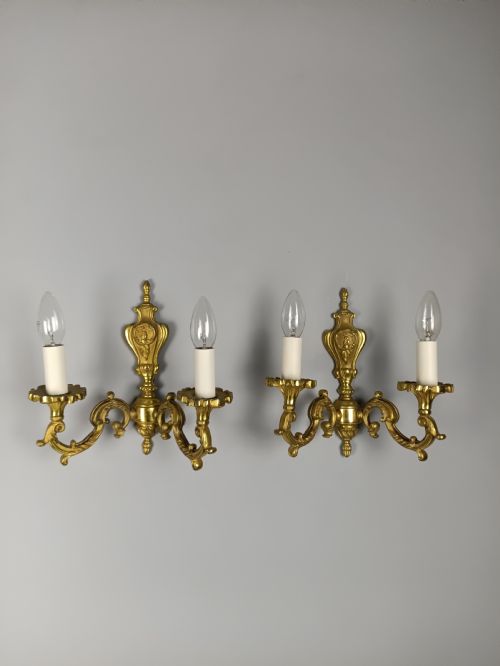
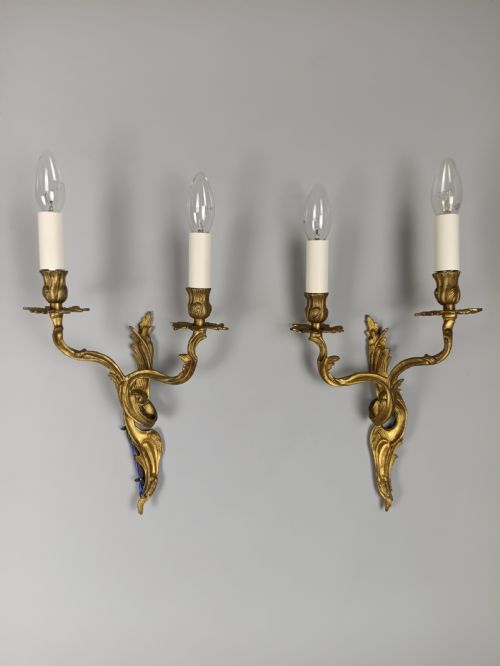
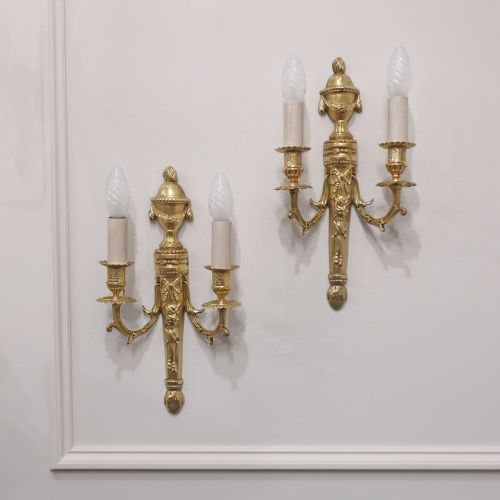
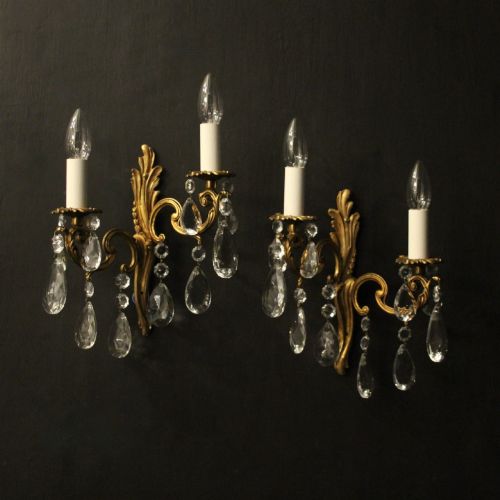
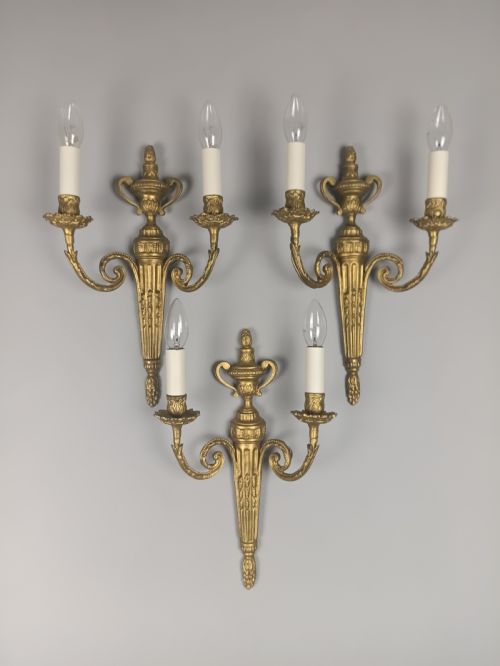
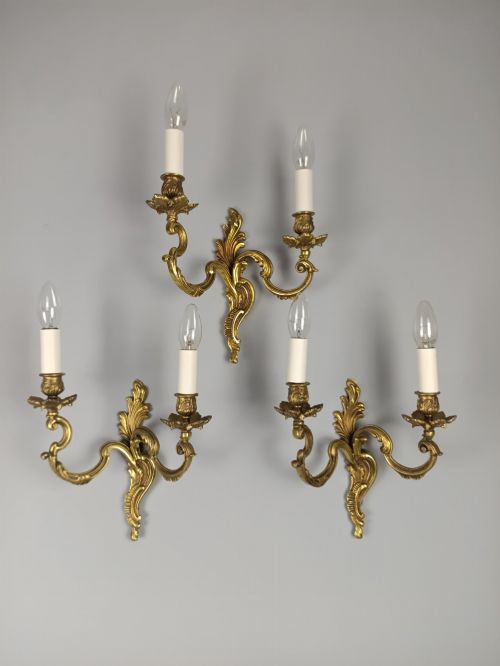
When searching for a french double wall sconce, buyers encounter twin-branch lighting fixtures primarily originating from the nineteenth and early twentieth centuries. These pieces manifest in distinct stylistic revivals, notably Rococo, Neoclassical, and Empire designs that reflect historic French decorative arts.
The most common configurations on this page are matched pairs and larger sets featuring two branching arms designed to hold candles or electrical conversions. Origins span the Victorian era through the nineteen-thirties, with brass and gilt bronze serving as the dominant structural materials.
Materials and construction
Foundry casting forms the basis of these metalwork pieces, utilising bronze, brass, and ormolu to achieve crisp architectural and organic contours. Skilled artisans chased the metal surfaces by hand after casting to refine leaf scrolls, ribbon motifs, and neoclassical urn details.
Gilding techniques applied to bronze and brass bases create the characteristic golden surface sheen seen across many examples. Supplementary elements such as crystal drops, glass inserts, and burr walnut introduce textural contrast to the heavy metal structures.
Several pairs incorporate carved burr walnut alongside traditional brass mounts, proving that cabinetmakers occasionally borrowed lighting design.
Assessing craftsmanship and execution
Quality separates through the depth and clarity of the metal chasing rather than mere surface shine. Superior specimens display sharp undercuts, refined hand-finished detailing on scrollwork, and substantial weight in the cast bronze or brass arms.
The integrity of the original mercury gilding or gold leaf application dictates the visual richness of the fixture. Lesser examples rely on flat stamped components and shallow casting that obscure the intricate relief of French revival motifs.
Casier
The French Double Wall Sconce Glossary
- Ormolu
- Finely ground high-carat gold mercury-gilded onto a bronze object. This historic French technique produces a warm, durable metallic lustre.
- Twin-branch
- A lighting mount featuring two projecting arms extending from a central backplate. Such configurations provide balanced bilateral illumination.
- Chasing
- The manual tooling of metal surfaces using small hammers and punches to sharpen cast details. It defines the crispness of floral and architectural ornaments.
- Rococo revival
- A nineteenth-century design movement favouring asymmetrical scrollwork, C-scrolls, and naturalistic shell motifs. It draws inspiration from mid-eighteenth-century French decorative arts.
- Backplate
- The structural wall-mounting section of a sconce that supports the branching arms. This component often carries the primary decorative relief.
French Double Wall Sconce: Frequently Asked Questions
How do I wire a vintage wall sconce?
Most antique fixtures accommodate modern wiring channels routed through the central backplate and arms by a qualified electrician. Care must be taken to preserve original structural threads and mounting points during conversion.
Candle-style drip pans often conceal modern lamp holders designed for small SES bulbs. Professional installation ensures the heavy bronze or brass body secures safely to standard wall anchors.
How do I clean gilded bronze sconces?
Gentle dusting with a soft dry brush removes surface particulates without disturbing fragile gilding layers. Avoid chemical metal polishes that strip historic gold finishes from the bronze substrate.
Accumulated grime responds best to occasional wiping with a damp cloth followed immediately by thorough drying. Preservation of the natural patina remains the primary goal of any maintenance routine.
What is the difference between Empire and Rococo styles?
Empire pieces draw from Napoleonic classical antiquity, featuring strict symmetry, laurel wreaths, urns, and military trophies. The profiles remain disciplined and architectural in their presentation.
Conversely, Rococo designs embrace flowing asymmetry, organic leaf scrolls, and undulating curves. These pieces avoid straight lines in favour of dynamic, nature-inspired asymmetry.
Can I hang these sconces outdoors?
These interior decorative antiques lack weatherproofing seals and protective exterior coatings. Moisture causes active corrosion on exposed brass, unsealed bronze, and gilded surfaces.
Indoor placement protects the delicate metalwork and secondary materials like crystal and glass from thermal shock and dampness. They belong in sheltered domestic spaces such as reception rooms and hallways.