



Decorative Bronze Wall Appliques
These decorative bronze wall appliques bring sculptural illumination to interiors, forged in classical and revival styles.
Decorative Bronze Wall Appliques
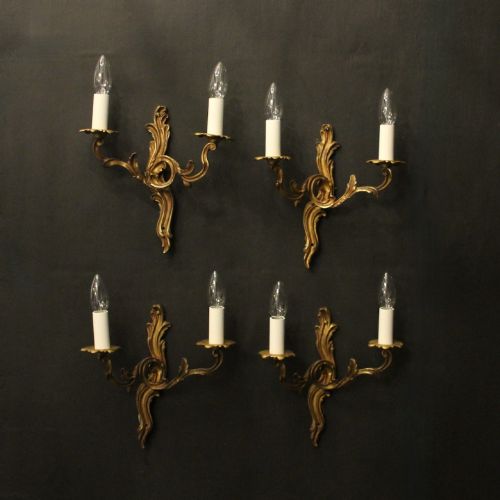
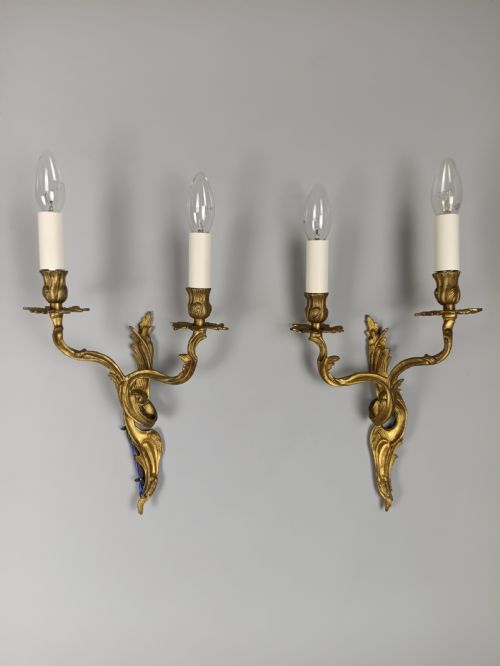
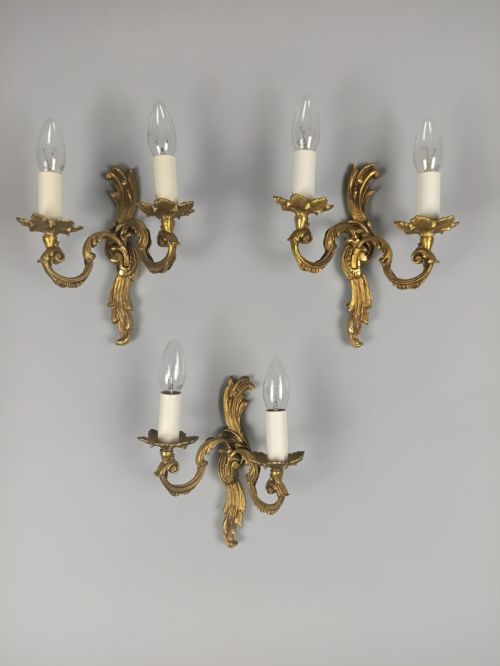
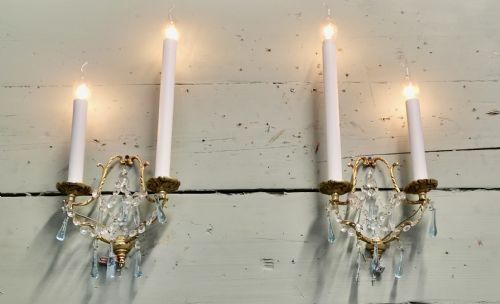
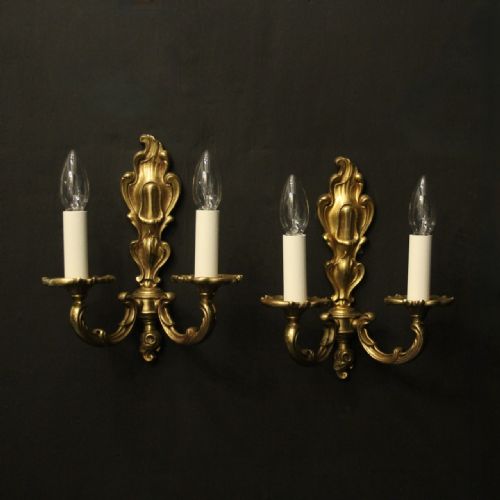
Decorative bronze wall appliques serve primarily as wall-mounted lighting fixtures and ornamental sconces designed to hold candles or electrical fittings. When exploring decorative bronze wall appliques, buyers frequently encounter pairs and sets originating from French workshops spanning the nineteenth and twentieth centuries.
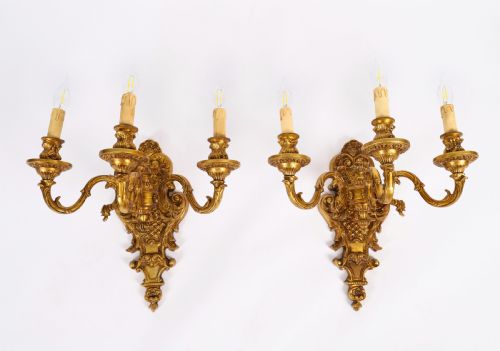
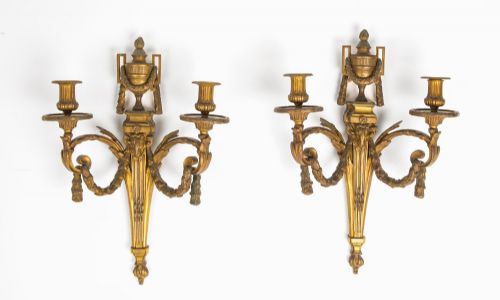
The objects take various forms including twin-arm fixtures, three-arm wall chandeliers, and single sconces adorned with motifs such as ram's head masks. Stylistic influences range from French Rococo and Louis XVI to Art Nouveau and Adam Revival designs.
Most examples hail from the nineteenth century or the decades leading up to nineteen thirty, reflecting enduring European tastes in interior metalwork. They function both as sources of ambient illumination and as sculptural wall ornaments in domestic settings.
How they were made
Makers utilised bronze, brass, and metal as base materials, often applying surface treatments such as gilding or ormolu to achieve a rich golden lustre. Casting techniques allowed artisans to shape intricate relief details, floral motifs, and figural elements like animal masks.
Surface finishing involved meticulous mercury gilding or gold leaf application over bronze and brass substrates, creating the characteristic sheen seen on ormolu components. Assembly of multi-arm lights required precise joining of cast branches, backplates, and drip pans.
Ram's head masks stare steadfastly from nineteenth-century backplates, quietly supervising every dinner party from the wallpaper.
What varies in quality
The preservation and quality of the original gilt bronze or ormolu surface finish significantly impact the visual presence of the piece. Substantial metal weight and robust construction of the backplates also separate superior wall lights from lighter alternatives.
Poix Blin·Maison Baguès
The Decorative Bronze Wall Appliques Glossary
- Ormolu
- Gilt bronze produced by applying a finely ground high-carat gold-mercury amalgam to a bronze object, which is then heated to drive off the mercury. This technique creates a durable, golden surface finish characteristic of fine antique metalwork.
- Applique
- A decorative wall-mounted fixture or sconce designed to hold candles or lamps. In historical lighting, these pieces are fixed directly to vertical surfaces to project light into a room.
- Gilt Bronze
- Bronze metal that has been coated with a layer of gold through various chemical or mechanical processes. It combines the structural strength of bronze with the lustrous appearance of gold.
- Louis XVI Style
- A neoclassical design aesthetic popular in France characterised by straight lines, symmetry, and classical motifs such as urns, ribbons, and ram's heads. It reflects a return to ancient Greek and Roman artistic influences.
- Rococo Revival
- A nineteenth-century design movement that revived the asymmetrical scrolls, C-curves, and naturalistic plant motifs of the eighteenth-century Rococo period. This style appears frequently on ornate wall lights and furniture mounts.
Decorative Bronze Wall Appliques: Frequently Asked Questions
What are decorative bronze wall appliques?
These are wall-mounted lighting fixtures cast from bronze, brass, or metal, often finished with ormolu or gilding. They were designed to hold candles or electric bulbs while serving as ornamental wall art.
Most surviving examples originate from French workshops across the nineteenth and early twentieth centuries, displaying historical styles like Rococo and Louis XVI.
How were they used historically?
They were mounted in pairs or sets along reception room and hallway walls to illuminate interiors by candlelight. Their reflective gilt surfaces amplified the available light from candles before the advent of electricity.
Over time, many of these fixtures were adapted for electrical wiring while retaining their original decorative metal frames and wall plates.
How do I style them at home?
Pairs of wall appliques work well mounted symmetrically on either side of mirrors, doorways, or fireplaces to create balanced accent lighting. They suit traditional and eclectic interiors where historic metalwork adds textural contrast to plain walls.
Consider the scale of the room and the height of the ceiling when positioning multi-arm lights to ensure proper visual balance.
How can I tell the period?
Stylistic indicators such as asymmetrical Rococo scrolls or symmetrical Louis XVI neoclassical motifs provide initial clues to a piece's era of origin. The casting methods, mounting hardware, and wear patterns on the metal also help distinguish nineteenth-century examples from later revival pieces.
Maker signatures or stamps, when present on the backplate, offer definitive evidence of the workshop and production timeframe.