

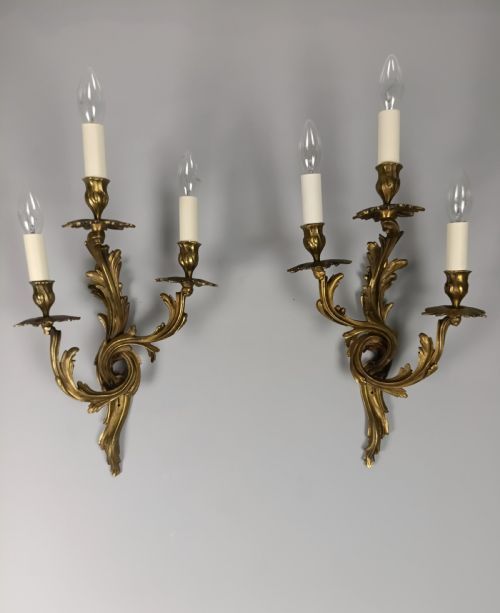

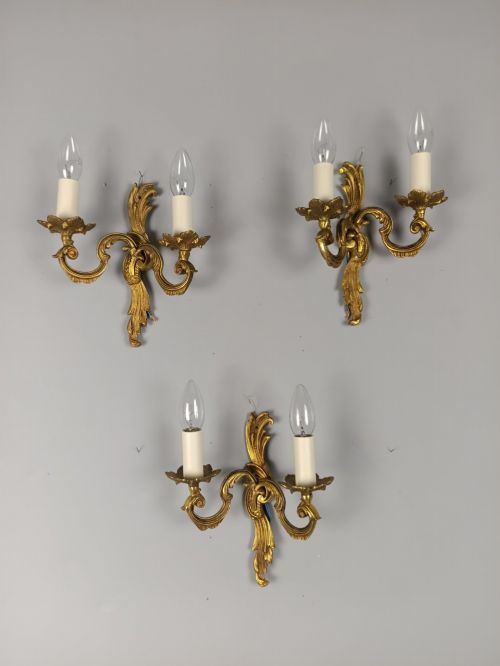


Ornate Gilt Wall Lights
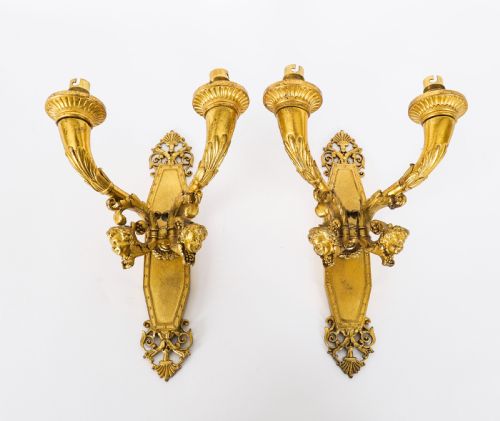
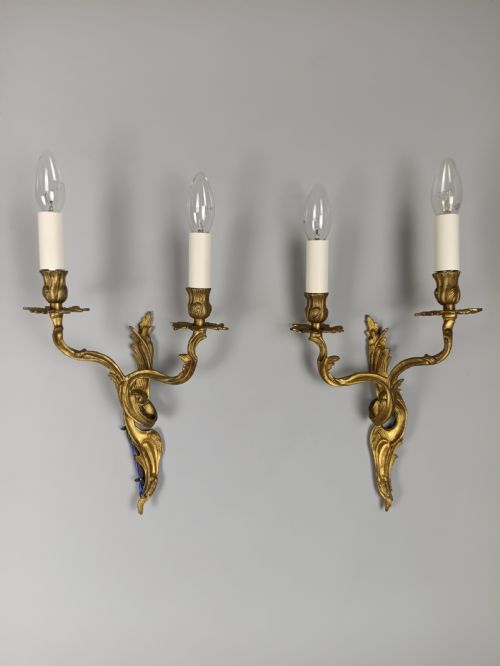
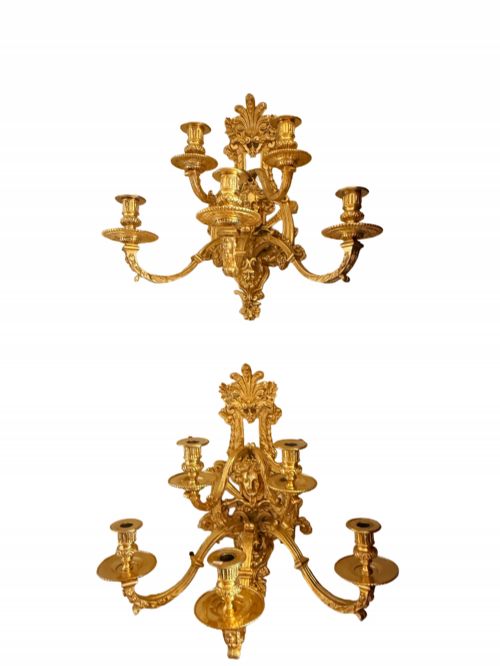
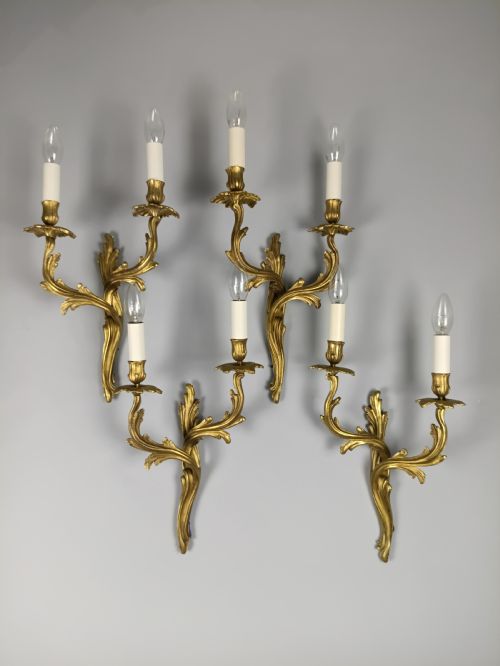
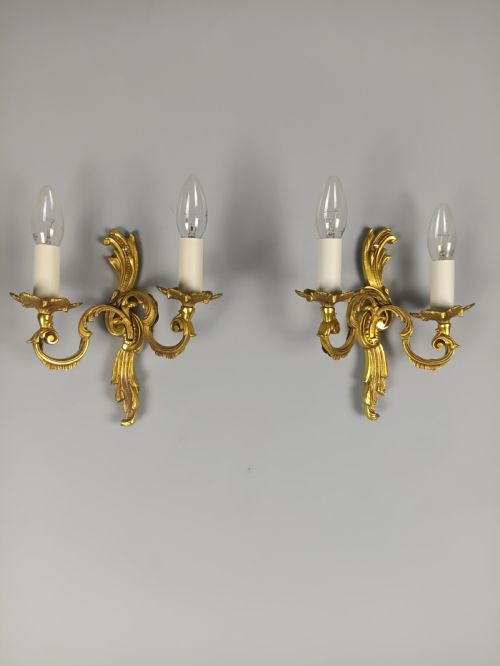
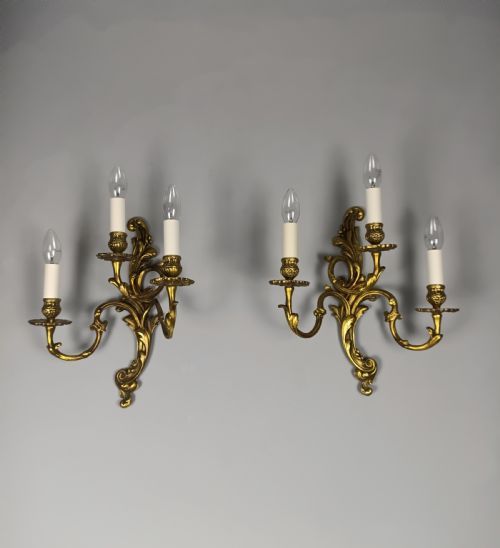
These ornate gilt wall lights bring decorative candle power and reflective brilliance to a room, spanning revival styles from the nineteenth century into the twentieth.
Ornate Gilt Wall Lights
When you search for ornate gilt wall lights, you are looking at decorative wall-mounted lighting fixtures designed to hold candles or electric bulbs while reflecting light into a space. The selection spans several centuries, reaching from eighteenth-century examples up through twentieth-century pieces.
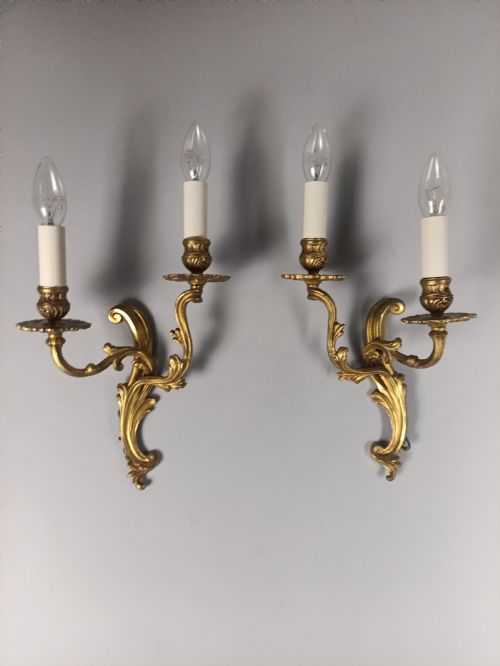
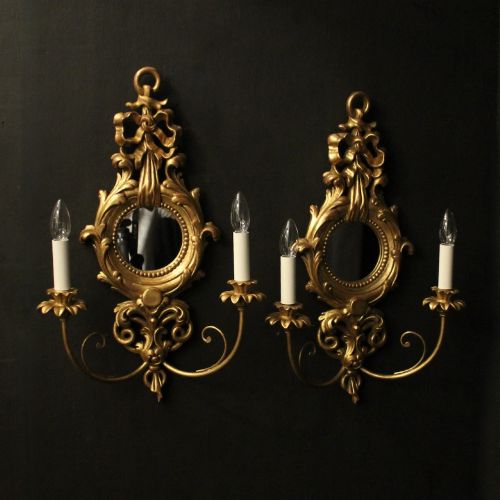
The most common forms on this page are pairs and sets of French wall lights and sconces, often featuring multiple branches for illumination. Alongside standard wall lights, the inventory includes girandole mirrors that combine a reflective glass plate with candle arms.
Most items draw on historical French design vocabularies, particularly Rococo, Louis XIV, and Louis XVI revivals, alongside Florentine and Italian variants. These pieces frequently manifest as ornate cast metal frameworks adorned with scrolling foliage, ribbons, or crystal elements.
How they were made
Manufacturers utilised metals such as brass, bronze, ormolu, and gilt metal as the structural base for these wall lights, often applying a surface layer of gold leaf or gilding. Carved giltwood also appears in mirror frames and specific sconces, providing a lighter wooden alternative to cast metal.
Casting techniques allowed workshops to produce complex three-dimensional scrolls and asymmetrical Rococo motifs, which were then chased, finished, and gilded. Glass components, including crystal drops and mirrored panels, were integrated to multiply the ambient light cast by the candles or lamps.
Listings feature items originating from the eighteenth century through the 1930s, constructed in brass, bronze, giltwood, and crystal.
What varies in quality
The distinction between standard examples and the finest pieces lies in the crispness of the casting and the depth of the hand-finishing. High-grade items display sharply defined acanthus leaves, scrollwork, and facial details, whereas lesser pieces show softer contours from worn moulds.
Materials also differentiate the tier of a piece, with heavy fire-gilded ormolu and hand-carved giltwood occupying the upper end of the scale. Simpler pressed gilt metal or lacquered brass versions represent more accessible decorative alternatives.
The Ornate Gilt Wall Lights Glossary
- Ormolu
- Gilt bronze produced by applying a mercury-gilding amalgam to a bronze base, common in French decorative arts. This technique yields a deep, rich metallic lustre.
- Girandole
- A branched wall light or a wall mirror fitted with candle sconces attached to the frame. They multiply the flicker of candlelight against the mirrored glass.
- Rococo Revival
- A nineteenth-century design movement mimicking the asymmetrical C-scrolls, shells, and naturalistic foliage of the eighteenth-century French style. It dominates the ornamentation seen on many of these wall lights.
- Appliqué
- A French term frequently used interchangeably with wall sconce or wall light. It denotes a decorative light fixture mounted directly onto a vertical surface.
- Candelabra
- A multi-branched lighting fixture designed to hold several candles simultaneously. In wall lighting, these branch out from a central backplate.
Ornate Gilt Wall Lights: Frequently Asked Questions
Were these wall lights originally for candles?
Many of these pieces were originally manufactured to hold wax candles before being adapted for electricity in later years. The arms and drip pans were designed to catch melting wax.
Today, a large proportion of these fixtures arrive rewired and ready for installation while retaining their historical candle-form sockets.
How do I date a gilt wall light?
Dating relies on identifying the revival style, the casting quality, and the composition of the underlying metal. Nineteenth-century pieces often feature heavier bronze castings and hand-chased details.
Twentieth-century reproductions or later interpretations tend to use simpler brass construction and lighter materials, though stylistic overlaps remain common.
What is the difference between brass and ormolu?
Ormolu specifically refers to gilded bronze, where a layer of gold is bonded to a bronze substrate through traditional metalworking processes. It produces a distinctive warm golden tone.
Standard brass is a copper and zinc alloy that can be polished or gilt, generally lacking the heavy, dense feel and precise chased detailing of genuine ormolu.
Can these lights be wired for modern mains?
Most antique wall lights can accommodate modern electrical wiring, and many listings note that the fixtures have already been professionally rewired. Standard interior bulbs fit into adapted candle tubes.
Qualified electricians should handle the installation to ensure the vintage metal backplates mount securely and safely to wall circuits.