






French Decorative Desk Clock
A French decorative desk clock brings nineteenth-century salon elegance and precise mechanics to a mantel or bureau.
French Decorative Desk Clock
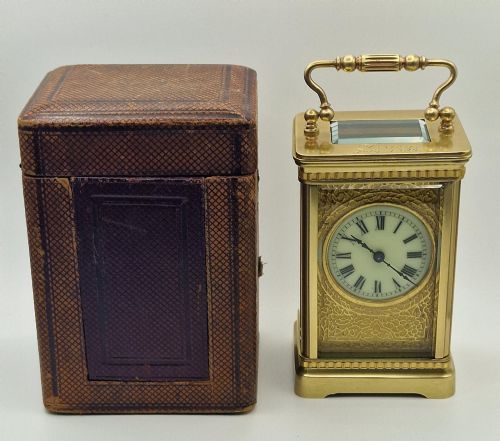
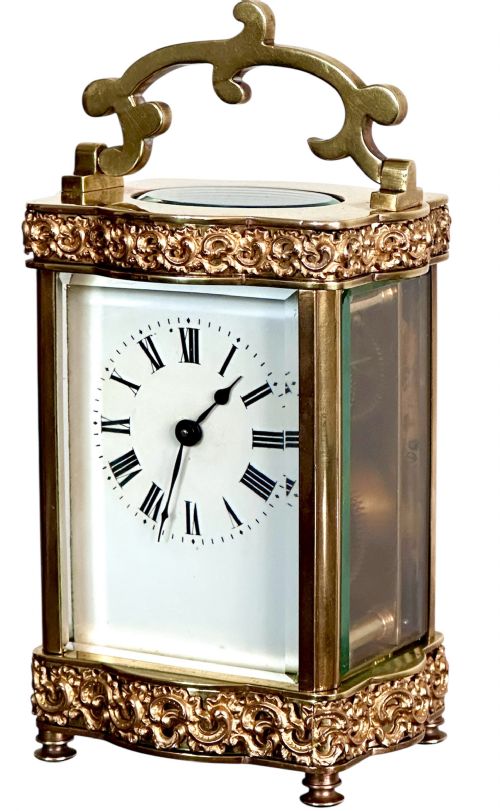
A french decorative desk clock encompasses substantial mantel pieces, glass-cased carriage clocks, and smaller boudoir timepieces originating from the nineteenth century. These objects combine timekeeping with sculptural bronze, porcelain, and enamel work designed for domestic display.
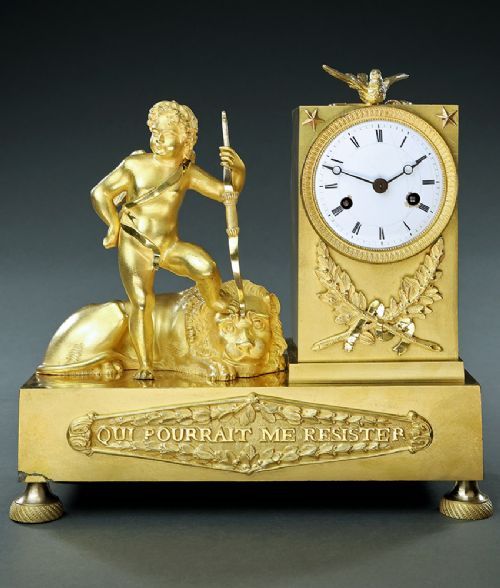
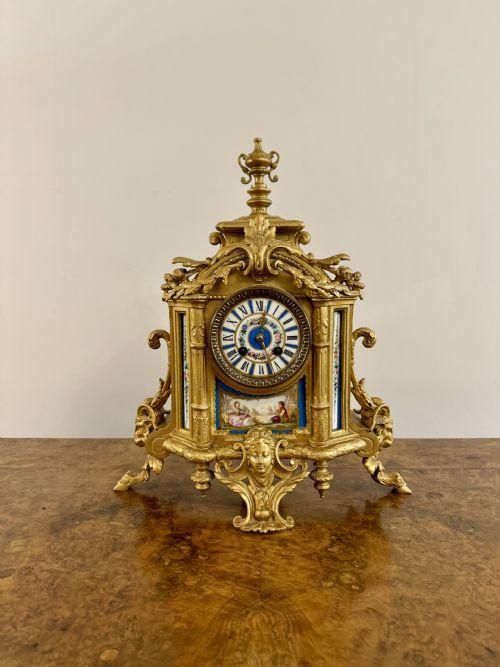
The version most commonly met on this page is the gilt bronze or ormolu mantel clock, often styled in the French Rococo Revival or Louis XIV manner. Such pieces frequently incorporate figurative elements like putti, cherubs, or doves alongside traditional dial faces.
Materials and Construction
These pieces rely heavily on cast bronze finished with ormolu gilding, paired with inset panels of hand-painted porcelain or champlevé enamel. Brass frameworks support glass panels in four-glass and carriage clock variants, allowing visibility of the internal movement.
Makers utilised marble plinths and bronze bases to ground figurative top sculptures, while dials featured individual enamel cartouche numerals or finely engraved gilt brass faces.
Materials recorded across the inventory include gilt bronze, ormolu, champlevé enamel, marble, porcelain, and brass.
Craftsmanship and Detail
The distinction between tiers rests upon the crispness of the bronze chasing and the depth of the ormolu fire gilding. Superior examples exhibit finely detailed casting on figural elements like putti and foliage, whereas lesser pieces display softer surface definition.
Complexity of the movement and the integration of decorative work, such as profusely engraved carriage clock cases or multi-fired champlevé enamel, elevate the standing of a piece.
Le Roy Paris·Duverdrey and Bloquel·Tiffany·Henri Jacot·Paul Garnier·John Bennett Cheapside London·Hessen Paris
The French Decorative Desk Clock Glossary
- Ormolu
- Gilded bronze produced by applying a mercury-gold amalgam to a bronze base and heating it to vaporise the mercury. This technique creates a durable, warm metallic lustre characteristic of nineteenth-century decorative work.
- Champlevé
- An enamelling technique where troughs are dug into a metal surface and filled with vitreous enamel powder before firing. It produces vibrant coloured patterns bordered by thin lines of exposed metal.
- Carriage clock
- A small, portable spring-driven timepiece designed for travel, typically fitted with a carrying handle and glass sides. Many examples feature compensated escapements and striking mechanisms.
- Four-glass clock
- A mantel clock housed in a rectangular brass and glass case that reveals the mechanical movement from all sides. These pieces often incorporate mercury pendulum columns.
- Pendule d'Officier
- A form of small table or desk clock with a folding handle, historically used by military officers. The style bridges the gap between domestic mantel clocks and portable carriage clocks.
French Decorative Desk Clock: Frequently Asked Questions
How do I wind a French desk clock?
Most of these mechanical timepieces utilise a key inserted into winding squares on the dial face to tension the mainspring barrels. Care must be taken not to over-wind the movement.
Striking clocks require attention to ensure the strike sequence matches the hands, preventing the internal count wheel from falling out of synchronisation.
What is a crystal regulator clock?
A crystal regulator is a mantel clock enclosed by bevelled glass panels on all sides within a brass or gilt bronze frame. This construction showcases the pendulum and movement clearly from multiple angles.
Originating in the nineteenth century, these pieces often feature mercury-filled pendulums designed to compensate for temperature fluctuations.
How do I distinguish Rococo Revival from Empire style?
Rococo Revival pieces display asymmetrical scrolls, naturalistic floral motifs, shell work, and playful figures like putti or cherubs. The bronze is heavily chased with organic curves.
Empire style favours symmetrical, neoclassical geometry influenced by antiquity, featuring columns, military trophies, sphinxes, and strict architectural proportions.
Where should I place a carriage clock?
A carriage clock suits desks, tables, or shelves where its portable nature and glazed sides can be appreciated at close quarters. Stable, level surfaces ensure the balance wheel operates accurately.
Avoiding direct sunlight and drafty areas protects the delicate gilding and prevents dust accumulation inside the glass case.