






Victorian Gilt Metal Clock
A victorian gilt metal clock brings weight and gleam to a room, combining brass, ormolu and painted porcelain in substantial mantel and carriage forms.
Victorian Gilt Metal Clock
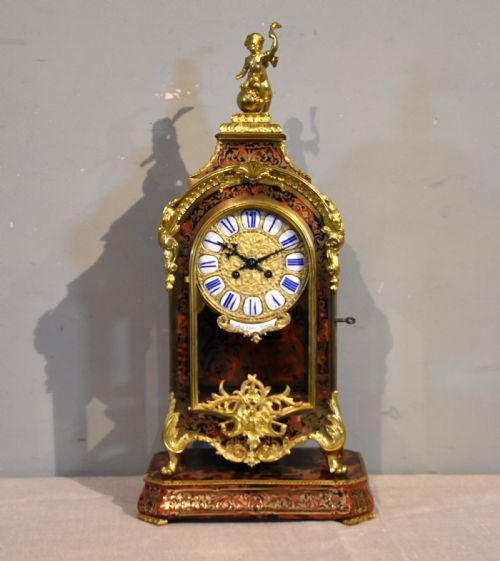
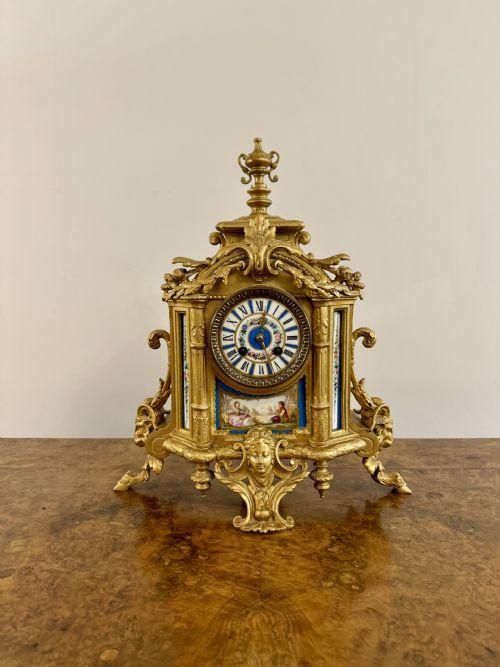
A victorian gilt metal clock encompasses heavy nineteenth-century timepieces designed to sit on mantelpieces, desks and brackets across formal interiors. The selection here leans heavily towards French production from the 1850s to the 1890s, featuring ornate rococo revival curves, louis styles and architectural bronze cases.
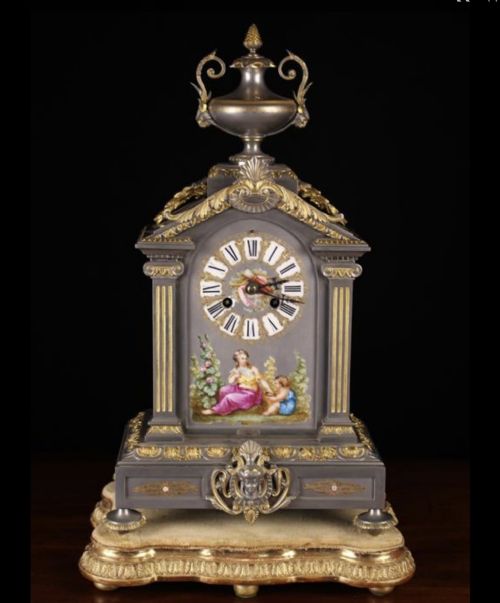
Buyers frequently encounter mantel clocks paired with garniture sets, alongside smaller carriage clocks and boudoir pieces. Many integrate painted porcelain panels depicting figures or landscapes within gilded bronze and brass housings.
The objects date from the nineteenth century, including specific decades such as the 1860s and 1880s, reflecting the tastes of the Victorian period and the Napoleon III era. English makers and retailers also appear alongside continental workshops.
Materials and construction
Cases combine cast gilt metal, ormolu, brass and gilt bronze over structural frames of wood or slate, sometimes ebonised for contrast. These metals undergo casting and chasing before receiving a layer of fire gilding or electroplating.
Dials and decorative inserts frequently utilise painted porcelain, enamel and glass to display roman numerals and delicate markers. Movements range from standard eight-day striking mechanisms to complex fusee movements and automata.
Garniture sets match the central clock with side urns or candelabra executed in the same metal and porcelain combination, maintaining a unified decorative scheme.
Listings feature items from the 1850s to the 1890s, dominated by French rococo revival and louis style gilt metal mantel clocks.
Distinguishing quality in the metalwork
Depth and crispness of the cast ornamentation separate superior examples from simpler production. Finer cases exhibit sharp hand-chasing on the scrollwork, foliage and figures rather than smooth, soft cast edges.
The integration of signed movements by established makers such as P.H. Mourey, Vincenti and Co, or Leroy & Fils elevates a piece. Quality also shows in the preservation of the original fire gilding or ormolu finish and intact hand-painted porcelain panels.
PH Mourey·Leroy & Fils·Wm Gilbert USA·Vincenti & Co·Thomas Cole·Andre Guilmet
The Victorian Gilt Metal Clock Glossary
- Ormolu
- Gilded bronze produced by applying a mercury and gold amalgam to a bronze base and heating it. This technique creates a durable, warm golden surface found on better nineteenth-century French clock cases.
- Garniture
- A matching set of decorative objects consisting of a central clock flanked by two matching vases, urns or candelabra. These sets were designed to sit together on a mantelpiece.
- Fusee
- A conical pulley used in clock movements to maintain even driving force as the mainspring unwinds. It ensures more consistent timekeeping.
- Carriage clock
- A small, portable spring-driven timepiece with a carrying handle, originally designed for travel. They often feature glass panels exposing the escapement.
- Boulle
- A form of marquetry using brass and tortoiseshell inlaid into wood, named after French cabinetmaker André-Charles Boulle. Pieces incorporating this style appear on clock cases and brackets.
Victorian Gilt Metal Clock: Frequently Asked Questions
How do I wind my clock?
Most mechanical pieces utilise a key inserted into winding holes on the dial to tension the springs every eight days. Care must be taken not to over-wind the mechanism.
Moving the hands requires gentle adjustment, following the specific instructions of the movement type, whether striking, chiming or simple timepieces.
Where should I place a heavy mantel clock?
These substantial items require a stable, level surface such as a deep mantelpiece, sturdy sideboard or dedicated bracket fixed securely to the wall. The weight of bronze, marble and metal demands solid support.
Keeping the clock away from direct sunlight and damp environments protects the delicate enamel dials and painted porcelain panels from degradation.
What is a clock garniture?
A garniture consists of a central clock accompanied by two matching side pieces, such as urns or vases. They create a balanced display across a fireplace or large piece of furniture.
Sets are matched by material, period and decorative style, combining gilt metal, porcelain and bronze to form a cohesive ensemble.
How do I identify French pieces?
French examples from the nineteenth century often bear foundry stamps or maker signatures on the movement backplate, such as P.H. Mourey or Vincenti. The styling typically leans towards rococo revival or louis xvi motifs with cast ormolu.
English equivalents frequently use fusee movements and distinct domestic timber or brass cases, contrasting with the ornate gilt metal of continental workshops.