



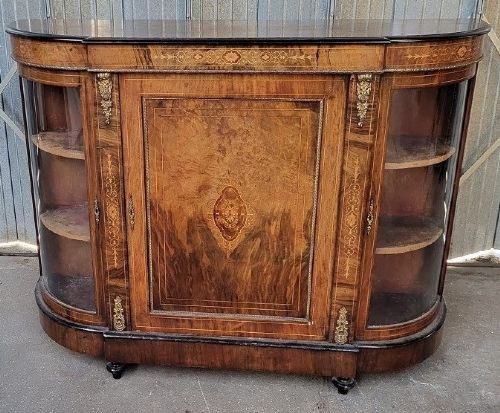


French Curved Sideboard
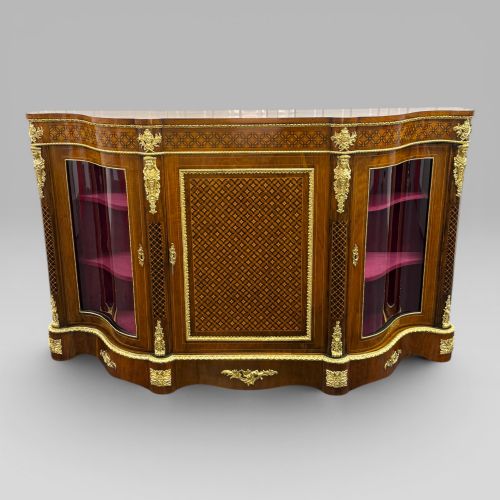
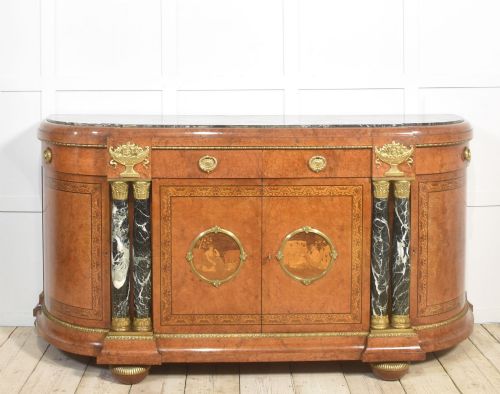
A french curved sideboard brings together graceful serpentine lines, rich timber, and gilt mounts to anchor a formal interior.
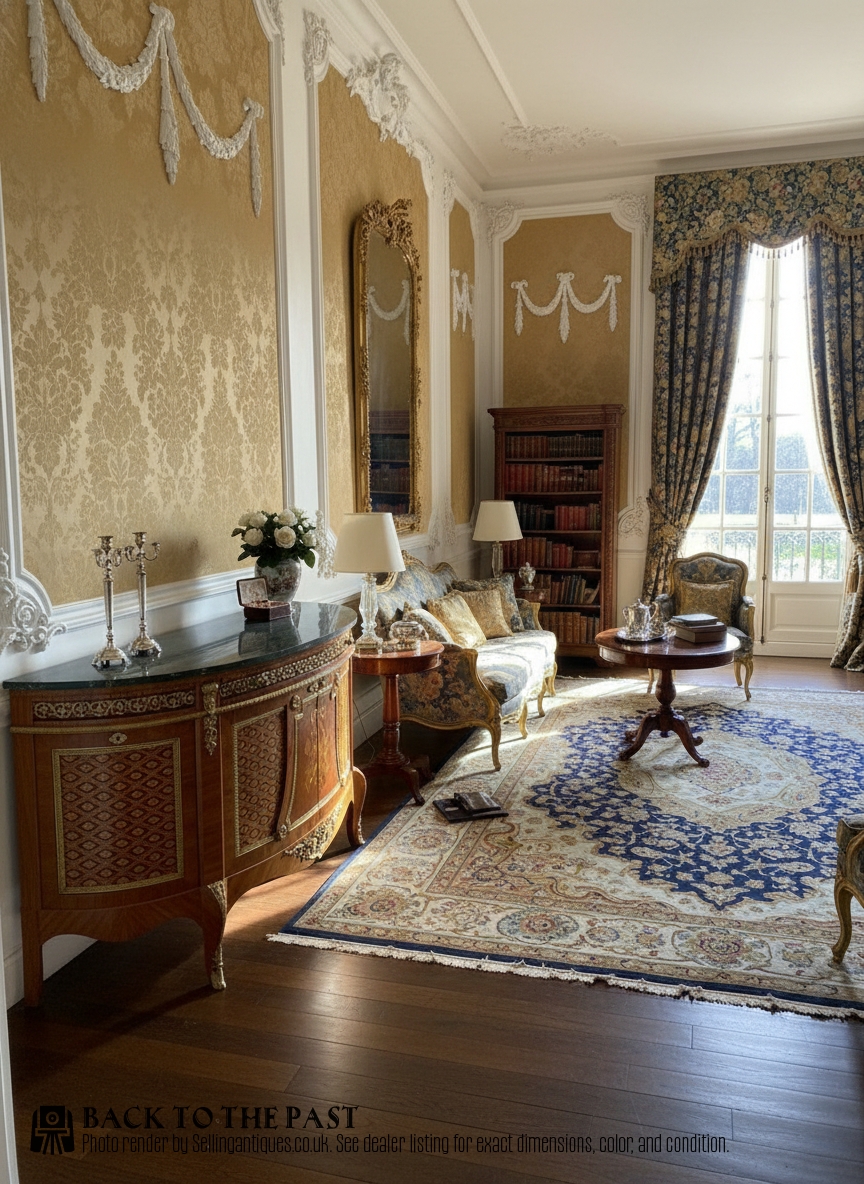
French Curved Sideboard
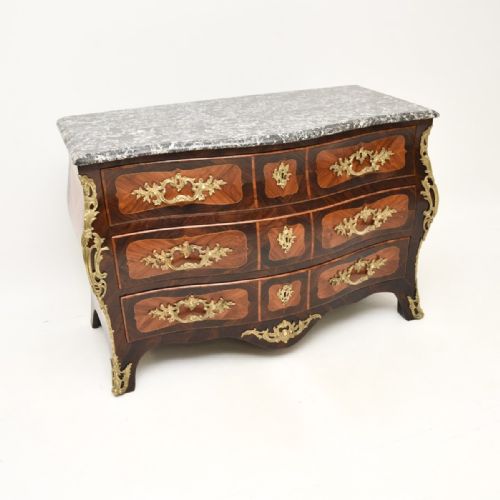
When searching for a french curved sideboard, a buyer encounters a range of related forms including credenzas, side cabinets, commodes, and sideboards. These pieces span the eighteenth century, nineteenth century, and early twentieth century.
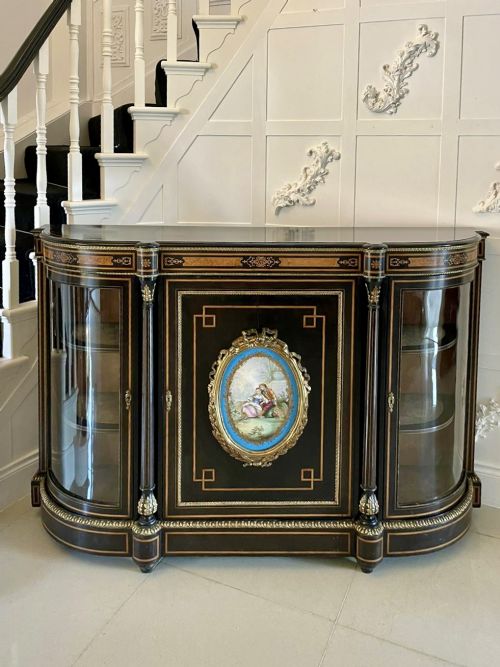
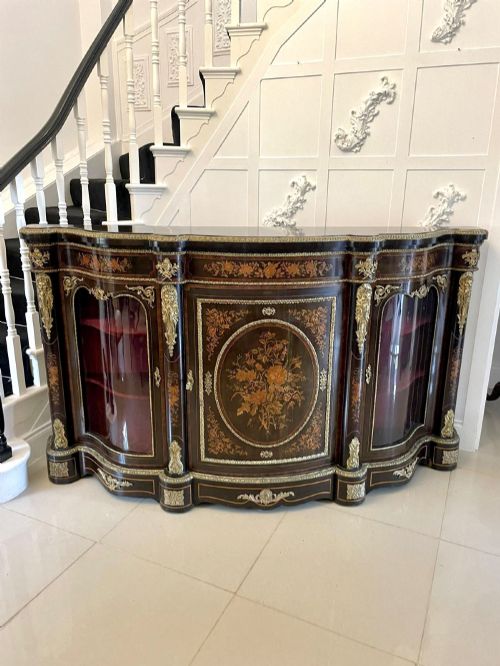
The versions most commonly met on this page combine nineteenth century Victorian craftsmanship with French revival aesthetics, particularly Louis XV and Napoleon III styles. They display serpentine or curved fronts designed to soften room layouts.
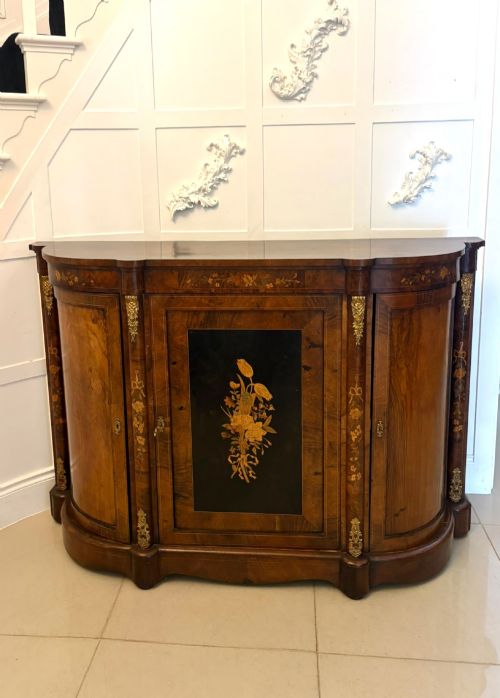
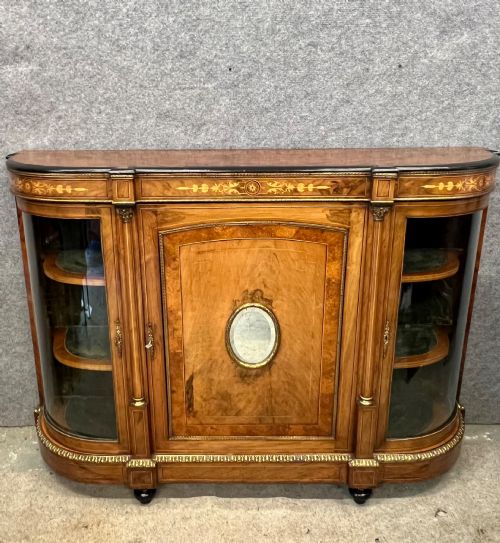
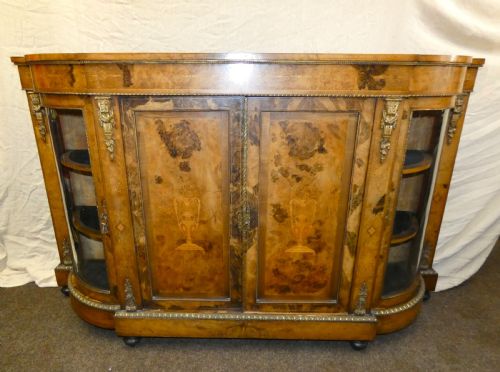
Makers and workshops from both Britain and France produced these cabinets using walnut, burr walnut, kingwood, and ebonised wood. Many feature integrated marble tops and enclosed cabinet space behind curved doors.
Materials and construction methods
Cabinet makers utilised dense hardwood carcases of walnut, kingwood, or satinwood as a foundation for intricate floral marquetry and parquetry veneers. Burr walnut sections provided dramatic grain patterns across large door surfaces.
Mounts cast in ormolu and detailed with gilding edge the curves, frames, and feet of the carcase. Heavy marble slabs, shaped to match the serpentine contour of the top, complete the assembly.
Secret drawers tucked beneath marble slabs occasionally surprise those who investigate the inner workings of nineteenth-century commodes.
Distinctions in craftsmanship
The finer examples demonstrate precision in the alignment of marquetry patterns across curved door panels and drawer fronts. The execution of cast ormolu mounts separates standard production from exceptional pieces.
Superior construction involves heavy, well-fitted marble tops that follow the exact serpentine radius of the timber base. The depth of timber selection and the retention of original polish dictate the standing of each cabinet.
Jacques Bircklé·Maison Gagneau
The French Curved Sideboard Glossary
- Credenza
- A sideboard or display cabinet, often low in height, associated with nineteenth-century reception rooms. They typically incorporate central cupboards flanked by curved glass doors.
- Ormolu
- Gilt-bronze mounts applied to furniture edges and feet. This decorative technique adds metallic contrast to dark timbers.
- Marquetry
- The art of forming decorative patterns using thin veneers of different woods. Floral motifs are frequently seen across these surfaces.
- Boulle
- A style of marquetry using brass and tortoiseshell inlay. It appears on ebonised cabinets from the nineteenth century.
- Bombé
- A swelling, outward-curved commode or cabinet shape. This profile requires skilled shaping of timber carcases.
French Curved Sideboard: Frequently Asked Questions
How do I style a french curved sideboard?
These cabinets suit dining rooms, hallways, or drawing rooms where their curved profiles soften angular spaces. They provide surface space for lamps or decorative objects while offering enclosed storage below.
Keep surrounding furniture balanced in scale to let the marquetry and ormolu mounts remain the visual focus of the room.
What is the difference between a credenza and a commode?
A credenza typically functions as a low side cabinet or sideboard with cupboards and sometimes display sections. They are designed primarily for reception rooms.
Commodes generally feature banks of drawers rather than cupboards and originate primarily from French domestic interiors.
How do I identify a Victorian french revival piece?
Victorian cabinet makers frequently adopted French Rococo and Louis XV styles, combining native walnut with continental marquetry motifs. Look for serpentine shapes, ormolu mounts, and floral inlays.
Construction details on the interior carcase usually indicate British workshop origins despite the French stylistic influence.
Are marble tops original to these cabinets?
Marble tops were fitted to many nineteenth-century French and Victorian cabinets to provide a durable, decorative surface. They were cut to match the specific serpentine or demi-lune curve of each carcase.
Checking the underside of the marble and the supporting timber ledge reveals how the stone integrates with the cabinet frame.