




French Corbels
French corbels are architectural supports and wall brackets that bring classical weight and sculptural depth to a room.
French Corbels
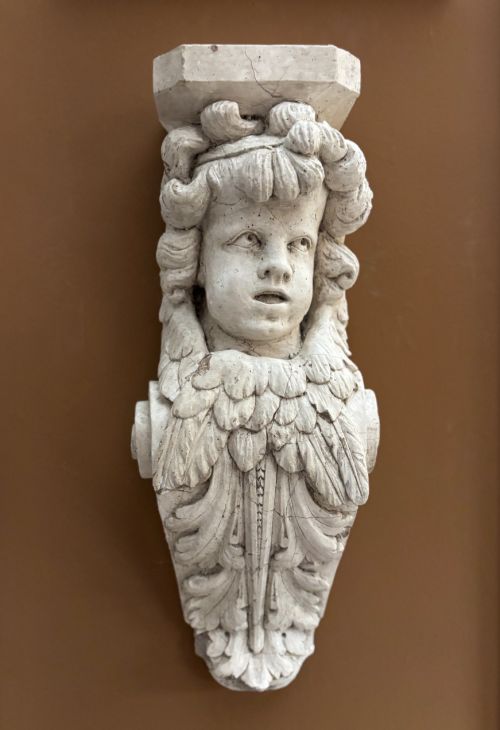
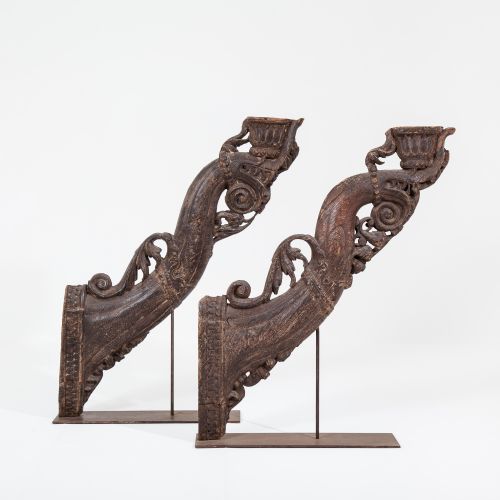
When you search for french corbels, you encounter architectural salvage and decorative wall brackets designed to support shelves, consoles, or structural loads while serving as ornaments themselves. The pieces listed here span the eighteenth, nineteenth, and early twentieth centuries, encompassing wall mounted console shelves and hanging brackets.
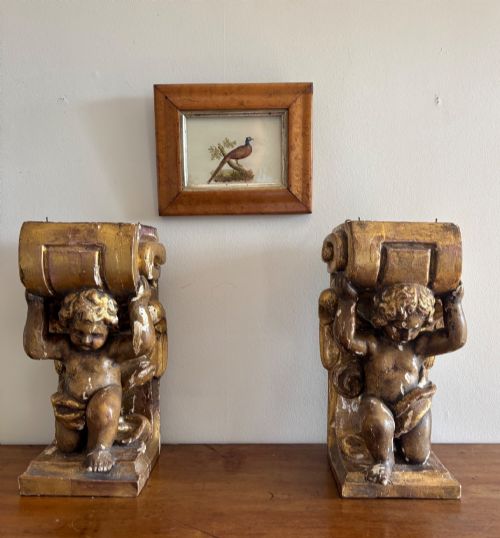
You are most likely to meet carved wood and gilt examples from the nineteenth century alongside eighteenth century stone and plaster pieces. Formats range from single brackets to matched pairs, displaying influences from rococo and baroque revivals.
How they were made
Makers shaped these supports from carved wood, stone, and plaster, frequently applying gesso, gold leaf, or paint to the finished surfaces. Artisans also utilised composition material, ormolu, and ceramic elements such as porcelain and majolica.
The combination of carved wooden substrates with gilding or painted finishes defines many of the nineteenth century brackets, while heavier architectural elements rely on carved stone and plaster.
French Corbels Retail Price Guide 2026
Typical asking prices for french corbels among the pieces listed under this phrase on Sellingantiques today, from the lower quarter to the upper quarter. They describe what is for sale here now, not the wider market.
What varies in quality
Quality rests in the crispness of the carving and the integrity of the original surface treatment, whether that is gold leaf, gesso, or paint. Finer examples display deeply undercut foliage, scrolls, or figurative details such as putti that show confident hand work rather than mechanical repetition.
The choice of medium also dictates the character of the piece, with substantial stone and carved wood holding a different presence compared to moulded plaster or composite materials.
Henri Dasson
The French Corbels Glossary
- Corbel
- A structural piece of stone, wood, or metal jutting from a wall to carry a superincumbent weight. In decorative contexts, it often functions primarily as a wall bracket.
- Ormolu
- Gilded bronze used for decorative mounts and furniture ornamentation. It provides a bright metallic contrast against wood or ceramic surfaces.
- Gesso
- A plaster mix used as a base for paint or gold leaf on wood. It allows for sharp moulded or carved detail before gilding.
- Majolica
- Tin glazed earthenware popular during the Victorian period. It offers a colourful glazed surface for decorative wall brackets.
- Putto
- A figure of a small infant, frequently winged, depicted in classical art and architectural decoration. These figures often support or adorn brackets and corbels.
French Corbels: Frequently Asked Questions
What are french corbels used for?
These pieces function as decorative wall supports for small shelves, busts, or clocks. They add architectural character to plain walls.
Historically they bridged structural support and ornamentation in domestic and public interiors.
How do I hang a heavy wall bracket safely?
Heavy stone or carved wood brackets require secure fixings into wall studs or masonry using appropriate fixings. Weight distribution is crucial.
Consult a professional if the piece is exceptionally heavy or if the wall substrate is uncertain.
How do I date a wooden corbel?
Dating relies on examining the tool marks, the timber species, and the ageing of the gesso or paint layers. Revival styles often mimic earlier centuries.
Wear patterns and construction methods help distinguish eighteenth century work from nineteenth century reproductions.
Can I use these brackets to hold actual shelves?
Many brackets are sturdy enough to support a wooden or glass shelf board across a pair. Check the load bearing capacity of the specific material.
Plaster and composition pieces suit lighter display duties than solid stone or carved timber.