


French Classical Lighting Pair
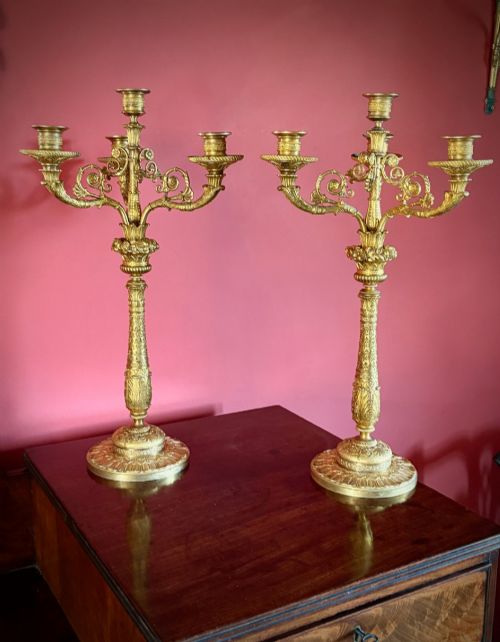
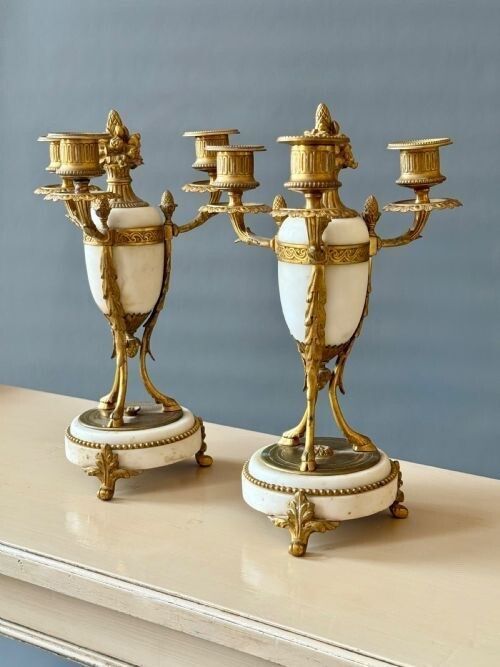
These French classical lighting pair pieces bring historic bronze, brass, and marble illumination into a room with genuine period character.
French Classical Lighting Pair
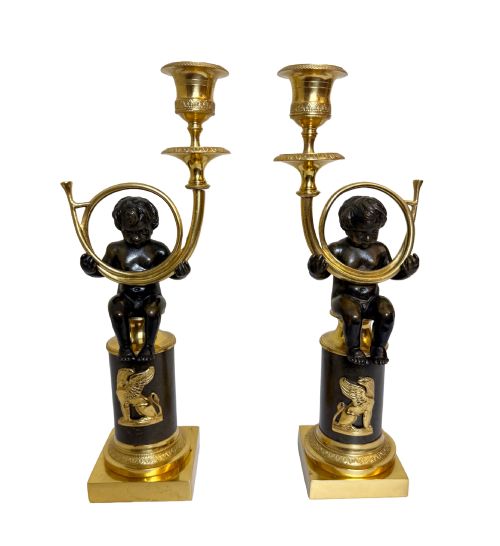
A french classical lighting pair encompasses candlesticks, candelabra, wall lights, and table lamps originating from the nineteenth and early twentieth centuries.
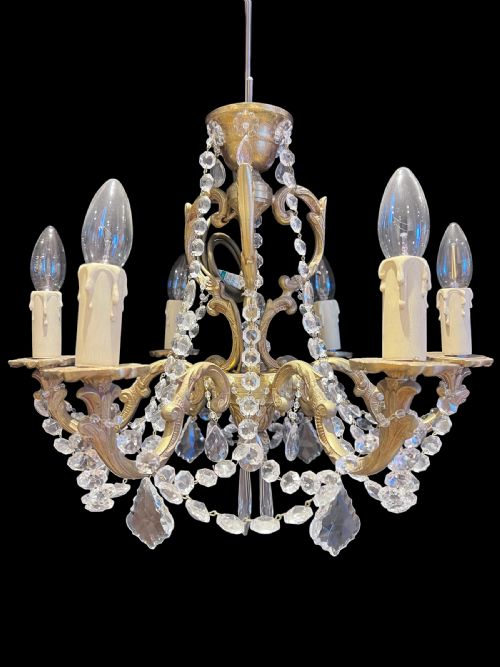
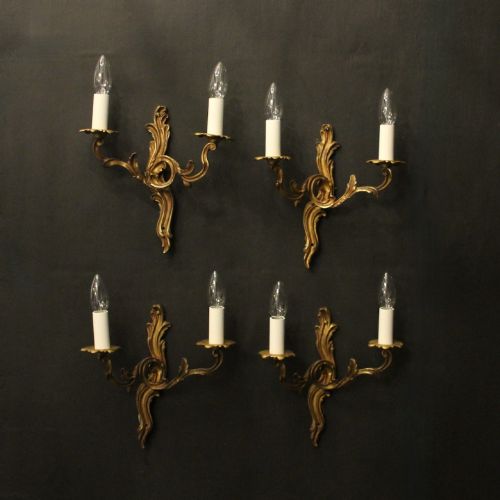
Buyers encounter table lamps, wall sconces, and multi-light chandeliers reflecting French Neoclassical, Empire, Louis XVI, and Rococo design vocabularies.
Many examples utilise converted traditional candleholders or incorporate materials like crystal and marble into symmetrical decorative pairs.
Materials and Technique
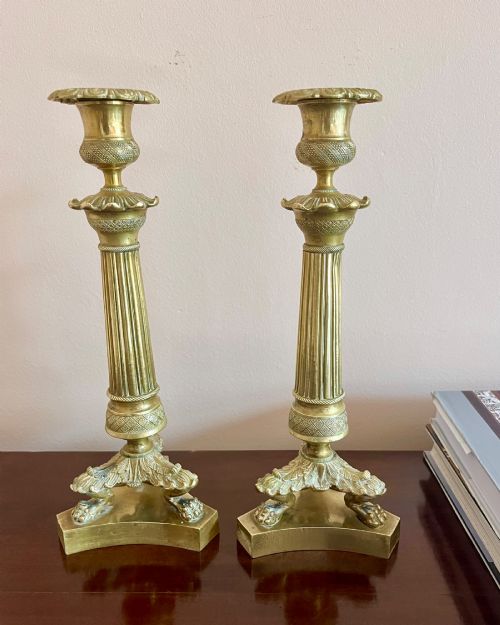
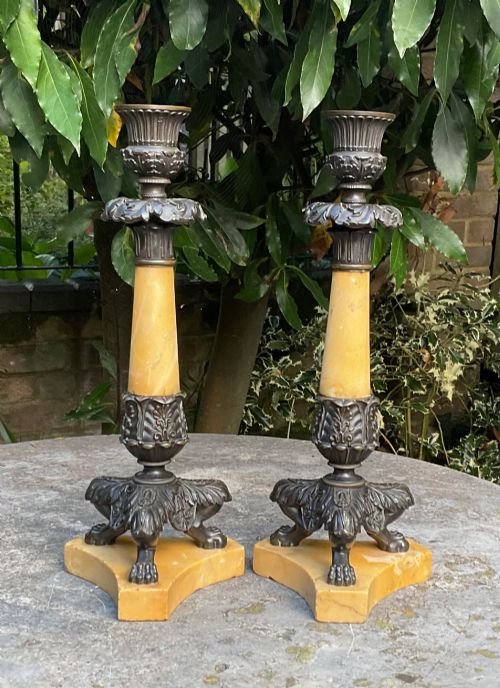
Maker workshops utilised cast metals such as bronze, ormolu, and brass, frequently combining them with white or rouge marble, onyx, and carved giltwood.
Gilding techniques applied gold leaf or surface finishes to metal elements, while glass and crystal components were shaped to refract light in chandeliers and wall lights.
Listings feature items spanning the nineteenth century through the 1930s, utilising gilt bronze, brass, ormolu, marble, onyx, and crystal.
Craftsmanship and Detail
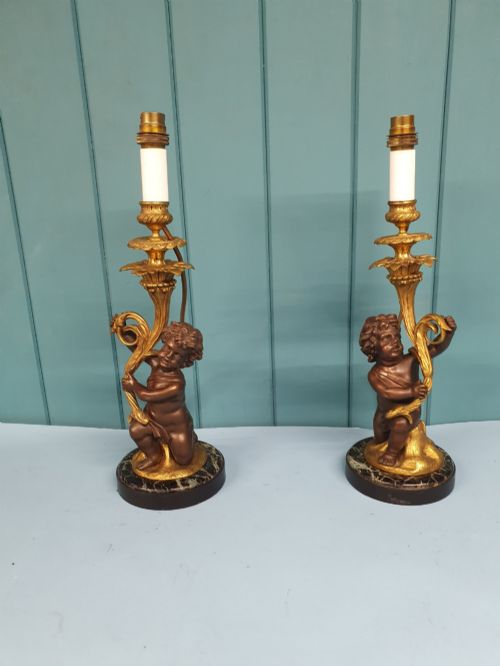
Superior examples display crisp chasing and fine detail in figural motifs like cherubs, caryatids, and ram's head masks cast in bronze or ormolu.
The integration of natural stones, such as solid marble and onyx bases, separates standard production from substantial works attributed to known makers.
E Rousseau·Casier·Pierre Philippe Thomire
The French Classical Lighting Pair Glossary
- Ormolu
- Gilt bronze produced by applying finely ground high-carat gold to a bronze base. This technique creates a rich golden finish characteristic of decorative metalwork.
- Candelabra
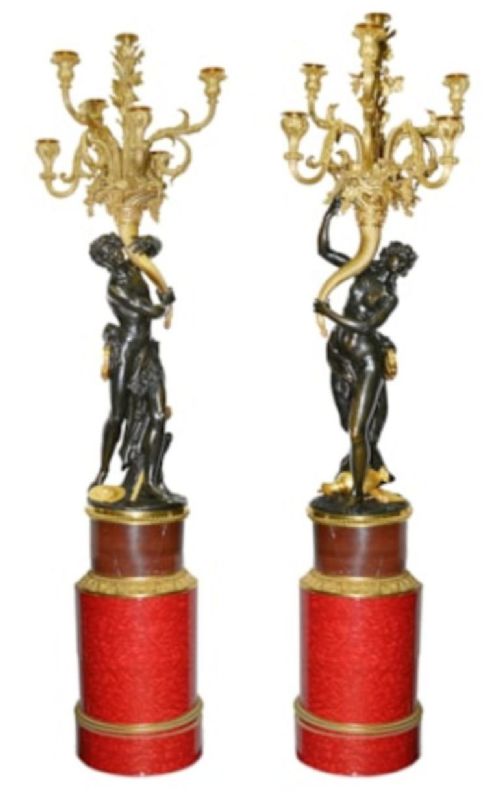
- A branched candlestick holding multiple candles or electrical lights. These fixtures often feature central stems ornamented with classical figures or foliage.
- Cassolette
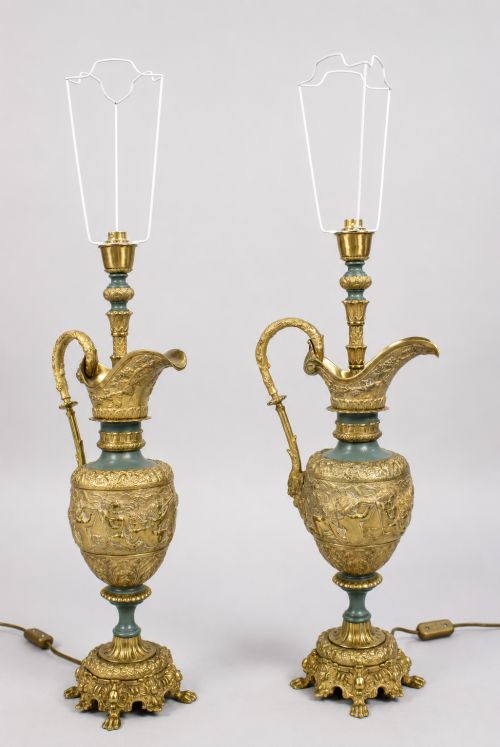
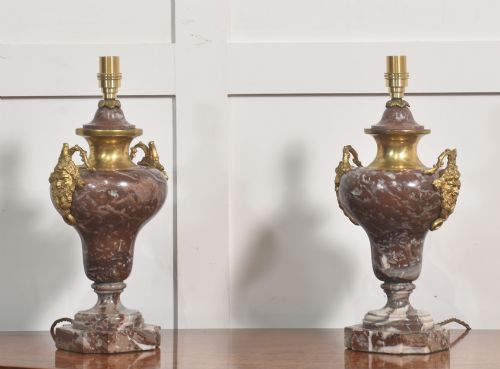
- A decorative vase or urn with a perforated cover, frequently mounted in ormolu and used as a lamp base in period interiors.
- Ewer
- A large jug with a wide spout, often adapted into the body of a table lamp in nineteenth-century designs.
- Caryatid
- A sculpted female figure serving as an architectural support column. These figures appear frequently on candlesticks and candelabra stems.
French Classical Lighting Pair: Frequently Asked Questions
How do I identify French Empire lighting?
French Empire lighting pieces draw on military and classical motifs, often incorporating heavy bronze or brass structures with distinct symmetry and dark patination.
Look for classical figures, eagles, and laurel wreaths cast into the metalwork of candlesticks and candelabra from the nineteenth century.
Were these lamps originally electric?
Most table lamps in this category started as nineteenth-century candlesticks, oil lamps, or cassolettes before being converted for modern electrical use.
Original candelabra and wall lights frequently retain structural adaptations made to accommodate wiring while preserving the antique metal body.
What is the difference between ormolu and brass?
Ormolu consists of a bronze substrate gilded with real gold, producing a deep and warm metallic lustre that retains its tone over centuries.
Brass is an alloy of copper and zinc used directly for its bright golden appearance without the application of gold leaf or mercury gilding.
How do I style wall lights in a modern room?
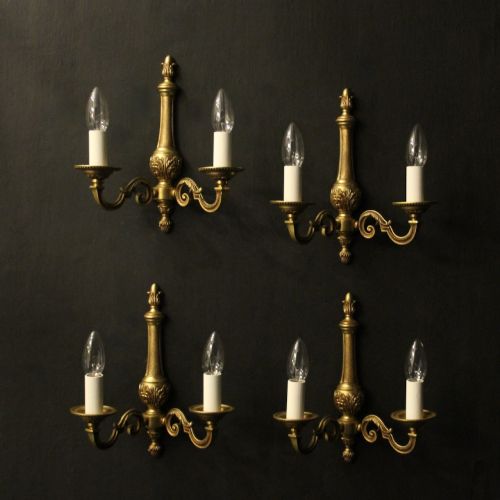
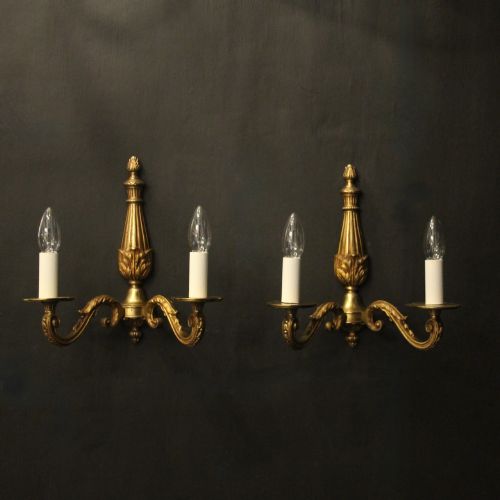
Pairs of twin-arm or triple-arm wall lights function effectively when flanked around mirrors, fireplaces, or architectural doorways in a hallway or living space.
Matching sets of four or six sconces allow for consistent illumination across larger walls while maintaining a unified period aesthetic.